


Ghana and the UK have initiated discussions to establish a digital trade finance corridor aimed at closing Ghana’s estimated US$7billion annual trade finance gap, a structural constraint that continues to limit export growth and SME participation in global trade.
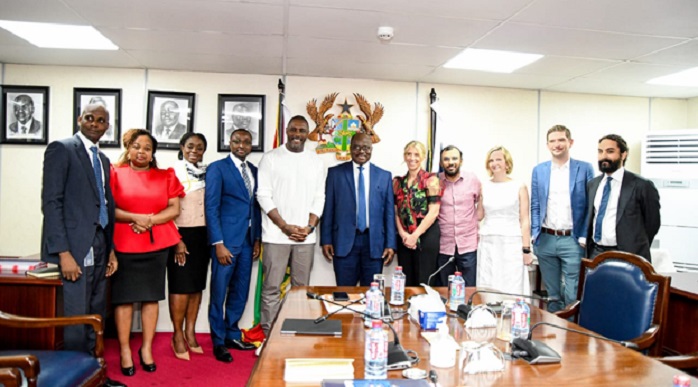
The initiative, dubbed Neofingo, was unveilled at a high-level forum convened by ODI Global in partnership with Ghana’s 24-Hour Economy Authority and the AfCFTA Secretariat. The event was held simultaneously in London and Accra, bringing together regulators, financiers, fintech firms and policymakers.
The proposed UK-Ghana Digital Trade Finance Corridor is designed as shared digital public infrastructure to connect Ghanaian exporters, particularly small- and medium-sized enterprises, to global trade finance systems. It aims to integrate UK-based neobanks with African fintech platforms, enabling access to critical instruments such as digital letters of credit.
Ghana’s trade finance gap forms part of a wider US$120billion shortfall across sub-Saharan Africa. However, policymakers increasingly attribute the constraint not only to capital scarcity but also weakened ‘trust infrastructure’, exacerbated by the retreat of correspondent banking relationships. This has left many exporters unable to secure trade guarantees, effectively constraining the movement of goods despite production capacity.
The Neofingo framework seeks to address this by digitising trade documentation, compliance processes and financing instruments using open standards such as ISO 20022 and the International Chamber of Commerce’s eUCP. It also builds on the UK’s Electronic Trade Documents Act 2023, alongside Ghana’s pro-fintech regulatory environment.
Officials argue that Ghana’s position as host of the AfCFTA and its ongoing 24-hour economy policy provide a strategic foundation for piloting such infrastructure at scale.
“The global trade finance system was not designed for African SMEs,” said Augustus Goosie Tanoh. “Neofingo reframes trade finance as shared infrastructure, allowing a small exporter in Tamale to access the same digital instruments as firms in London.”
Research cited by Sara Pantuliano suggests that effective implementation of AfCFTA digital trade protocols, supported by such a corridor, could increase Ghana’s GDP by up to US$3billion over the long-term and generate as many as 600,000 jobs.
From a bilateral perspective, UK officials view the initiative as an extension of existing economic ties. Ben Ainsley said the corridor would “add a financial layer” to longstanding connections, facilitating trade and investment flows between businesses and diaspora networks.
The forum marks an exploratory phase, with stakeholders expected to define governance structures, legal standards and institutional frameworks required to operationalise the corridor. Participants include development finance institutions, multilateral agencies and trade finance providers.
If implemented, the corridor could serve as a prototype for digitally-enabled trade finance systems across West Africa, with implications for scaling intra-African trade under AfCFTA and reducing systemic financing constraints faced by emerging-market exporters.
The post Ghana,UK launch talks on digital trade finance corridor appeared first on The Business & Financial Times.
Read Full Story







Facebook
Twitter
Pinterest
Instagram
Google+
YouTube
LinkedIn
RSS