


A growing number of Ghanaians have pushed back against Parliament’s call for the scrapping of the Office of the Special Prosecutor (OSP), describing the proposal as misguided and dangerous for the country’s anti-corruption fight.
Public critics say the OSP, far from being redundant, remains one of the few institutions capable of holding politically exposed persons to account.
Joining the chorus, former Tamale Central MP and seasoned lawyer, Inusah Fuseini dismissed Parliament’s claims that the OSP is overlapping, ineffective, or unnecessary.
He insisted that using the Ken Ofori-Atta’s case as justification to abolish the office is both unfair and intellectually dishonest.
“One single case cannot be used as a yardstick to evaluate the usefulness of the OSP,” he stressed on Joy FM’s News file programme over the weekend.
Inusah Fuseini argued that, eight years after its creation, the OSP has become a critical safeguard in Ghana’s anti-corruption architecture and must not be buried over political frustrations.
The former Tamale Central MP expressed shock at the calls from some MPs, including persons who had served on the very committee that drafted the OSP Act, who claimed the office had not delivered value for money.
He said many of their arguments ignored the preventive and deterrent value the office has offered the country.
According to him, the OSP has saved the state enormous potential losses through investigations and reforms, citing the Minerals Income Investment Fund (MIIF) probe as an example.
He argued that the mere existence of the OSP has forced public officials to rethink corrupt tendencies.

“We cannot quantify how many people are running away from corruption because that office exists. That preventive impact alone is value,” he said.
Inusah Fuseini, also a former Lands minister referenced the role played by former Special Prosecutor, Martin Amidu, in improving corruption perception metrics, arguing that such systemic contributions cannot be ignored.
Last week, the debate on the OSP’s relevance resurfaced in Parliament. Majority Chief Whip and MP for South Dayi, Rockson-Nelson Dafeamekpor, warned that Parliament might have to dissolve the OSP if it “continues to abuse its powers,” noting that MPs had invited the Special Prosecutor multiple times without cooperation.
In response, MP for Ofoase Ayeribi, Kojo Oppong Nkrumah, said legislators often complain only when the OSP’s actions affect political allies, citing repeated warnings from the Minority Leader about investigative bodies weaponising their powers.
Meanwhile, Speaker of Parliament, Alban S.K. Bagbin questioned the constitutional basis for continually allocating resources to an agency that is not achieving expected outcomes, stating that the OSP was one of the institutions Parliament must re-evaluate.
Bawku Central MP, Mahama Ayariga, challenged the tangible achievements of the office in nearly eight years of existence, arguing that creating more anti-corruption institutions does not solve the problem without genuine political commitment.
Inusah Fuseini, however, defended the legality and operational independence of the OSP. He highlighted that Parliament itself had granted the office expansive police powers under Section 28 of Act 959, giving the Special Prosecutor and authorised officers the same arrest and search powers, as police officers under the Criminal and Adult Offences Procedure Act 1960 (Act 30).
He explained that the law also makes it an offence to obstruct an authorised officer under Section 69(3), deliberately providing sufficient authority to prevent interference during investigations. The former Tamale Central MP pointed out that MPs complaining now were fully aware of these powers when they passed the law.
He added that arrest powers cannot be narrowly interpreted, illustrating that if someone entered the OSP office and started destroying furniture before any investigation began, the Special Prosecutor would be empowered to act.
The former Lands minister stressed that evaluating the OSP based on the Ken Ofori-Atta case alone would be misleading. He compared it to historical constitutional incidents, such as a parliamentary standoff under President Limann, which eventually led to Ghana constitutionalising ministerial appointments under Article 78(1).
“The value of the OSP cannot be measured by failure or success in handling one man. It must be assessed comprehensively,” he said, urging MPs to examine the original rationale for the office: to enable politically exposed persons to be prosecuted independently without interference from an Attorney-General appointed by the same government.
On operational independence, Inusah Fuseini explained that Section 4(1) of the OSP Act statutorily transfers prosecutorial fiat from the Attorney-General to the OSP for corruption cases. The Attorney-General’s role is primarily constitutional housekeeping, not operational control.
He cited other common law jurisdictions, including Canada and Singapore, which operate independent anti-corruption prosecutors despite having Attorney-General systems.
Inusah Fuseini also noted that Section 15 of the OSP Act makes the Special Prosecutor harder to remove than a Superior Court judge. Removal requires a three-member committee and strict evidential thresholds to prevent political retaliation.
He challenged MPs calling for the office’s dissolution to provide concrete evidence of incompetence rather than relying on politically influenced narratives.
On a personal note, the former Tamale Central MP admitted he initially doubted Special Prosecutor, Kissi Agyebeng’s suitability due to his youth and perceived closeness to influential figures such as Gabby Otchere-Darko and Ken Ofori-Atta.
“But he has shown courage of conviction. The very people I thought he could not touch, he is touching them,” Inusah Fuseini said.
He warned that many of those under investigation are wealthy and politically powerful, capable of threatening the lives of anti-corruption officials and their families, underscoring the need for strong institutional protection.
Concluding, Fuseini emphasised that scrapping the OSP would only benefit corrupt politicians, not ordinary Ghanaians. “Instead of scrapping the OSP, Ghana must strengthen it,” he said, urging Parliament to recognise the office as a critical guardrail in the country’s fight against corruption.
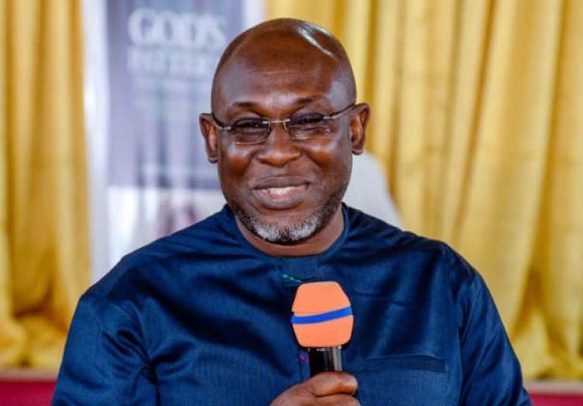
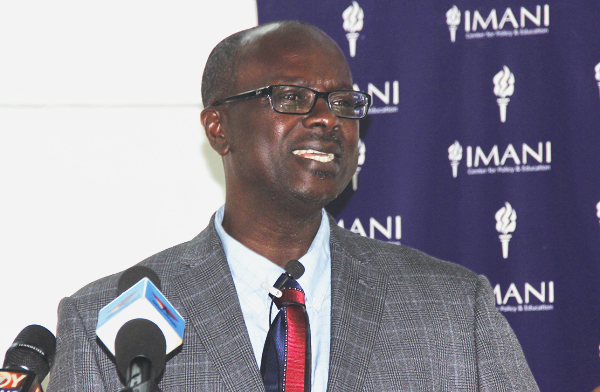
Kofi Bentil
Vice-President of IMANI Africa, Kofi Bentil, who also appeared on the programme maintained that the OSP overstepped its mandate in the arrest of Mr. Martin Kpebu, a private legal practitioner.
He argued that the OSP could only arrest individuals who obstruct investigations directly related to corruption cases.
He stated: The OSP Act is specialised, not plenary. A verbal altercation does not constitute obstruction. The OSP cannot arrest citizens outside corruption-related functions.
However, Kofi Bentil defended the OSP as an institution, insisting it is constitutional, necessary and still evolving. “Under no circumstances should this episode be used to call for the removal of the Special Prosecutor,” he said.
For more news, join The Chronicle Newspaper channel on WhatsApp: https://whatsapp.com/channel/0029VbBSs55E50UqNPvSOm2z
The post Fight Against Corruption: Don’t Dare Scrap OSP! … Inusah Fuseini, Kofi Bentil Reject MPs Call To Collapse Agyebeng’s Office appeared first on The Ghanaian Chronicle.
Read Full Story










Facebook
Twitter
Pinterest
Instagram
Google+
YouTube
LinkedIn
RSS