


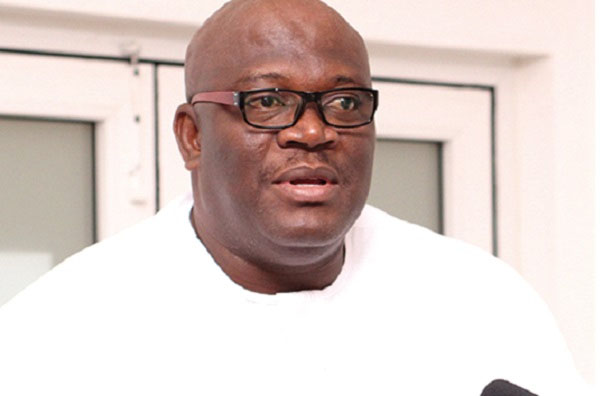
Kwasi Anin Yeboah, Chief Justice
Tsatsu Tsikata, lead counsel for the petitioner in the 2020 presidential election petition, had a tough day yesterday, as he was asked several questions from the Bench at almost the same time, such that he had to plead to “answer one at a time.”
Whilst on his feet arguing his case, the Bench, on the other hand interjected with questions for clarifications. But it appeared Tsatsu could not accommodate those questions considering the pace at which they were thrown to him.
It appeared as though he does not finish answering one question when the other follows. Thus, his outburst to the Bench: “My Lords, can I answer one at a time?”
Referred to by a section of the public as ‘The Law,’ Tsatsu was addressing the Law Lords on why the 1st and 2nd respondents could not close their cases without their witnesses being cross-examined.
During last Monday’s hearing, counsel for the respondents separately told the court they did not intend to lead evidence, because the petitioner had not crossed the threshold of burden of proof, and also the evidence before the court was enough to determine the case. As such, they informed the court that they had closed their cases.
This development came just after Tsatsu had also closed his case following the ending of the cross-examination of the third witness of the petitioner, Robert Joseph Mettle-Nunoo.
When the respondents told the court last Monday they were not going to call their witnesses, Tsatsu objected to it. Counsel were then asked by the Bench to come the next day to properly address the court.
Arguing his case, lead counsel for the 1st respondent, Justin Amenuvor, referred the Bench to the case of Alma vs Hydrofone Estate Ghana Limited, a decision of the Supreme Court reported in 2013/14 II Supreme Court of Ghana Report 201551, at page 1567.
Counsel Amenuvor quoted His Lordship Benny JSC in the case being referenced: “A court has no duty to call upon any party to testify in any case. The court acts as an empire and only hears such evidence that the parties will profess. Whether the parties testify or not, it is none of the court’s business…”
He (Amenuvor) continues: “So, my lords, it is our submission that the petitioner has brought us to court. He has led evidence; He has closed his case; we don’t think that there is anything more for us to say. It our election petition and it’s a risk we have taken. Even if, indeed, the petitioner has a good case, my lords, I believe that he should be dancing and be happy…”
Also arguing just after the 1st respondent, Akoto Ampaw, counsel for the 2nd respondent, associated himself with the submissions made by counsel for 1st respondent.
However, he added on by referring the Lordships to the case of Joseph Aknu-Baffoe and two others vs Lawrence Boako Supreme Court of Ghana Report 2013.
Also known as ‘Sheshe’, Akoto Ampaw further argued that it was their submission that the petitioner had adduced evidence and closed his case, but in their assessment, the petitioner had not discharged the burden of proof. Based on that, the 2nd respondent would not plead further evidence.
He told the court to determine the case which has closed on the basis of the evidence before it. Sheshe said: “So, my lords, we [respondents] are of the view, especially in the light of the provisions of C.I.87, that we are entitled not to adduce any evidence. We are entitled not to call any witness, and all that the petitioner may do if he so wishes is to tender our witness statement as hearsay evidence. Unfortunately for the petitioner, he has closed his case so he cannot even do that. Accordingly, we pray that our prayer to elect, not to adduce, evidence be held. We pray accordingly.”
Meanwhile, in his argument in opposition, counsel for the petitioner, Tsatsu Tsikata, told the court that the 1st & 2nd respondents had in fact adduced evidence in this case.
His argument, which lasted well over 120 minutes, centered largely on the 1st respondent, explaining that she, Jean Mensa, Chairperson of the 1st respondent, was at the heart of the petition.
Tsatsu argued that Jean Mensa, being the Chairperson of the 1st respondent, who was the constitutionally-designated Returning Officer for the election in contention, which took place under C.I. 127 which she signed, needed to clarify some issues.
Again, it was the submission of Tsatsu that the Chairperson, having put before the court a witness statement, had elected herself to adduce evidence.
This position was argued for some time between the Bench and Tsatsu. The court was of the view that a mere filing of a witness statement was not evidence before the court, but rather potential evidence.
The Bench explained that it was after the witness had mounted the box and sworn to adopt that statement before it becomes evidence-in-chief. Tsatsu disagreed anyway, and continued.
Bench: Mr Tsikata, in your writ you know, relief 4, the number of witnesses that the petitioner intended to call was five, eventually you called two, and you pleaded to the court and added one. But were we going to insist because you have written in your writ that you will call five witnesses go and bring the five witnesses?
Tsikata: My lords, we have not filed five witness statements. My lords, we have not filed five witness statements.
Bench: …She has not taken the judicial oath to speak the truth for her to be cross examined for her witness statement to be adopted as evidence-in-chief. [So, until that happens] that document is just potential evidence. It is not proper evidence before this court.
Tsikata: My Lord, that evidence indicates an election to adduce evidence, that is what I’m submitting.
Meanwhile, the court has set tomorrow, Thursday, February 11, 2021, to give its ruling on the application not to adduce evidence triggered by the respondents.
The post My Lords, can I answer one at a time? appeared first on The Chronicle Online.
Read Full Story



Facebook
Twitter
Pinterest
Instagram
Google+
YouTube
LinkedIn
RSS