
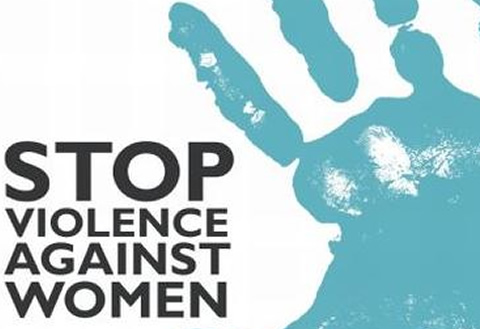

Her incessant cries for help went unanswered over decades of marriage, as her husband turns the home into a boxing arena.
Amina (not her real name) couldn’t leave her marital home because her separation or divorce wasn’t just a failure, however, a break of a marital vow and a slur on her faith and beliefs.
It was until she lost her left eye that the young woman came to her senses, and realized that she had married and stayed with a tyrant for years.
Amina’s story is just a peek into the countless number of women whose lives have been ruined or ended due to Gender-Based Violence.
GBV
As one of the most prevalent human rights violations in the world, gender-based violence knows no social, economic or national boundaries.
In fact, GBV remains a silent nightmare of many women and girls, undermining their health, dignity, security and autonomy.
In typical Ghanaian society, the GBV is shrouded in a culture of silence and supported by cultural and traditional beliefs.
GBV occurs in every country, across all segments of society and entails any harm or threat of harm inflicted on a person because of male-female power imbalances entrenched within a society.
Illustrations
Sexual violence, intimate partner violence, female genital mutilation, child marriage, sex trafficking and femicide are all forms of gender-based violence.
GBV can be physical, sexual, mental or economic in nature.
Though gender-based violence is inflicted on men and boys too, women and girls face the greatest threat.
Consequence
Survivors of GBV suffer devastating consequences with many of them experiencing severe physical injuries, unwanted pregnancies and exposure to HIV or other sexually transmitted infections.
Self-harm, depression, anxiety and post-traumatic stress disorder are also common.
Statistics ?
Figures reveal a growing trend of GBV in the country and that call for concerted and decisive action if the nation could tackle the menace for women and girls to live dignified lives.
Research conducted on young urban women in the informal sector shows that 44 percent of women in urban areas have suffered repeated, sexually-oriented behaviour like touching, rubbing or groping.
Conducted by ActionAid Ghana (AAG) in 2020, the study further shows that 49 percent had been sexually-abused in the world of work with 41 percent sexually harassed more than once.
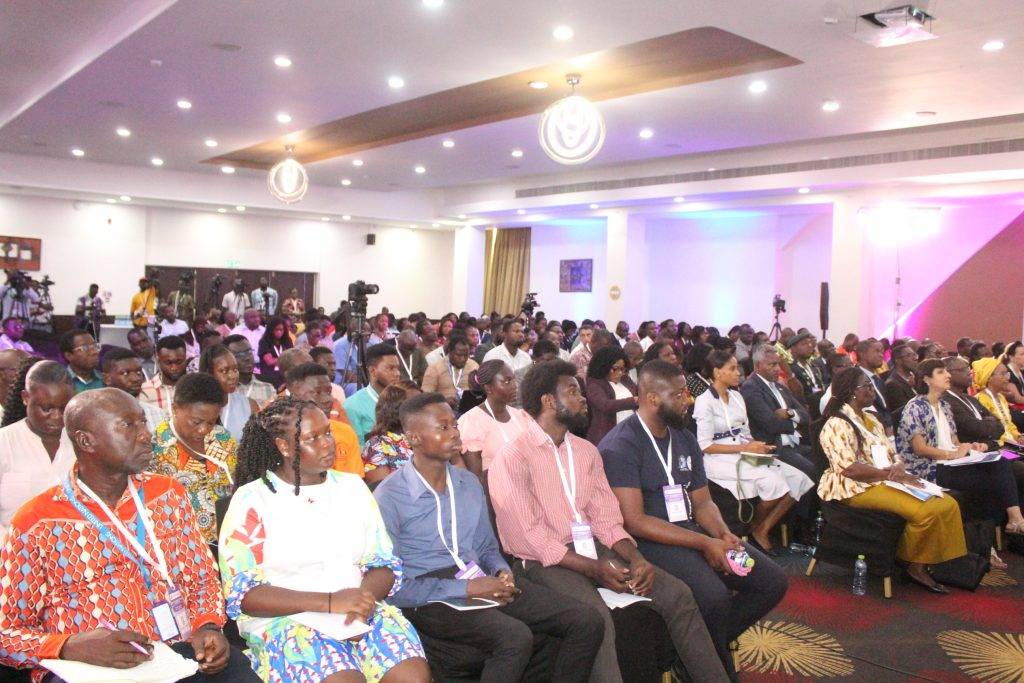
Mr Kwame Denkyira Afram, the Bono Regional Programme Manager of the AAG disclosed the figures when speaking at a forum to mark the 2025 celebration of the “16 Day Activism of Activism Against Gender-based Violence” campaign, held at Abesim, near Sunyani.
Every year in November, the Ministry of Gender, Children, and Social Protection (MoGCSP) launches and spearheads the campaign to raise awareness and promote action to eliminate violence against women and girls in the country.
On the theme: “The role of the community in protecting women and girls”, the Bono Regional Office of the Department of Gender with Support from AAG organised the forum.
Mr Afram regretted that violence against women and girls continue to be the most urgent and pervasive human rights violation, resulting in serious harm for individual women, families, communities and the broader society.
“Within the first quarter of 2024, it was reported that, there were 123 cases of domestic violence, with 67 percent of the victims being women.
Evidently, many of the attacks were tied to relationship failures and misunderstandings between couples, as the trend saw partners, particularly males, using murder as a means to get back their spouses, whom they believed cheated on them or failed to reciprocate their feelings”, he stated.
The nation had made significant progress over the past 30 years with strengthened laws, services and prevention strategies.
However, Ghana seems to be failing to eliminate violence against women which persists at alarming rates across the world, with one in three women experiencing violence across their lifetimes.
Deeply entrenched stereotypes, harmful social norms, weak implementation of laws, and inadequate resources are impeding progress with global crises like conflicts and climate change further intensifying the drivers of violence against women and girls.
“In fact, rapid technology change is creating new risks and increasing violence against women and girls across the online-offline scale”, Mr Afram stated.
According to the Department of Gender of the Ministry of Gender and Social Protection, about 32 percent of girls in the country between 15 years to 24 years believe that ‘wife beating’ is justified.
Mr Joycelyn Adii, the Bono Regional Director of the Department said a domestic violence survey conducted in 2016 revealed that 27.7 percent of Ghanaian women have suffered at least one form of violence.
She said outmoded and bad traditional practices and beliefs were also fueled by GBV, which remained inimical to the holistic growth and development of women and girls, saying: “harmful traditional norms remain a key barrier to the progressive growth of many women and girls”.
“When a woman is beaten, when a girl is assaulted, when a child is mistreated, the entire community feels the impacts because families are broken, children are traumatized, productivity declines, and poverty deepens”, Mrs Adii stated.
Protocols/Conventions
The target 5.2.1 of the United Nations Sustainable Development Goals (SDGs5) enjoins countries around the globe to eliminate violence against women and girls by 2030.
Just about five years to go, Ghana’s commitment towards achieving the set target for the global goals seem unconvincing.
Though the nation remains signatory to international conventions and protocols, forms of violence against all women and girls in the public and private spheres, including trafficking and sexual and other types of exploitation persist still.
Some of these protocols, like the African Union Convention on Ending Violence Against Women and Girls (AUCEVAWG) adopted during the 38th Ordinary Session of the Assembly of Heads of State and Government in February 2025 pushes Africa to eliminate GBV.
The AUCEVAWG is a comprehensive legal instrument for the prevention and elimination of all forms of violence against women and girls on the continent.
Besides, the Convention on the Elimination of All Forms of Discrimination against Women was adopted by the United Nations General Assembly, however, the GBV hid behind closed doors, and was often protected by silence, stigma, blame and harmful norms.
Way forward
GBV continued to be the most urgent and pervasive human rights violation, resulting in serious harm for individual women, families, communities and the broader society.
It isn’t a private issue, however a human right issue, a public health concern and a key development challenge.
The face of GBV is changing, manifesting in online attacks, cyberstalking, non-consensual sharing of images, body-shaming, threats, defamation and harassment.
Just like physical violence, digital violence also destroys confidence, dignity, mental health and opportunities too.
There is therefore the need for stakeholders to collectively dialogue and to bring out ideas and suggestions for the nation to put in place stronger strategies to tackle the growing concern of violence against women and girls.
More so, the nation ought to tackle head-on the persistence of outmoded traditional norms like widowhood rites and child marriage that impede the proper growth and development of women and girls.
Besides awareness creation, law enforcement remains the surest remedy for tackling the GBV in the country.
The civil society community, media, academia as well as the religious community must rise now and stimulate stakeholder support towards ending the GBV to provide decent space for survivors and other women and girls to thrive and achieve their full potential in life.
By Dennis Peprah
Source: GNA
The post Gender-based violence – a silent nightmare of many women and girls appeared first on Ghana Business News.
Read Full Story















Facebook
Twitter
Pinterest
Instagram
Google+
YouTube
LinkedIn
RSS