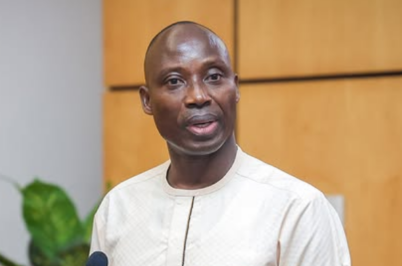
The Microfinance and Small Loans Centre (MASLOC), is considering the introduction of an electronic system for the disbursement of funds. This is to help reduce the difficulties associated with the current manual system where beneficiaries had to spend long periods before they can access loans. The acting Chief Executive Officer (CEO) of MASLOC, Mrs Sedina Christine Tamakloe Attionu, made this known during a familiarisation visit to the Ashanti Region to acquaint herself with progress of work there. Currently, disbursement of funds is done in two categories. One involves individual loans where cheques are issued directly to individuals. There is also a group loan where the leader of a group of 25 members is responsible for sharing funds to each member at a meeting place. Mrs Attionu, however, believed the system was beset with so many problems that could be avoided by the electronic disbursement system. On the challenges associated with the recovery of loans, she said steps had been taken to address the bottlenecks. She said loans taken from MASLOC were revolving funds and advised all beneficiaries to endeavour to pay back for other needy people in the country to benefit. Accompanied by the Ashanti Regional Manager of MASLOC, Mr Isaac Dekiayie and other MASLOC officials, the CEO visited the Atonsu Dompoase M/A Cluster of Schools to interact with two caterers who benefited from the intervention. The caterers, Mrs Lydia Norshie and Vida Donkor, said they had each been feeding 313 pupils at the Dompoase M/A Primary B and Dompoase M/A KG, respectively, under the school feeding programme. They said having benefited from the loan for six months, they were motivated to use the funds profitably and pay back for others to also benefit and advised all beneficiaries to do same. At Ejisu Besease, a Poultry Farmer, Ms Lydia Asare, also a beneficiary, told the CEO that she took a loan of GH¢8,000 to support her project and said it was currently producing 1,500 chicken and 25 crates of eggs every day. The CEO and her team also paid courtesy calls on the Ashanti Regional Minister, Mr Eric Opoku and the Kumasi Metropolitan Chief Executive, Mr Kojo Bonsu. She appealed to the Ashanti Regional Co-ordinating Council and the Kumasi Metropolitan Assembly to help MASLOC to acquire a parcel of land to set up a regional office to assist in its operations. Â
Although the home is supposed to be a safe haven for all those living in it, the lived experiences of inhabitants of some homes indicate a pathetic picture. The current reality is that some homes are under siege from gender-based violence. Not a single day passes without Ghanaians being inundated with stories of children, women and some men devastated by violence in the media. The last three years had seen rising cases of reported spousal murders. Several gory newspaper headlines had gripped Ghanaians with awe in the past. A few examples will suffice: “60-year-old driver kills wifeâ€; “60-year-old farmer arrested for killing wifeâ€; “Man sets lover ablaze, ends up burning to deathâ€; “Farmer chops off wife’s armsâ€; and “Man beheads girlfriendâ€. In 2011, most Ghanaians woke up to the painful experience of a house-help accused of conniving with armed robbers to attack her benefactor’s residence. Combatants at the battlefield even do not suffer the multiple injuries this poor house-help suffered. But the shocking reality is that these headlines constitute a tip of the iceberg! Most incidents of violence against women and children go unreported! Global Trend Globally, statistics on violence against women (VAW) show that one in every three women has been beaten, coerced into sex or otherwise abused in her lifetime; between 30 per cent and 60 per cent of ever-partnered women have experienced physical or sexual violence or both by an intimate partner, and according to the World Health Organisation (WHO), between seven per cent and 48 per cent of girls and young women  aged 10-24  report their first sexual encounter as coerced. VAW in Ghana A 1998 study on violence against women in Ghana put the prevalence of violence against women at par with the universal trend.  This means one in every three Ghanaian women has been beaten, coerced into sex or otherwise abused in her lifetime. These figures are buttressed by the yearly regional compilation from the Domestic Violence and Victim Support Unit (DOVVSU) of the Ghana Police Service, which indicates that violence against women is still unacceptably high. It is clear from the above statistics that some Ghanaian homes are under siege. The fate of victims/survivors who find themselves in such homes is even compounded. Adressing militarism Militarism is a belief that constructs a culture of fear and supports the use of violence, aggression or military interventions for settling disputes and enforcing economic and political interests. As a mindset, it has deleterious costs for the true safety and security of women and of society as a whole. Militaristic thinking creates otherness and privileges violence as an effective way to solve problems. When militarism is not challenged, it perpetuates hierarchies of power and grants impunity to perpetrators of violence against women. Addressing militaristic ways of thinking encourages more varied and nuanced ideas about genuine security, promotes inclusiveness for example bringing more women into public life, creates a world built not on the competitive sale of weapons, but on authentic relations of trust and cooperation. It is therefore imperative to address militaristic beliefs in all of our societies – homes, communities and the nation as a whole. It is erroneous to think of militarism only in the context of war. Ghana may play ostrich by believing it is an oasis of peace in a desert of conflicts. Let’s hope it is not a mirage! Militarism neither ends nor begins in war zones, nor does it confine itself to the public sphere. The families of militarised men and women may experience violence in their homes where ‘war crimes’ and armed domestic violence are hidden from public view. Is Ghana militarised? Responses to this question may differ in proportion to the different shades of political opinion we have in this country. Nevertheless, after all is said and done, it is the lived experiences of people that matter. Have we, for once, wondered how people live within the domestic setting of armed robbers, belligerent security officers, gun-wielding political activists and chiefs with gun-protected skins and stools? As we search for answers, maybe we may come to appreciate the rationale for the international theme for the 2013 16 Days Campaign  “From Peace in the Home to Peace in the World: Let’s Challenge Militarism and End Violence Against Womenâ€, and why the local theme’s focus on “Working with Men and Boys to End Violence in our Homes†is apt.Â
 Guinness Ghana Breweries Limited (GGBL), producers of Ruut Extra Premium Beer, Ghana’s first cassava beer, has presented a sponsorship package of GH¢27,500 to the Ministry of Food and Agriculture towards the organisation of the 2013 National Farmers Day. Solange Kuimo, Marketing Manager of Innovation – GGBL, revealed that the package included three tricycles, each to be awarded to the Best National Cassava Farmer, Best Regional Cassava Farmer and Best District Cassava Farmer. “In addition, the National Best Farmer will receive a monthly donation of two crates of Ruut Extra Beer for six months; the Best Fisherman will also receive a monthly donation of two crates of Ruut Extra Beer for six months. All 70 winners from the different categories will also receive three crates and branded shirts each of Ruut Extra Beer. Over 200 crates of GGBL’s assorted drinks, including Alvaro and Malta Guinness, have also been presented to the Ministry of Food and Agriculture to refresh farmers and dignitaries at the event,†Solange added. Preba Greenstreet, Corporate Relations Director, said “GGBL has been investing in local raw material sourcing for more than a decade working in partnership with local farmers, key government ministries and agencies, as well as researchers to help develop sustainable local raw materials for production. We are proud to recognise and support our farmers as we celebrate this year’s National Farmers Day. Ruut Extra Premium Beer was introduced in December 2012 to provide Ghanaian consumers a drinking experience that would enable them to demonstrate their national pride with a beer derived from our own soil. Since its introduction, Ruut Beer has been adored by many Ghanaians and adjudged the ‘Emerging Brand of the Year 2012’ by the Chartered Institute of Marketing Ghana (CIMG), a testament to the quality and impact it is making in local farming communities. Â
 Death has snatched away one of the most celebrated and iconic personalities that graced the world in the past century. Nelson Rolihlahla Mandela, a veritable idol in South Africa and hugely adorable figure worldwide, died at his home where he had been receiving medical care after a long battle with lung infection, the same health condition that killed his father when he was nine years. His death, coming weeks after his 95th birthday, has dealt a big blow to millions of loved ones. For millions who believe Madiba had lived a fulfilled life in age and achievements, it does not invoke any hard feelings. South African President, Jacob Zuma announced Mandela’s death on national television yesterday. “Our nation has lost its greatest son†Mr Zuma said. The former anti-apartheid campaigner and first democratically-elected President of South Africa had been rushed to hospital on many occasions since last December, but his unwavering spirit that enabled him to survive 27 years in jail, overpowered the icy hands of death, as he survived many bouts of emergencies until his condition got critical lately. The outpouring of well-wishes during those critical moments in hospital and the grief that his death, even at 95, has unleashed to the entire world are vivid testimonies of his celebrity status globally. Health status Since December 2012, Nelson Mandela had been hospitalised on many occasions, as he sought treatment for a recurring lung infection. Those occasions drew South Africans and well-wishers across the world to their knees in fervent prayer for his speedy recovery. After visiting Mandela in hospital on Sunday, June 23, 2013, South Africa President Jacob Zuma appealed to the nation and the world to pray for him, his family and the medical team. Madiba, as Mandela was widely called in South Africa, had had some other health problems in the past that were equally troubling. He underwent prostate surgery in 1985 and tuberculosis treatment in 1988 while he was a prisoner. Childhood and education Born on July 18, 1918 to Nonqaphi Nosekeni and Henry Mgadla Mandela, chief councillor to the paramount chief of the Tembu, Nelson Mandela spent his early childhood in the Transkei, being groomed to become a chief. In that respect, he was offered the best of education, having attended basic school at Clarkebury Boarding Institute where he obtained his Junior Certificate at and Healdtown, a Wesleyan secondary school of some repute, where he successfully matriculated. Thereafter, Nelson Mandela’s education was never smooth. While pursuing a Bachelor of Arts degree programme at the University College of Fort Hare, he was expelled for joining in a student protest. He managed to complete the degree programme though through the University of South Africa and went back to Fort Hare for his graduation in 1943. Later, Mandela enrolled at the University of the Witwatersrand for an LLB programme but he abandoned it in 1948 without graduating, perhaps, based on his confession that he was a poor student. Nelson Mandela started another academic pursuit through the University of London but again, he did not complete that degree programme. However, in 1989, while in prison, he was awarded an LLB by the University of South Africa, graduating in absentia at the school’s congregation in Cape Town. Civil rights activism The inability of Nelson Mandela to complete many of his degree programmes might be due to his utter abhorrence for the apartheid regime in South Africa and the strong desire to fight against same, rather than his confession of being a poor student. Spending his childhood in the Transkei where he was being groomed to become a chief, Nelson Mandela learnt about his ancestor’s valour during the wars of resistance and that inspired him to also join the freedom struggle of his people. As a young man, indeed, in his 20s, he had become actively involved in the anti-apartheid movement, but in that same early stage of his civil rights activism, he began paying the price for liberty after being expelled from the University College of Fort Hare for engaging in students protest. That punishment did not crackdown Madiba; it rather thrust him into the deep throats of civil rights activism, as he participated in the founding of the African National Congress (ANC) Youth League in 1944. His rise to the political pinnacle had begun fast and swift, as he became the ANC Youth League's national secretary in 1948, and two years later in 1950, he became its national president, rising further to become one of four deputy presidents of the ANC in October 1952. The apartheid regime, concerned about the growing turbulence on the political front, banned the ANC and the Pan Africanist Congress (PAC) in 1960. But Mandela channelled his energies into a different and wild form of civil rights activism, playing a lead role in the formation of Umkhonto we Sizwe, the ANC's armed wing, of which he became the first commander-in-chief, to launch an underground struggle. In spite of a travel ban on political activists, Mandela managed to outwit the security apparatus to travel outside the country during which period he underwent military training in Algeria and some other African countries. Mandela in Ghana The foreign trip of Nelson Mandela brought him to Accra, Ghana in April 1962, to take inspiration from Ghana’s first President Osagyefo Dr Kwame Nkrumah, who, as a leading voice of the liberation struggle in Africa, provided inspiration and support for the anti-apartheid struggle. Arrests and charges In the course of his civil rights activism, Nelson Mandela challenged the political establishment in many ways, leading to his arrest. In December 1952, he and 19 other activists were arrested and charged under the Suppression of Communism Act for their participation in the Defiance Campaign, a national protest against laws curtailing the freedoms of blacks, Indians and coloured people in South Africa. He was consequently sentenced to nine months' imprisonment with hard labour and later handed a six-month ban from attending meetings or leaving Johannesburg. Again, in December 1956, Nelson Mandela was among 156 political activists arrested and charged with high treason for pursuing a campaign leading to the adoption of The Freedom Charter in 1955. Later, Mandela joined seven other accused persons, including his close friend, Walter Sisulu, who faced charges of sabotage and conspiracy to overthrow the government in the Rivonia Trial in October 1963. But a profound statement he made at the trial received worldwide publicity. "I have fought against white domination, and I have fought against black domination. I have cherished the ideal of a democratic and free society in which all persons live together in harmony and with equal opportunities. It is an ideal which I hope to live for and to achieve. But if needs be, it is an ideal for which I am prepared to die," he remarked. All the eight accused persons were sentenced to life imprisonment on June 12, 1964, marking the beginning of a new life for Mandela on the Robben Island. Imprisonment In 1964, the exact year the Civil Rights Act was passed in the United States to reflect the growing consciousness of civil rights activism, and at a time when many African countries had been liberated from colonialism, the apartheid regime in South Africa sentenced Mandela to life imprisonment for championing the liberation of black South Africans. But his incarceration on the Robben Island did not silence him from upholding his convictions; neither did it erase his thoughts from the minds of freedom fighters, as he continued to keep close contact with ANC leaders, while well-meaning people, both home and abroad, rallied around a relentless campaign for his release and the liberation of South Africa. Many songs were composed in his name and for his release from jail. But the freedom struggle came at a huge cost as many people, including children, died in pursuit of freedom and justice. Notable among them were hundreds of innocent schoolchildren who were massacred in Soweto in 1976 while protesting against a directive that they could not be taught in their own language. Release and presidency After holding Mandela in prison for 27 years, the apartheid regime succumb to national and international pressure to release him, and in February 1990, Madiba walked out of the prison walls that had snuffed a greater part of his youthful life from him. He was subsequently released from jail on Sunday, February 11, 1990, and as a person destined to be great, he led the ANC to win the country's first multiracial elections in 1994 with an overwhelming majority. It is on record that Mandela’s inauguration as President attracted the largest number of world leaders since the funeral of former US President John F. Kennedy in 1963, a clear testimony of his international repute. In keeping to his promise and in a rare act exemplified by African leaders, he ruled for only one term in office as he handed over the baton to Thabo Mbeki in 1999 and plunged into a private life, mostly as a peacemaker. Peacemaker After his release from jail, Nelson Mandela played a key role in talks to end white minority rule in South Africa. The efforts he made in that regard, together with then President F. W. de Klerk, earned them a joint Nobel Peace Prize in 1993. With South Africa speedily getting out of the woods of apartheid, Nelson Mandela re-oriented his activism to making peace, using his huge influence and status as former President to mediate in civil conflicts in Burundi, the Democratic Republic of Congo and other countries. Marital issues After his expulsion from the University College of Fort Hare for engaging in a student protest, Nelson Mandela returned to his homeland but the Regent, furious about his conduct, decided to arrange a marriage for his adopted son with the view to ensuring that Mandela's life was properly planned. But Madiba was not enthused about the plot and so he fled to Johannesburg to begin a marriage with civil rights activism. Fleeing from that arranged marriage did not in any way mean Mandela disliked women. Indeed, he married three times, an indication that he had a soft spot for women. First, he married Walter Sisulu’s cousin Evelyn Mase, a nurse, in 1944. They had four children - two sons (Madiba Thembekile ‘Thembi’ and Makgatho) and two daughters both called Makaziwe. After 11 years of marriage, Mandela and Evelyn separated in 1955 and finally divorced in 1958. In that same year, even as Mandela continued his civil rights activism and was facing trial, he could still reserve some attention for the beauty of a woman, as he got married to Winnie Madikizela, a social worker. They had two daughters - Zenani and Zindziswa. But that marriage was largely procured in absentia as Mandela served a life imprisonment on the Robben Island, incarceration that kept man and wife apart for 27 years. The couple eventually divorced in 1996, six years after Mandela had been released from prison and two years into his tenure as first democratically-elected President of South Africa. Nelson Mandela contracted his third and final marriage in a unique style as he married Graca Machel, widow of late Mozambican President Samora Machel on his 80th birthday in 1998. Retirement After devoting all his life to the service of mankind, Nelson Mandela officially retired from public life in June 2004. He made his last public appearance during the final match of the 2010 World Cup in South Africa. There is no doubt that Nelson Mandela was a great man in his generation, and as the world mourn him, it is expected that his memory would inspire a deep sense of freedom, justice, peace and unity among all mankind. As he once said: "Death is something inevitable. When a man has done what he considers to be his duty to his people and his country, he can rest in peace. I believe I have made that effort and that is, therefore, why I will sleep for the eternity." Writer’s Email: [email protected] Â

 All roads lead to Sogakope  in the South Tongu District of the Volta Region today as the nation sets to honour its gallant farmers and fisher folks for the critical role they play in feeding the nation. The National Farmers Day celebration instituted in 1985 is aimed at recognising and rewarding hardworking farmers for their contribution to national development. To acknowledge this important role of farmers who ensure that there is food on our tables every day, the government has since 1988, set aside every first Friday in December as a national holiday to honour our farmers. Winners In all, 70 farmers selected throughout the country will be honoured at the national durbar. The overall winner will take home a fully furnished three-bedroom  house to be built  by the Agricultural Development Bank (ADB), and sited at the winner’s choice of location  while the first-runner up takes home a tractor and its accessories sponsored by the EDIF. The second runner-up receives a double cabin Pickup donated by Stanbic Bank. Aside the national event at Sogakope, it is anticipated that the day will be observed throughout the remaining nine regional capitals, as well as metropolitan, municipal and district capitals. At all these celebrations, deserving farmers will be awarded various prizes and certificates as a way of saying thank you and to boost their morale to continue to serve the nation. Theme and significance This year’s celebration is on the theme: “Reducing Post-harvest losses for sustainable food security and nutritionâ€. The theme is timely as farmers, especially those producing the staple foods such as maize, yam, rice, groundnuts sorghum among others look on helplessly as their toil waste away on a yearly basis, thus, threatening food security in the country. It is important that as government works towards reducing post-harvest losses, it addresses the problem holistically and go beyond improving the on-farm productivity to addressing other complimentary areas such as good road network to farmlands, ensuring fair prizes of farm products, and affordability of agro-products such as insecticides, pesticides, among others in the agribusiness. It is estimated that Ghana experiences annual post-harvest losses between 25 and 30 per cent of total agricultural produce for all staple food crops. So, by addressing a reduction in post-harvest losses, Ghana will be matching towards increased food availability for consumption and excess to sell. The selection of Commodore Steve Obimpeh (rtd) as the Chairman of the planning committee of this year’s celebration could be described as “all hands on deskâ€. Indeed, it is gratifying to note that Commodore Obimpeh was once the Minister of Food and Agriculture and he being the Chairman of the committee, he might have brought lots of experience to bear on the various decisions taken to make the celebration a memorable one. Who wins the ultimate? As we anxiously wait for events to unfold, all eyes will be on which of the selected farmers penciled to pick awards will take home the ultimate prize of a fully furnished  three-bedroom house in addition to other mouth-watering prizes. Role of corporate bodies It is worthwhile to note with satisfaction the contribution of corporate bodies over the years towards the successful celebration of the day. There is a long list of sponsoring companies and institutions towards the celebration of the day, however, the Agricultural Development Bank (ADB) can be singled out for mentioning for its consistent support of the celebration with substantial contributions including the hosting of the cocktail reception in honour of the farmers, the farmers forum in its fourth year this year and also a two-bedroom house for the winner since 2001. At this year’s cocktail, the Managing Director of ADB, Mr Stephen Kpordzi, reaffirmed the commitment of ADB to continue to support the day. Hope for the future There is hope for agriculture in the future and it is reassuring to see the President of Ghana, Mr John Dramani Mahama, assuring the farmers of far-reaching programmes the government is putting in place to ensure sustainable agricultural development in the country. At the cocktail, the President addressed the concerns of practically all the sectors of agriculture; the provision of improved seeds, subsidised fertiliser, subsidised tractors, expanded irrigation programme, reduction of  poultry imports, support for aqua-culture among others. Youthful involvement One good reason why we should all celebrate this day is the fact that more and more youth are venturing into the agricultural sector unlike the previous years when farming was seen as a preserve for illiterates and the poor. This, President Mahama acknowledged, when he said, “I am encouraged by the growing youthful age of the persons who are coming to receive farmers awards in recent years. It shows a generation change that agriculture is no longer a profession meant for our grandfathers and mothers.†Congratulations As we celebrate the 29th edition of the National Farmers Day, all Ghanaians with one voice should congratulate our worthy farmers on holding firm the food basket to ensure that it does not fall to the ground. Â
The Commercial Division of the High Court yesterday gave the Kumasi Metropolitan Assembly (KMA) five days to vacate the Kejetia Bus Terminal which it took over from Freko Enterprise. The court, presided over by Mr Justice Emmanuel Amo-Yartey, also gave the assembly the same period to purge itself of contempt before it could come back to argue an instant case seeking to maintain its presence at the terminal. The court, however, refused to grant a request by Freko Enterprise to strike out an application by the KMA which is seeking to dismiss Freko’s case that the assembly had wrongfully taken over the management of the terminal. Ruling on a preliminary objection raised by counsel for Freko Enterprise on the legitimacy of the KMA to file the application before the very court whose earlier order the assembly had refused to obey, Mr Justice Amo-Yartey said it was important that the order it gave on November 13, 2013 was obeyed before the assembly could come back to fight its instant application. According to the judge, if the sanctity of the court was to be maintained, no one should be allowed to treat its orders with impunity. Mr Justice Amo-Yartey stated that there was evidence before the court that the injunction order was served on the assembly, adding, “He who comes to equity must come with clean hands.†That notwithstanding, he said, the court would not strike out the instant application filed by the KMA, as requested by Freko Enterprise. Mr Richard Appiah- Nkyi, counsel for Freko Enterprise, had argued before the court last week on the striking out of the KMA application, saying the assembly was already in contempt for refusing to obey the order of the court to vacate the terminal. Counsel also pointed out that the assembly did not come properly before the court, having failed to abide by the limited injunction on November 13, 2013. Mr Appiah-Nkyi further argued that having failed to vacate the terminal as directed by the court, the KMA had treated the court with contempt and could, therefore, not go before the same court to pray for the granting of an order. In his reply, lead counsel for the KMA, Mr Thaddeus Sory, said the application they brought before the court was properly laid and, therefore, called for the dismissal of the objection raised by the lawyer for Freko Enterprise. He further stated that the defendant (Freko Enterprise) should have come by formal application and not verbal objection.
 The Obuasi police last Wednesday fired volleys of tear gas and warning shots to disperse hundreds of protesting youth of Anyinam, a community near Obuasi, who were demonstrating against Anglo Gold Ashanti (AGA) Obuasi Mine over lack of power supply to the community. For more than four hours, the police had to battle rampaging youth who burnt tyres and barricaded the entrance to the Kwesi Mensah Shaft to prevent workers of the company from going in or leaving the mining area. A police Toyota Land Cruiser vehicle had the windscreen smashed. The Obuasi Divisional Police Commander, Assistant Commissioner of Police (ACP), Mr Kofi Dwumfour-Berchie, said that the police had no choice but to fire tear gas and warning shots to control the mob. “For now, they have dispersed but we will continue to monitor the situation to prevent unwanted development, “ he told the Daily Graphic. Seven of the protesters were arrested by the police and the angry youth vowed to use all means available to them, including getting back to the streets, to force the police to release them. The protestors said the community had a 70-year-old agreement with the mining giant, which mandated  the company to bear the cost of electricity supply to the entire community. Recently, the company replaced the old transformer, resulting in power outages. Worse of all, for about two weeks, the community had not enjoyed electricity supply, a situation which angered the youth and drove them onto the streets in protest. Anytime the protesters were dispersed by the police, they would regroup and march on to the streets. Attempts by the Daily Graphic to speak to the General Manager (Public Relations ) of the AGA did not materialised  as management was locked up in a marathon meeting. Â
 Six people died and several others injured in six separate accidents within a week on the Odorkor -Kwashieman Highway in Accra. In the first accident which happened around the Kwashieman Traffic Light intersection, a Hyundai Elantra mini saloon car moving from Lapaz towards Sowutuom ran into two persons sitting on the pavement. Yussif Abass, 36, died while on admission at the Korle Bu Teaching Hospital, while Kwesi Nyamekye, 25, is receiving treatment at the same hospital. In the second incident which happened last Tuesday around 7:00 p.m, a 60-year-old man was ran over at Mallam Junction by a KIA Rio salon car. The victim was rushed to the Korle Bu Teaching Hospital but he died the following day. Last Thursday, a one-and-half-year old boy, identified as Gabriel Acquah, was ran over by a hit-and-run vehicle when the child emerged from a house at Odorkor Tipper Junction. He also died while on admission at the Cocoa Clinic in Accra. The fourth incident happened around the Kwashieman Traffic Light when a Toyota Echo ran into two men as the car collided with an unregistered Lefan motorbike. The victims were rushed to the Korle Bu Teaching Hospital but they were pronounced dead on arrival. The bodies of the deceased have since been deposited at the Korle Bu Teaching Hospital and Police Hospital morgues. Two other accidents that occurred on the highway resulted in the injury of several other people. Odorkor MTTU boss Briefing the Daily Graphic, the Head of the Odorkor Divisional Motor Traffic and Transport Unit (MTTU), ASP Abdullai Mumuni, expressed worry about the spate of accidents on the highway. He noted that the situation was alarming since Christmas was fast approaching. “If more than six accidents could occur and kill six people within a week, leaving several others injured, then what should one expect during Christmas?â€, ASP Mumuni asked. He attributed the accidents to reckless driving in recent times, saying it was the cause of numerous accidents on the roads. Advice to Drivers ASP Mumuni advised drivers who plied the two highways to drive cautiously and avoid speeding, adding, “that would help reduce further occurrences.†Wrong packing of Articulated Trucks In a related development, ASP Mumuni cautioned articulated truck drivers who packed on the edge of the Odorkor-Kaneshie road to desist from that practice. He said for the past two years, the road along the area had become a death threat to both drivers and pedestrians who plied the route, adding that pedestrians usually found it difficult to cross to the other side of the road. ASP Mumuni recounted several accidents that had occurred due to the situation. A resident who spoke to the Daily Graphic registered his anger and fear about the situation. Mr Fred Quaye, a consultant, remarked that the lives of the residents were in danger. He called on the appropriate authorities to come on board and assist the police to bring the situation under control. Â
The Vice-Chancellor of the Valley View University (VVU), Prof.  Buor, has observed that the problem of developing countries is not the lack of natural or human resources but integrity. He said it was against that background that Adventist education went beyond preparing students for life to preparing them to build a character based on morality and spirituality. The Vice-Chancellor, who made the observation at the fourth matriculation ceremony of the Techiman Campus of the VVU in the Brong Ahafo Region, indicated that the university was making significant progress in academia.  He explained that the January 2013 ranking of universities by the 4 International Colleges and Universities (4icu) ranked the VVU the fifth best university and the best private university in the country. A total of 1,196 fresh students, comprising 892 males, representing 74.58 per cent, and 304 females, making 25.42 per cent, were matriculated, bringing the student population on the campus to 3,200. This year’s enrolment falls short of the 2012 figure of 1,461 by 18.13 per cent, while the enrolment of distance and sandwich students dropped significantly. The VVU Techiman Campus was started on July 2009 after the Techiman Secondary/Technical School had been phased out. Prof. Buor said to ensure the maximum use of residential facilities, efforts should be made to increase the admission of regular students, adding that those admitted had the privilege of holistic education which should prepare them for life. He explained that the university prosecuted an educational philosophy that embraced a person’s whole development, saying, ‘‘This involves the harmonious development of the physical, mental and spiritual faculties of a person which, indeed, subsumes character development.’’ Prof. Buor pointed out that education had generally emphasised the academic dimension to the neglect of the spiritual development. ‘‘This is partly evident in the prizes awarded during speech days of pre-tertiary schools and congregations of universities in which academic performance is the emphasis,’’ he said. The Rector of the Techiman Campus of the VVU, Prof. J.K. Osei, noted that the campus was making a significant impact on the Techiman community in several respects, saying that within its four-year existence, it had embarked on a number of interventions to improve teaching, learning, research and extension in its agribusiness programme. That, he explained, included a 10-acre citrus plantation which had started bearing fruits, a fish pond with actively growing tilapia, a poultry unit providing eggs for the students, as well as an apiculture and mushroom units currently under construction.
Smuggling of cocoa beans across the eastern borders of the country is on the increase. This is because of the price differential between what Ghana pays for a kilogramme of cocoa beans and what Togo pays. A number of foreign agents have invaded the country to entice local cocoa farmers to sell their produce to them at prices between GH¢150.00 and GH¢400.00 or mortgage their farms to them for a period ranging from three to eight years. Daily Graphic investigations revealed that while Ghana paid GH¢3.39 for a kilogramme of cocoa beans the same quantity  was sold at GH¢4.30 across the eastern border. They said it was easier to send the produce across the border where there was ready market than to carry it over long distances across difficult terrain to the local cocoa sheds. Members of the Cocoa Board Education Team on tour of the region chanced upon a group of smugglers carrying bags of cocoa on motorbikes at Kute in the Jasikan District towards the border. They managed to scare the smugglers, who dropped the produce and took to their heels only to return armed to attack the carriers engaged by the team to carry the bags of cocoa for sale in Ghana. The smugglers succeeded in overpowering the carriers, beat them up and eventually took the produce from them and crossed the border to Togo.  In another development, the education team seized a large number of bags of cocoa from other smugglers on the Atikpui-Nyive road in the Ho West District, which they deposited at the Produce Buying Company shed at Hohoe. Mr Prosper Zegblah, the Volta Regional Manager of the Produce Buying Company (PBC) shed at Hohoe, confirmed this last Wednesday, and said there was an increase in smuggling of cocoa across the eastern border.  Mr Zegblah noted that the practice would jeopardise ther realisation of this year's estimated target of 75,000 bags of cocoa. He said during the period  2009/10, when smuggling was at its peak, the company purchased only 8,000 bags but a year later, when the price was increased, this shot up to 45,000 bags and it increased further to 60,000 bags in 2012. He said the increase informed the estimate of 75,000 bags for this year. " But we fear that with the rate at which the smuggling is going on, we might not achieve the target, " he lamented. Mr Zegblah called on local cocoa farmers to consider the various interventions being offered them by the government to improve their living conditions. He mentioned such interventions such as the provision of potable water, schools and good roads, health facilities, free mass spraying exercise on their farms and scholarships for their children. While advising the farmers to desist from mortgaging their farms to foreigners since they rather stood to lose in the future, the regional manager appealed to the security agencies, especially the timber task force, which is tasked to check smuggling of timber, to also check the smuggling of cocoa.
The Volta Regional Minister, Mr Joseph Afotey-Agbo, has advocated a stronger church — community relations to rid the country of crime and other social vices. He described as worrying the increasing involvement of the youth in crimes such as armed robbery, fraud, cybercrime and ocultism and stressed the need for a concerted effort to combat those negative developments. The regional minister was addressing the 125th anniversary celebration of the Evangelical Presbyterian Church and School at Dzelukope in the Keta Municipality last Sunday. The celebration, which was on the theme:â€Rebuilding the Walls of Dzelukope E.P. Church and School,†was also used to raise fund to undertake some developement projects in the church and school. The church, since its establishment, had, through hard work, strived to shape and impart Christian ideals, virtues and values. At the social front, the church had established health institutions and schools from the basic to the tertiary level, among them is the first university in the Volta Region — the EP University College — which have helped to transform the socio-economic fortunes of the people. He said while the government was committed to fighting crime, and would put various security measure in place to discourage such negatives, it was the duty and responsibility of the church to focus on the moral and spiritual development of the people, particularly the youth. Mr Afotey-Agbo took a swipe at charlatans and so-called men and women of God whose immoral and unacceptable lifestyles and conduct destroyed the very foundation they claimed to be building. He, therefore, urged Christians to spearhead the crusade against those vices through the teaching and inculcation of Christian values. The regional minister commended the chuch, saying the EP Church, since its inception,had  transformed society. “The church’s contribution to education and various economic enterprises have greatly assisted to uplift the living standards of our people,†he said. Preaching the sermon, a former Synod Clerk of the EP Church, Rev. L.J.K. Dzakpasu, called on the people to honour their tax obligations since those taxes would be used by the government to undertake development projects. A Senior Presbyter of the church, Mr Fred Kobla Gobah-Tengey, called on the past students of the school to pay their dues to their alma mater.
Construction of a water facility to produce underground water to support the country’s offshore oil operations is expected to commence at Axim. The move is to halt the current importation of water from neighbouring countries at a high cost to support the offshore oil operations which require large volumes of water daily. A group of Ghanaian companies have pooled their resources and  have formed a company known as  the Offshore Water Services Ltd (OWSL) to undertake the project, with its membership drawn mainly from Ghanaian companies in the Ghana Oil and Gas Service Providers Association (GOGSPA). Water is one of the very important ingredients required for various purposes during drilling. However, the available  volume  of  water required by the jubilee operations and other fields is said to be woefully inadequate to meet offshore demands. The project, which would be sited on a five-acre plot, is in partnership with the host community, and upon completion, it will have a storage capacity  of producing 10,000 cubic metres at a daily delivery rate of 5,000 cubic metres. Speaking to the Daily Graphic, the Executive Director of the  Ghana Oil and Gas Service Providers Association (GOGSPA), Mr Nuetey Adzeman, said to meet the demands, supply vessels were left with no other choice than to lift water from neighbouring countries. The twin-city of Sekondi/Takoradi, he said, was better placed to supply water to the offshore operations. However, the demand to satisfy the needs of domestic consumers left little or nothing for offshore operations. “As a result of water shortage in the Sekondi-Takoradi Metropolis, supply vessels go to  Cote d’Ivoire to lift water to service the offshore demands at a very high cost to the government of Ghana and the international oil companies,†he said. That, he said, defeated the spirit of promoting local content and local participation in petroleum activities as prescribed previously in the Petroleum Exploration and Production Act, 1984 (PNDC Law 84) and now Petroleum (Local Content and Local Participation) Regulations 2013 (L.I 2204). He said  the construction and drilling aspects of the project would start in January 2014 and the facility inaugurated at the beginning of  the second quarter of 2014. This project is intended to complement the efforts of the Ghana Water Company Limited (GWCL) in the delivery of water by taking the pressure of supplying to the offshore industry and rather enable them to concentrate on servicing domestic users. The project, he said, when completed, would create wealth for stakeholders and employment for the community.
  The Catholic Archbishop of Freetown, Most Rev. Dr Edward Tamba Charles, has urged members of the Knights and Ladies of Marshall, a Catholic friendly society, to be shining examples and soldiers of Christ. “I congratulate you and assure you of my maximum support and prayer. Be true role models of the Catholic faith and work as shining examples, as true soldiers of Christ in the evangelising process,†he said He described as laudable the fundamental principles of the Noble Order,—unity, charity, fraternity and service— which are prerequisites for the development of one’s spirituality. Most Rev. Charles said this in a homily at a thanksgiving Mass to climax the consecration of the new Council and Court of the Knights and Ladies of Marshall at the St Anthony Catholic Church, Freetown, Sierra Leone. Present at the Mass were the Supreme Knight of the Knights of Marshall, Sir Kt Bro. Joseph Ekow Paintsil, his Deputy W/B, Ernest Amoako Arhen, the Grand Lady of the Ladies of Marshall, Most Respected Lady Sis. Margaret Yirenkyi, her deputy, Respected Lady Alice Ayebi and about 200 Marshallans from Ghana, Liberia, Togo and Sierra Leone. Also present included Past Supreme Knight, Sir Kt Bro. James Adomako, Most Respected Ladies, Sisters Dame Theresa Pobee and Victoria Yellu, all from Ghana. Advice Most Rev. Charles stressed on the need for Christians to prepare themselves adequately for the arrival of the Lord Jesus Christ so that they could give a good account of their stewardship. “The time has come for Christians to change the course of their lives by doing what is pleasing to Him,†he advised. Most Rev. Charles appealed to the Marshallans to assist in promoting vocation, as well as organising a viable laity council in the Catholic Archdiocese of Freetown. In his remarks, Sir Kt Bro. Paintsil thanked Archbishop Charles and the Catholic Archdiocese of Freetown for their encouragement and support which had culminated in the establishment of the first Council and Court in Sierra Leone. He told the congregation that the fundamental principles of the Noble Order had found expression in all activities – through united activities, networking, intensification of fraternal relations and the rendering of charity to the poor and needy by all operating councils and courts in Ghana, Togo, Benin, Liberia, the United Kingdom, and now Sierra Leone, with an estimated membership of about 10,000. He invited the congregation, especially the youth to,  among other things, consider joining the Noble Order to experience the benefits associated with the Noble Order’s inspired fundamental principles of unity, charity, fraternity and service. At the Mass, the new Grand Knight, Bro. Thomas W. Tingan and Noble Lady Sis Rachael Abie Parker presented a church organ with combo and US$1,000 cash to the church. The hierarchy of the Noble Order also presented an undisclosed amount to support ongoing projects.  Â
Mrs Rani Melwani, a Director of Melcom Group of Companies presenting the keys to an ambulance  worth $36,000 to  Air Vice Marshal Mathew Quarshie, Chief of Defence Staff. Looking on are Mrs Sonyia Sadhwani, Director of Brand Management of Melcom (right), Mr Ramesh Sadhwani, Joint Group Managing Director of Melcom (extreme right), and Mr Godwin Agnorbor, Director of Communications of Melcom Group . The ambulance presented to the 37 Military hospital is the company’s  contribution towards healthcare delivery. The presentation is also in appreciation of what the role the hospital played during the collapse of a building housing the Melcom store at Achimota a year ago.
 The Minister of Water Resources, Works and Housing, Mr Collins Dauda, has attributed the collapse of buildings in the country to the use of poor building materials by contractors. He observed that in most cases the kind of building materials used by contractors were not up to standard and were cheap. Mr Dauda made those remarks when he addressed participants in the annual general meeting of the Architectural and Engineering Services Limited (AESL) in Accra. The minister further challenged contractors to use locally manufactured materials in their works to reduce the cost of building. Mr Dauda said a study had revealed that the use of local materials in the construction of public buildings brought the cost of the project down by 30 per cent. To this end, the sector minister tasked the executive of the AESL to put in place a contract document that compelled contractors to use local materials in their works. Mr Dauda was optimistic that patronising local materials would also create jobs for many Ghanaians, to reduce  unemployment. Ministry’s support to improve local building materials He stated that minority was prepared to support and partner the AESL to improve the quality of local building materials and designs for global competitiveness. He assured the AESL of the government’s commitment to address the delay in the payment of consultancy fees by the government, ministries, department and agencies. AESL accepts challenge of the minister The Managing Director of AESL, Mr Louis Satchmo A. Atongo, stated that his outfit had accepted the challenge of the minister and had already put in measures to address the issues. Mr Atongo indicated that the company had invested substantially in technological infrastructure and hoped to improve architecture in the country in the years to come. He added his voice to the call on engineers and contractors to use standard materials in their building projects. Â
 CDH Financial Holdings (CDH) has presented a cheque for GH¢150,000 to sponsor the building of an infrastructure for  Internet connectivity at the Ghana Armed Forces Command and Staff College. Making the presentation, Group Chief Executive of CDH, Mr Emmanuel Adu-Sarkodee, explained that no modern activity could be undertaken without the incorporation of Information and Communication Technology. He said CDH, therefore, did not hesitate to support the college when the request came through. He explained that the amount was to cover the cost of building an infrastructure which would enable a wireless Internet access to cover the entire campus premises. The Commandant of the College, Air Vice Marshal Issifu Sakib Kadri, expressed his gratitude on behalf of the Ghana Armed Forces Command and Staff College to the management of the CDH for the support. He also pledged that the infrastructure, when completed, would be maintained for generations to come, and assured the CDH management that their support was great relief to the college. The Ghana Armed Forces Command and Staff College is a key training institute for  officers of the Ghana Armed Forces, as well as officers from other countries. Â
International Needs Ghana (ING), a non-governmental organisation (NGO), has observed that wife-inheritance, a traditional practice under which widows are forced to marry their brothers-in-law, is outmoded. The practice, the NGO says, is as outmoded as the ‘trokosi’ system, which is also a traditional religious practice where virgin girls serve in shrines to atone for the crimes committed by a family member. It has, therefore, called for wife-inheritance to be scrapped. Mrs Patience Vormawor, ING’s Programmes Manager, Research and Documentation, was addressing a day’s workshop on the rights of women, children and other vulnerable groups for about 50 traditional, religious and opinion leaders and women’s rights advocates at Adidome. International Needs Ghana is a child and women’s rights advocacy NGO. Under the wife-inheritance system, the widow’s new husband, brother or relative of the late husband, takes over all property of the deceased. Mrs Vormawor said a widow must have the absolute freewill to choose her next lover and have the right of property of her late husband according to prevailing inheritance laws. The workshop was organised by ING with support from the Australian Agency for International Development (AUSAID) and International Needs, Australia. Participants were from the Ketu-South and Keta municipalities, Ketu-North, Akatsi-South, Central-Tongu, North-Tongu and South-Tongu districts of the Volta Region. It was to empower participants on women and children’s rights issues towards the elimination of debasing, dehumanising and destructive practices affecting women and children.    Mrs Vomawor said such inheritance marriages placed many women in difficult situations and in some cases, they contracted Sexually Transmitted Diseases (STDs).    She urged community leaders to show concern for women and children as their predicaments reflected the well-being of families and the community at large. Mrs Vomawor expressed worry that the Trokosi system was still in practice. She took participants through some of the dehumanising practices women and children suffered and the national and internationals rules banning them. Mrs Vomawor said children and women must be given the right environment to develop their potentials. Mr Raphael Suglo, Director, Commission on Human Rights and Administrative Justice (CHRAJ), South- Tongu District, cautioned traditional authorities and their courts to stay off cases regarding defilement, rape, incest and other human rights related litigations reserved for the national agencies and courts. He said assembly members and religious leaders were also forbidden from such cases. Mr Suglo taught participants lessons on Inheritance Law, Child Labour and Human Trafficking and asked them to report all child abuse and similar cases to the police, CHRAJ or the department of social welfare.   Mr Sylvanus Adukpo, ING Programme Manager in charge of Gender and Empowerment, said the phenomenon of teachers impregnating pupils was an issue that needed to be addressed as it hindered the progress of girls. An eight-member Women’s Rights Advocacy Committee, including chiefs, is to be formed in all the 17 communities which sent delegates to the workshop. — GNA
The government has ordered the immediate suspension of the Anti-Piracy Textile Task Force established by the Ministry of Trade and Industry to clamp down the rising sale of pirated textiles on the Ghanaian market. The new twist described by the Textile Workers Union as unfortunate, followed a clash between members of the 17-member task force and some traders at Makola, in the Central Business District (CBD) in Accra this week. The Deputy Minister of Trade and Industry, Nii Lantey Vanderpuije, announced the new directive when he met with the textile retailers at the Makola Market. Earlier, during an interaction with President John Mahama and the Minister of Gender and Social Protection, Nana Oye Lithur, the Greater Accra Regional Market Queen, Madam Mercy Needjan, appealed to the President to intervene in the seizure of their textiles, since the traders were losing their livelihood. Consequently, the President announced the immediate suspension of the work of the task force and gave the traders a three-month moratorium to learn to decipher between the pirated textiles and the genuine ones. Riding on the back of the President’s directive, Nii Vanderpuije announced the suspension of the work of the task force.
President John Mahama has arrived in Paris, France to news of the death of former South African President Nelson Mandela. Mr. Mahama who is  attending a two-day summit on peace and security in Africa spent the early part of his arrival in Paris to finalise a short piece in celebration of Mandela and published by the New York Times. FULL ARTICLE BELOW For years, it seemed as though only one photograph of Nelson Mandela existed. It showed him with bushy hair, plump cheeks, and a look of serious determination. But it was a black-and-white shot, so grainy it looked ancient — a visual documentation of an era and an individual whose time had long passed. In the early 1960s, fed up with the systematic oppression and inhumane treatment of indigenous Africans, Mandela successfully proposed a plan of violent tactics and guerrilla warfare, essentially forming the military wing of the African National Congress. Within a few years, this martial division, aptly named Umkhonto we Sizwe or Spear of the Nation, was discovered and its leadership detained. In 1964 Mandela was found guilty of sabotage, and ordered to serve a life sentence. During his trial, in lieu of testimony, he delivered a speech from the dock. “I have cherished the ideal of a democratic and free society in which all persons live together in harmony and with equal opportunities,†he said. “It is an ideal which I hope to live for and to achieve. But if need be, it is an ideal for which I am prepared to die.†I was 5 years old when Nelson Mandela became prisoner number 46664, and was banished to spend the remainder of his years on Robben Island, five square miles of land floating just north of Cape Town. Robben Island had been the site of a colony for lepers, a lunatic asylum and a series of prisons. It was a place of exile, punishment and isolation, a place where people were sent and then forgotten. But the haunting image in that photograph did not let us forget. In the 1970s, I was a member of the African Youth Command, an activist group that protested against social and political injustices. We idolized Mandela. We hung posters of that photograph in our dormitory rooms; we printed it on pamphlets. We refused to let Mandela fade into irrelevance; we marched, held demonstrations, staged concerts and boycotts, signed petitions and issued press statements. We did everything we could to decry the evils of apartheid and keep his name on people’s tongues. We even burned effigies of John Vorster, Jimmy Kruger and other proponents of that government-sanctioned white supremacy. Freedom on the African continent was a reality for which we were willing to fight. Nevertheless, I think we’d resigned ourselves to the likelihood that Mandela would remain a prisoner until his death, and South Africans would not experience equality until well after our lifetimes. Then on Feb. 11, 1990, the miraculous happened; Mandela was released. The world was spellbound. We wondered what we would do if we were in his shoes. We all waited for an indescribable rage, a call for retribution that any reasonable mind would have understood. Twenty-seven years of his life, gone. Day after day of hard labor in a limestone quarry, chipping away at white rock under a bright and merciless sun — without benefit of protective eyewear — had virtually destroyed his tear ducts and, for years, robbed Mandela even of his ability to cry. Yet, the man insisted on forgiveness. “To go to prison because of your convictions,†he said, “and be prepared to suffer for what you believe in, is something worthwhile. It is an achievement for a man to do his duty on earth irrespective of the consequences.†By the time I finally came face to face with Nelson Mandela, he had already been awarded the Nobel Peace Prize and elected president of a land in which he and all other black people had previously been refused suffrage. He had become an icon, not only of hope, but also of the possibility for healing. I was relatively new to politics then, a member of Parliament and minister of communications. It was my first time in Cape Town. I had stayed out late with friends and was waiting to take the lift up to my hotel room. When the doors opened, there was Mandela. I took a step back, and froze. As he exited, Mandela glanced in my direction and nodded. I could not return the gesture. I couldn’t move, not even to blink. I just stood there in awe, thinking: here was the man for whom we had marched, sung and wept; the man from the black-and-white photograph. Here was the man who had created a new moral compass for South Africa and, as a matter of course, the entire continent. It is no coincidence that in the years since Mandela’s release so much of Africa has turned toward democracy and the rule of law. His utilization of peace as a vehicle of liberation showed Africa that if we were to move beyond the divisiveness caused by colonization, and the pain of our self-inflicted wounds, compassion and forgiveness must play a role in governance. Countries, like people, must acknowledge the trauma they have experienced, and they must find a way to reconcile, to make what was broken whole again. That night, as I watched Mandela walk past me, I understood that his story, the long walk to freedom, was also Africa’s story. The indignation that once permeated our continent has been replaced by inspiration. The undercurrent of pessimism resulting from the onslaught of maladies — wars, coups, disease, poverty and oppression — has given way to a steadily increasing sense of possibility. It wasn’t just Nelson Mandela who was transformed during those years of his imprisonment. We all were. And Africa is all the better because of that.Â
The Savannah Accelerated Development Authority (SADA) has presented five motor tricycles with accessories valued at GH¢16,500 to farmers in the Northern,Upper East,Upper West, Brong Ahafo and Volta regions. The gesture is also to support the efforts of the farmers towards addressing the challenges of food insecurity in the five beneficiary regions. At a ceremony in Tamale to present the facilities to the farmers through the Ministry of Food and Agriculture (MOFA), the Director of Corporate Affairs of the SADA, Mr Sam Danse, stated that this year, through its Agricultural Input Support Programme, the SADA had supplied 25,415 varieties of improved maize, rice, soya seeds and fertilizers to farmers in the beneficiary regions. He said tractor and agronomic advisory services were also provided to smallholder farmers as a way of increasing their farm yields and income levels. According to him, even though the rainy season delayed, the SADA was able to achieve more than half of its  target of providing support to more than 20,000 farmers in the Northern Savannah Ecological Zone (NSEZ). "The SADA strongly believes in transforming agricultural policies in the NSEZ from addressing food security to using agriculture as a platform to increase farmers’ income levels and generate small-scale enterprises," he stressed. He further explained that his outfit would continue to pursue its agenda of supporting farmers with improved technology to add value to their farm produce, thereby "unlocking the economic potential of the agricultural sector." The Northern Regional Director of Food and Agriculture, Mr William Boakye Acheampong, pledged on behalf of the other beneficiary regions to improve on agricultural productivity. He promised that farmers would be encouraged to do more to enhance food security in the NSEZ.
Facebook
Twitter
Pinterest
Instagram
Google+
YouTube
LinkedIn
RSS