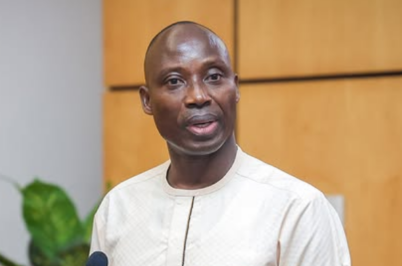
The road network in the Akim Swedru area  in the  Eastern Region is being rehabilitated to provide  access to the remotest parts of the  area for the transportation of food and cash crops to the marketing centres. The Member of Parliament (MP) for the area, Mr Kennedy Osei-Nyarko who is rehabilitating the roads from his own resources, said for the past 15 years, the road network in the constituency had seen no rehabilitation and had become unmotorable. He told the Daily Graphic that he sought assistance from J.A Plant Pool, which provided him with a grader for the rehabilitation of the roads for a period of three weeks. Mr Osei-Nyarko said he was spending  over GH¢10,000 to provide fuel and meet other expenses for the rehabilitation of the roads. “We do not always have to wait for the government to provide all our needs,†he said, adding that the gesture was in filfilment of a campaign promise. He said as MP for the area, he was touched by the hallowing pains that farmers and commuters go through daily as a result of the  poor nature of the road network in the constituency. Mr Osei-Nyarko mentioned some of the places where roads had undergone rehabilitation as Akim Awisa, Akim Swedru, Akote Junction-Akote and Apoli Junction— Apoli and its township. He thanked the people for the confidence reposed in him and assured them that he would work assiduously to alleviate their plight. He also thanked J.A Plant Pool for proving him the grader for the rehabilitation work.                        Â
 Former President Jerry John Rawlings has challenged African leaders to emulate the shining example of the late former South African President, Nelson Mandela, who worked for the betterment of his people in particular and Africa in general. He said the ideals of the late global peace icon as a selfless voice for the world’s oppressed must not be allowed to die with him. Former President Rawlings extolled the virtues of the late South African leader in Accra yesterday when he signed the book of condolence opened for President Mandela at the High Commission of South Africa in Accra. He said Mandela was a symbol of resilience, fortitude, patience and tolerance and also exhibited exceptional leadership qualities which would shape and inspire present generations and those yet unborn. He stressed that Mandela had given Africa a unique leadership which African leaders should strive to live by. Tribute Former President Rawlings paid glowing tribute to Mandela as a man of great spiritual elegance, an enigma, yet an icon of true reconciliation and a man who embodied a unique political culture. “His capacity, power, empathy, his psychological understanding of the pain of humanity were such that he just could not abdicate his responsibility,†he added. “He was a man of great spiritual elegance, a man of towering moral height. His moral compass pointed out to millions around the world a moral mandate strong enough to prompt defiance of leaders bent on propping up the apartheid regime,†he said. Lone Voice Former President Rawlings recalled that at the collapse of the bi-polar world, and while the unipolar world was beginning to over-assert itself, Mandela was the one voice strong enough to call the rest of the world to order over the excesses in Iraq, saying that he was that moral conscience of the world whose voice the West dared not disobey. “Only Mandela could say ‘enough is enough’,†he said, maintaining that Mandela’s selflessness transcended continental boundaries, while his activism and endearing fortitude helped blaze the trail and made it possible for the Black man to be acceptable to the psyche of humanity and White supremacists. That strength to fight for the common good, he said, made it easier for US President Barack Obama to be seen as a potential leader and eventually voted into office as a leader. “What will now be lost to the world is the unifying effect of a man who held to his sense of purpose in the face of Western governments who branded him for years as a terrorist when he was a dignified freedom fighter.†Â
The Commissioner of the Commission on Human Rights and Administrative Justice (CHRAJ), Ms Lauretta Lamptey, has proposed that the government set up a democracy fund to support independent governance institutions. She said the country needed strong and independent institutions which had predictable sources of funding, the right number of personnel, as well as demonstrated commitment and political will, to combat corruption. Presenting a statement on the state of corruption in Ghana on the theme, "Zero corruption — 100 per cent development", at a ceremony to commemorate the 10th International Anti-corruption Day in Accra yesterday, Ms Lamptey said the government needed to invest sufficiently in the proposed fund to win the fight against corruption. Progress Ms Lamptey reported that from 2012 to date, 85 complaints on abuse of office had been processed — 26 in relation to misappropriation and embezzlement, eight complaints had to do with conflict of interest, seven concerned with bribery, eight  on extortion and two on breaches of the code of conduct for public officers. She added that currently, CHRAJ was sensitising the public to avenues for safe reporting of corruption and impropriety and encouraged the public to use particularly the Whistleblowers Act to report corruption. She gave an overview of Ghana's review under the United Nations Convention Against Corruption (UNCAC), noting that although the review was still in progress, it had emerged that though Ghana had a relatively good legal framework to combat corruption, it still needed to enact the Public Officers Conduct Bill, the Whistleblowers (Amendment) Bill, the Witness Protection Bill and the Right to Information Bill. Fighting corruption The Director of the Economic and Organised Crimes Office (EOCO), Mr Kweku Akpadi Mortey, answering questions on investigations conducted by CHRAJ and the outcomes, said investigations took time and resources to complete. He said putting out information on someone under investigation could make the public conclude that the person had really committed what he or she was being accused of. However, Mr Mortey said most of the time, the accusations had no merit and were based on mere hearsay. The Attorney-General and Minister of Justice, Mrs Henrietta Brew Appiah Oppong, who chaired the function, also reiterated the fact that institutions had to be strengthened to win the fight against corruption. Â
 A 35-year-old Ghanaian based in Saudi Arabia, Theophilus Akai Baddo, and his friend met their untimely death when their car was swept into a drain in Teshie during a heavy downpour last Saturday. Baddo and Eric Asiedu, 28, unemployed, were said to have defied all caution from rescuers at the scene not to drive through flood waters that had collected after  torrential rains that swept through the Ledzokuku Krowor municipality and its environs between 6 p.m. and 8 p.m. on that fateful day. Baddo, who resided at Hong Kong, near Lapaz in Accra, had returned home from Saudi Arabia to attend his father’s funeral. He decided to visit his friend, Asiedu, at the Teshie Nungua Estate, where the two enjoyed themselves at a popular spot in the area known as Busy Mouth Foods and Drinks. After the rains had subsided around 8 p.m., the two decided to drive away in an unregistered vehicle, with a plate number DP 2467. The vehicle was being driven by Baddo, but unfortunately for them, the car was swept by the strong currents of the drain next to the eatery joint. The drain had then overflowed its banks and the two had ignored calls from people who were rescuing trapped cars from the water not to go through it. The car was later found about a mile away from the eatery joint, while the two bodies were located in a far away mangrove at Sangonaa in Nungua, close to the sea. According to the District Officer in charge of the Nungua Police Station, Deputy Superintendent of Police (DSP) Ms Patience Akwetey, the police had a report from the Assembly Member for the Klowe Koonaa Electoral Area, Mr Robert Oko Odike, who lives close to where the bodies were found, about the two bodies in the area. She said a policeman was, therefore, dispatched to the scene and the bodies were picked and deposited at the Police Hospital morgue. Sources indicate that Baddo is the son of a late New Town Mantse, who was buried a few weeks ago. Â
 The Ejisu-Juaben Municipal Directorate of the Ghana Health Service (GHS) has begun an initiative to help reduce the incidence of maternal mortality which has become a major health issue in the country. In line with this, 30 midwives from the GHS, private health facilities and others from the Christian Health Association of Ghana (CHAG), operating within the municipality, have been trained on long-term family planning methods and how to effectively administer them. The five-day training, funded by the United Nations Population Fund (UNFPA), saw the participants learning more about Implanon, Jadelle and Intra Uterine Device. They were also taught how to insert and remove family planning kits, how to identify eligible clients, counselling among others. At the opening of the workshop, the acting Ejisu-Juaben Municipal Director of Health Services, Mrs Mary Amponsah-Koduah, urged the participants to take the training serious to acquire the needed skills. She said when family planning was taken seriously, it would in the short-term reduce unwanted pregnancy, prevent the transmission of sexually-transmitted diseases among other benefits. She added that it would also in the long run help reduce maternal mortality since women would plan their pregnancies so that they would not face challenges. The Ejisu-Juaben Municipal Co-ordinating Director, Mr Owusu Frimpong Boadu, pledged the assembly’s support for the health directorate to help improve quality healthcare delivery in the municipality. He said to help achieve the various Millennium Development Goals (MDGs) in the country; there was the need for all stakeholders in the country to contribute their quota to ensure total attainment of the goals. The Ejisu-Juaben Municipal Planning Officer, Mr Joseph Mills, on his part, said the UNFPA was currently supporting eight districts in the Ashanti and six others in the Brong Ahafo regions to build the capacity of health personnel to enhance their operations to reduce cases of maternal mortality. He said the programme, dubbed, “6th Country programme,†commenced in 2013 and ends in 2016. He added that for a start, the assembly had received GH¢46,283 for the first year for capacity building and procurement of equipment for maternal health, advocacy on behavioural change among other issues. Mr Mills said everything would be done to ensure the project achieved its objectives of enhancing quality healthcare delivery and improve maternal health issues in the municipality and the nation as a whole. Â
 President John Dramani Mahama will join more than 90 world leaders to attend the memorial service for the late former President of South Africa at the Soweto FNB Stadium in Pretoria today. The event will divert the world’s attention to South Africa, as the gathering of world leaders is likely to be the largest in recent times. President Mahama had his inaugural Chinua Achebe Leadership Forum lecture at the Bard College in New York, United States of America (USA), resheduled to yesterday to enable him to leave for South Africa thereafter to participate in the memorial service. US President Barack Obama, the British Premier, David Cameron, and the French President, Francois Hollande, are among the world leaders to participate in the memorial service at the 95,000-capacity Soweto FNB Stadium. The UN Secretary-General, Ban Ki-moon, and three former US Presidents — Jimmy Carter, George W. Bush and Bill Clinton — have all confirmed their attendance to bid farewell to one of Africa’s legendary leaders. Mandela died last Thursday at the age of 95. South Africa’s Parliament yesterday held a special session to pay tribute to Mandela, who spent 27 years in jail before becoming the country's first Black President in 1994. He served a single term before stepping down in 1999. A statement issued by the South African Foreign Ministry said the official memorial service would begin formally at 11 a.m. It said President Jacob Zuma would address the official memorial service, while tributes would be paid by heads of state from the various regions of the globe, as well as representatives of international and regional organisations. Other eminent persons are expected to also address the gathering. “As we invite people to participate in this event, we must make the additional point that the body of President Mandela will not be in position at the Official Memorial Service. President Mandela will lie in state at the Union Buildings only from Wednesday, December 11 to 13 December, 2013,†it said. The statement said provincial and local authorities had been requested to arrange transport for mourners from various parts of the country to the Soweto FNB Stadium and the overflow venues at the Ellis Park Stadium, the Orlando Stadium and the Dobsonville Stadium. Big screens would be installed at the overflow venues to allow mourners to follow proceedings at the FNB Stadium, in the company of compatriots and fellow sympathisers. It called on the people to cooperate and demonstrate patience and dignity if they were to be turned away. There would be road closures around the FNB Stadium and no cars would be allowed at the stadium. It said mourners to the FNB Stadium could travel by Metrorail from all major stations in Gauteng. Â
 The Paramount Chief of Tema, Osongaa Nii Adjei Kraku II, has cut the sod for the commencement of work on a $500,000 two-storey house made up of nine classrooms for the St Nicholas Preparatory School in Tema. The project involves the construction of classrooms for primary, junior and senior high school pupils and students. The school takes care of underprivileged children in the sprawling Tema Manhean fishing community. The sod-cutting ceremony marked St Nicholas’ Day, which is observed globally on December 6 each year. St Nicholas was a bishop in the 4th century in Greece who developed a reputation for giving out gifts.  The project was initiated in February 2012, through the Maria Tsakos Foundation in Ghana with the motto: “Every child has a right to education.†Nii Kraku, who offered land for the project, commended the Tsakos Group for starting the development of the community by first planting a church. There are also long-term plans for a vocational college to be constructed to teach information technology, and tourism. The school also hosts the Holy Transfiguration Cathedral of Accra. Nii Kraku lauded the decision by the group to attach a field and a basketball pitch to the project. Tsakos Group presented GH¢2,000 to Nii Kraku to support his education foundation. President of the Ghana Olympic Committee and the Ghana Athletics Association, Professor Francis Dodoo, commended the Tsakos Group for supporting Ghana to host major competitions for junior athletics for the past seven years. The school has Mrs Susan Lyddon and Mrs Vivienne King, a founding sponsor who has come from the UK to stay for one month, volunteering their services. Madam Deborah Eleazar of the Tsakos Group expressed the hope that the community would make the project sustainable. The school is being supported by the Education and Book Appeal Ghana (Teabag), donations from the crew of  Mount “Nippon Princessâ€, currently at anchor off Tema and the MT “Salaminaâ€, two vessels belonging to the Tsakos Group, and friends from the UK, fund raising initiatives including sponsored dinners and shooting parties. Captain Alkiviades Kappas, one of the founders of the school who donated a bus to the school, also takes care of the running costs. Mr Andreas Bisbas, a UK-based sponsor, also donated a generator, while Atlas Copco provided food items covering a period of six-months to the school. Â
 The Abeka Circuit of the Methodist Church, Ghana has climaxed its 10th anniversary celebration with a thanksgiving service at the Redemption Methodist Church at Abeka in Accra. The occasion, which also coincided with the 50th anniversary celebration of the Redemption Methodist Church and dedication of the chapel and the manse, had the theme: “Celebrating God’s Glory: Abeka Circuit at 10, Redemption Society at 50’’. The celebration brought together members of the church and dignitaries from the Methodist fraternity.  All dressed in their beautiful anniversary clothes, they danced their hearts out, to the glory of God. Among the dignitaries who graced the occasion were the Rt. Rev. Titus Awotwe Pratt, the Bishop of Accra, who dedicated the chapel and Manse to God; the Rt. Rev. Abraham Tagoe, the immediate past Bishop of Accra, Bro. Solomon Quaye Lartey, the Diocesan Lay Chairman and Mrs Christiana Aku Odoi, the immediate past Lay Chairman. Preaching the sermon, the Rt. Rev. Abraham Tagoe said the Almighty God, who had shown His abundant mercies on the church for all these years, would continue to shower His blessing on the church and the nation as a whole. He said God’s goodness was unmeasurable and it was up to the children of God to lead a godly life so that they could experience God’s favour anytime. The Superin-tendent Minister of the Abeka Circuit, the Very Rev. Eugene Amartei Armaah, said the celebration of 10 and 50 years as a circuit and a church would urge them on as the body of Christ to build a spiritually vibrant and economically viable circuit which was also socially inclusive. He said the holistic evangelism of Methodism which involved proclamation , social action and catechism were necessary to ensure the total growth of the church. The Abeka Circuit of the Methodist Church, Ghana, was inaugurated on March 22, 2003 with three societies namely: the Redemption Society, St Paul Society and the King of Glory Society, with the Very Rev. George Mensah as the first Superintendent  Minister. The Redemption Methodist Church, which also marked its 50th anniversary, was founded in February 1963 by Sister Lydia Adams, who started it as a prayer fellowship with the Clottey and Boye families. The church currently runs a school which caters for children from the pre-school level to Kindergarten. It also has a 33-seater TATA bus, which serves all the societies in the Abeka Circuit. Â
 The Accra West Regional Knights and Ladies of Marshall have donated assorted items to the Children’s Ward of the Ridge Regional Hospital in Accra. The items included detergents, gauze, cot sheets, fruit juice, biscuits, Christmas hats and GH¢500. The Accra West Regional Grand Knight, Worthy Brother Yaw Osei-Poku, who led a delegation of Marshallans to present the items, explained that the society wanted to put smiles on the faces of the children and parents on admission at the hospital. He said it was in line with the charity works of the society. The Head of Child Health Department of the Hospital, Dr Nana Kwakyewa Sereboe, who received the items, expressed appreciation to the society for the gesture. She said the items had come in at the right time and appealed to other societies to emulate the example of the Marshallans. Â
 The Ga South Municipal Assembly (GSMA) has invested about GH¢20 million into various development projects within the municipality from May 2012 to September this year. Out of the various projects, GH¢10 million was spent on removing schools under trees, construction of teachers quarters and providing resources to schools within the municipality. The remaining amount was spent on other community development projects including the construction of footbridges, landfill sites and supporting infrastructural projects within the municipality. Funds used for the implementation of the projects were derived from the District Development Fund (DDF), the Urban Development Fund (UDF) and the Internally Generated Fund (IGF). Speaking at a policy fair at Weija in Accra, the Chief Executive Officer of GSMA, Mr Jerry Akwei Thompson, said the assembly intended to generate more funds to support the development of all the communities within the municipality. About the policy fair The policy fair provided the platform for the assembly to showcase various development projects undertaken within the last one year. The event was also used to honour outstanding farmers whose contribution and work had enhanced the well-being of the people within the GSMA. Various items were also presented to beneficiaries of Local Enterprises and Skills Development Programme (LESDEP). According to Mr Thompson, the rationale behind the policy fair was to enable residents to have firsthand information of developmental projects the assembly had undertaken over the past year. “It would also afford them the opportunity to know what their monies were being used for. We expect all stakeholders to scrutinise these projects and give suggestions on  the way forward in our communities,†Mr Thompson said. He said since GSMA had a lot of potential in the areas of tourism, farming, estate development and sound environment for business, it would be prudent for stakeholders to team up with the assembly in public private Partnership (PPP) arrangement to provide social services to the people. Government’s interventions to support farmers Mr Thompson said the government had introduced the passbook system of fertiliser purchase to replace the coupon system, adding: “this allows farmers to purchase fertiliser at the same price anywhere in the country.†“There is a subsidy of 50 per cent on every bag of fertiliser purchased. The subsidy covers three types of fertiliser and other types will be subsidised in the near future,†he said. Â
 Mfantseman Municipal Police Commander, Deputy Superintendent of Police David Ashun, has urged drivers to help make Christmas and Easter festivities happy occasions and not mournful ones. Addressing the drivers’ union in the Mfantseman municipality at Mankessim, DSP Ashun said it was unfortunate that these joyous occasions (of which the saviour of mankind was born and when he sacrificed his life to save the world) had become tragedies in some homes because of careless behaviour of some drivers. He said the police would be resolute on recalcitrant drivers during the coming festivities, and appealed to them to ensure that they complied with driving regulations. DSP Ashun called on them to desist from speeding, overtaking at wrong spaces and overloading. He appealed to commercial transport owners not to put pressure on their drivers to make the daily sales fixed for them at all cost and cautioned against driving while drunk. He said from January to November, 121 accidents occurred involving 174 vehicles in which 34 people died and 113 people were injured.   Chairman of the GPRTU, Mr Oscar Kweku Appiah, expressed gratitude to the police commander for organising the meeting to remind drivers of the things they were not expected to do to ensure accident-free Christmas. He assured that the drivers would cooperate with the police to ensure that no accident was recorded during the festivities. -GNA Â
 Some staff members of the Koforidua branch of Barclays Bank  have engaged in an activity hitherto unknown in banking. It was an evangelisation tour of the Koforidua Prison during which they mingled with the inmates and sing, danced and shared the gospel with the prisoners after which they made personal contributions to purchase some detergents and consumables for them. The event dubbed: “Make a Difference Day (MAD)†was aimed at making life bearable for the prisoners and also to help in reforming them for a decent life after they leave the prison. Joy and sorrow It was indeed a mixture of joy and sorrow as many of the inmates and some staff members of the bank could not hold back their tears as the bank officials, led by Messrs Kwasi Mante and Augustus Sey,  branch and operations managers respectively, and Mr Kwabena Osei Kufuor, a Banking Hall Executive took turns to advise the inmates. That was after two psychiatric nurses from the Koforidua Regional Hospital, Messrs Charles Ntim and Emanuel Kwadwo Dei, had also taken the inmates through life after prison.  The inmates, totalling 656, made up of the young and elderly, some in their early 70s who were given the Word of God, were also counselled on how to make ends meet and deal with stigmatisation after they come out of the of the prison. Suicide Some of them committed suicide because most of the inmates after serving their sentences were considered outcasts by families, friends and the society in general. Charles Ntim reminded the inmates that every human being was faced with challenges and that their present situation should not make them feel as outcasts which will make them go to the extreme of committing suicide, which to him was condemned by God. Â
 Eight suspected armed robbers, at dawn last Saturday, attacked 14 employees of White Dove Mineral Water, a sachet water producing company at Akyem Akroso in the Birim Central Municipality, and took them hostage. The robbers, some of who allegedly wielded guns and machetes, collected the mobile phones of the victims and GH¢5,000, being the previous day’s sales of sachet water, locked the workers in a room, ransacked the place and fled before a report was made to the police. Briefing the Daily Graphic at Oda yesterday, the Oda Municipal Police Commander, Deputy Superintendent of Police (DSP) Issah Mohammed Cantona, said about 2 a.m. last Saturday, when the workers were busily producing water, the eight robbers, four of whom were masked, scaled the wall of the factory into the premises. He said the robbers ordered the workers to surrender all their mobile phones and the money they had on them and  they complied. DSP Cantona said the robbers, not satisfied with what the workers had given them, ordered all of them into one room, locked them up and ransacked the entire factory for more money. He said after their operation, which lasted for more than an hour, the robbers warned them not to come out of the room until after 7 a.m. and fled with their booty. DSP Cantona said after the robbers had left the scene, one of the male employees managed to destroy a window of the room for the other hostages to come out through it. The employees then lodged a complaint with the Akroso Police, who called for reinforcement from Oda but it was too late; the robbers had already fled the scene. He said the police had mounted a search for the criminals and appealed to the general public to assist them with information to enable the police to apprehend them. Â
A top church leader has said Mr Nelson Mandela’s awesome peace-loving disposition, which created and maintained comradeship among the various races in South Africa after the demise of apartheid, is a quality African leaders should be craving after. Rt Rev. Francis Amenu, Moderator of the General Assembly of the Evangelical Presbyterian Church, Ghana, said this in a sermon at the thanksgiving service on Sunday to crown the centenary celebration of the Agotime-Afegame EP Church at Agotime-Afegame.       He said African political leaders should be harnessing segments of society towards tackling the developmental problems of their countries and not acting to divide them. Rt Rev. Amenu said Mr Mandela’s life was a remarkable one for all African leaders to emulate. He urged Ghanaians to reflect on the life of Mandela and resolve to do the right thing, honour taxes and levies, eschew corruption and stop smuggling. The EP church was founded in that community in 1907 along with formal education. Rev Richard Mawutor Buamah, Associate District Pastor, said ethnic and political differences should not be wedges, preventing the different segments of society from working together. “The future of our dear Church depends on faithful individuals of today, willing to sacrifice time, talent and wealth,†he stated. He said it was his prayer that the historic celebration did not manifest only in the merrymaking but also show in “an inner rejuvenation and re-dedication to God the Father Almightyâ€. Nene Mahumansro XIV, Le Mantse of Agotime-Afegame, said the centenary of the Church was in fact a community affair as the church coming along with education had produced “many prominent citizens that have made significant impact on the national and international scene in diverse areas.â€
Public-Private partnership is needed to sustain residential homes for orphaned children. The government has developed a set of national standards for residential homes for orphaned and vulnerable children (OVC) to ensure that the homes meet minimum standards. The standards require that orphanages improve nutrition and food supplementation, enhance the basic health and hygiene situation of the homes and empower and train caregivers, so that they can deliver better services to the children in their care. This was made known by the Minister of Gender, Children and Social Protection, Nana Oye Lithur, at a forum in Accra to deliberate on how to sustain the supply of basic needs to orphaned and vulnerable children in residential homes. Nana Lithur emphasised that although institutionalised care for vulnerable children was not the objective of the government, some children found themselves in those facilities through no fault of theirs. Those children, she said, encountered various challenges in the orphanages, sometimes through genuine challenges faced by the management of the institutions. “Key among these challenges is funding, which manifests in various forms, including poor nutritional supply and health concerns for the children in these facilities,†Nana Lithur said. The forum was to create an avenue for the ministry to partner the corporate sector, in line with the government’s public-private partnership (PPP) policy to sustain the supply of their basic needs, which is fundamental to their existence. Rationale for the forum It was necessitated by the need to find a means to sustain a five-year programme, which started in 2011 and titled -â€One Child, One World†(OCOW), to address malnourishment and limited access to necessary nutritional requirements for normal growth and development in residential homes for OVCs. The programme, which ends in 2015, is being implemented by AmeriCares, a United States organisation, and two local bodies, Hope for All Foundation (HOFA) and the Youth and Social Enterprise Fund (Y-SEF). The partnership was formed to respond to the financial difficulties faced by orphanages due to the increase in the number of orphaned children, sometimes resulting in malnourishment and limited access to necessary nutritional requirements for normal growth and development. The project addresses the nutritional and health needs of 1,500 orphans and vulnerable children and their over 319 caregivers living in 30 homes in nine out of the 10 regions of the country. Baseline Assessment In a presentation of the programme at the meeting, Ms Elikem Tomety Archer, the Director of Mid-East and Africa Partnerships of AmeriCares, said the OCOW programme was launched in July 2011  and a baseline assessment completed in December 2011. Thirty homes were fully vetted and approved by the Department of Social Welfare (DSW) to participate in the survey. It was observed during the baseline study, she said, that the proportion of children in homes who were considered underweight or wasting was about twice the levels found among Ghanaian children outside the homes A significant proportion of children are fed less than two times a day and majority caregivers and  proprietors said food/nutrition was the biggest unmet need for the children in the homes, followed by financial support, healthcare costs, educational/school fees and training of caregivers. Accomplishments to date Ms Archer said since 2011, AmeriCares had delivered 11 shipments of nutritional supplements, infant formula, and hygiene products worth US$1,045,186 to these homes. One hundred and one caregivers in the 30 homes had also been trained in basic nutrition, health and hygiene practices and funds to train an additional 109 caregivers had been granted, she added. Programme Sustainability She pointed out that majority of proprietors and caregivers of the homes, as well as other stakeholders, had lauded the programme as having gone a long way to meet some of the unmet needs of children in the homes, hence the need to sustain it beyond the programme period had become imperative. “As we enter the third year, there are plans to scale up the programme to at least 100 homes. This will require about GH¢500,000-GH¢800,000 in kind and in cash donations from corporate bodies who would love to adopt those homes as part of their corporate social responsibility,†Ms Archer said. The idea, she said, was to ensure that participating companies benefited as they gave, as part of a “cause-related marketing relationship†by enhancing the brand image of their products, while at the same time supporting the initiative to raise the necessary funds to support the OCOW programme and thereby address a huge socio-economic issue that afflicted thousands of Ghanaian children.

The Kumasi Metropolitan Assembly (KMA) has filed an appeal at the Court of Appeal in Kumasi seeking to overturn a High Court ruling that ordered the assembly to vacate the Kejetia Bus Terminal in five days. It has also filed an application for stay of proceedings of all cases concerning the Kejetia terminal that are before the High Court pending the determination of the appeal. Filed on behalf of the assembly by Mr Thaddeus Sory of Sory@Law, an Accra-based law firm, the assembly contended that the ruling of the High Court was not grounded in law. It said the High Court decision that the KMA was in contempt for refusing to vacate the Kejetia terminal was erroneous. Again, it alleged that the evidence by Freko Limited that the KMA had been served with the interlocutory injunction, which was upheld by the High Court, was fabricated. Mr Sory will move the appeal when the Court of Appeal reconvenes in Kumasi in February 2014. On Thursday, December 5, 2013, the Commercial Division of the High Court in Kumasi gave the KMA five days to leave the Kejetia terminal, which it took over from Freko FD Enterprise, the private company that had managed the facility for about 12 years. The court, presided over by Mr Justice Emmanuel Amo-Yartey, said the assembly must purge itself of contempt for failing to abide by an earlier 10-day limited injunction it pronounced, following an ex-parte motion filed by Freko Enterprise. Meanwhile, the KMA was still in control of the terminal as of yesterday. Mr Sory explained to the Daily Graphic that legally the assembly was still clothed with the power to manage the facility.
 The Executive Director of Food Sovereignty Ghana, Mr Ben Guri, has cautioned the government not to rush into adopting genetically modified (GM) food because of its long-term side effects. He said there was ample scientific proof that there was long-term side effect of GM food, adding, “Today, those side effects may not show, but give it the next 50 years and they will begin to show on our health and that is why I think that GM food may have its good sides but it is too early to adopt it.†Mr Guri, who gave the caution in an interview, pointed out, “Even in Europe of all places, as at now GM food is banned.†Touching on the Seed Breeders Bill which had been passed by the Parliament, he cautioned that if the bill was allowed to go through, “the danger here is that if I have my own seeds, by law GM seeds should never come into my field. Even if the pollens are blown into my field, I will be chargedâ€. “What is happening is that they are trying to get our local seeds extinct and replace them with GM seeds, which is what is called the modernisation of agriculture. Usually the first year, you may get a good yield but the following year you have to buy new seeds again if you want to have a good yield because you cannot even select from those seeds to grow again. It is not allowed by the bill that has been passed,†he pointed out. He explained that the Seed Breeders Bill was meant to protect breeders in such a way that they might reap back what had been invested. Mr Guri described the move to introduce GM food as another form of re-colonisation and a “dangerous weapon†because Africa would have to become 100 per cent dependant on their food. “It is a very dangerous weapon because if they control our food, they control our lives because if they refuse to give us the seeds when we lose all our local seeds, we will die out,†he warned. Touching on the Seed Breeders Bill that had already been passed by Parliament, he said, the bill was “sneaked†into Parliament because Parliament did not open it up for discussion, saying even most of the parliamentarians did not understand what it was all about. He reminded politicians that they had the responsibility of feeding Ghana by passing the right bills that would support farmers in the country. Mr Guri said he was happy that with pressure from civil society, “they are going to be very cautious about the bill, although it is passedâ€. He congratulated farmers, especially those who won awards during this year’s Farmers Day, and stressed that the day was an important one because it gave the opportunity to showcase the people who were making Ghana what it was. Â
 The Vice-President of  Global Leadership Network (GLN), a non-governmental organisation (NGO), Professor Samuel  Lartey, has stressed the need for Ghanaians to eschew the growing blame game tendency in the national body politic. He said instead of looking for loopholes and resorting to the blame game, it was important for Ghanaians to use their expertise to team up with governments to initiate policies and programmes that would enhance the accelerated socio-economic development. He was speaking at a workshop organised by the GLN to sensitise the public to appreciate the essence of being supportive in harnessing human and natural resources in a meaningful way. Prof Lartey expressed concern over the growing tendency among Ghanaians to apportion blame on all issues pertaining to national development. He said that attitude rather undermined effective and sustainable socio-economic development and said the GLN  was established not only to grow and support leaders in the various sectors of the economy but also to demand responsible and accountable leadership. It was also to sensitise  the public to be more nationalistic, instead of promoting their selfish tendencies. On how to harness the human and natural resources in the country to support accelerated development, Prof Lartey said  it was important for leaders in the various sectors of the economy to be visionaries, people-oriented, work as a team and be culturally sensitive. He said good leaders were not only always focused on their desire to execute their vision for the benefit of the larger society but also encouraged the public to work as a team and collaborate in all endeavours by devising means to realise the desired objective of accelerated development The President of the GLN, Mr Mark Kakraba Ampeh, urged the public to always provide better alternatives to put the development initiatives of the country on track. “Our mission is to transform and regenerate our nation through self-actualisation of its citizens, irrespective of sex, age, tribe and social association,†he explained. Expounding the operations of the GLN, he said, “While we need to raise leaders to respond to the immediate challenges of our time, it is even more important to raise leaders who will take over from us and, even more importantly, lay a solid foundation for the development of leadership for generations to come.†Â
 The Supreme Knight of the Knights of Marshall, Sir Knight Joseph Ekow Paintsil, has challenged Christians to muster courage to expose corruption in society. According to him, “corrupt acts are becoming the norm rather than an aberrationâ€, saying that it was “being perpetrated in both high and low placesâ€. Addressing members of the Knights and Ladies of Marshall after the dedication of an oratory for Council 10 and Court Five at the Divine Mercy Catholic Church, Okponglo, last Saturday, Sir Knight Paintsil said the current state of corrupt acts, which had become a canker in the Ghanaian society, should be a source of concern to Catholics and Marshallans. The GH¢1.2 million oratory has a seating capacity of 750 and was dedicated by the Metropolitan Archbishop of Accra, the Most Rev Charles Gabriel Palmer-Buckle. Sir Knight Paintsil entreated Marshallans never to condone corrupt practices. “Marshallans occupy very many leadership and sensitive positions at their workplaces and in their communities. We have to let the people we serve and relate to see us as different types of leaders who are disciplined, not corrupt and incorruptible,†he stated. He also reminded Marshallans of their duty to practicalise the motto of the society, ‘Charity, unity, fraternity and service’ in the church and their communities, stressing, “We have to do more to let the church feel our presence in all aspects.†On the use of the oratory, Sir Knight Paintsil said it would serve as a place of worship, deeper learning and understanding of the faith and also a rallying point for Marshallans to understand their mission as Catholic knights in serving the church and the community. Palmer-Buckle In his sermon, the Most Rev Palmer-Buckle reminded Marshallans of the four principal teachings of the church — understanding the Scriptures, fellowship, breaking of bread and prayers. He explained that those four teachings were the foundation teachings of the Apostles. He said reading the Bible would enable Marshallans, and for that matter Christians, to understand the Scriptures, while practising fellowship would enable them to reach out not only to members of the church but also the entire community. The Most Rev Palmer-Bukcle said the breaking of bread could be found in the celebration of the Eucharist and receiving other sacraments in a worthy manner, stressing that the prayer component of believers made them to achieve greater things. He urged Marshallans to help make young people more useful to the church by engaging and guiding them in their development. Writer’s email: [email protected] Â
 Participants in a discussion on “A decade of medical postgraduate specialist training in Ghana†have observed and deplored a serious disparity in the distribution of medical specialists in the country. They said there was high concentration of medical specialists in the Greater Accra and Ashanti regions, with the Korle Bu Teaching Hospital and Komfo Anokye Teaching Hospital having a chunk of them. “The three northern regions have the least number of medical specialists with the Upper East Region being the most deprived,†Professor Felix Asante of the ISSR told the gathering at the 10th anniversary public lecture at the Ghana College of Physicians and Surgeons (GCPS). He said, for instance, that the Greater Accra Region could boast nine consultants, 205 specialists and 72 senior specialists, while the Upper East had, four specialists and two senior specialists without even a consultant. Doctor population On doctor population ratio, Prof. Asante said there had been a significant improvement in that direction for all the regions in the country with the exception of the three regions in the northern sector and attributed it to the continuous persistent refusal of doctors to be posted there. He said the doctor to population ratio fell from a high of 17,899 individuals to one doctor in 2005 to 10,034 individuals to one doctor in 2011 and attributed it to the increase in the production of doctors and a reduction in migration of doctors to the Western world. Ghana College of Physicians and Surgeons Professor Asante was happy that the postgraduate intake into the GCPS, including both membership and fellowship, had increased markedly from a total of 78 doctors in 2004 to 202 doctors by 2012, adding that 87 doctors were scheduled to graduate from the GCPS in 2013 in various areas of specialisation. He said the establishment of the GCPS appeared to have slowed down the medical brain drain in Ghana, as more and more doctors availed themselves of the local opportunities and said the college needed to be supported effectively in order to continue to be a strong incentive for the retention of doctors in the country, apart from helping to staff hospitals with the much needed specialists. Solutions to emigrations Professor Asante suggested that in addressing the negative effects of health worker emigration there was the need for better health workforce retention, especially in rural and remote areas. “There is also the need for a stronger protection and fairer treatment of health workers, who may face difficult and often dangerous working conditions and poor pay,†he added. Impact of the College Speaking on the topic, “A decade of postgraduate specialist medical training in Ghana: Impact on the public health, the Omanhene of the Asokore Traditional Area, Nana Susubribi Dr S.K.B. Asante, said the impact of the college on health delivery had been significant, “and the Council Fellows and staff of the college deserve our deepest appreciationâ€. He said he was aware of the severe constraint the college faced in health delivery in the rural communities, explaining that formal medicine had to contend with pervasive supervision. Appreciation The Provost of the College of Health Sciences, University of Ghana, Professor Yao Tettey, who chaired the lecture, was grateful to the planning committee and the resource persons for accepting to present their papers. He urged fellows of the college to take note of the issues raised so that they could be discussed at various levels for solutions. Â
Facebook
Twitter
Pinterest
Instagram
Google+
YouTube
LinkedIn
RSS