


Last week’s African Mining Indaba convention held in Cape Town, South Africa, may well have been the best yet in drawing together those involved in mining and mining investment for the whole of Africa.
How does one measure a conference’s success, or otherwise? Certainly, on the face of things, this year’s gathering of the African mining sector at the 19th Mining Indaba in Cape Town last week was a definite success.
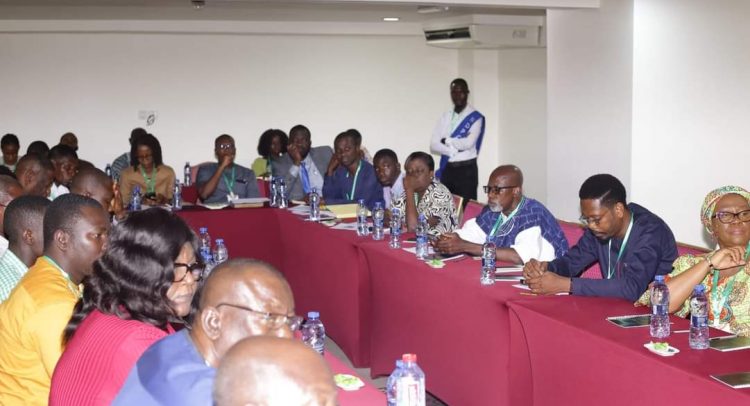
It attracted a record 7,700 delegates -- about 10% up on the previous year -- and these came from 100 countries spread across six continents: although, as would obviously be expected, the large majority attending were from Africa itself.
Interestingly, the overall vibe was remarkably upbeat despite the trials and tribulations afflicting the resource sector -- and particularly the precious metals industry which still dominates investment related conferences of this type.
Compared with the recent Vancouver Resource Investment Conference, it was like chalk and cheese. But the Indaba exhibition, which was of comparable size in terms of booth numbers to Vancouver, seemed more lively.
In part, perhaps this is because Indaba hosts not only junior mining companies but also mid-tiers and majors -- and a perhaps over-represented the number of suppliers, who by the nature of things tend to buy larger and thus dominate more exhibit space.
Also, the juniors that go to Indaba seem to be the better-funded ones, with fewer very small companies on the brink of going under if things don’t improve rapidly.
While the Mining Indaba does have its fair share of promotional presentations from explorers and junior miners, it has far more high-profile speakers -- from governments, top independent economists and from CEOs of major mining groups as well -- and perhaps unlike Vancouver it attracts fringe meetings and satellite conferences which draw in even more people than the 7,700 delegate-number suggests.
Miners with operations in the region often organise site visits for investors, analysts and the media around the event -- and the number of competing parties being thrown in the evening associated with the conference appear to be legion, making the event a potential major assault on the liver!
Some impressions from a visitor standpoint include the aforementioned supplier presence, which some find a distraction, while others find it valuable.
The fund managers who are important to the exhibitors seem to find little time to walk the exhibit floor, being tied down with meetings on the fringe of the event. It was perhaps noticeable, too, that the Canadian impact on visitor-numbers was perhaps smaller than in the past despite the attractions of a convention in the southern African sunshine at a time when much of Canada is buried under snow and ice! But this may well be a matter of expense and time when the Canadian junior sector is indeed struggling.
With so many government officials from across Africa among the audience (according to the organisers, 36 African governments were represented at the event), it is perhaps not too surprising that social and environmental issues and sustainable development were particularly important topics in the presentations and discussions.
Not surprisingly, given the events of the second-half of last year, the South African mine-labour situation was also at the forefront of discussion and conversation. Things do seem to be settling down, but the impact of the accompanying big wage increases, coupled with rapidly growing electricity charges, are going to mean either sharply increased operating costs for the mines, or a substantial cut in the big workforces the mines employ; or, more likely, a combination of the two. Rapid workforce cuts are politically unpalatable and could lead to further strains in mining company/government relations, possibly leading to further calls for mine nationalisation.
But was this year’s Mining Indaba a success? On balance, definitely a “Yes!â€. Any conference that is strong enough in its perception to bring together those who will benefit from the kind of focused networking opportunities which will lead to new business in the future has to be what the attendees really need -- and this the Cape Town Indaba continues to do par excellence.
It is a can’t-miss event for those interested in all aspects of mining in Africa in general and South Africa in particular. The fact that there are also some extremely interesting keynotes, and general presentations, too, is a bonus.
The convention is still going from strength to strength each year despite an industry downturn, and one suspects next year’s 20th Anniversary Mining Indaba could be even more successful -- particularly if there is a pick-up in the global mining sector.
Read Full Story









Facebook
Twitter
Pinterest
Instagram
Google+
YouTube
LinkedIn
RSS