


THE founder and former Executive Director of the Media Foundation for West Africa, Professor Kwame Karikari, has warned that in Ghana’s politically polarised environment, the media risked becoming allies or pawns in the spread of incendiary rhetoric, divisive propaganda and hate speech.
He observed that such partisanship was depriving the nation of expert opinion on matters of national development.
“People with expert knowledge or specialised knowledge in many fields choose to be silent for fear of unwarranted attacks by party senior callers, illiterate commentators and mercenary radio or television hosts,” he said at a public lecture and stakeholder dialogue to commemorate this year’s World Press Freedom Day.
The day, observed on May 3 annually, is used to rank the media freedom of countries, highlight the fundamental principles of press freedom, evaluate media independence, and honour journalists who risk or have lost their lives.
In this year’s ranking, Ghana scored 72.20 per cent to rank 39 of 180 countries from its 52nd position in 2025.
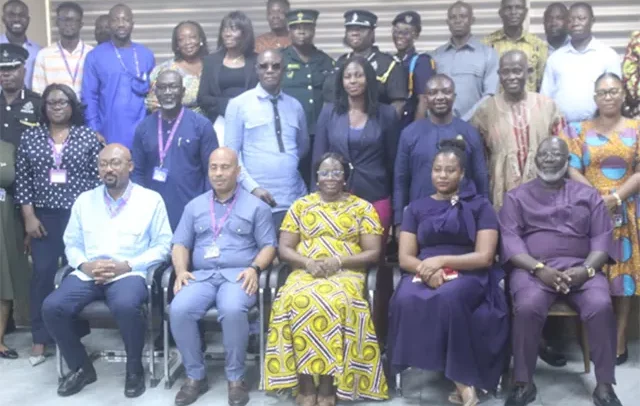
Organised by University of Media, Arts and Communication (UniMAC), the dialogue was on the theme “Shaping a Future at Peace: Safeguarding Journalism in Ghana.”
The dialogue attracted students of the University, academia, media practitioners, and the public.
Professor Karikari called on journalists and media institutions to uphold accuracy, ethical reporting and public trust in an era of rapid information flow.
He noted that the trend was largely due to the inextricable entanglement between much of the media and partisan politicians as many press and broadcast outlets were owned or influenced by politically exposed persons.
These alliances, he said blurred the line between journalism and political propaganda.
For his part, the Vice Chancellor of UniMAC, Professor Eric Opoku Mensah, said the theme is a reminder that the development the media seeks could not be achieved in a polarised environment.
“It reminds us that the future we aspire to one anchored in peace, justice and development cannot be achieved without a free, responsible and protected press,” he said.
Journalism, he noted, remained one of the strongest pillars of democracy and that in Ghana the media had historically played a critical role in the country’s democratic journey by amplifying public concerns, exposing wrongdoing and fostering national dialogue.
“This noble profession is increasingly confronted with challenges, such as misinformation, economic pressures, threats to safety and threats to life, and in some instances, attempts to suppress press freedom,” he said.
He reaffirmed the UniMAC’s commitment to academic freedom and freedom of expression, noting that these principles were closely tied to press freedom.
“As a university community, we reaffirm our commitment to academic freedom and freedom of expression. These are principles that are closely tied to press freedom,” he said.
BY AGNES OWUSU
Follow our WhatsApp Channel now! https://whatsapp.com/channel/0029VbAjG7g3gvWajUAEX12Q
The post Politically polarised environment threatens media – Prof. Karikari appeared first on Ghanaian Times.
Read Full Story







Facebook
Twitter
Pinterest
Instagram
Google+
YouTube
LinkedIn
RSS