


Mr. Anwel Ahmed Sadat, the Municipal Chief Executive for Oforikrom, in Kumasi, has appealed to the Government, development partners and Non-Governmental Organisations (NGOs), particularly World Vision Ghana, to increase funding and resources towards environmental hygiene and household toilet facilities.
He noted that this step will help eliminate open defecation in underserved communities in Metropolitan, Municipal and District Assemblies (MMDAs)
According to the MCE, several communities in the jurisdiction including Anloga, Ayigya and the Dagomba Line enclave continue to face inadequate access to household toilet facilities, despite growing public demand for improved sanitation.
Mr. Sadat made the appeal when the Ashanti Regional Chapter of the Media Coalition Against Open Defecation (M-CODE) paid a working visit to the Oforikrom Municipal Assembly to monitor their budget allocation, challenges and the way forward. This was to tackle Open Defecation and enhance sanitation conditions so as to improve access to toilet facilities.
He explained that while many residents have expressed interest in constructing household toilets, the Assembly lacks the financial capacity to support all applicants.
According to him, there has been a significant increase in requests for household toilet facilities, but funding remains inadequate to meet the growing demand.
Mr. Sadat noted that the sanitation challenge is not limited to households, as some public institutions also lack adequate toilet facilities.
He cited the Oforikrom Roman Catholic School, which previously had no toilet facility until the Municipal Assembly intervened to complete one for the school.
He assured that the Assembly remains committed to providing sanitation facilities in both homes and institutions to improve public health and environmental cleanliness because clean sanitation is a shared responsibility.
The MCE further appealed to World Vision Ghana to collaborate with the Greater Kumasi Metropolitan Area (GKMA) Sanitation and Water Project to increase financial support to continue the household toilet construction in the Municipality.
He also called on the Ministry of Local Government, Chieftaincy and Religious Affairs to increase budgetary allocations for sanitation to enable MMDAs to address the growing sanitation deficit.
According to him, increased investment in sanitation infrastructure would significantly improve access to household toilets and help Ghana achieve its open defecation-free targets.
Mr. Sadat indicated a number of interventions undertaken by the Assembly to improve environmental sanitation.
He disclosed that the Assembly had invested part of the sanitation component of the District Assemblies Common Fund into the construction of skip pads, the placement of eight refuse containers at strategic locations, and the procurement of six tricycles to support waste collection.
He said the Assembly has employed 75 sanitation workers to undertake routine street sweeping and maintain cleanliness across the municipality.
He reiterated that approximately 75 percent of the Assembly’s sanitation interventions have focused on environmental cleanliness, although access to household toilet facilities remains a major challenge in several communities.
According to him, the Assembly intends to increase the number of dustbins from the current eight to about 50, along the principal streets and to improve waste management.
The MCE expressed optimism that with sustained collaboration between government, development partners and local communities, the Oforikrom Municipality would significantly improve sanitation standards and achieve universal access to household toilet facilities.
For more news, join The Chronicle Newspaper channel on WhatsApp: https://whatsapp.com/channel/0029VbBSs55E50UqNPvSOm2z
The post MCE seeks support of Government, Development Partners for Sanitation and Hygiene Initiatives appeared first on The Ghanaian Chronicle.
Read Full Story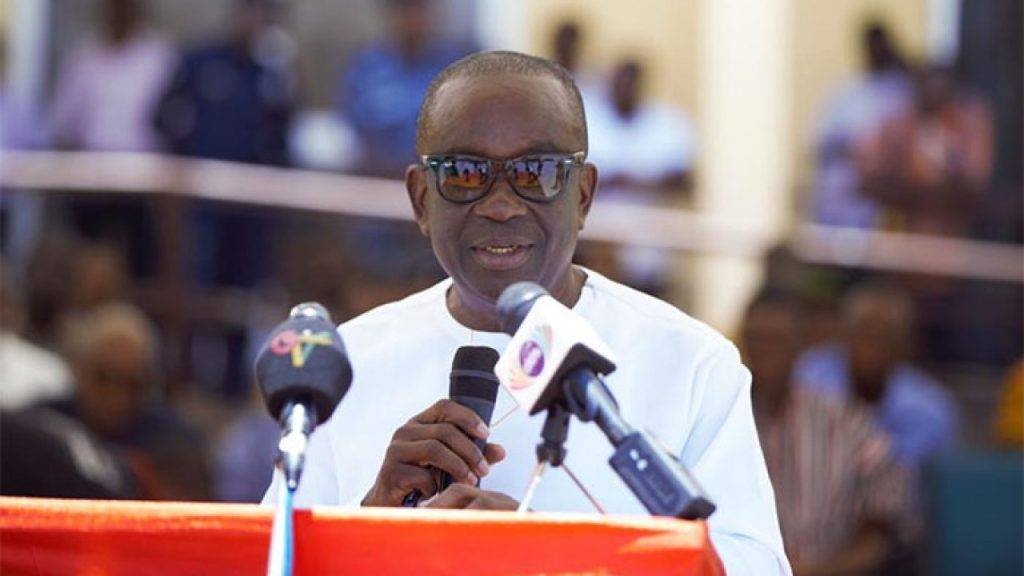


.jpg)




Facebook
Twitter
Pinterest
Instagram
Google+
YouTube
LinkedIn
RSS