


By Joshua Worlasi AMLANU
The government has begun the sixth review of its US$3 billion Extended Credit Facility programme with the International Monetary Fund, shifting attention from macroeconomic stabilisation to the execution of policies needed to sustain growth and investor confidence.
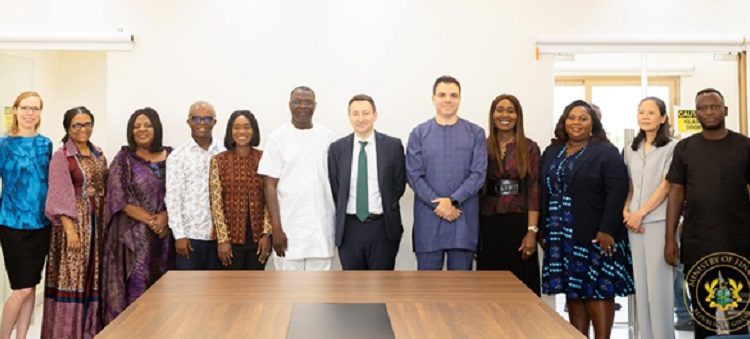
Finance minister Cassiel Ato Forson formally received an IMF mission led by Ruben Atoyan in Accra, describing the programme as a “transformative” effort that has restored stability following the 2022 economic crisis.
He said the reform agenda has delivered “strong and measurable outcomes,” including improved credibility and renewed confidence among investors and the public.
“It has been a long, demanding, but ultimately transformative journey,” Dr. Forson said, noting that policy discipline and difficult decisions have underpinned the recovery.
He added that the government remains focused on consolidating these gains, cautioning that “progress does not permit complacency.”
The sixth review follows the completion of the fifth review in December 2025, which unlocked about US$385 million and confirmed that the country’s performance under the programme had been broadly satisfactory. At that stage, all quantitative performance criteria were met and macroeconomic stabilisation was gaining traction, supported by stronger-than-expected growth and declining inflation.
Inflation has since returned to single digits for the first time since 2021, while growth has been driven by services and agriculture.
The external sector has strengthened on the back of gold and cocoa exports, supporting reserve accumulation and a firmer exchange rate. Ghana’s fiscal position has also improved, with the country on track to achieve a primary surplus of 1.5 percent of GDP, reflecting tighter expenditure controls and enhanced revenue mobilisation.
Debt restructuring has advanced, with bilateral agreements secured and ongoing negotiations with external commercial creditors.
These developments have contributed to a more sustainable debt trajectory, although completion of the restructuring process remains critical to anchoring medium-term stability.
Despite these improvements, the focus of the current review is increasingly on policy execution. Dr. Forson indicated that the next phase of reforms will prioritise translating macroeconomic stability into tangible economic outcomes.
“We must ensure that stability translates into more investment, more jobs and more opportunities for all,” he said, adding that headline indicators alone are not sufficient to define recovery.
This emphasis reflects a broader shift in the programme’s objectives toward private sector-led growth. Structural reforms aimed at improving the business environment, strengthening governance, and enhancing public sector efficiency are expected to play a central role.
The IMF has previously identified weaknesses in state-owned enterprises, particularly in the energy sector, as ongoing fiscal risks requiring sustained policy attention.
Monetary policy remains aligned with stabilisation efforts. The Bank of Ghana has begun a cautious easing cycle following a decline in inflation and improved external conditions. However, the IMF has advised that further easing should be gradual and data-dependent to safeguard recent disinflation gains and maintain exchange rate stability.
The financial sector also remains under close scrutiny. Authorities have continued implementing bank recapitalisation plans and reforms to address non-performing loans, although vulnerabilities persist, particularly among state-owned banks. Strengthening supervision and resolution frameworks is expected to remain a priority under the programme.
The outcome of the sixth review is likely to shape Ghana’s policy direction over the near term. Dr. Forson said “critical decisions” will be taken before the IMF mission concludes, with a focus on reinforcing reform discipline, strengthening policy credibility, and sustaining investor confidence.
In December 2025, the IMF described the fifth review as a “significant milestone” and acknowledged Ghana’s strong reform efforts, signalling continued support as the country transitions from stabilisation to a more growth-oriented phase.
The post Sixth IMF review puts spotlight on post-stabilisation policy execution appeared first on The Business & Financial Times.
Read Full Story




Facebook
Twitter
Pinterest
Instagram
Google+
YouTube
LinkedIn
RSS