


About a fortnight ago, Ghana’s Supreme Court directed Wesley Girls’ Senior High School to respond to a lawsuit filed by Shafic Osman, a private legal practitioner, who alleges systemic religious discrimination against Muslim students in the Methodist-founded but state-assisted institution. The suit seeks accommodation for Islamic religious practices, including the wearing of the hijab and the observance of fasting.
Even before the apex court’s directive, the matter had ignited intense public debate. Major Christian bodies including the Christian Council of Ghana, the Catholic Bishops’ Conference, the Anglican Church and the Methodist Church of Ghana were swift to defend the school’s autonomy. Their argument is straightforward: mission schools, though publicly funded, retain their faith-based identities and cannot be compelled to adopt practices that contradict their foundational doctrines.
The Attorney-General echoed this position, asserting that Wesley Girls’ remains a church-owned institution with the constitutional latitude to enforce rules aligned with its Methodist ethos. Yet the counter-argument, forcefully articulated by the plaintiff and sections of the public, insists that public subvention carries with it an obligation to uphold inclusivity and religious freedom in line with Ghana’s constitutional guarantees.
This tension between institutional autonomy and individual religious rights lies at the heart of the controversy. But beyond the legal contest, deeper social fault lines are beginning to show.
Former Tamale Central MP and seasoned legal practitioner, Alhaji Inusah Fuseini, has issued a timely caution. Speaking on Joy FM’s widely followed current affairs programme, News File, he warned that allowing such a sensitive matter to be settled purely through judicial pronouncement risks aggravating religious tensions in an otherwise cohesive society. While acknowledging the courts’ constitutional mandate, he stressed that the law, when applied rigidly to emotionally charged religious issues, can unintentionally fracture social harmony.
His concern finds a sobering echo in recent security assessments. Renowned international relations and security expert, Dr Vladimir Antwi-Danso, raised similar alarms at the Centre for Policy Scrutiny’s (CPS) high-level programme titled: “Fighting Terrorism in the Middle East and Africa,” held in Accra. The forum brought together leading academics, diplomats, security experts and governance specialists to examine the evolving nature of global and regional security threats.
In his presentation, Dr Antwi-Danso underscored a disturbing global trend: religion has overtaken ideology as the principal driver of contemporary terrorism. Extremist networks, he explained, now rely heavily on manipulated interpretations of faith to recruit, radicalise and mobilise vulnerable populations. According to him, the ideological motivations that once defined terrorism are steadily giving way to a more potent and dangerous religious fervour.
His most sobering warning focused on West Africa. Dr Antwi-Danso described the Sahel as the epicentre of Africa’s growing belt of instability, where jihadist groups have exploited weak governance, unresolved historical grievances and vast ungoverned spaces to advance a sophisticated politico-religious agenda. Ghana’s neighbours – Burkina Faso, Togo, Benin and Côte d’Ivoire have already borne the brunt of this menace and while Ghana has so far avoided major attacks, the risk of spillover remains acute, particularly along our northern borders.
It is against this backdrop that The Chronicle aligns itself with the call by Alhaji Fuseini and the Christian Council of Ghana for an out-of-court resolution of the Wesley Girls’ matter. This is not a retreat from justice, but recognition that dialogue and compromise are sometimes better guarantors of national cohesion than legal absolutism.
Ghana’s long-standing tradition of religious tolerance must be protected with care. The Chronicle, therefore, urge both the plaintiff and the Methodist Church Ghana to continue engaging in good faith, mindful that how we resolve this dispute may either reinforce our unity or expose dangerous fault lines. In matters of faith and coexistence, the courts alone cannot be the ultimate arbiters. National harmony must remain the higher calling.
For more news, join The Chronicle Newspaper channel on WhatsApp: https://whatsapp.com/channel/0029VbBSs55E50UqNPvSOm2z
The post Editorial: Why Religious Harmony Is A National Security Issue appeared first on The Ghanaian Chronicle.
Read Full Story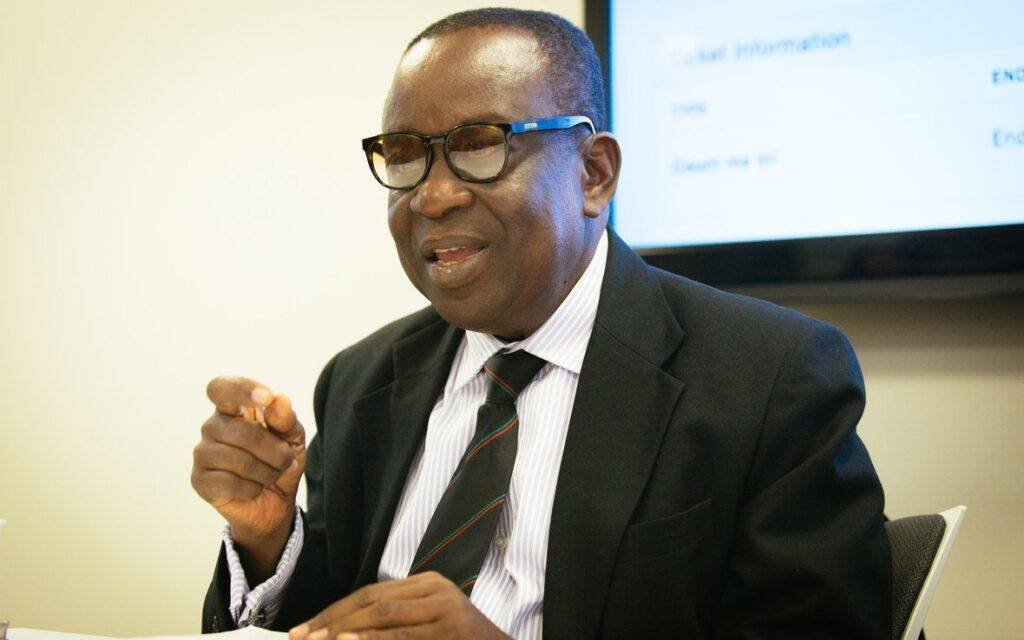







Facebook
Twitter
Pinterest
Instagram
Google+
YouTube
LinkedIn
RSS