


Government has been urged to support actions aimed at ending violence at the workplace, particularly the informal sector.
This has become necessary because, gender-based violence remains pervasive at the informal workplace, requiring all stakeholders especially government, to take steps to protect the rights of the vulnerable.
The International Labour Organisation, ILO, during its 108th Conference, later in June 2019, will look at the Convention and Recommendation on ending violence and harassment in the world of work, with a strong focus on gender-based violence.
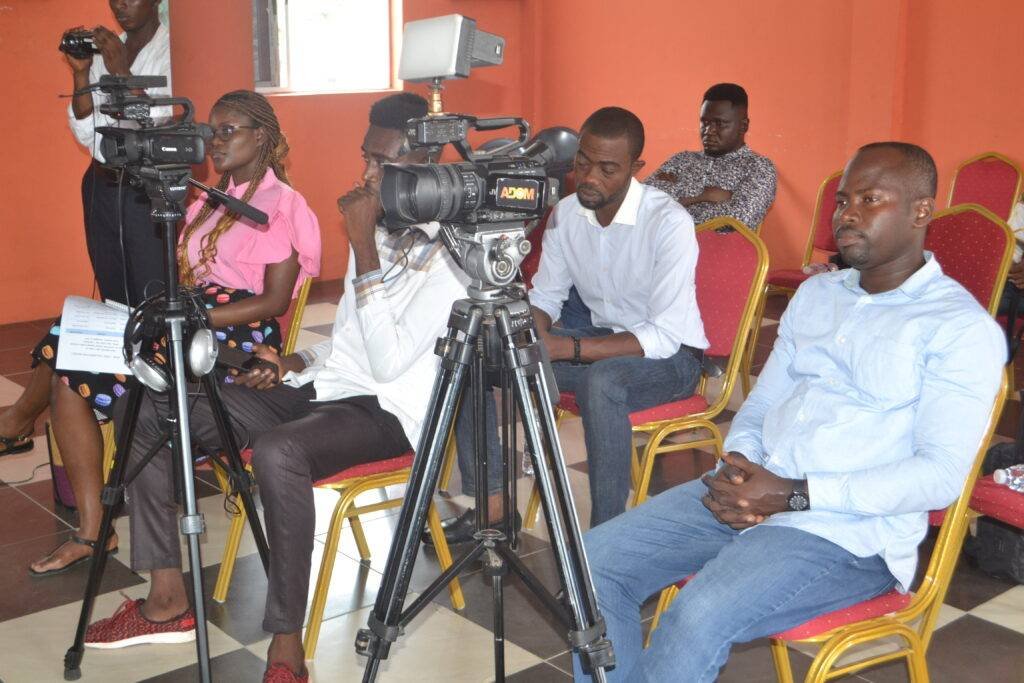
Bono Regional Programme Manager, ActionAid – Ghana, Tontie Binado said they are leading a global campaign to press for appropriate legal and policy frameworks, and effective implementation to guarantee the rights of all workers.

The campaign, launched in Sunyani was under the theme; “Decent Work Now for Women in the Informal Economy”, and according to the Programmers Manager, “it is expected to end all forms of violence at the workplace”.
To achieve this, ActionAid is urging government to fully support the adoption and ratification of the ILO Convention and Recommendation on ending violence and harassment in the world of work.
Women working in the informal sector, such as street vendors, apprentice beauticians, seamstress, domestic and home-based workers are susceptible to violence from actors including their trainers, fellow workers, customers, employers or household members.
These women who receive little or no employment benefits are particularly targeted for violence and harassment at work due to factors including poor conditions of work, type of work and low bargaining power.
About 35% (818 million) of women in the informal sector globally, over the age of 15, have experienced sexual or physical violence at home, in their communities or in the workplace. This situation, Mr Binado said should not continue.

Sharing her experience with Joy News, Portia Kyeremeh, a resident in Sunyani and an apprentice fashion designer said, after her Senior High School education in 2015, she needed to work to raise enough money to further her education after the death of her father.
She said, “I had to move from one place to the other as a sales girl due to constant sexual harassment from my male employers and workmates”.
“Because I had resolved not to involve myself in any amorous act in the name of looking for a job, I had to resort to cooking and selling rice”. She saved enough money and has now enrolled as an apprentice fashion designer.
Portia advised her fellow young ladies “not to agree or accept favours with strings attached to it but rather explore other dignified means to survive and pursue their dreams”, adding, “you should be bold and courageous to report all forms of abuse to higher authorities, for it is noble to suffer today and gain tomorrow than to enjoy today and grieve tomorrow”.
Ahead of the ActionAid campaign launch, the Bono, Bono East and Ahafo Regional Director of Domestic Violence and Support Unit of the Ghana Police Service, Setina Aboagye said, their interaction with females at various workplace clearly shows gender-based violence is still happening.

She, however, revealed that “the situation is severe at the informal sector such as that learning dressmaking, beauticians, food vendors” etc.
She alleged some girls in some part of the region including Banda are seriously maltreated in their attempt to earn a living.
“Some girls who work as labourers at “chop bars” or traditional restaurants are sometimes locked up in a ‘container’ they sleep in. Their employers take the keys away, such that these vulnerable workers urinate and keeps it in the "container" until they are opened in the morning”.
Some of these girls are also sexually harassed and deprived of basic care though they are casual workers or learning on the job, a situation Mrs Aboagye said is unlawful.
The DOVSU boss further noted that these and many other inhumane treatments meted out to female workers and apprentices require the collective effort of all stakeholders to reverse the trend.
She pledged her outfit’s unflinching support to ensure that women work in a safe environment.
“We are happy and ready to support ActionAid in the sensitization drive to ensure that the message gets down to all, especially potential victims and perpetrators”, she said.
On his part, Emmanuel Adu Gyamena, Regional Manager, Graphic Communications Limited, appealed to stakeholders to extend their coverage and sensitisation programmes to the males as well.
According to him, some of them also suffer similar violence as their female counterparts.
Kwame Afari Denkyira, programme officer-in-charge of Education at ActionAid cautioned trainers and employers to treat their workers as their own children.
“Your workers are not your slaves. Be warned that there are laws available to deal with such violations”.
Read Full Story









Facebook
Twitter
Pinterest
Instagram
Google+
YouTube
LinkedIn
RSS