


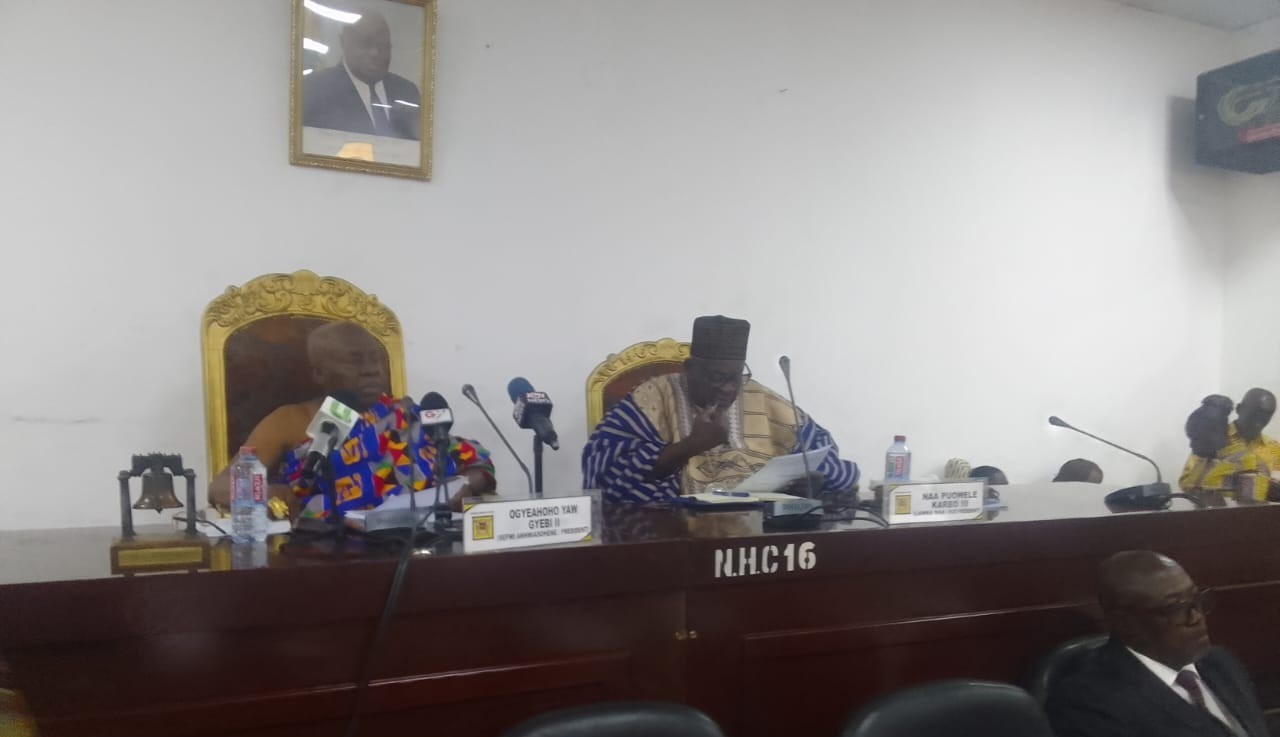
Asantehene, Otumfuo Osei Tutu II, has charged the National Petroleum Authority (NPA) to liaise with other state agencies to deal with unauthorised siting of fuel stations, especially, in waterways.
The Ashanti King’s admonishing to NPA echoes the sentiments of many residents of Kumasi after last week’s devastating floods following hours of torrential rain.
“When issuing licenses, did you do due diligence? Are you ensuring fuel stations are sited in the right places? Please coordinate with district assemblies, waste management and other agencies to address these issues. It should be multi-faceted,” he told NPA boss Hassan Tampuli and the board of the Authority visited the King at the Menhyia Palace.
Residents of Anloga Junction and Daban have particularly blamed perennial the floods on the building of fuel stations in waterways.
Last week’s floods, like those of previous years, have destroyed properties and in some instances claimed lives.
There is currently an on-going demolition of temporary structures along the Aboabo Storm Drain by the National Disaster Management Organisation (NADMO).
NADMO, however, says it is waiting for a comprehensive report from the Environmental Protection Agency (EPA) for appropriate action.
Otumfuo Osei Tutu II says the collaboration between EPA and NADMO is critical and called on NADMO to replicate it with other state agencies.
“Recently fuel stations at Anloga Junction got flooded. What if they caught fire? he quizzed.

Cylinder Recirculation Module
The introduction of the cylinder recirculation module proposed by the NPA is meant to ensure that LPG filling points are sited out of densely populated areas and commercials centres.
The directive followed public outcry in the wake of the massive explosion at recently LPG filling station at Atomic Junction last year.
At a Cabinet meeting of October 12, 2017, President Akufo-Addo on the advice of Cabinet, directed that henceforth the Cylinder Recirculation Model of Liquefied Petroleum Gas (LPG) distribution be implemented.
This model means that LPG Bottling Plants will be sited away from congested commercial and population centers and will procure, brand, maintain and fill empty cylinders to be distributed to consumers and households through retail outlets.
Low-risk stations will be designated for the supply of gas to vehicles. This whole exercise must be completed within one year.
At the meeting with Asantehene, Chief Executive Officer, Hassan Tampuli says a stakeholder consultation is being rolled out to deal with misunderstandings in the yet to be in Cylinder recirculation model
“We started stakeholder consultation from the Council of State, and we are continuing here. Cylinder operators have agitated and embarked on a strike on several occasions. We met at the Ministry of Energy and explained things to them. They fear it will collapse their businesses but we assured them it won’t”, he emphasised.
The project will be funded by Ghana's foreign partners.
The Gas and cylinder operators allege that employment will be solely non-Ghanaians.
But the NPA officials assured them by virtue of the local content law, most Ghanaians will be employed as they seek to strengthen the industry.
Bottling plant and jobs
Mr Tampuli says four companies have shown interest to build bottling plants in Ashanti Region under the new value chain which is coming on stream.
GOIL and three others have already begun applying for licensing to start operations of the plants in the lead up to the enrolment of the recirculation model.
Mr Tampuli says when these companies start operating will employ not less than 40 people each.
“The introduction of the model will not put people out of business as being speculated but rather employ more people,” he said.
Marketers, dealers and tanker drivers
Regarding their current operations, LPG Marketing Companies (LMC) can transition into LPG Distribution Companies (LDC) but should they decide to acquire an LPG Bulk Distribution Companies (LBDC) licence, LBP, they will not be given the opportunity to operate as a retail and distribution outlet.
They, however, have the liberty to transition into any of the licensing categories, once they meet the requirement for the licensing regime, officials say, LPG tanker drivers and their jobs remain untouched.
As a result of the conversion of the refilling plants into autogas outlets, about 400 jobs are going to be lost, however, an estimate 4,500 new jobs under the LDC, LBP, LPG Transport Companies (LTC) and door-to-door delivery will be created.
Again jobs of LPG Bulk Transports (LBT), LPG Bulk Distribution Companies (LBDC) and LPG Bulk Storage Companies (LBSC) and that of retail outlets transitioning into distribution centres are protected.
Officials say there will be a one-year transition where both distribution models will be implemented side by side leading to the phasing out of the old model by the end of 2018.
Read Full Story








Facebook
Twitter
Pinterest
Instagram
Google+
YouTube
LinkedIn
RSS