


Prof. Emmanuel Yaovi Hunnuor Bobobee, Agricultural Engineer and Inventor of the TEK Cassava Harvester and an Associate Professor of Agricultural Machinery Engineering Department at the Kwame Nkrumah University of Science and Technology (KNUST) has emerged the Champion of African Cassava Mechanisation, at the Africa Industry Excellence Award (AIEA) in Nigeria.
According to conservative estimate, it can earn Ghana over $3 billion from gari alone, $4 billion from starch and between $5 billion to $6 billion from bio-ethanol per one million hectares of the lead varieties of cassava
Prof. Emmanuel Yaovi Hunnuor Bobobee, who has pioneered research into benefits of the local stable food, received the Africa Industry Excellence Award (AIEA) for his distinguished contribution to advancing mechanised cassava production across the continent.
Professor Emmanuel Yaovi Hunnuor Bobobee, a Specialist Researcher in Agricultural Mechanisation at the Agricultural Research Council, Institute for Agricultural Engineering (ARC-IAE) in Pretoria, South Africa, from 2013 to 2015, received the prestigious Award last week, in Abuja, during the second edition of the three-day Africa Cassava Conference – ACC 2025.

The three-day conference brought together policymakers, researchers, industrialists and farmers to explore opportunities in processing, technology adoption, export and the development of cassava-based products across Africa.
Prof. Bobobee invented the TEK Mechanical Cassava Harvester, which is patented 17219 and championing the mechanisation of cassava production in Ghana and beyond.
It is designed to harvest all tropical root and tuber crops, and whilst harvesting it also ploughs the field at the same time for the next cultivation, conserve energy and works best when the ground is hard.
In a presentation at the conference, Prof. Bobobee explained that his mechanical cassava harvester, which is already in use in several countries, could support large-scale production if widely adopted, stressing that mechanised cassava production is key to transforming the crop into an engine for Africa’s next phase of industrial development.

He said “Ghana and Nigeria share similar agricultural challenges and both countries stand to benefit from sharing innovations and strengthening cross-border collaboration.
“The participation of seven countries demonstrate rising continental interest in cassava, hence the crop should be placed at the center of Africa’s fourth industrial revolution”.
The Director-General of the Pan-African Organization for Small and Medium Industries, Dr. Henry Emejuo said cassava was both an economic commodity and a daily staple across the continent and its “versatility made it indispensable to households explained in the fact that there is hardly any day a Nigerian or African home does not consume a cassava-based products such as gari or tapioca”.
He said the conference, which brought together, delegates from more than seven African countries, provided a critical platform for policymakers, scientists and industrialists to harmonise strategies that would deepen cassava utilization and unlock its economic potential.
Cassava (with the botanical name (Manihotesculenta), according to conservative estimate, can earn Ghana over $3 billion from gari alone, $4 billion from starch and between $5 billion to $6 billion from bio-ethanol per one million hectares of the lead varieties of cassava.
Prof. Hunnuor Bobobee, who has always described cassava as the “green gold” for Sub-Saharan Africa in this era of the fourth industrial revolution, has been advocating for the establishment of a dedicated Cassava Research Institute, as well as a Cassava Marketing Board as it pertains with the Cocoa Marketing Board (COCOBOD).
Arguably the leading staple in Africa now, the continent produces about 60 percent of the global cassava production, but Africa is not even near 1 percent when it comes to export and value addition of the crop.
Prof Bobobee has vast experience in agricultural equipment development and mechanization with special interest in mechanised cassava production and explained that his interest is to alleviate the drudgery associated with the manual methods of cassava production by making the entire process easy, mechanised, smart and attractive.
As a Specialist Researcher in Agricultural Mechanisation, his 17-acre cassava farm, purposely for teaching and demonstration, is cultivated with about 12 cassava varieties out of some 30 elite cassava varieties developed by the Crop Research Institute of the CSRI, and are capable of yielding a minimum of 25 tons of cassava per hectare, as against 8 tons in the case of local varieties.
Prof. Bobobee told The Chronicle that “cassava is a reliable staple for us and can also be used as a composite flour to make confectioneries and bread”.
He said the good thing about cassava is that “the continent produces and consumes” unlike the other crops that we produce and look for external markets.
Apart from the food types derived from cassava, the crop can also be used for bio-ethanol, artificial rice, animal feed, as starch for paper, plywood and textile industries and as binder for the pharmaceutical industry.

It can also be used as a monosodium glutamate, artificial sweetener, an adhesive and a bio-plastic.
Meanwhile, congratulatory messages continue to inundate the various WhatsApp platforms of Old Students of Sogakope Secondary School (SOSA/SOGASCO), Bobobee’s Alma mater.
“I suggest we get a parcel of land in the school to demonstrate mechanised cassava production with all the innovations that have brought this award.
“This could be one of the highlights for our 65th Anniversary in 2026 for the award to have multiplier effects on the Alma mater”, Prof Bobobee responded to the messages.
From Thomas Agbenyegah Adzey, Kumasi
For more news, join The Chronicle Newspaper channel on WhatsApp: https://whatsapp.com/channel/0029VbBSs55E50UqNPvSOm2z
The post KNUST Professor Reveals: Ghana Can Earn Over $12bn From Cassava Products appeared first on The Ghanaian Chronicle.
Read Full Story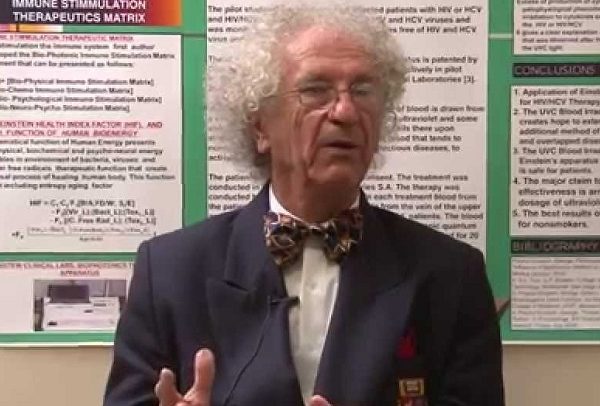







Facebook
Twitter
Pinterest
Instagram
Google+
YouTube
LinkedIn
RSS