


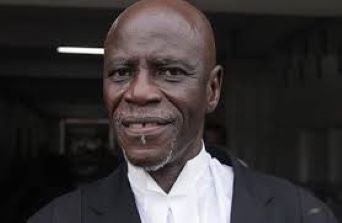
Lawyer Akoto Ampaw cross examining a witness
Ampaw: Now Mr Mettle-Nunoo, I truth that you are well?
Rojo: I’m trying very hard to respond to the court. I’m quite sick and I’m getting better slowly.
Ampaw: Now, I believe that it was after the declaration of December 9th and the press release of 10 that the petitioner decided to challenge the declared result. Is that so?
Rojo: That is not correct. The petitioner sought to have interventions made prior to the declaration.

Mr Robert Joseph Mettle-Nunoo
Ampaw: You are not listening to my question Mr Mettle-Nunoo. I am saying after these events that you decided to challenge the result in court. That is the question.
Rojo: In that regard yes, but prior to the declaration the petitioner has not had audience for the concerns raised.

Supreme Court
Ampaw: Please Mettle-Nunoo! My lords, may I ask when he goes on a merry-go-round of his own, these portions should be struck out that are not answers to my question. And Mr Mettle-Nunoo, let me advise you that you are before the Supreme Court; that when I put a question before you, the court expects you to answer the question and not to set your own question and run around with your own answer. Listen carefully to my questions and answer them.
Rojo: My lord, may I declare, I answer a question with an initial statement, and I need to throw more light on that answer, am I not permitted to do so?
Ampaw: You are not permitted to run irrelevant commentaries. That is what I’m trying to tell you.
Rojo: But how do you determine irrelevant commentaries?
Ampaw: Mr Mettle-Nunoo, this decision to go to court was after a number of civil society organisations and faith groups, prominent public voices had urged the petitioner to go to court if he didn’t accept the declared result?
Rojo: I believe you also recalled the petitioner said he will not accept a fraud result.
Ampaw: You see, you have not answered my question. So please, be respectful of the court and answer my questions?
Rojo: The question again?
Ampaw: The petitioner took the decision, to go to court after a number of civil society organisations, faith groups and prominent public voices had urged him to go to court if he did not accept the result of the declared election?
Rojo: That is not correct.
Ampaw: So the petitioner went to court before these calls on him. That is what you are suggesting?
Rojo: The petitioner went to court on his own evolution.
Ampaw: Now, I believe as a person with considerable experience in the former strong room, which is today called the National Collation Centre, you played an important role in the preparation of this petition. Is that right?
Rojo: That is correct.
Ampaw: Can you tell the court?
Rojo: Please wait, what was your question again?
Ampaw: Now, Mr Mettle-Nunoo, can you tell the court exactly when the decision was taken by the petitioner to go to court?
Rojo: I don’t know exactly when the petitioner took the decision to go to court. But I do know he took a decision at a certain time to go to court.
Ampaw: Around what exact time?
Rojo: I’m not privy to that.
Ampaw: Now, I also believe that the information you gave to the petitioner, as to what happened in the strong room, certainly contributed to the drafting of some of the paragraphs of the petition. Not so?
Rojo: Some of the paragraphs of (Ampaw: of the petition. You are in court because of the petition.) You are asking whether I made an input into the petition.
Ampaw: You heard my question so… That is what I mean.
Rojo: Definitely, I made an input
Ampaw: And right, from the beginning you were one of the witnesses that the petitioner he intended to call, is that not correct?
Rojo: I have no idea who and who the petitioner chose to call. I have no idea.
Ampaw: Vey well. So when did you get to know that the petitioner was interested in calling you as a witness?
Rojo: I cannot recall when they called me, but there was an interaction about my health and whether I will be able to make this, but I cannot recall when exactly that decision was taken.
Ampaw: Can you recall whether it was in late December, early January?
Rojo: I really do not recall.
Ampaw: I’m putting it to you that you have deliberately refused to respond because you are seeking to avoid telling the court the truth on this matter – the subject matter of your witness statement and how it came about?
Rojo: Your lordships, you have known me for many years, do you know me to have dubious character?
Judge: Answer the question?
Ampaw: I’m waiting for the answer?
Rojo: I’m not hiding behind any condition of mine. I’m not.
Ampaw: Are we free to address your condition of health? With your consent that is what I mean.
Tsikata: My lords (…)
Judge: Counsel for the petitioner informed us that the witness under oath was unwell and you decided to come to terms with the situation. That is why we are going through this. He could have not been here.
Ampaw: That is so. That is why I respectfully (Judge: let us …). My lords, if I may please be heard? The witness, in his letter dated 3rd February 2021, states that I’m holding my right to privacy, so that all my testimony is in public, and I want to know whether that waiver covers the conditions of his health. I’m not… itcovers, I don’t have a problem. If it covers, then I want to deal with that matter.
Judge: He won’t mind if it is on a live telecast. That is my understanding; let’s avoid this.
Ampaw: Very well my lords.
Ampaw: Now can you tell the court on 3rd February 2021 where you were?
Rojo: I went for a medical review.
Ampaw: So where were you coming from for the medical review? That is what I mean.
Rojo: That is the Korle Bu Teaching Hospital.
Ampaw; Please Mr Mettle-Nunoo, I’m asking where did you come from before going to Korle Bu?
Rojo: I came from home.
Ampaw: So can you tell the court how long have you been living at home since your condition?
Rojo: Which specific medical condition are you referring to, because I have several health challenges?
Ampaw: Very well. On the 4th of February 2021, I believe you were still at your personal residence?
Judge: Mr Akoto Ampaw, where is this leading to? Is this really necessary? Is it directed at something? Where is this leading to?
Ampaw: My lords, we are seeking to demonstrate to the court that the explanation given for this belated witness statement is a ruse, that is what we are seeking to do.
Judge: I believe they sought for leave and it was granted.
Ampaw: I’m not disputing that my lord.
Judge: This witness …came after Dr Kpessa Whyte had given evidence…
Ampaw: Very well my lords.
Ampaw: I believe that from the beginning of February you have access to the media – radio, TV, online stream media, didn’t you?
Rojo: I had access to?
Ampaw: To the media. You can listen to radio; you could watch TV and you could go online?
Rojo: That is not entirely true, I didn’t renew my DSTV license, and so I didn’t have access to that one.
Ampaw: I’m furthermore putting it to you that you did listen to radio?
Rojo: No, I don’t listen to radio.
Ampaw: So are you suggesting to this court that you had no interest on what was going on in this petition?
Rojo: That is not correct. The fact that I’m not watching television or listening to radio does not mean that I’m not interested in the proceedings.
Ampaw: So you agree that you were interested in what was going on with the proceedings here?
Rojo: Absolutely. As a representative of the petitioner in the strong room, I’m interested in the proceedings. I’m interested, very, very interested.
Ampaw: So you heard the proceedings as they unfolded in this court?
Rojo: Some of them, but not all.
Judge: Mr Akoto Ampaw, what is the position of the law, assuming even if he sat here and heard evidence, does it disqualify him?
Ampaw: Pease my lords, not at all but it enables the court to take note of that. But it enables the court to take not of that, because it is a witness who has heard the proceedings before testifying. That is an important thing. That is a very important thing I’m trying to drive at and this is a matter that the court must take into consideration. A witness that sits in court hears the proceedings and then comes to give evidence.
Now I want you to explain to this court how come your original witness, statement of truth, referred to paragraph one to 22.
Judge: But Mr Akoto Ampaw, we have gone beyond that. Permission was sought for amendment and we accordingly granted it. You who is a veteran in this job, do you allow your witnesses to prepare his statement of truth?
Ampaw: My lords…
Judge: I’m asking you as a lawyer. Do you prepare this statement of truth or you allow the witnesses to prepare?
Ampaw: My lord, the last time…
Judge: Answer that question.
Ampaw: I don’t, but I make sure the witness reads what he prepared.
Judge: But petty, petty errors may occur and they occur on regular basis that is why we allow these amendments to be granted. So we have gone beyond that.
Ampaw: My lords, I’m most grateful that the court recognises the occurrence of petty errors.
Ampaw: Now you said in paragraph eight of your witness statement that “Dr Kpessa Whyte and I, on many occasions, pointed out errors in figures and words on the sheets that were brought, which ultimately affected totals and assigned results.” Now when the petitioner filed his petition, the only problem that he complained about is where complaint Exhibit ‘D’ is attached to the petition. The alleged padding complaint in Exhibit ‘F’, and his exhibit, I believe, ‘E’
Judge: How can the witness have access to the pleadings? He said he gave information for the preparation…that is how I understood him. Looking at the pleadings, how many witnesses will he have access to the pleadings settled by counsel?
Ampaw: My lord…
Judge: No, in fairness to the witness?
Ampaw: The witness has not said he is unable to answer this question.
Judge: Well go on. The court is also to protect every witness who comes to testify. Yes!
Tsikata: My lords, indeed, the witness has made it clear that he had an input, but he doesn’t know the details or what the lawyers did. I think he gave an answer in that effect. And this question is referring to Exhibit… and so on in the pleadings, and I don’t think that it is appropriate for the witness to be asked questions in relation to a petition. If he wants me to go into the witness box to answer questions about how the petitioner’s pleadings were made, we can determine…
Ampaw: My lords, I raise serious objections to this remark. I take serious objections to it.
Tsikata: I will avoid such comments, I take back my lords.
Judge: Mr Ampaw, on a more serious note you …address the witness.
Ampaw: Now, you know that your Regional Secretary in Ashanti clearly indicated that they had no problems with the Ashanti Region result, but rather rejoiced at the result. Don’t you?
Rojo: I’m not aware that the Regional Secretary had made any such statement.
Ampaw: But you are again aware?
Rojo: I said I’m not aware, how can I again be aware?
Judge: Mr Nettle-Nunoo, he is asking another question, please, don’t lose focus, just listen.
Ampaw: You are again aware that persons present at the Regional Collation Centre for your party, included Mrs Betty Mould Iddrisu, not so?
Rojo: I knew she was in the Ashanti Region, but I have no knowledge she was in the Regional Collation Centre at that particular time. I have no knowledge of that.
Ampaw: And I’m putting it to you that she didn’t complain about the figures that were collated in Ashanti?
Rojo: I’m not aware of that and she is not the returning officer. Sorry, she was not the representative in the region in that regard.
Ampaw: Now, I’m, furthermore, putting it to you that the complaint that the petitioner has in respect of Ashanti in the Ashanti Region related to only four constituencies?
Rojo: That is not correct.
Ampaw: And I’m furthermore putting it to you that the numbers involved were mere 534 votes?
Rojo: That again is not correct.
Ampaw: I’m furthermore putting it to you, that this number had no material effect on the overall outcome of the presidential election?
Rojo: I don’t know where you are getting these figures from, and I have no way of confirming that the figures and the source of the data are correct.
Ampaw: Now, one of your complaints in your witness statement relates to the Eastern Region summary sheet. Is that not correct?
Rojo: That is correct.
Ampaw: Now you will notice that your complaint was that there were two summary sheets, one signed by the NDC and other agents of the other candidate. And the other both signed by agents of some of the other candidates was not signed by NDC.
Rojo: There were two summary sheets presented. One was signed by the NDC and the other was not signed. That is correct.
Ampaw: I’m further putting it to you that the fact that the other summary sheet was not signed by the NDC does not prevent the Chair of the EC to rely on it, provided they were signed?
Judge: Is it not a question of law?
Ampaw: Very well my lords, but he makes a case out of it. That is the point.
Judge: If there is…
Rojo: My lords, if I may, that is exactly what we were raising – that on many occasions the EC permitted a resubmission.
Judge: We intervened to expunge the question? So there is no question now.
Ampaw: In paragraph 10 of your witness statement you claim that the EC officials were applying double standards, correcting, signing summary sheets from the regions on occasions. while refusing to correct others that the agents of the candidates had signed. Is that not so?
Rojo: That is the point I’m making in my statement.
Ampaw: I’m putting it to you that Dr Kpessa Whyte, who was with you at the National Collation Centre, made no such reference in his witness statement?
Rojo: My lord, I won’t know what he said in his statement. In my candid opinion, if I may, I was watching the fax machines and many occasions the fax machines were not attended to because no faxes were coming.
Judge: Please, Mr Rojo Mettle-Nunoo, at times you talk too much.
Rojo: I’m a petitioner and a former lecturer that is why it is like that.
Judge: You are in the court room, let me remind you the way you answer questions.
Judge: Mr Akoto Ampaw, if two persons witnessed the same incident and you asked them what you witnessed, they will come with different statements. That is natural. One witness made mention of something, it doesn’t mean another will mention same thing. You understand it?
Ampaw: That is generally true, but more so…
Judge: More so …if he doesn’t have access to his witness statement
Ampaw: My lords, I’m putting it to him, if he says he doesn’t know, it is on record that he doesn’t know. That is what I’m doing.
Judge: But the question must be a legitimate one.
Ampaw: Now, in any event, from your long experience since 1992 in the then strong room, now National Collation Centre, you know even there agents of candidates disagree with the figure, the EC may go ahead and use the result to declare the elections. You know that from your experience?
Rojo: That is not always the case. In most cases, depending on who the Returning Officer is. You were given the opportunity for correction before the final verdict or declaration. In this particular instance, the EC Chair is not following best practices.
Ampaw: I’m putting it to you that the agents of the parties cannot compel the EC to do their will?
Rojo: The agents of the parties cannot compel the EC that is correct, that is why in the past we had an IPAC. The IPAC provided an opportunity for further stakeholder dialogue.
Ampaw: Now you claim in paragraph 19 of your witness statement that you made a mistake when you signed the summary sheet in the strong room is that not so?
Rojo: That is correct.
Ampaw: I’m putting it to you whether or not you made a mistake the EC was entailed to processethe summary sheet?
Judge: Mr Akoto Ampaw, is it not a matter of law?
Rojo: My lord, that is not always the case.
Judge: Oh! Mr Mettle-Nunoo, please!
Tsikata: My lords, I think there is a time line.
The post Cross examination between Ampaw and Rojo appeared first on The Chronicle Online.
Read Full Story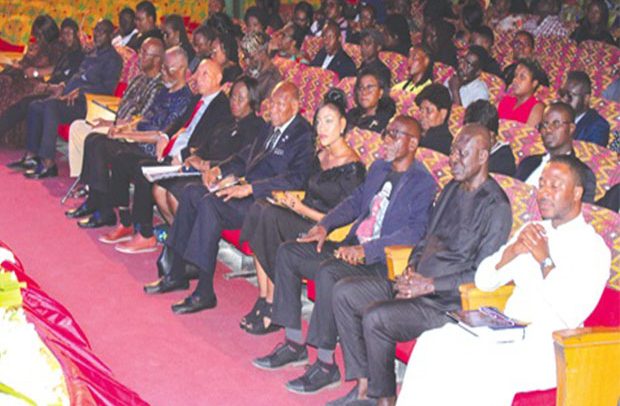





Facebook
Twitter
Pinterest
Instagram
Google+
YouTube
LinkedIn
RSS