


Coup d’états are no more entertained in Africa and the world at large. A section of the army in Africa has used this crude method of taking over the reins of power to cause irreparable damage to the various economies on the continent. Though the United Nations has not passed any law banning coup d’états (we stand for correction though), the various global regional blocks – European Union, Africa Union – and a host of others no more entertain it.
Having realised that the take-over of governments by brute force is no more a popular idea, the military seems to have developed a new strategy, where they capture the president and at gunpoint force him to resign, but still insist that they have not organised any coup. This new found strategy was pioneered by the Zimbabwean military a couple of years ago, and has now been replicated in Mali.
As we put this piece together, President Ibrahim Boubacar Keita of Mali has ‘resigned’ after the military seized the presidential palace, and the president himself, following a series of protests that rocked his government over a disputed legislative election. As we have already indicated, the military in this poor West African country is insisting that it has not organised a coup, and that the president voluntary resigned.
When a president resigns, one would have expected that either his vice or prime minister would automatically take over from him, but this is not what has happened in Mali. The military is rather in control and still insisting that it has not organised a coup.
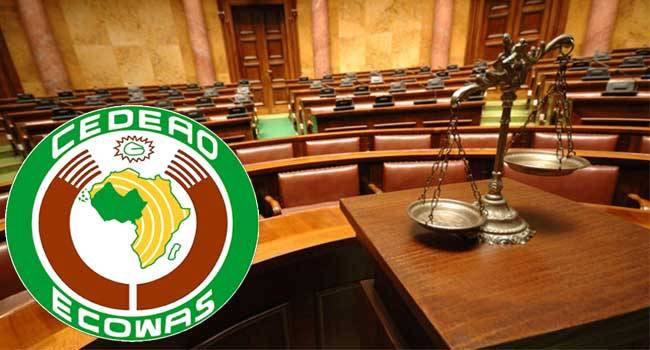
But, whilst showing concerns over events in Mali, The Chronicle is scandalised over the seeming crocodile tears being shed by the leadership of the Economic Community of West African States (ECOWAS).
Immediately the incident happened, ECOWAS issued a statement to condemn the toppling of the government. It also announced the shutting down of all land and air borders with Mali, in addition to severing trade deals with it.
ECOWAS, as a group, has the mandate to ensure good governance and stability in the sub region. Unfortunately, it sometimes sits down unconcerned when trouble is staring it in the face until the situation develops into full blown crisis before intervening. One of the major problems that confronted President Ibrahim Boubacar Keita’s administration was rebel activities in the north.
The al Qaeda linked group has created a state of instability in the north, and with the scarce resources available to Mali it was very difficult for the President and his team to defeat the rebels. It took the intervention of the French government to somehow stop the further advancement of these rebels to the south.
Again, we stand for correction, but The Chronicle is yet to read or hear any support, be it financial or military, that ECOWAS offered Mali.
What broke the camel’s back was the disputed election organised by President Ibrahim Boubacar Keita, where he subverted the will of the people of Mali. When the masses marched onto the streets to protest ECOWAS should have sensed that something dangerous was going to happen, but kept mute and rather sat in their cosy offices in Abuja.
Now that the situation has got out of hand, the same ECOWAS is imposing sanctions and also sending a delegation to meet the junta head – what hypocrisy.
The government our brother is heading had virtually been overridden by rebels in the north, and yet you sat down and did not say anything, leading to agitations against him. The same brother organised a disputed election, but you failed to reprimand him that what he did was wrong. Now that he has been overthrown, you are crying more than the bereaved family. In our view, ECOWAS is gradually becoming a toothless mongrel, and until the organisation changes its character, ensuring absolute peace in the sub region will be a mirage.
The political development going on in Ivory Coast is another time bomb that is waiting to explode, but, again, ECOWAS is pretending as if it does not know what is going on. It is waiting for the situation to get to breaking point before reacting.
The organisation, formed way back in 1975, seems to have lost its pro-activeness and is only interested in solving crises. We insist that the coup staged in Mali could have been avoided if ECOWAS had taken pre-emptive measures, instead of being reactive, a decision it has resorted to at the moment.
We claim to have gained independence from colonial rule, but all our apron strings are still attached to the colonial masters, otherwise, we do not understand why ECOWAS should sit down for the French government to send troops to northern Mali to help quell rebel activities there, instead of starting something on our own before calling for an external help.
ECOWAS is gradually losing its usefulness, and the earlier it sat up, the better it would be for the West Africa sub-region.
The post Editorial: Coup d’état in Mali : ECOWAS should stop shedding crocodile tears appeared first on The Chronicle Online.
Read Full Story







Facebook
Twitter
Pinterest
Instagram
Google+
YouTube
LinkedIn
RSS