


From Richard Owusu-Akyaw, Kumasi. A former Bishop of Kumasi Diocese of the Methodist Church Ghana, Right Rev Prof Osei Sarfo-Kantanka has said the provision of development projects by the government is a legitimate responsibility and demand of the constitution. He said in meeting this obligation the government is not doing the citizenry a favour and […]
The post GOVERNMENT IS NOT DOING US A FAVOUR -Methodist Bishop appeared first on The Chronicle - Ghana News.
From Richard Owusu-Akyaw, Kumasi.
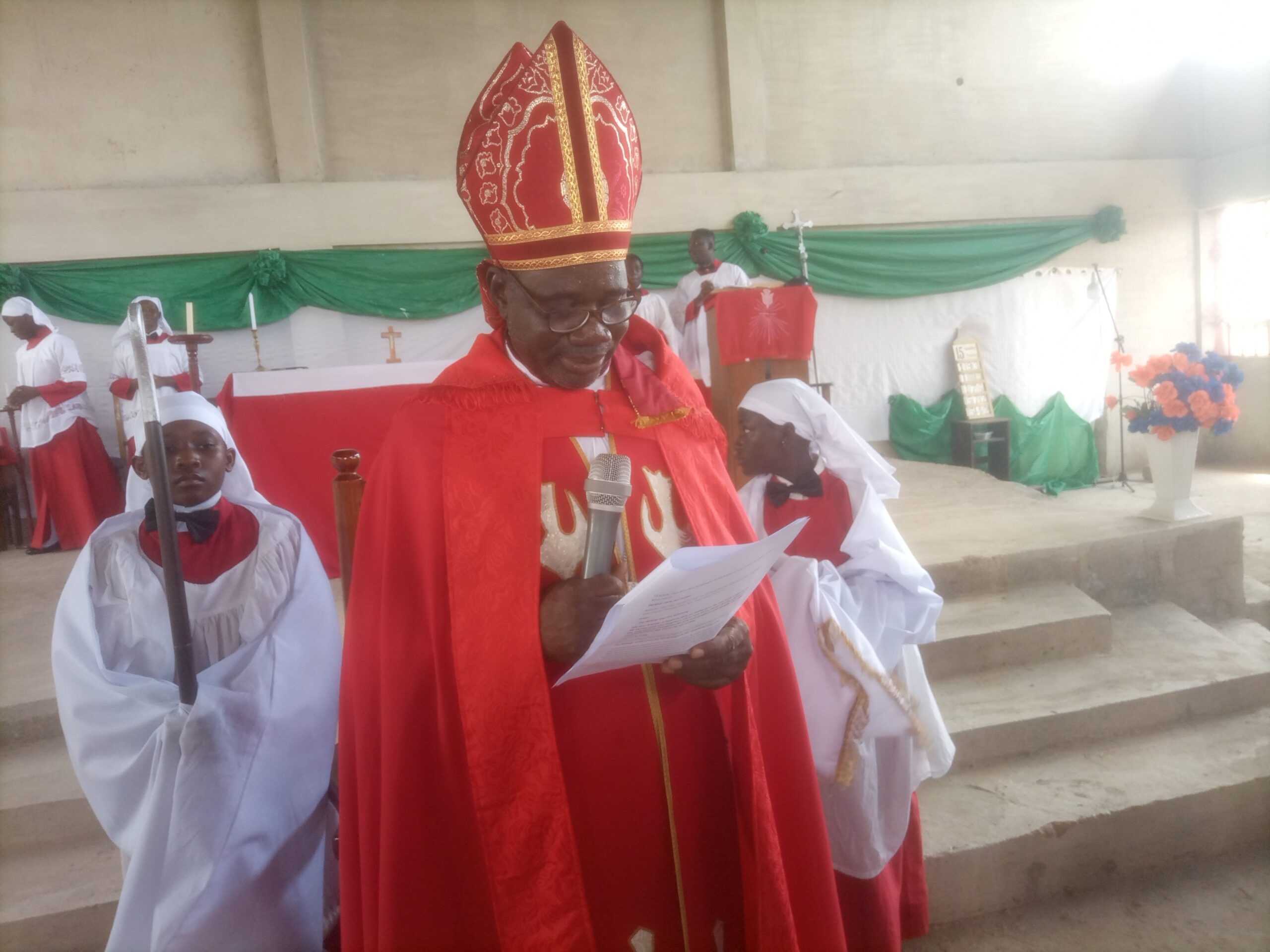
A former Bishop of Kumasi Diocese of the Methodist Church Ghana, Right Rev Prof Osei Sarfo-Kantanka has said the provision of development projects by the government is a legitimate responsibility and demand of the constitution.
He said in meeting this obligation the government is not doing the citizenry a favour and that it is not a matter of “I will do this and that” stressing that whatever plans any elected president of Ghana ought to do is stipulated in the constitution.
“It is about time the citizenry understands that government is not doing us a favour by providing amenities. It is indeed a government’s responsibility to do so,” he explained,” during a public lecture code named -“Enhancing peace during voting” at the Valley View University School of Theology and Missions.
Prof. Sarfo-Kantanka described the era where chiefs call on politicians to fix their road in an election year as vote buying and vote selling, saying -“No road no vote is vote selling and it is all because of poverty, which is giving us all these problems.”
He explained that per Article 31-34 of the 1992 constitution, which provides directory principles of state policies, one cannot sit down for political parties to talk of their manifestoes on how they will develop the country after being informed about these provisions in the constitution.
Bishop Sarfo-Kantanka noted: “Whatever is expected of our government is clearly stated in this directory principles therefore when a government responds to these directives is not a favour to any group of people. It is what is expected of them.”
The former Methodist Bishop stated that poverty has made some people to take elections as do-or-die affair and that their party winning at the election is the only way they can win a contract or there will be job for the boys. They are not talking about the skills they have the government policy will enable them to have jobs.
Bishop Sarfo-Kantanka stressed: “As long as we are not finding ways to solve the poverty among us, we will see people who are strong but use their strength for the party, hoping that when they win election they party will give them money.
He indicated that our economy run wild during elections because of these poverty related issues, adding that poverty therefore is the major cause of the ineffectiveness of multi-party democracy in our part of the world.
“Government must bring on policies that will bring prosperity to the people and pursue policies that decrease poverty which is a great disservice to our part of the world” he told the government.
On the situation of political stability and peace to permit effective functioning of government, the crop scientist told security agencies to be fair and not to be seen as supporting one party or the other.
Prof Sarfo Kantanka noted that peace is never won on a silver platter. “We must fight or plan for it” he said and advised that just as we talk of freedom fighters for our political leaders from our colonial masters, so we must have peace fighters, who will help us establish and run our multi-party democracy and have both short and long term plans as well in achieving our goal of practicing democracy in a peaceful atmosphere.
On multi-party he said quoting J.D Van der Vyver that some conditions including certain level of dedication and intellectual sophistication among the greater part of the people, as important pre-conditions for multiparty democracy to be met before multiparty system can strive.
According to the Methodist Bishop, t is obvious that some of the political parties in Ghana depend greatly on the ignorance of the electorate ,especially those in the rural areas and explained that that this is borne by the fact that multiparty system in the urban area is usually different from the rural areas.
Bishop Sarfo-Kantanka noted that for multiparty democracy to strive, we need an enlightened citizenry who understands what the policies are and whether the policies are good or bad and also mentioned free flow of information and a politically alert and informed public.
The former Methodist prelate lauded the media, saying the media landscape is very active in Ghana now. He noted “We have come very far in terms of the ability of the media to investigate and bring out information to the public”.
He, however, said “We still have a long way to go but we must be grateful for what has been accomplished especially by the private media so far.
Recounting the dark days in Ghana, the Canadian-trained scientist noted: “We have moved from the era where we listened to news at 1.p. m. from one radio station upon which one had to flee or seek refuge to an era where a lot of media outlets make information available.
Bishop Sarfo-Kantanka raised some concerns about professionalism gap among some media personnel while dealing with political issues.
According to him some media practitioners allow all kinds of statements to go on air ,whiles others refuse to ask the critical question that bring out the truth and the realities on the ground saying some radio and TV stations seem to only provide platform for political activists to indulge in the bad practice of use of vulgar language.
He asserted “We cannot lose sight of the fact that some media houses are clearly partisan in their outlook and urged the monitoring and supervising agents to be vigilant in order not to ignite genocide as it happened in some African countries like Rwanda. He advised the media to be very conscious for the positive and negative potentials of the airwaves.
Bishop Sarfo-Kantanka said, however, that all is not lost having moved through stages to practice multi-party democracy where elected officials have had to exercise power alongside traditional rulers whose authority.
“we have also moved from one-party state authoritarian rule to military rule to our current multi-party democracy all in a period of about 70 years spanning four republics from 1960-1966
( first republic), while the second republic lasted from 1969 to1972 with the third republic spanning 1979-1981 until 1992 when the present fourth republic began in 1992.
“We must thank God that in spite of the many imperfections, multi-party democracy has stayed on for the past 24 years” Prof. Kantanka noted.
3rd Center Lead
The post GOVERNMENT IS NOT DOING US A FAVOUR -Methodist Bishop appeared first on The Chronicle - Ghana News.
Read Full Story




Facebook
Twitter
Pinterest
Instagram
Google+
YouTube
LinkedIn
RSS