


In the decades gone by, we had sanitary inspectors who worked in the town councils, hence their name “tan-cansi.” They always appeared unannounced like housemasters going for inspection, and woe betide you to have an unclean environment in your premises or leave your pots, pans and plates unwashed. Today, those unmoved, un-bribable, and strictly […]
The post How clean can we be? appeared first on The Chronicle - Ghana News.
In the decades gone by, we had sanitary inspectors who worked in the town councils, hence their name “tan-cansi.” They always appeared unannounced like housemasters going for inspection, and woe betide you to have an unclean environment in your premises or leave your pots, pans and plates unwashed.
Today, those unmoved, un-bribable, and strictly adhering to the letter and spirit of duty workers are no more, in fact, they are extinct. If that is the reason why our environments are so unclean and untidy in this era, man cannot be sure. How we evolved from responsible species to I-don-carism breed of homo-sapiens, I cannot be certain.
But, what is certain is that we simply feel content living in filth, and we must be giving the angels of the Lord God of Host lots of work to do by keeping epidemics and plagues away from us. The other day, when cholera struck, hundreds of people perished, and yet, that was not a lesson to us.
Governments continue to construct new roads, but in the old fashion way with open gutters. The only advantage that such open drainages have is to help growing boys develop the skills of soccer by playing O.T. (One-Touch) gutter-to-gutter football.
What the open drains do is not to drain waste water in the end, but become refuse dumps and the production of organic manure; and even this will depend on the toxic level of the gutters.
The other time we made attempts at concealing the drains, we run into problems of flooding, since, for some reasons, they also got choked. That is why the Abbosey-Okai to Kaneshie Market section of the Winneba road always gets flooded, even with slight isolated showers.
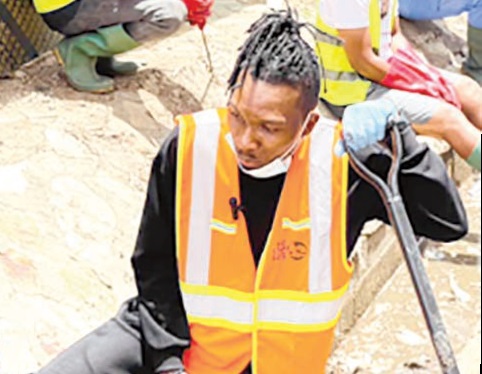
We have task-forces organised by politicians or the community to de-silt such gutters. And what a foul sight when the cleaning up is completed. While the job is going on, the traders continue to ply their trade, with some selling food, very oblivious of the health hazards around.
The very interesting thing is that usually, after the job is done, the heap of debris is left by the shoulders of the gutters, and if it is not collected on time, the filth finds its way back home into the gutters.
The only way out is to construct sealed drainages, with size and volume more than twice what will normally flow through it.
In effect, we must start learning from the French and other such advanced countries, which have complex underground drainage systems, to take care of waste and floods.
It is really and truly necessary to keep the filth under check, and go on to apply strict sanctions against those who litter the public.
The other day, it was all about polythene bags, which were blamed for the filth and eye-sore. Then someone came up with a biodegradable bag, which will dissolve into the soil after a few months.
We never thought of one thing. It is not the black polythene bag which is creating the filth. It is rather we, the humans’ inability to dispose of filth that has made the bags to be found all over the place. For even with biodegradable bags, if they are disposed of anyhow, just as the polythene bags were, they will also cause filth, at least, until they get dissolved.
We need more education on the disposal of waste, and severe sanctions need to be applied to deter offenders, for our beaches are now becoming health risk zones, due to our inappropriate means of disposals.
We sit in this country and rate ourselves higher than countries like Gambia, and yet a visit to Gambia beaches, and you will think people sweep there three times a day, all week long. One prominent chief in Tema started a campaign on getting our beaches clean, but, I am sure, he might have given up this laudable project.
It must be noted that with such filth draining into our seas, the fish will soon disappear, because of lack of food and the toxic nature of the waters. It must also be noted that to have a clean beach, we must have proper drainage and waste disposal systems, so that filth will not wash into our water bodies and find its way into the sea.
We cannot afford to live in filth, and it is for all of society to get up and do the right thing, while those in authority also encourage the citizenry to do the right thing.
A clean nation is a healthy nation, and a healthy nation is a wealthy nation.
Hon. Daniel Dugan
The post How clean can we be? appeared first on The Chronicle - Ghana News.
Read Full Story



Facebook
Twitter
Pinterest
Instagram
Google+
YouTube
LinkedIn
RSS