


The Brong-Ahafo region in Ghana is not unused to producing sporting talent. It boasts Ghana captain and former Sunderland record transfer, Asamoah Gyan, among its former inhabitants, as well as the former West Ham, Fulham and Leicester defender John Paintsil and a number of top footballers plying their trade across Africa.
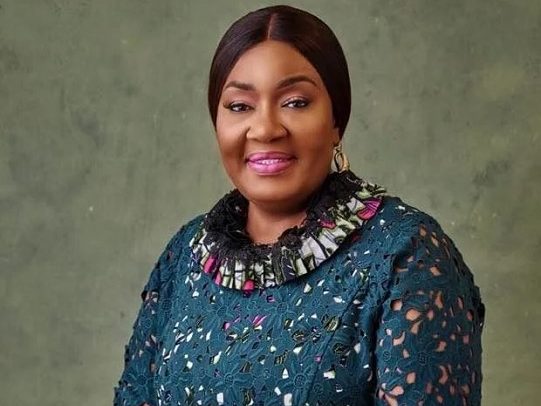
At a second division club located in the capital of the region, Sunyani, a new star is emerging, a star standing on the touchline rather than the pitch – as head coach of the men’s club DC United. She is a 27-year-old woman: Mavis Appiah.
Appiah joined in 2016 as assistant coach and a year later was handed the top job. Since she took the reins the team has thrived, finishing top last season.
To get to this stage, however, has been a struggle. And to take Appiah’s coaching career to the next level will involve further sacrifices and barrier-breaking moves.
“I started playing football right from primary school, where I was on a girls’ team and played all the way through to university where I was part of a team that went to the Ghana University Sports Association Games in 2014,” Appiah says.
But to play football as a woman in Ghana is not easy. ''Your parents don’t allow you to take part in football when you are female because they think only boys should play football. So people discourage you, the community discourages you, your family discourages you. It’s terrible out here in Ghana because most people in our society refuse to accept it’s not just a male job.''
With a father who was once a first division coach but never quite made it to the top, Appiah was determined to find a way past those views. “I was combining playing and education, which gave me the time and excuse to play. I applied for a coaching licence after school. When I finished university I already had the coaching licence and decided to focus on that rather than playing.”
While doing her national service at a school near DC United – graduates in Ghana must complete one year in the public or private sector – she began as assistant coach.
The second division in the region is not professional and it has been hard to build her coaching CV without support: “I have never been paid, I’ve never received a salary for coaching, I come to training and go home by myself with no financial support.”
The young Ghanaian now has her CAF B Licence and it is her passion for the game coupled with a desire to make things better for those that follow which has driven her to keep pushing.
''You want to do it so you can start to change the future and make it so that women who would like to take their first steps into the job will be able to do so without fear or hindrance,” she says.
Inspired by Mercy Tagoe, the head coach of the Ghana women’s national team, the Black Queens (the only woman to have held that post), she is also aiming for the top. “Currently I’m hoping I can get my pro licence, which no female in Ghana has ever reached,” she says.
Her team play possession-based football and Appiah’s coaching philosophy also centres around developing young talent. “We’ve set a standard here where I don’t think any team can reach DC United. My players are disciplined. We have a player and coach relationship. They see me as their coach and as their mentor, not as a woman.”
While she could probably have her pick of jobs in the women’s domestic game, it is working at the top of the men’s game and breaking further records that is her goal. “It’s a dream that one day I can coach a big men’s team. I want to change the mind-set that men should coach men and women should coach women. I want to coach men because I want to set that record. I want to be the first female coach in the Premier Division.”
The University of Ohio has offered her the chance to do a Masters in coaching education in the US, but she faces having to turn the place down if she cannot find the $3,070 to enrol.
“As I speak with you now I don’t know how it’s going to work because I don’t have any financial support coming from anywhere, not from the government or anyone else.
“I’m the only female from Ghana to have been given this opportunity and I hope I can get some help. It would be an inspiration to many women to see a female coach from the second division in Ghana being given the opportunity to study and coach in the States.”
It would be a crime if Appiah is not able to meet the costs of continuing her education, especially when this is her driving force.
“I didn’t have anyone to look up to. What is driving me to coach men is a personal challenge I have set for myself, to be the person girls can look up to that I did not have,” she says.
Read Full Story




Facebook
Twitter
Pinterest
Instagram
Google+
YouTube
LinkedIn
RSS