


GNA feature by D.I. Laary, GNA
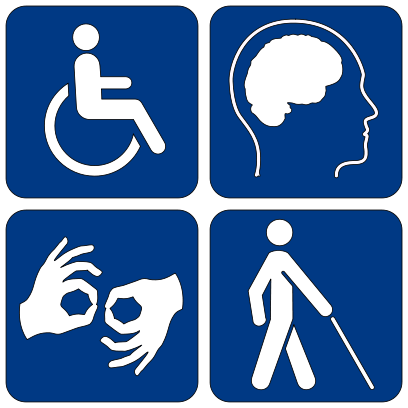
Wa, Feb 3, GNA - The leadership of Ghana Federation of Disability Organisations (GFD) has been pushing hard to make Ghana’s Disability Act, 2006 (Act 715) congruent with the United Nations Convention on the Rights of Persons with Disabilities (UNCRPD).
The move is to make sure the two right laws, which seek to promote inclusion and effective participation of persons with Disabilities (PWDs) in the Ghanaian society, are not unparalleled in content, scope and application.
RATIFICATION OF CONVENTIONS
The UNCRPD is a global shift from considering PWDs as objects of pity to accepting them as persons with human Rights. The Convention does not create any new rights. It highlights accessibility and inclusion angle of all human rights. Indeed, the UN Convention builds upon, and works in synergy with previous international texts connected to PWDs and various human rights treaties.
Ghana signed onto the UNCRPD in 2007 and ratified it in 2012. By the ratification, the Convention becomes part of Ghana’s domestic laws and wields the same binding force as all domestic laws of the state of Ghana. As a state party to the pact, Ghana has also assumed all obligations and responsibilities provided in Article 4 of the Convention.
The obligations of Ghana as stipulated under Article 4 of the CRPD covers the following: Ensuring the full realisation of all human rights and fundamental freedoms for all PWDs,taking all appropriate measures, including legislation, to modify or abolish existing laws, regulations, customs and practices that constitute discrimination against persons with disabilities and Mainstreaming the rights of PWDs in all policies and programmes.
The others are; ensuring accessibility of information to PWDs, disseminating information on the rights recognised in the convention to all stakeholders; and reporting to the UN Committee in charge of the CRPD on the level of implementation of the UNCRP.
Ghana has been reporting to the UN Human rights committee on the level of implementation of the CRPD every year.
But, unlike the international convention which is rights-based, Ghana’s PWDs Act 715, which preceded the convention, it is welfare oriented and suffers technical deficiencies. The shortfalls include how a PWD is defined, internationally agreed principles of legislative drafting such as textual clarity and simplicity, legislative coherence, and sensitivity to context, among others.
Ghana’s Act does not even provide for political participation of PWDs but the UNCRPD does. Again emergency humanitarian services are not provided for in Act 715 but they are provided for in the UNCRPD.
To ensure smooth application of the two legal instruments pursuing the same objectives, Act 715 must be amended to match with the CRPD in order to avoid confusion in their meaning and application.
The GFD had contracted Law and Development Associates (LADA) to carry out a comparative study on Ghana’s law and the global one in order to produce a gap analysis report as a basis for the amendment of Act 715. The report was produced and the recommendations for improving the scope, contents, and textual and structural arrangements of the Act, submitted to the Ministry of Gender, Children and Social Protection in 2013. This formed part of GFD’s contribution to fast-track the process of amendment.
However, it is disappointing how successive governments have move with slow-pace in their approach to the implementation of pro-disability policies, legislations, and social interventions, including article 29 of the 1992 constitution of Ghana.
As a result, PWDs in Ghana continue to be at the peripheral of issues, particularly when it comes to decision-making. For instance, article 4 (3) of the UNCRPD enjoins state parties to closely consult and actively involve PWDs in the design, implementation, and monitoring of all legislations, policies, programmes, and projects, especially when they are intended to benefit PWDs. This provision adds weight to the international philosophy of inclusion of PWDs in society, “nothing about us, without us”.
It is regrettable that, unlike South Africa, Uganda, and Kenya, among other countries, where article 4(3), is complied with, Ghana continues to practise the welfare model of disability, occasionally designing and implementing few social interventions it believes will benefit PWDs without closely consulting and actively involving PWDs in the design and implementation processes.
A glaring example was the UN high level meeting on disability and development in September 2013. Ghana attended the meeting without consulting PWDs in Ghana for their views. Ghana did not also include PWDs in its delegation as other state parties to the convention did.
Ghana’s PWDs Act has failed woefully to promote the rights of PWDs and to ensure their participation in political and public lives. Worse still, state agencies keep violating provisions of Act 715 with impunity. For instance, the N 1 highway in Accra provides six overpasses for pedestrians without disability pass way to cross the high speed road in safety. There is no single ramp to facilitate PWDs crossing the road. PWDs staying on both sides of the road are marooned. Those from other parts of the way who need to cross over for school, medical care, market etc cannot do so.
The millennium schools constructed by the Accra Metropolitan Assembly do not have appropriate provisions to enable children with disability access the facilities.
Sadly, the schools and the roads were constructed after Act 715 had come into effect, and therefore constituted a violation of section 6 of the PWD Act 715. The GFD was in court against the state for violation of section 6 of the PWD Act 715 but justice has not been delivered.
Disability issues are human rights issues which require a sustained national support and efforts. The general public and relevant stakeholders ought to support the ongoing campaign and efforts by the Disability Rights Fund (DRF) coalition involving GFD, Mind Freedom Ghana and Media Caucus on Disability. Their efforts are to get government to fast-track the amendment of the persons with disability act to make it congruent with CRPD.
RECOMMENDATIONS
There is the urgent need for organisations to extend support to the media in terms of capacity building and financial stipends to journalists with passion in reporting on disability matters to investigate and serialise stories on the deficiencies of Act 715, using the gap analysis report as point of reference.
In this way, the media could also mainstream disability issues and stories. It is lamentable that disability issues, which are human rights issues, are never attractive enough to be featured as topical issues on media platforms like talking point, boiling point, double critical, news file, burning issues, etc. Let’s be aware that disability is everybody’s concern – if it does not happen in your early ages, it might happen in your old age one day when you start using the walking stick struggling to climb buildings or structures you probably refused to effect a change today.
GNA
Read Full Story







Facebook
Twitter
Pinterest
Instagram
Google+
YouTube
LinkedIn
RSS