


Accra, June 21, GNA – Developing the capacities of staff of governmental and non-governmental organizations is critical to the optimal exploitation of the plethora of available satellite imagery.
Mr Foster Mensah, the Executive Director of the Centre for Remote Sensing and Geographic Information Systems (CERSGIS), University of Ghana, said the ability to properly process and interpret earth observation data, especially satellite images, can tremendously improve information retrieval and consequently decision making.
Mr Mensah was speaking at a three-day workshop on the use of earth observation data for effective natural resources and agricultural management in Africa held in Accra.
The workshop was organized by the Tiger Initiative of the European Space Agency (ESA) in collaboration with the West African Science Service Centre on Climate Change and Adopted Land Use (WASCAL), the University of Twente, Netherlands and the University of Energy and Natural Resources, Ghana.
It focused on the exploitation of the data from ESA’s recently launched satellite sensors which provide global scale optical and radar data at no cost to the user.
In view of this, Mr Mensah commended the organizers of the workshop for their commitment towards enhancing the capacities of geospatial practitioners in Ghana and West Africa.
He said considering the mix of organizations participating in the workshop, the benefits of the training would be far reaching and assist the participants to generate critical information on natural resource management to decision makers.
“Major continental initiatives on delivering climate services based on earth observation data such as the one recently announced by the African Union will benefit from such a training, and eventually increase the resilience of human and environmental systems to climate change,” he added.
He said there were now other national, sub-regional and continental initiatives in Africa aimed at ensuring increased availability of earth observation data for science, business, education and decision making.
Mr Mensah said the commitment of the African Union in realizing an African outer space programme by adopting the African Space Policy and Strategy in January 2016 as part of its Agenda 2063
“Several other countries in Africa are currently developing space programmes and these initiatives are going to lead to further proliferation of earth observation data for resource management,” he said.
Dr Gerald Forkuor, a Remote Sensing Scientist at WASCAL, said the workshop was aimed at demonstrating the capabilities and application areas of data from the Sentinel satellites, introducing participants to new and open source tools and applications for processing the data and discussing the sustainable application of earth observation data in natural resource and agricultural management in Ghana and Africa.
He said the workshop was to empower the participants to use the cost effective satellite images in most of their decision making process.
“We will monitor the participants on how they use the information provided them,” he added
The outcome of this workshop will be an improvement in decision making at all level of national development and an increase in societal benefits from the use of earth observation technology.
Target audience were Geospatial analyst and practitioners in governmental ministries and institutions, the private sector and postgraduate students.
GNA
Read Full Story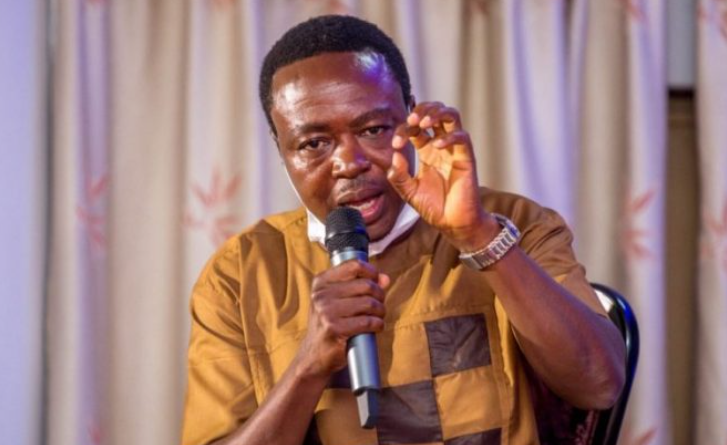





Facebook
Twitter
Pinterest
Instagram
Google+
YouTube
LinkedIn
RSS