
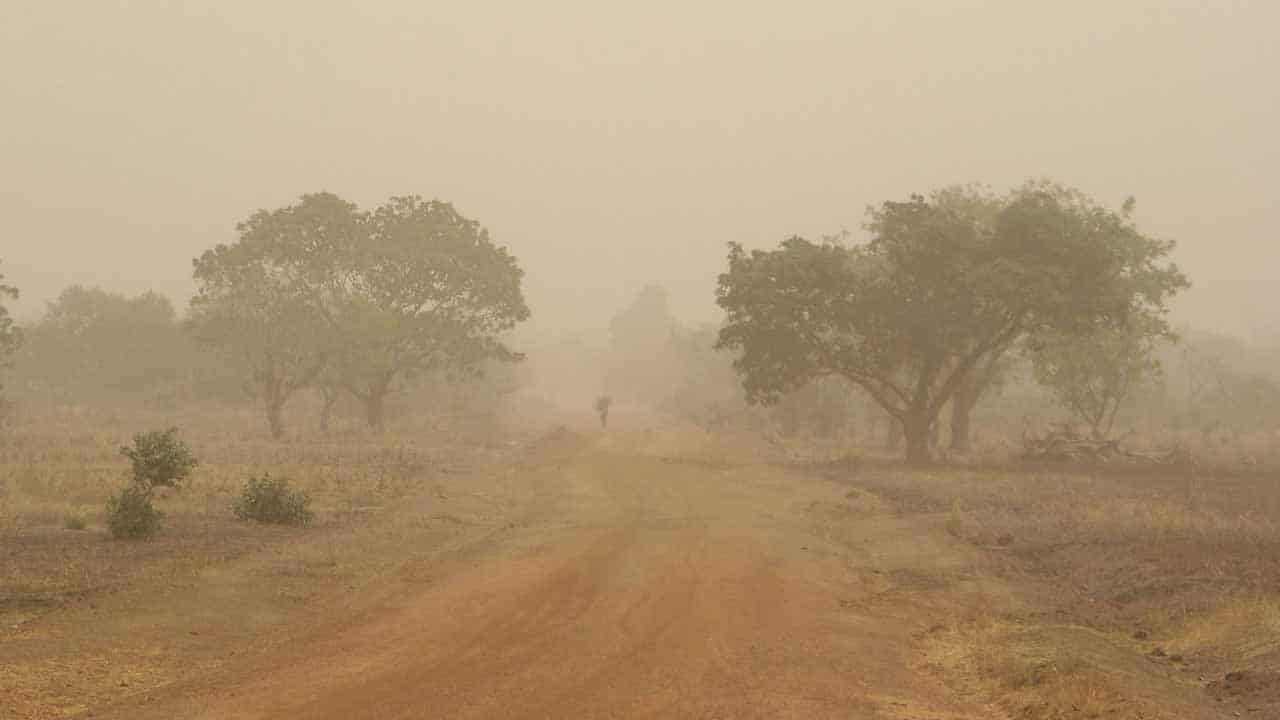

A new study has found that the air in several senior high schools in Kumasi is far dirtier than what health experts consider safe, putting thousands of students at risk of developing serious health problems.
The research, conducted between September 2022 and August 2023 in six schools, using air quality sensors, revealed that pollution levels, specifically tiny particles one cannot see with human eyes known as PM2.5, consistently exceeded the World Health Organization’s recommended limits.
Dr Victoria Owusu Tawiah, Lead researcher, explained to Ghana News Agency that the levels recorded were worryingly high.
“Think of a big bucket of water, like the ones used at home. Clean air should have only five tiny grains of dust in that bucket. But in Kumasi schools, the bucket has about fifteen grains instead of five,” she told the Ghana News Agency.
PM2.5, she said, refers to extremely tiny particles that cannot be seen with the eye but can travel deep into the lungs when breathed in, increasing the risk of asthma, lung disease, and other health complications.
“Children breathe in more air than adults and their bodies are still developing, so they are more likely to suffer from the effects of air pollution,” she added.
The study found that pollution was much worse during the dry season, when Harmattan dust from the Sahara mixed with smoke from burning rubbish, vehicle emissions, and household cooking fires.
During this period, the air was almost twice as polluted compared to the rainy season.
Mornings and evenings were identified as the most polluted times of the day, largely due to heavy traffic and domestic burning. Saturdays also recorded the highest weekly pollution levels, driven by increased weekend cooking and waste burning.
“Local factors like busy roads and open fires near schools make the situation worse,” Dr Owusu-Tawiah said.
Using an international air quality scale, the study found that air in the monitored schools frequently entered the ‘unhealthy for sensitive groups’ category, posing particular danger to children, people with asthma, and those with respiratory conditions.
Dr Owusu-Tawiah called for urgent action, including stopping open burning, promoting cleaner cooking methods, planting more trees around school compounds, and planning outdoor activities based on real-time air quality alerts.
“This is not just a school problem. It’s a city problem. Kumasi is growing fast, and if we don’t act now, more children will suffer from breathing problems and other health issues.”
She urged schools, government agencies, and parents to work together to protect students and reduce pollution around learning environments.
Air pollution remained one of Ghana’s deadliest public health threats. In 2023 alone, it claimed over 32,000 lives, according to the State of Global Air 2025 report by the Health Effects Institute (HEI) and the Institute for Health Metrics and Evaluation (IHME).
The report showed that air pollution caused nearly 14 per cent of all deaths in Ghana last year, making it the country’s second leading risk factor, after high blood pressure.
The World Health Organization earlier estimated that about 28,000 Ghanaians died prematurely in 2019 due to polluted air. By 2025, this figure had risen by more than 4,000, signalling a disturbing trend.
The Air Quality Life Index 2025 report also notes that dirty air is cutting nearly 0.8 years (or about nine months) from the average Ghanaian’s life expectancy. While global deaths from air pollution remain around 7.9 million, Ghana’s burden remains disproportionately high.
Source: GNA
The post Kumasi schools face dangerous air pollution – Researcher warns appeared first on Ghana Business News.
Read Full Story





Facebook
Twitter
Pinterest
Instagram
Google+
YouTube
LinkedIn
RSS