


Professor Jane Naana Opoku-Agyeman, the Vice President has charged African countries to bring to the fore unity, consistency and the courage to prioritize sustainable solutions over short-term fixes to ensure the continent ends AIDS by 2030.
“The next five years are the critical moment that will determine whether we can reach the 2030 target of ending AIDS as a public health threat. We know that this is Africa’s decisive moment. We possess the science, the knowledge, the leadership and the resilience.
“What we need to bring to the fore are unity, consistency and the courage to prioritize sustainable solutions over short-term fixes.
Let us advance our focus on discipline, scaling integrated sustainable responses that can end AIDS, TB and malaria. And position Africa for long-term health resilience,” she said.
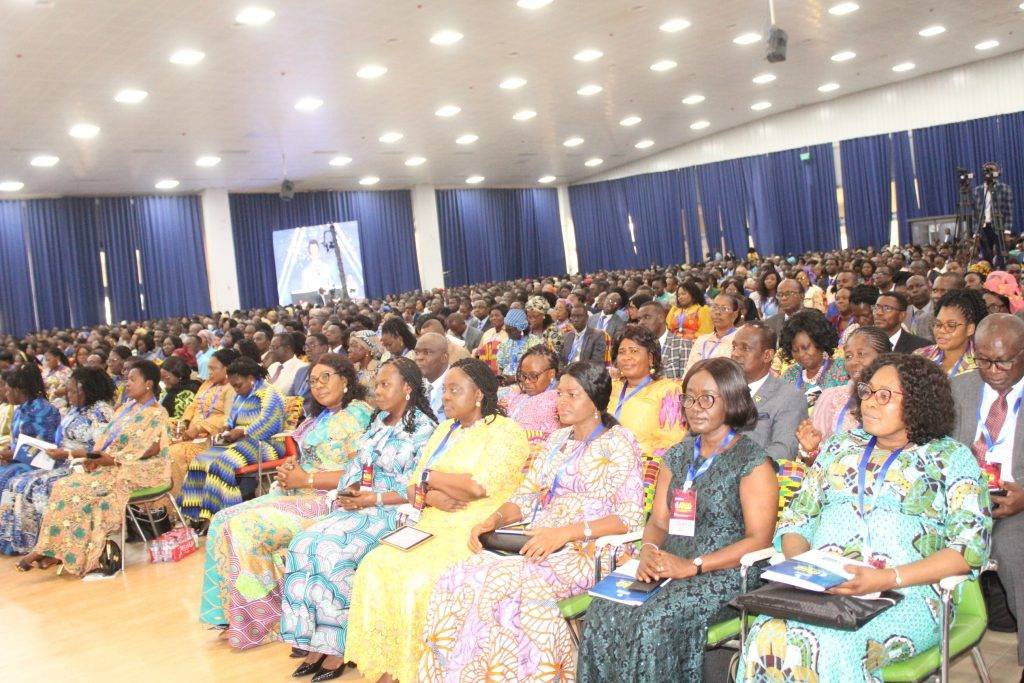
The Vice President made the call at the opening of the 23rd International Conference on AIDS and STIs in Africa (ICASA 2025) held in Accra on Wednesday.
The conference, which begins on 3-8 December is organised by the Society for AIDS in Africa (SAA) on the theme; “Africa in Action: Catalysing Integrated and Resilient Health Systems for Sustainable Responses to end HIV, Other Infectious Diseases, and Emerging Threats”.
She said health emergencies were testing health systems thus the space for global solidarity, though still important, was narrowing adding that, in such a moment, Africa must step forward with vision and leadership.
“We must hold our agenda, define our priorities and build strong, sustainable, self-reliant systems across the world, we have witnessed remarkable progress in reducing new HIV infections and AIDS-related deaths with Antiretroviral therapy saving millions of lives,” the Vice President stated.
She said innovations such as HIV self-testing and long-acting injectables were driving prevention, yet the pandemic persists and progress was uneven with Africa, facing profound disparities in access and outcomes.
According to the Vice President while the 95-95-95 targets were within reach for many nations, others remained far behind.
In Ghana, however around 65 per cent of people living with HIV know their status and many are receiving lifesaving treatments.
New infections have steadily declined and community-led organizations remain the backbone of the country’s response, she said.
These notwithstanding, Africa demands sustained political, financial and social policy as young people, especially adolescent girls and young women, account for a disproportionate share of new infections.
She said as stigma and discrimination remained barriers to testing, disclosure and adherence, with global support shrinking, Africa must refuse to let her hard-earned
This is our chance to be bold, to rethink, redesign and rebuild a sustainable financial foundation for the next generation of health security, she added.
The Vice President said to end AIDS by 2030, Africa must lead their own response. We must strengthen domestic finance, build regional pharmaceutical manufacturing capacity, enhance disease surveillance and laboratory systems, and empower communities and civil society organizations.
“Our national approach is anchored in our broader research agenda. This is a long-term strategy to build a self-sustaining, technology-driven, data-enabled and equitable health system.
She called for sustainable and creditable financing and strengthening universal health coverage as government had unpacked the end-AIDS to expand fiscal space for essential health services.
She said it was as a result of this that the government through the Ghana Medical Care Trust Fund would provide support for citizens living with chronic and lifelong conditions.
This initiative, to be launched in January 2026, would guarantee access to essential services for every community, decentralizing care and removing financial barriers, Local pharmaceutical manufacturing, the Veep stated.
Dr David Pagwesese Parirenyatwa, the President of SAA and ICASA 2025, commended Ghana for their hospitality and hosting this year’s conference.
Speaking on the importance of the conference he said ICASA was by Africans for Africa and charged countries to commit domestic funding to end AIDS by 20230 on the continent.
ICASA is a major, bilingual AIDS conference held exclusively in Africa, alternating biennial between Anglophone and Francophone countries.
For over 30 years, ICASA has been instrumental in mitigating the impact of HIV/AIDS, Tuberculosis, Hepatitis and Malaria, while promoting an inclusive environment free from stigma and discrimination against people living with HIV (PLHIV) and their families.
Source: GNA
The post Ghana charges African countries to unite to end AIDS by 2030 appeared first on Ghana Business News.
Read Full Story





Facebook
Twitter
Pinterest
Instagram
Google+
YouTube
LinkedIn
RSS