


By Buertey Francis BORYOR
The Minister of State for Climate Change and Sustainability, Seidu Issifu, has stated that comprehensive sustainability reporting is no longer optional but a fundamental requirement for businesses and financial institutions to access funding and remain operational.
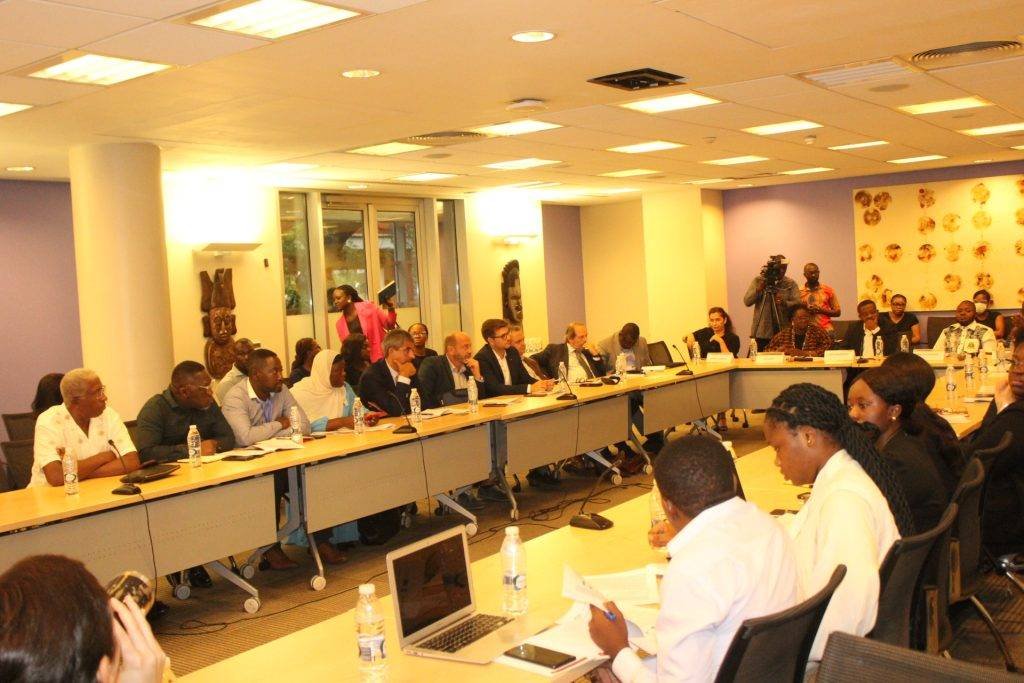
Speaking at the National Stakeholder Conference on Sustainability Reporting in Accra, under the theme “Driving Sustainable Value Through Reporting: Transparency, Accountability and Inclusive Growth, the Minister said that the global financial landscape is shifting, making environmental accountability a core requirement for economic operations.
He noted that a financial institution that is not sustainability compliant is not going to have funding to do business, emphasising that this new direction makes transparent reporting critical for civil society organisations, government institutions, and the private sector.
Mr. Issifu underscored government’s commitment to sustainable development, noting that his office is actively breaking down silos and improving coordination on climate action across various government ministries and the private sector.
A significant step in this direction, according to the Minister, is the establishment of a Climate Technical Working Group within his office. This group includes representatives from key ministries and private sector leadership, ensuring a unified national approach to climate initiatives.
On the policy front, he announced that government has completed a review of its national climate plan, known as the Nationally Determined Contributions, and added that that the updated document will be presented to President John Dramani Mahama within the next two weeks, making it a binding responsibility for the government to pursue sustainable development and growth.
The Minister also mentioned initiatives like the Climate Prosperity Plan and efforts to promote all-year-round farming through irrigation as part of the broader strategy.
He commended the Institute of Chartered Accountants Ghana (ICAG) for hosting the forum, stating that sustainability reporting is essential for accounting for our interaction with the environment to ensure future generations do not suffer. He urged all private sector players, civil society organisations, and government institutions to embrace qualitative and transparent sustainability reporting as the definitive way forward.
Echoing the Minister’s sentiments, the Chief Executive Officer of ICAG, Mr. Kwasi Agyemang, emphasised the importance of new global reporting standards- stating that the International Financial Reporting Standards S1 and S2 are set to change how businesses report their environmental impact.
Mr. Agyemang explained that these standards are not just bureaucratic checkboxes but powerful tools designed to drive meaningful change. He noted that, they will require companies to provide detailed insights into their sustainability practices, compelling them to critically examine their environmental footprint.
He added that investors and stakeholders will now have clear visibility into how corporate activities affect the environment. Furthermore, he commended John Mahama’s establishment of a dedicated Ministry of Climate Change and Sustainability, stating that this move demonstrates a commitment to solving environmental challenges like protecting water bodies and stopping illegal mining.
To support this transition, the ICAG CEO said that his organisation is committed to developing strong training materials and support systems to help businesses adapt smoothly to the new reporting requirements.
The post Sustainability reporting key to business survival and funding appeared first on The Business & Financial Times.
Read Full Story











Facebook
Twitter
Pinterest
Instagram
Google+
YouTube
LinkedIn
RSS