


A three-day National Economic Forum was held at Akosombo from 13th to 15th May 2014 and adopted a 22 point communiqué christened the ‘Senchi Concensus’.
The main themes discussed centred on macroeconomic policy, strengthening institutions for formulating and implementing socio-economic policy, the development of the private sector, and good governance among others. Clearly absent from the communiqué was any discussion of the application of science and technology to production systems in the economy.
This omission is the clearest explanation of why this country cannot get to grips with sustainable growth and development.
In the advanced industrialized countries, the task of macroeconomic policies, that is, fiscal, monetary and exchange rate policies, is to achieve full employment, stabilize investment rates, and bring inflation down to manageable levels in order to smooth cyclical movements: Sustainable growth has already been achieved.
The paradigm of physical statics (or of optimization and comparative statics) comes into its own in the management of the economy.
In underdeveloped countries, on the other hand, the primary goals for stabilization policies have been to reduce short-term current account deficits, budget deficits, and inflation. The aim of macroeconomic policies is to bring aggregate demand into line with available resources, including external resources so as to control inflation.
For, by definition, an underdeveloped economy is one operating well inside its potential production possibility frontier, i.e. an economy in which there is a massive underutilization of natural and human resources.
We have not achieved sustainable growth.
That, indeed, is our primary goal, but it is also obvious that we cannot achieve sustainable growth by tinkering with monetary, fiscal and exchange rate policies. We have to expand the production possibility frontier.
Economics defines a production function as a mathematical function which expresses the maximum volume of physical output that a firm can obtain from all technically feasible combinations of physical inputs, given the prevailing level of technical knowledge. But...
(a) How is such technical knowledge produced?
(b) How do people, firms, nations acquire technological capabilities?
(c) How do firms develop the capabilities to deal with technologies at world levels of efficiency?
(d) What should be the policy regarding the importation of technology?
(e) Which forms of technology transfer create more learning – wholly owned FDI or import of capital goods, licences, minority joint ventures?
(f) How can we model the technology transfer process which has been shown to “involve time, effort, cost and risk, and complex interactions between firms and institutions?
In view of the fact that these questions seek to probe the basic causes of our underdevelopment, one would have thought that there would be a group to discuss the following:
(1) What policies should be in place for Ghana to acquire capabilities for assimilating and using existing productive knowledge to satisfy socio-economic needs?
(2) What policies should be in place for Ghanaian industry to move towards eventual self-reliance – reducing dependence on imports and achieving a high degree of independence in manufactured goods?
(3) How do policymakers integrate technological change into socio-economic plans?
(4) How can Ghana promote and strengthen the linkage between research and industrial development?
Lots of research activities take place in the universities and research institutions and centres. How can this knowledge base be linked with the productive sectors to pave the way for innovation?
(5) How can the educational system in Ghana be made more functional? In other words, in this global system which is driven by science and technology, how can the products of our educational system be made more scientifically minded to enable the economy to compete in the system?
(6) What can African governments do to provide an acceptable amount of the relatively capital intensive needs (roads, bridges, potable water, electricity, energy supplies, school buildings, housing) of an expectant population without getting into unmanageable debt problems?
Structure of the Ghanaian economy
All knowledgeable commentators of the Ghanaian economic scene, but especially Szereszewski (1965) and Killick (2000) agree that the current structure of the economy is basically the same as that which had been established in 1911! Szereszewski argues that:
(1) In the twenty years between 1891 and 1911, the economy of the Gold Coast (renamed Ghana in 1957), was transformed from an economy dominated by traditional agriculture based on the most simple techniques of production, collection of forest produce, traditional crafts and rudimentary commerce into the biggest exporter of cocoa in the world;
(1) A tiny gold-mining industry in the west of the country which had been struggling in the 1870s exported 280,000 ounces of gold in 1911;
(2) A railway network came into existence, and whole new sectors of activity appeared;
(3) The pace of industrialization picked up in the early 1960s but manufacturing started from being 0.8% of GDP in 1955 to 2.3% in 1961 to 9.7% in 1965 and barely 8% currently.
Killick adds that up until 1985 it was protected behind high tariff walls and it was inefficient and uncompetitive internationally. Many of the manufacturing firms were tiny and had no linkage with the very few large ones. There was rapid growth in capital stock but this was in inefficient and low-productivity subsectors. There were large improvements in educational provisions but these were non-growth-inducing;
(4) The saving ratio has always been low, averaging no more than 4% of GDP, and providing no basis for sustained growth.
(5) the composition of exports (and imports) has remained the same as it was in 1911;
(6) the economy has an inflexible production structure with low domestic input-output linkages, low capacity utilization, primary producing and exporting, import dependent. Any semblance of structural change has been superficial.
Interestingly, between 1911 and now, many countries, particularly those in South, Southeast and East Asia have transformed their economies from less developed countries to advanced industrialized, newly industrializing, and near-newly industrialising economies (near NICs).
The near NICs are some of the current middle income economies. None of them was at the level of Ghana’s promise of development or Ghana’s developmental potential in 1911 or more realistically in 1957 when she attained political independence. How did these economies manage to traverse this path that has eluded us for nearly sixty years?
For over half a century now, this country has gone through economic booms occasioned by high export prices, and busts brought about by low export prices or quantities -- but also by serious mismanagement of the economy.
The country, has since 1983, gone through the Economic Recovery Programme, the Structural Adjustment Programme, the first and second phases of the Ghana Poverty Reduction Programme, and the Ghana Shared Growth and Development Agenda (2010-2013) yet the structure of the economy has not changed since 1911.
It is predominantly agricultural, mainly dependent on the export of primary products to generate foreign exchange; the modern industrial sector is miniscule and seems to be declining every year; manufacturing is predominantly small-scale with all that this entails, particularly with respect to productivity, growth and employment generation.
How do we increase productivity in agriculture so that the proportion contributed by agriculture to GDP will fall from the current 39% (IEA, 2007) to 15% or less; and in industry so that it will contribute 40% or more to GDP as is the case in genuine middle income countries?
In other words, the official supposition that if the economy grew at the minimum rate of 8% it would achieve middle income status by 2015 begs the question (Actually, the economy was supposed to have attained low middle income status in 2006 due to rebasing, the discovery of oil and the rapid growth of the ICT sector).
The growth rate itself could be boosted by increases in the prices of our primary product exports, or by large investments in the mining sector which are enclaves in the economy. The truth is that since the 1950s we have gone through these scenarios and haven’t done much with the booms.
The challenge goes beyond the question of high growth rates; it is a question of sustainable growth, and this can only be achieved by domestic industrial revolution.
Why Does the Ghanaian Economy Operate So Far Below its Potential?
Everybody agrees that this country abounds in natural resources,which we use and/or export in their raw form.
Why have we not set up dozens of processing plants to turn the many agricultural raw materials we produce into quality products for home consumption and for export? Where are the entrepreneurstoproduce organic pesticides from the neem tree which abounds in this country, and from pyrethrum? The technology already exists.
The residues of maize, sorghum, millet, soya are rich in vitamins and minerals and could be used for animal feeding.
Similarly, peels of citrus fruit could be used for feeding animals either directly or as silage. Enterprises in the food industry create large amounts of residues which, with proper planning and the necessary budgetary support, could be used as inputs into the agricultural sector itself.
Why do we import better quality tomatoes, onions and mangoes from more arid Burkina Faso? Why can Malaysia export several derivatives of cocoa and palm oil and we can’t?
Why can’t we take the provision of utilities, notably electricity and water, for granted?In the water delivery sector, every year in the rainy season, trillions of cubic metres of water run off into the sea and, in the process, cause floods and soil erosion in many parts of the country.
Many countries build their houses to harvest water for household activities. Can’t our architects design buildings for harvesting water? Many other countries collect the water into reservoirs for irrigation. In our case, we could, in addition to the foregoing, direct the flow of rain water to fill the Volta Lake and make electricity load shedding a thing of the past.
Garbage has piled up and is threatening to swallow our towns and cities. Our solution is to pay consultants huge sums of money to dispose of it.
The solution has so far not been successful; and yet in many not so technologically advanced countries, the garbage is burned as fuel for the production of steam for power stations – which are in short supply in this country.
Also, since the garbage material contains about 80% organic material, it can be used for compost production which is then sold to farmers for the purpose of increasing agricultural productivity.
What differentiates us from the people of Mauritius who have mastered the technology of turning their primary products into useable intermediate and final products for the domestic and export markets, and have now moved into medium technology products like electronic goods.jewelry, watches, clocks, sporting goods and printing?
Why can’t we specialize, as South Africa does, in medium technology products like motor vehicles manufacturing, auto components, including engines, industrial machinery/equipment, chemicals, fertilizers, synthetic fibers? Why is our industrial productivity only 30-50 percent of the levels in China and Southeast Asian economies? (UNIDO Report quoted in African Review of Business and Technology, August 2004)
The answer, or a large portion of the answer could lie in the facts that
(1) there has been insignificant technological development and innovation in the production processes of the economy. Technological change is a critical aspect of the rate of growth of productivity in virtually all industries, including agriculture.
Research on the contribution of factors of production to the growth of economies reveals that technological development/innovation contributes between 50% and 87% to the growth of national product in the advanced industrialized economies and in the first and second tiers of the newly-industrialising economies.
(2) There has been insignificant technological development because there is no significant capital goods industry in Ghana. Most equipment has to be imported. The capital goods sector is the one that generates different kinds of skills for itself and all other sectors.
Its undeveloped state means an acute shortage of engineering, managerial and technical skills which can increase productivity, raise quality, and learn to cope with increasingly more sophisticated products and production processes.
(3) Most equipment is not only imported, most projects are turnkey. There is little adaptation and improvement of foreign technologies – which implies low capacity to absorb foreign technology and hence little chance of developing indigenous technological capability.
(4) Continuously investing in more modern plants and exploring new processes and product ideas and markets; developing plant design expertise, process engineering and selection of technology - these seem to be completely absent.
Because of this woeful lack of technological savvy, the country was not able to take significant advantage of preferential treaties, notably the US AGOA which offered increased tariff free access for exports from Sub-Saharan Africa into the US market worth US$10 trillion; and the EU’s ‘Everything but Arms Initiative’ that allows Africa’s 35 least developed countries duty- and quota free access for almost all labour-intensive products (African Review of Business and Technology, 2004)
Technological change or innovation is responsible for breakthroughs in medicine, agriculture, industrial expansion, solutions to climate change, new directions in information and communication technology (which itself raises productivity in virtually every sector of the economy) and improved infrastructure.
According to Michael Porter (Competitive Advantage of Nations 1990, 19), in the current globalisation of industries and internationalisation of companies, firms cannot compete unless they create and sustain competitive advantage.
Competitive advantage is underpinned by availability and use of skills and technology. No firm can afford to relax; competition is “constantly changing the landscape in which new products, new ways of marketing, new production processes, and whole new market segments emerge†(p.20).
Unfortunately Ghana has not integrated technological change and innovation into her development experience or into the many development plans that she has tried to implement.
For example
1. We still ask foreigners to build roads, bridges, railways, harbours, hydro dams, and to construct communications networks for us. The fact is that countries that are serious about transforming their economies do not allow foreigners to undertake these projects more than once,and certainly not more than twice.
They see to it that foreign companies engaged on these projects pass on the requisite knowledge and skills to indigenous businesses so that any subsequent undertakings are done with local expertise. We could have borrowed money on the international market and started the railway project as far back as 2011 if we had acquired the relevant expertise, instead of depending on the Chinese.
2. The traditional technologies in use in the informal sector are simple, labour intensive, low cost, and the level of efficiency is rather low in terms of productivity and product quality.
We are yet to embark on a vigorous programme of R & D activities geared towards upgrading the traditional technologies to facilitate their transfer to the modern industrial sector through the establishment of small-scale industries.
The range of products to be encouraged include the traditional ones of processed foods, handicraft products, building and construction materials, pharmaceutical and chemical products, and energy, but must not be restricted to these since the country abounds in many raw materials from which many products can be derived.
For instance, many industrial products can be derived from agricultural crops such as coconut, groundnut, kola, sunflower, shea butter, cocoyam, yam, oranges, sugarcane, rice, bamboo, cassava, sorghum, oil palm, rubber.
The technological challenge here, as in the case of the establishment of a capital goods industry, is one of attaining such quality that the products will be competitive on the international market so that the small size of the domestic market will not be a constraint.
3. Ghana has thirteen research institutes, several research centres under the Council for Scientific and Industrial Research (CSIR). Everywhere in the world, these institutes are supposed to link up with industry and agriculture and serve as innovative channels for the development of these sectors.
In this country the institutes under CSIR have done a lot of research, and contributed significantly to what little development we can boast of in agriculture. Besides this, there is little linkage between research and the productive sector.
4. Like the institutes of the CSIR, the faculties and departments of science and S&T in our tertiary institutions have tenuous or no links with industry; and the polytechnics which have to produce middle-level technical personnel are starved of funds to purchase the equipment and other inputs needed to train scientific and technical personnel. So these polytechnics are turning out mostly personnel in business studies.
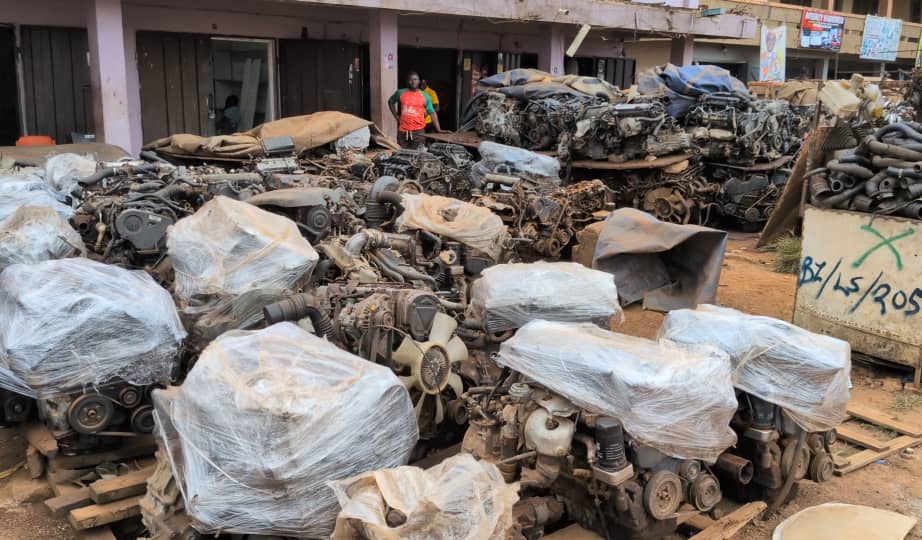
5. Yet Ghana has beehives of technological activity in Accra and Kumasi and smaller versions in Takoradi and Cape Coast. Vehicle repair is the main activity, but many gadgets are also produced. How can the artisans in these beehives move from repair to manufacture of vehicles?
And to quality improvement in the manufacture of gadgets so they can be competitive with imports, and even find niches for themselves in the international market?
6. There are many manufacturing enterprises which never change their layout when once established. All the capabilities that they acquire are production capabilities – very little trouble-shooting and minor and major change capabilities. There is very little in terms of design engineering. The country seems stuck in a low-level technology trap.
There are three main reasons for this impasse.
Firstly, conventional economics including development economics as studied in universities the world over does not have a model or theory or hypothesis on how LDCs can initiate and sustain growth and development because it does not have a theory of technological change, and the acquisition of technological capabilities as the prime mover of the development process.
Economics of technological change is studied in specialised institutions like Maastricht in the Netherlands, SPRU in England and a host of others in the advanced and the newly-industrialising countries.
What this means is that graduates of the Ghanaian educational system from basic to the tertiary level have little knowledge and scant appreciation of the relationship between technological change and economic development.
And unless this relationship is discussed and assimilated by our students, the educational system cannot produce businessmen capable of integrating innovation into their businesses.
Secondly, we have a dysfunctional educational system which has not shown itself capable of churning out adequate numbers of forward-looking entrepreneurs and farm managers capable of transforming the economy.
Research indicates that the three premier universities have turned out an average of 500 graduates in agriculture since the early 1970s. Apart from the few employed by the Ministry of Agriculture the rest do not practice farming. What then is the purpose of agricultural training and education?
Thirdly, even if the educational system were functional, the prerequisites for sustained growth are lacking, namely, the establishment of a capital goods industry, acquisition of technological capabilities, and the critical minimum level of infrastructure necessary for a take-off.
The capital goods industry is of critical importance in the creation of industrial skills, the improvement and diffusion of techniques and the development of innovations. The growth of the capital goods industry is responsible for the sustained growth of the productive capacity of an economy.
A very important segment of capital goods production is machinery production, transport equipment, specialized machine tools. This type of production is characterized by a sequential organisation of discrete manufacturing operations, from individual parts and compounds which are subjected to physical transformation, to final assembly into machinery and equipment.
Some components of the capital goods industry are foundry, forging, heat treatment, specialized machining facilities.
A very strong design engineering capability is needed for a successful establishment of a capital goods production sector.
Integrating technological development into socio-economic development
An examination of the development plans since independence reveals that producers of the plans have sought to develop formal structures of science and technology as the outcome of a theoretical and formal analysis of the role of S&T in the development process.
S&T structures whichhave included academic and industrial institutions have been thought of as complimentary to strictly non S&T portions of the plans and have thus remained weak and tangential. What is needed is for S&T structures and industry to grow hand in hand. The emphasis should be on research closely linked to industry.
Below, we attempt to demonstrate this integration as it applies to the development of the industrial sector..
The basic questions to ask in this exercise are
(1) What kind of industrial sector do we want to see established and operational in Ghana?
(2) What are the objectives for developing the industrial sector?
(3) What are the objectives of innovation in national development?
(4) What are the objectives of applying S&T to the development process?
The kind of industrial sector we want to see established and operational in Ghana
(1) An industrial sector in which we find a strong entrepreneurial spirit, vision, hard work, confidence, risk-taking capacity, aggressive marketing and good managerial skills.
(2) An industrial sector that is competitive in the global system.
(3) An industrial sector part of which performs as quality subcontractors to world-class brand names.
(4) An industrial sector in which priority is given to technology absorption, adaptation, innovation and exploitation in line with domestic industrial and export requirements.
The realization of this vision for the industrial sector depends on the articulation of credible objectives, the promulgation of realistic and achievable policies, and the adoption of result-assured strategies.
The objectives should lead to policies that solve problems facing the sector, break down barriers to efficient functioning of the sector, and encourage the introduction and adoption of innovations for sustainable growth.
This is possible only when process and product innovations which have the effect of increasing the productivity of the enterprise (and the productivity of agricultural yields per hectare) are introduced.
But technological development/innovations must be integrated into industrial and agricultural development to ensure success and sustainability of economy-wide development.
Thus, given the structure, characteristics, shortcomings and challenges facing the Ghanaian industrial sector, the objectives for the development of the sector are to:
* transform the micro/small-scale, rural/urban non-factory units into viable factory production enterprises continually upgrading itself, and capable of supplying the socio-economic needs of the bulk of the population.
* encourage a significant proportion of these micro-enterprises to become vibrant SMEs
* increase the share of manufacturing output in GDP to at least 30% by 2020
* (within manufacturing) shift away from concentration on non durable goods production to production of intermediate goods (chemicals, for example) and certain capital goods (machinery).
* increase the share of manufactures in total exports to 40% by 2020.
* encourage innovation in all enterprises and make them competitive in the local and international markets.
* promote education that provides the intellectual and practical skills for engineers, scientists, farm and industrial managers, entrepreneurs, government executives and technicians.
* provide uninterrupted power and water supplies to the industrial sector.
Objectives of innovation in national development
In technology development, priority is given to technology absorption, adaptation, innovation and exploitation in line with industrial and export requirements.
There should be an Industrial Technology Plan to import technology, internalize imported technology, and identify R&D areas for the priority sectors.
A board or agency should be set up to focus on enhancing the utilization of local resources and improving the domestic application of proven industrial technology particularly for SMEs.
A comprehensive manpower development programme should be instituted in order to create an indigenous supply of technically skilled manpower.
There should be a programme which encourages SMEs to become suppliers of industrial inputs, machinery and equipment in the electrical and electronics industries, wood-based industries, light engineering industries, enabling local SMEs to supply parts and components to large-scale industries.
This programme assists in the upgrading of the technical capabilities of SMEs, and provides greater integration and linkages in the economy.
CSIR should establish contract research management systems to promote R&D services such as resolving specific product and process problems in industry. A lot should be done to ensure that R&D programmes are more industry-oriented.
The objectives of applying science and technology are to:
(a) lay a solid foundation for the continuous development of S T,
(b) Reduce technological dependence, and
(c) Nurture small and medium-sized enterprises.
These objectives of technological development must be integrated into the objectives of industrial(and agricultural and service) sector developmentthrough the establishment of industrial projects which are inextricably linked to and thrive on technological development and innovation for continued growth.
Industry
In the industrial sector we advocate a four-pronged strategy for industrial growth.
(A) Setting up a capital goods/machinery and equipment producing sector.
(B) Upgrading the technologies and modernizing the micro/small-scale/urban/rural enterprises. This demands local manufacturing of simple machines and tools. For a large number of small scale industries the key issue is much more concerned with building up more basic operational capabilities, together with craft and technician capabilities for efficient acquisition, assimilation and incremental upgrading of fairly standard technology.
(C) Enlarging the medium and large-scale facilities and introducing sophistication and efficiency into their operations. This needs a build-up of technical engineering and managerial skills, the unpackaging, absorption and adaptation of imported technology, thus indigenizing technical progress and building sustainability into the growth of the economy.
(D) Setting up of spare parts producing and repair workshops to rehabilitate broken down heavy equipment - a situation which takes for granted the establishment of capital goods or machinery and equipment production enterprises.
Technological development in this strategy is not tangential to national development; it is fully integrated into national development. The setting up of a capital goods industry ensures that
(1) skills for the development of other industries are produced.
(2) Reverse engineering (dismantling and reassembling imported technology) is possible, making the country less dependent on foreign expertise for every conceivable project
(3) Capacity stretching (replacing worn out or damaged parts of machines with domestically produced parts) is possible, to give imported machinery and equipment a much longer life span and help to conserve scarce foreign exchange.
(4) People have immediate access to the technological infrastructure which helps them to translate their dreams and ideas into successful business enterprises.
(5) Maintenance culture is encouraged because the facilities for maintenance are available.
Technological requirements for sustainable industrial growth
To facilitate the acquisition of skills, to increase the domestic production of some equipment and machinery,
the Technology Transfer Centre (TTC) and the Ghana Investment Centre (GIC) should have their mandate reviewed to:
(a) Collect information on
(i) domestic production of equipment, prices, quality, availability;
(ii) foreign machinery and equipment, their prices, quality, country of origin;
(iii) trends in international trade;
(iv) technological advances and marketing opportunities - the latter through the creation of research data bank covering both domestic, sub-regional and selected overseas markets – with a view to
• assisting in the identification of the technological needs of the national economy, technology acquisition, and analysis of information on alternative sources of technology;
• evaluating and selecting technologies relevant to the national needs and also compatible with environmental standards;
• helping to negotiate the best possible terms and conditions under which the technology will be acquired, registered, and ratify the agreement thereof.
(b) Develop, organize, and monitor local raw material sourcing for industrial production and/or focus on enhancing the utilization of local resources and improving the domestic application of proven industrial technology particularly for medium and large-scale enterprises.
(c) Provide a convergence of services to help nascent entrepreneurs through counseling, training, information, and access to finance. Subsidies may be justified initially, but progressively the services should be against affordable payments.
(d) Advise on the importation of technology, internalization of imported technology, and identification of R&D areas for the priority sectors.
(e) Assist in the unpackaging of imported technology, including the assessment of its suitability, direct and indirect costs and conditions.
(f) Promote and assist in the absorption and adaptation of foreign technology and create the basis for the growth and development of indigenous technology, linked to national design engineering and research and development efforts.
(g) Help in the diffusion and assimilation of technology among its users.
(h) Encourage the type of technology imports which allow the acquisition of increasingly complex skills from assembly or the finishing of products to more complex capabilities involving the adaptation, improvement, design and development;
(i) Create technology parks as a seedbed for technology-based companies
Incentives for utilization of indigenous technology
(1) The government should set up a Unit with the specific responsibility of transferring technology from R&D laboratories to industry. The Unit commercialises the technologies developed with government support, undertakes further work towards upscaling laboratory know-how, setting up pilot plant, etc., and even provides risk finance for development projects.
(2) To inculcate technological entrepreneurship in the country, the government should launch a Venture Capital Fund, i.e. contribute risk capital and arrange credit facilities that can enable professional or industrial groups to create or exploit local technological innovations.
(3) Government should treat local inventors favourably with regard to patents.
There cannot be sustained growth if technological development and innovation are not the drivers of the growth process.
It does not matter what other socio-economic policies are put in place.Abstracting from technological development ensures a stagnant industrial sector because productivity remains low.
Capacity utilization in the industrial sector comes to depend on primary product exports (not on exports of manufactures) to generate foreign exchange for the purchase of raw materials and intermediate inputs. There is need for more foreign exchange to import consumer goods the demand for which keeps on rising as population increases.
The agricultural sector itself cannot grow because it lacks inputs from industry. It does not take too long for these contradictions to manifest themselves, and government is forced to
(a) borrow money from the public, in competition with the private sector, for its development expenditures, thus causing interest rates to rise and choking off private investment; and/or
(b) resort to the central bank to print money for projects - a strategy which inevitably facilitates the onset of inflationary pressures;
(c) borrow money from abroad. Since productivity in both agriculture and industry is low, the returns to government investment are not enough to liquidate the debt.
Moreover, a lot of government expenditure is on social services which are not directly productive. The net result is debt overhang
To discuss debt problems, cuts in government expenditure, central bank management of the economy, inflation, continuity in policy formulation, accountability, good governance, as was done at Senchi is concentrating on the superstructure of the economy when the basic structure is left wobbling.
By Prof. Kofi N. Afful
The writer is a retired Lecturer, University of Cape Coast, E-mail: [email protected] Mobile: 0249 919 326











Facebook
Twitter
Pinterest
Instagram
Google+
YouTube
LinkedIn
RSS