


By Konrad Kodjo DJAISI
Agriculture and agro-processing in the West African sub-region require larger markets to be competitive and become engines of food security and economic growth.
This is because small national markets and country-focused food security notions create disincentives to increasing domestic production.
This observation was made by Dr. Mima Nedelcovych, a partner of Schaffer Global
Group, and Dr. Denise Mainville, a senior associate of Abt Associates, when they delivered a paper on trade-barrier effects on agribusiness investment in ECOWAS.
The pair, who delivered their paper at a three-day conference jointly organised by ECOWAS and USAID’s Agricultural Trade Promotion (ATP) and Expanded Agribusiness and Trade Promotion (E-ATP) teams in Accra last week, conducted 40 key informant interviews with food processors, packagers, traders, farmers, associations, and transporters in major cities of Mali, Burkina Faso, Senegal, and Côte’ d’Ivoire.
Dr. Nedelcovych noted that the ECOWAS Common Market is not effective in many ways -- especially with regard to lack of respect for the Common External Tariff, and uncertain internal tariffs. She said the lack of an enabling environment for regional trade results in many missed opportunities; thus hurting food security and economic development.
ATP and E-ATP promote trade in major agricultural staples and livestock in West Africa. The programmes focuses on reducing physical and policy-related barriers to moving goods along key transport corridors; enhancing linkages among producers and suppliers, processors, and distributors; increasing advocacy in support of a conducive environment for agricultural trade; and improving the efficiency of trade transactions and regional market access.
In the findings, Dr. Mainville also observed that opportunities exist for regional marketing of maize and maize-based products. With rice and other staples, they said it was a very politically-sensitive crop for food security -- but observed that the plethora of trade barriers limit trade of locally produced rice.
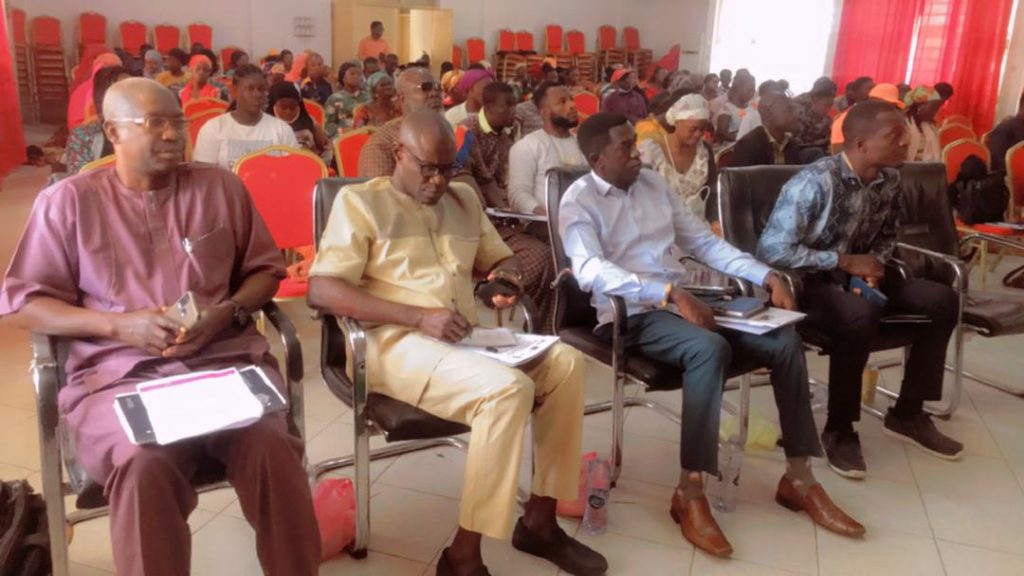
The conference, which brought private and public sector players in the agribusiness trade value-chain together, shared a sense that the regional trade framework for trade and food security is sound and encouraging to the free movement of goods and people in the sub-region; but the main weakness is that national policies and practices still need to be aligned with the spirit of the framework provided by trade protocols and the ECOWAS Trade Liberalisation Scheme.
Important regional ECOWAS policies and protocols have already been agreed to and endorsed by all the heads of state in the region, but some of the states have not taken the subsequent steps to integrate the agreed-upon policies into their national structures and regulations.








Facebook
Twitter
Pinterest
Instagram
Google+
YouTube
LinkedIn
RSS