


By Dominick Andoh
Government is to establish fodder-banks under the Afram Plains Agric Development Programme (APADP) to offer pasture for local and foreign cattle herds, as it seeks a solution to the Fulani menace.
Mr. Kwesi Ahwoi, the Minister of Food and Agriculture, says his outfit is currently negotiating with his counterparts from Niger, Mali and Burkina Faso about a mutually beneficial relationship that will streamline the activities of Fulani Herdsmen.
“We need to negotiate with the source countries. The Minister for Agric and Livestock in Niger came to meet me and we are negotiating [on hosting their cattle],†he said.
Mr. Ahwoi indicated that government is establishing fenced fodder-banks that will serve as grazing lands for local and foreign cattle herds in exchange for meat.
Landlocked countries in West Africa face an extensive dry season, about eight months, during the year. The harsh weather conditions force cattle herders to drive their herds down south into the country in search of grazing land.
This results in frequent clashes between locals and foreign cattle-herdsmen in many communities of the country. Local authorities’ also struggle to contain livestock that stray onto streets of the capital.
This has led to calls by stakeholders for the passage of a ranching law.
Government last month indicated that it will soon send a team to understudy the ranching law that Burkina Faso has successfully implemented. Mr. Ahwoi told the B&FT that MOFEP is aware but is yet to send a delegation to that country.
A ranching law prescribes that areas to be utilised for breeding wild animals in captivity or semi-captivity must be fenced. Animals will not be subject to the restrictions established for hunting and are declared to be the property of the breeder. Ranchers would also be required to obtain a licence from local authorities for their business.
In recent times, activities of foreign cattle-herdsmen who drive their herds through farming communities causing damage to crops and properties -- and in some instances engage in violent clashes with local folks -- have made it necessary to enact legislation that governs animal rearing and breeding in the country.
However, due to the benefit of rearing these animals, it is important for any applicable legal framework to take both concerns into account and strike a balance between the encouragement of these initiatives and conservation, security and local concerns.
In Burkina Faso, Ghana’s northern neighbour, both game-ranching and breeding are subject to an authorisation. Within ranches, wildlife populations are to be monitored either by the rancher or by the wildlife administration with a view to rational management of captures.
In Botswana “permission†is required to farm or ranch game animals. Fencing may be required.
"Protected" and "partially protected" game animals may be farmed or ranched only under a specific authorisation. If the area is fenced, there is no limit to the number of animals of specified species which may be taken. Otherwise, culling is subject to a permit. A permit is also required for the sale of animals, meat or trophies.
Though government is yet to send a delegation to Burkina Faso to study their law, stakeholders believe that with the passage of legislation to govern livestock rearing and breeding, the unfettered activities of Fulani herdsmen and individual livestock owners will be well-regulated.
Read Full Story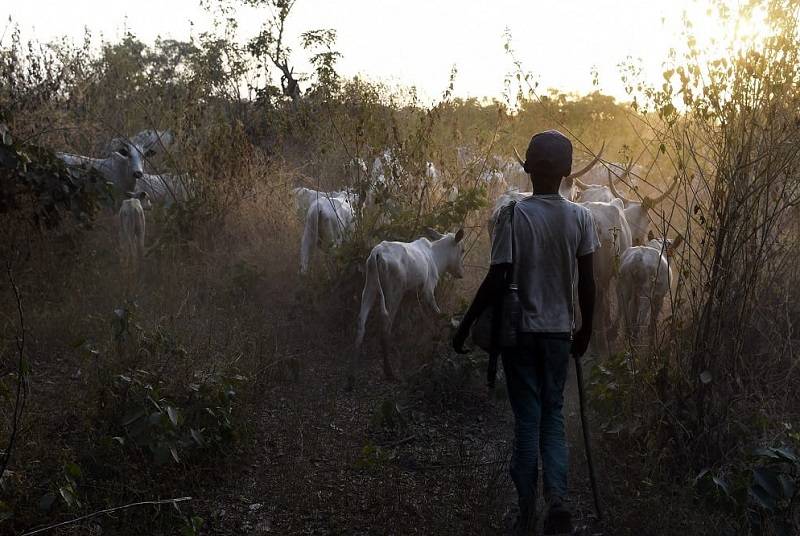












Facebook
Twitter
Pinterest
Instagram
Google+
YouTube
LinkedIn
RSS