


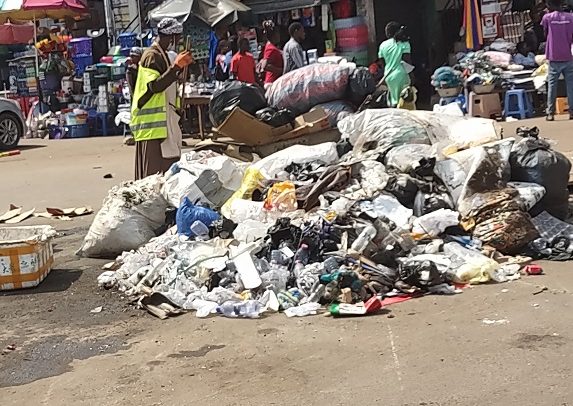
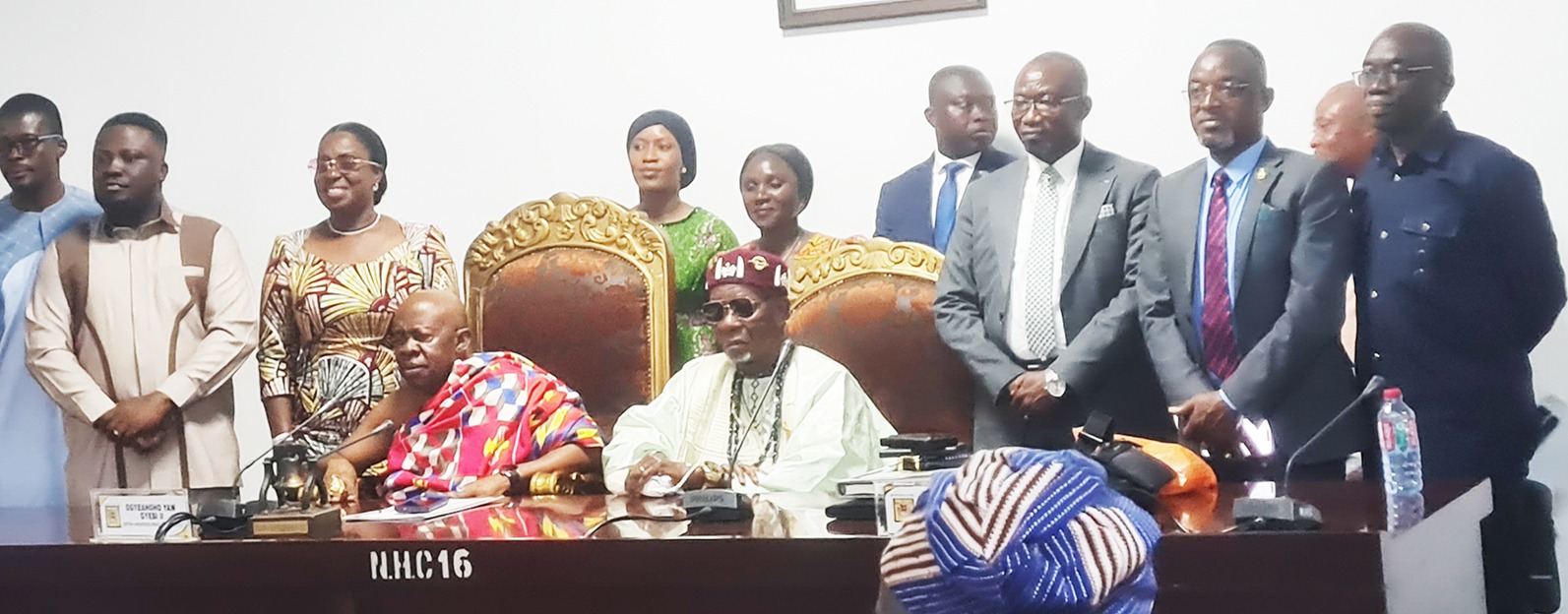
The Okyenhene, Osagyefo Amoatia Ofori Panin II, has described the recent flooding in Accra as a stark warning that Ghanaians must change their attitude towards the environment if the country is to prevent future disasters.
According to him, while poor planning and inadequate disaster prevention measures have contributed to the recurring floods, human behaviour remains one of the biggest threats to environmental sustainability.
Speaking at the 2026 Kyebi Ohum Festival held over the weekend under the theme: “Rejuvenating Our Customs for Sustainability and Nature’s Connection,” the Okyenhene condemned the indiscriminate disposal of refuse into drains, rivers and other unauthorised places, as well as the construction of buildings on waterways and activities that obstruct the natural flow of rivers.
He urged Ghanaians to reconnect with nature and revive traditional values that promoted environmental conservation.
“Nature will treat us according to how we treat it. If we take good care of nature, it will also take good care of us,” he said.
Osagyefo Amoatia Ofori Panin II noted that many traditional customs discouraged environmental abuse, including indiscriminate littering and unrestricted access to certain rivers on designated days.
However, he lamented that growing indiscipline has led to widespread environmental degradation.
“Our customs frowned upon littering in towns, rivers and water bodies. It was even taboo to visit some rivers on specific days.
“But today, because of indiscipline, people destroy the environment with impunity and expect nature not to respond. We must change our attitude towards the environment,” he stressed.
Beyond environmental concerns, the Okyenhene expressed alarm over the increasing abuse of drugs and alcohol among the youth, describing it as a growing national threat.
He called for the strict enforcement of laws regulating the sale of alcohol and tobacco products, directing the Ghana Police Service and Metropolitan, Municipal and District Assemblies (MMDAs) to arrest and prosecute drinking bar operators and vendors who sell alcoholic beverages to persons below the age of 18.
He also raised concerns about the widespread abuse of tramadol and other substances among young people.
“Today, children are mixing all kinds of substances with alcohol. The abuse of tramadol and other drugs has worsened the situation.
“These young people, after consuming these substances, often resort to robbery and other crimes. If we fail to stop this, the future of the next generation will be bleak,” he warned.
The Okyenhene therefore called for a nationwide crackdown on drug and substance abuse, insisting on strict compliance with laws prohibiting the sale of alcohol and cigarettes to minors.
On infrastructure development, Osagyefo Amoatia Ofori Panin II urged contractors executing government projects to prioritise public safety and fulfil their contractual obligations.
Referring to the deteriorating Ofankor–Nsawam Road, he criticised contractors who receive mobilisation funds but abandon projects midway, citing recent concerns raised by the Minister for Roads and Highways.
“How do we treat ourselves this way? The Ofankor–Nsawam Road has become an albatross around our necks. After driving on that road only a few times, motorists are forced to service their vehicles or risk damage,” he lamented.
The Okyenhene also advised government officials to refrain from interfering in chieftaincy matters, arguing that such actions undermine the independence and authority of the chieftaincy institution.
Commenting on the ongoing Etwereso chieftaincy issue, he reaffirmed the territorial integrity of Okyeman.
“If anyone wishes to break away, they are free to do so, but they should remember they are on their own. No one conquered Okyeman, and no one will conquer Okyeman. Our boundaries remain intact, and not even an inch of our land will be ceded,” he declared.
Representing the government, Chief of Staff Julius Debrah commended the Okyenhene for his visionary leadership and assured him of the government’s continued support.
He reiterated the government’s commitment to expanding agricultural production and appealed to traditional authorities to make more land available for farming.
According to him, the fertile lands of Akyem Abuakwa present enormous potential for large-scale oil palm cultivation.
“The Akyem lands are highly suitable for oil palm plantations. Government is prepared to invest resources into expanding oil palm production in Akyem Abuakwa to create jobs for the youth, while increasing output for both the local and export markets,” Mr. Debrah said.
This year’s Kyebi Ohum Festival attracted several prominent personalities, including leading figures from both National Democratic Congress (NDC) and the New Patriotic Party (NPP), traditional leaders and senior government officials.
For more news, join The Chronicle Newspaper channel on WhatsApp: https://whatsapp.com/channel/0029VbBSs55E50UqNPvSOm2z
The post Okyenhene ‘Mad’ Over Disposal Of Refuse Into Drains appeared first on The Ghanaian Chronicle.
Read Full Story




-1200x675.webp)




Facebook
Twitter
Pinterest
Instagram
Google+
YouTube
LinkedIn
RSS