


By Kingsley Webora TANKEH
The billions of cedis sitting in pension funds could be deployed to finance the country’s commodity value chains if there is market infrastructure, grading systems and regulatory safeguards, Head of Treasury-Ecobank Ghana, Peter Dzasa, has said.
His remarks come at a time when there is a push by regulators and market operators to expand commodity-backed financing beyond gold and cocoa to include cash crops such as cashew, shea and maize.
Speaking at The Money Summit 2026 organised by the Business and Financial Times (B&FT) in Accra, Mr. Dzasa stressed that with a robust regulatory regime in place, pension assets could be leveraged to support commodity markets.
“If you take the warehouse receipt system, you have the Ghana Commodity Exchange. If a producer produces, let’s say, soya, maize, peanuts or cashew, it goes through a process for grading to ensure that the quality is at a certain level. Once that is determined, we know that if we go to the commodity exchange we can get this level of grade,” he explained.
He acknowledged that verified quality and available market are important to institutional investors. “The buyer knows that in this market, on this platform, I can always get this produce. So then the market is there, the confidence is there, the infrastructure is there. Today, there are billions of cedis in pension funds. They are actually able to finance some of this because there is a ready market for it,” he said.
For Mr. Dzasa, trust is the currency that can unlock long-term capital. “For lenders or investors to bring in money, they need that trust, they need that confidence, and they need to know that they will get their returns. So once all that is established, it is good to go,” he said.
He cited an existing model in the maize sector, particularly in the northern regions. The cohesive bond financing model, he noted, could be replicated to provide structured commodity finance. This, he said, can stabilise rural incomes while providing bankable assets.
“For maize, that enables the producer to reduce distress selling. When there’s a proper harvest, you can actually store the maize and then take financing from the bank. And then when we are in a dry season or when you don’t have a proper supply of maize in the market, you are able to come to the market,” he said.
He added that cohesive bond financing helps mitigate price volatility, “because the producers can control when to come to the market and take funding from the banks for financing operations while the stock is there. And the banks know that the stock will be sold, so they are also able to finance.”
Mr. Dzasa therefore called for local expertise in de-risking commodity lending, citing a shea financing model by a client in Northern Ghana that has built a network of roughly 27,000 women’s groups.
“They actually provide pre-funding. They go out to buy the shea nuts, come back and sell to the company. Then they export. With that expertise, they are able to provide funding to their clients and do training so that the returns are coming. We have built capacity in-country; that expertise allows us to manage risk,” he noted.
Mr. Dzasa noted that once the full value chain – from warehouse receipt to commodity exchange trading – is established, there will be scope to issue longer-tenor instruments.
“If you have the infrastructure in place, we are actually able to go into the consumer markets and issue bonds. We have the markets in place, we have the receivers, the players in place. We can now go to the markets, issue a two-year bond, for instance, to go out and get finance and be able to sell. At the end of the day, all the bonds work as an end-to-end where you can pick the commodity, sell it and the returns come,” he explained.
He however acknowledged that price volatility remains the number-one risk for lenders, assuring that traditional hedging tools and secured off-taker arrangements can mitigate exposure. “In price volatility, we’re looking at how the borrower will get his money back. We then ask for probably secure off-takers or hedging of the sale so that the price is determined at the time of sale,” he said.
He added that building specialised commodity expertise within financial institutions is equally important. “We talked about the opportunities out there, but we have not built any expertise in trying to take advantage of those areas,” he said.
The post Infrastructure, regulation key to unlocking institutional capital for agriculture appeared first on The Business & Financial Times.
Read Full Story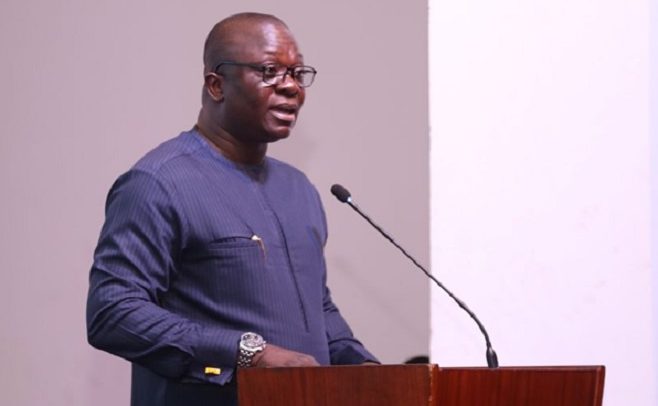


Facebook
Twitter
Pinterest
Instagram
Google+
YouTube
LinkedIn
RSS