


By Constance Gbedzo
The successful conclusion of Ghana’s 17th Extended Credit Facility (ECF) programme with the International Monetary Fund (IMF) ahead of schedule marks a watershed moment in the nation’s economic narrative.
For a country that has frequently found itself seeking the shelter of Washington’s financial umbrella, this milestone is a profound testament to rigorous fiscal discipline and a swift economic turnaround.
The numbers speak for themselves; inflation is on a steady downward trajectory, the cedi has found its footing, sovereign credit ratings are on the mend, and gross international reserves have surged to an impressive buffer of nearly US$14.5 billion, representing almost six months of import cover.
As the country gracefully transitions from a restrictive bailout framework into a 36-month, non-financing Policy Coordination Instrument (PCI), the narrative shifts from crisis management to sustaining hard-won reforms, boosting investor confidence, and protecting the economic gains for all Ghanaians.
To fully appreciate the magnitude of this triumph, one must look back at the dark macroeconomic clouds that gathered in 2022 and forced Ghana into the arms of the IMF for the 17th time. The crisis was birthed by a perfect storm of long-standing structural vulnerabilities and unprecedented global shocks. Domestically, the country was suffocating under a massive public debt overhang, aggravated by deep-seated operational inefficiencies and financial leakages in the energy and cocoa sectors.
The fiscal deficit had widened precariously, and when international credit rating agencies aggressively downgraded Ghana, the country lost vital access to international capital markets. Compounding these internal fractures were the lingering scars of the COVID-19 pandemic and the commodity price disruptions triggered by the Russia-Ukraine war. With foreign investors fleeing emerging markets, a rapid depreciation of the cedi, and inflation soaring to historic highs, the previous government was left with no choice but to seek a sovereign lifeline.
Under the strict surveillance of the ECF programme, government had to desperately explore revenue options to stabilize the listing ship. In the immediate term, the policy toolkit included unpopular and heavily debated revenue measures such as the Electronic Transfer Levy (E-Levy), upward adjustments to the Value Added Tax (VAT) rate, and the introduction of clean-up levies.
However, the true turning point did not lie in these reactive, transactional tax increases, but rather in a fundamental policy shift toward structural revenue mobilization and modernization. The new government pivoted aggressively toward broadening the tax base through digital transformation. Ghana Revenue Authority (GRA), therefore, spearheaded electronic VAT invoicing and integrated digital platforms to plug revenue leakages.
Furthermore, the operationalization of the Exemptions Act structurally curbed the rampant, unmonitored tax waivers that had historically bled the state of precious resources, shifting the strategy from merely raising tax rates to widening the tax net and enforcing compliance.
Indeed, the road to a successful and expedited programme required navigating a gauntlet of painful economic choices. Ghana’s triumph was anchored on the successful implementation of the complex and highly sensitive Domestic Debt Exchange Programme (DDEP), alongside protracted but ultimately fruitful external debt restructuring agreements with both bilateral and commercial creditors.
By consistently meeting quantitative targets and checking off structural benchmarks, even amid delays, the economic managers demonstrated an unwavering commitment to the fiscal consolidation path. This discipline cooled the overheated economy, restored macroeconomic predictability, and built the robust reserve buffers that allowed Ghana to close out the ECF programme ahead of schedule.
The NPP government deserves credit for laying the groundwork by navigating the politically hazardous Domestic Debt Exchange Programme (DDEP) and initiating complex external debt restructuring. However, their revenue framework relied heavily on taxing a squeezed populace through instruments like the E-Levy.
Upon taking office, the NDC administration pivoted. Instead of introducing further distortive consumption taxes, the fiscal managers focused on pluging structural leakages. By aggressively operationalizing the Exemptions Act to curb unmonitored tax waivers, expanding data-driven electronic VAT invoicing through the Ghana Revenue Authority; they shifted the economic burden away from ordinary citizens toward asset monetization and corporate resource retention.
The transition to the non-financing PCI framework provides a seamless bridge to the future, but it also carries heavy lessons for the managers of the Ghanaian economy.
The most enduring lesson is that temporary stability is a fleeting illusion without permanent institutional discipline. Ghana cannot afford to return to the cyclical, reckless spending patterns that have historically characterized its election years.
To ensure that the country never slips back into the cycle of IMF bailouts, managers must fiercely safeguard the legislated 45 percent debt-to-GDP anchor targeted for 2034. There must be an absolute cessation of the quasi-fiscal activities and unbudgeted expenditures that historically weakened the central bank’s balance sheet.
Crucially, the government must aggressively tackle the bleeding fundamental of its state-owned enterprises. This means definitively solving the distribution and collection losses at the Electricity Company of Ghana (ECG) through private sector participation, enforcing payment discipline, and restructuring the structural vulnerabilities within COCOBOD by streamlining operational costs and keeping farm-gate prices aligned with market realities.
The newly adopted PCI framework must not be viewed as an exit from accountability, but as a rigid self-imposed guardrail to entrench transparency, drive growth-friendly fiscal policies, and build an economy resilient enough to withstand future global shocks without ever needing a 18th bailout.
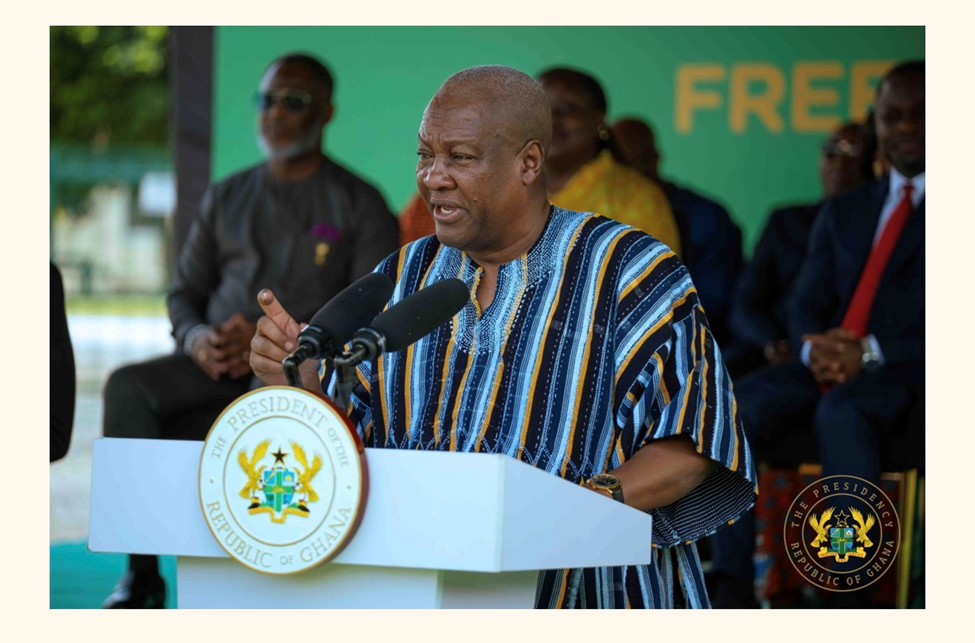
The accelerated exit from the ECF framework stands as a major victory for the leadership style of His Excellency, President John Dramani Mahama. His approach during this critical juncture was defined by pragmatic resource sovereignty and institutional insulation.
Recognizing that previous IMF programmes failed because governments treated them as temporary fiscal band-aids, Mahama framed the 17th IMF program not as a penalty, but as a runway for permanent structural repair. His leadership was instrumental in resisting the “cocoa trap” and typical market over-borrowing.
By empowering technical state actors, insulating the central bank from political financing, and championing the transition to the 36-month non-financing Policy Coordination Instrument (PCI), Mahama successfully decoupled short-term political expendability from long-term macroeconomic sanity.
This must become the central subject for our national discourse due to its useful lessons.
Ghana’s 17th IMF journey provides profound, unvarnished lessons for the nation’s future custodians. The cycle of reckless spending every four years must end. Future leaders must respect the legislated 45% debt-to-GDP anchor targeted for 2034.
Also, macroeconomic stability is an illusion if State-Owned Enterprises (SOEs) remain broken.
Indeed, the success of GoldBod proves that domestic resource mobilization and asset-backed economics will always outperform eurobond dependency and external commercial loans.
To the youth, there is the need to realize that sustainable wealth and economic resilience lie in value-chain integration. The era of relying solely on public sector employment is giving way to an economy driven by technical expertise, mineral processing, and digitalized agribusiness enterprise hubs.
The youth are the ones who will ultimately inherit the national debt, and must become the fiercest defenders of fiscal discipline. They must use their collective voice and digital literacy to hold governments accountable to the guardrails of the new PCI framework, ensuring that Ghana never has to look back toward a 18th IMF bailout.
The author is a Risk & Enterprise Development Expert
The post Guarding the gains appeared first on The Business & Financial Times.
Read Full Story





-1200x675.webp)

Facebook
Twitter
Pinterest
Instagram
Google+
YouTube
LinkedIn
RSS