


A landmark gathering of lawyers, bankers, entrepreneurs, students and public servants in Accra signals a new determination among Ghana’s professional class to drive the country’s development on their own terms.
There was a sense, among those who gathered at Accra’s maiden Dinner with the Professionals last Friday, that something long overdue was finally happening. Drawn from across sectors and generations, lawyers, bankers, consultants, doctors, entrepreneurs, fashion designers, and public servants sat down together not for ceremony, but for a purpose.
The evening, organised by the Project Consortium, was oversubscribed before it began, with fifty professionals applying for thirty seats. The organisers kept the entry requirement deliberately high: this was not a free event. Those who paid to attend, they reasoned, were those who meant it.
The premise was deceptively simple: bring Ghana’s professional class around a single table, and ask what they are prepared to do for their country. The answers that emerged over the course of the evening ranged from the philosophical to the intensely practical, suggesting that a new conversation about professional responsibility, national identity, and intergenerational leadership is quietly gaining momentum in Accra.
’’This is not an event for those looking for a free programme. People who commit their time and resources are people who are serious about improving their communities, serious about improving their country.’’
Mr Oxford Osei Bonsu Esq., who convened the gathering, set the tone in his opening address. “We find ourselves at a remarkable moment, he told the room. The resources and networks we have built to date are a foundation, but they are not yet sufficient to meet the scale of what we are called to do.”
He drew attention to the unusual demographic breadth of the room, four or five generations represented simultaneously, and argued that the presence of so many perspectives, from seasoned technocrats to young entrepreneurs, was itself a competitive advantage that Ghanaian professionals had not yet fully exploited.
The evening’s agenda moved seamlessly from discussions on entrepreneurship to exploring the interface between the professions and national development, the role of law in society, and the question of how professionals might engage with international platforms on Ghana’s behalf. “Can a professional doctor decide to engage in enterprise?” Osei Bonsu asked. The question was rhetorical, but the answer the room converged on was emphatically affirmative.
An Octogenarian’s Warning
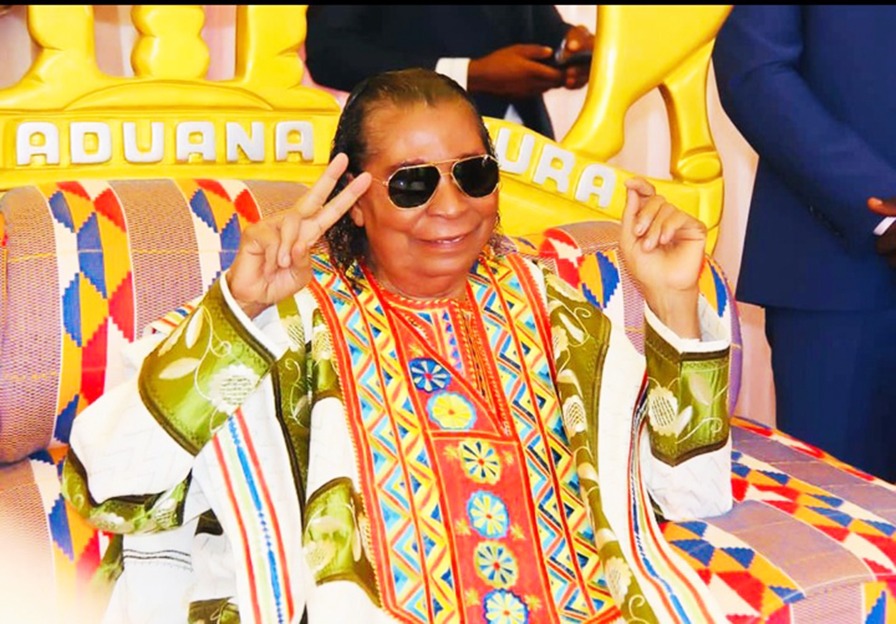
Among the evening’s most striking contributions came from Nana Akwasi Abayie (Oheneba Lovelace Prempeh), Otumfuo Akomferehene, an 82-year-old chartered accountant, chieftaincy title-holder and veteran of Ghana’s oil and gas industry, who spoke with the authority of a man who had lived the country’s entire post-independence.
Born into the Asante royal household, his father was the Asante King who reigned from 1931 to 1970. Nana Akwasi Abayie (Oheneba Lovelace Prempeh) trained as an accountant in the United Kingdom before returning to Ghana, joining KPMG, and eventually playing a central role in the syndication of financing for the country’s nascent oil sector. He later served on the board of the Tema Oil Refinery under President John Atta Mills. His chieftaincy connections run deep, he described, with precision, sixteen generations of Asante rulers stretching back to the kingdom’s founding in the 17th century.
His message, however, was not celebratory. He reserved his most pointed remarks for what he characterised as a generational failure to steward Ghana’s national assets. The railway network, which, within living memory, carried commodities from Takoradi to Kumasi and Accra, binding the country’s economic geography together, has been allowed to collapse. “I saw a route in the trains from Kumasi to Accra, packed with goods,’ he told the room. Now there are no trains.
The railway lines have been devastated.” The culprit, in his framing, was not poverty or policy failure alone, but a specific kind of leadership, one that prioritises personal enrichment over national legacy.
“A visionary leader looks at his legacy. What does he leave behind? How does he impact for the benefit of those who come after?”
Drawing on a sweep of history from the Abrahamic traditions through to the dismantling of European monarchies in the 18th and 19th centuries, he argued that the essential question of leadership, whether a ruler serves themselves or their people, has never changed. Kwame Nkrumah, despite his complexities, was held up as an example of a leader who built assets that outlasted him. The implicit challenge to the professionals in the room was clear: in whatever sphere they operate, which kind of leader will they choose to be?
Opportunity as a Discipline
If Nana Akwasi Abayie provided the evening’s historical backbone, the Honourable Joe Ghartey, former Attorney General and Member of Parliament, supplied its energy. A lawyer by training, parliamentarian by vocation and now consultant and businessman by choice, Ghartey delivered remarks that ranged from a colourful account of a diplomatic encounter with H.E Muammar Gaddafi to sharp observations about the untapped potential sitting within Ghana’s professional networks.
His central argument was that opportunity is not a matter of luck but of discipline, a trained habit of attention. “Opportunity can pass you by, he said, and you end up in a museum.” He described a working life conducted in constant pursuit of the next opening: consultancy assignments in the Savannah region, engagement with pan-African legal and professional bodies, business ventures pursued in parallel with public service. His point was not to boast, but to model: that professional reinvention is not merely possible in Ghana, it is necessary.
He also spoke frankly about the soft power that Ghana’s relatively stable democratic reputation confers on its professionals operating across the continent. At a gathering of the African network of professionalised organisations, he recalled being elected to a position not because of lobbying or patronage, but because, as he put it, “everybody likes us.” The room laughed in recognition. Ghana’s brand, he argued, is an asset that its professionals have not yet learned to spend deliberately.
A Profession’s Call to Conscience
The evening also heard from His Lordship Justice the Very Reverend George Appiah-Bonney, whose remarks centered on professional ethics within the legal profession. In a period when public trust in institutions across Africa has been tested, he urged younger lawyers in particular to hold fast to the standards that give the profession its social authority. Professionalism and moral integrity, he argued, are not optional add-ons to a legal career; they are the career.
The broader conversation that emerged across the evening touched on themes rarely combined so openly in a single room: intergenerational knowledge transfer, the intersection of law and economic development, the ethics of enterprise for professionals, and the question of how Ghanaian expertise might be mobilized on international platforms. Attendees described the networking alone as valuable, a room in which a banker might find herself in direct conversation with a security expert, a marketing professional, or a former cabinet minister.
Whether the Project Consortium’s initiative can sustain that energy beyond a single dinner remains to be seen. As an act of convening and insisting that Ghana’s professional class owes each other, and their country, a more deliberate form of engagement, the maiden gathering offered something rarer than a networking opportunity. It offered a standard to meet.
The post Professionals answer to a national call appeared first on The Business & Financial Times.
Read Full Story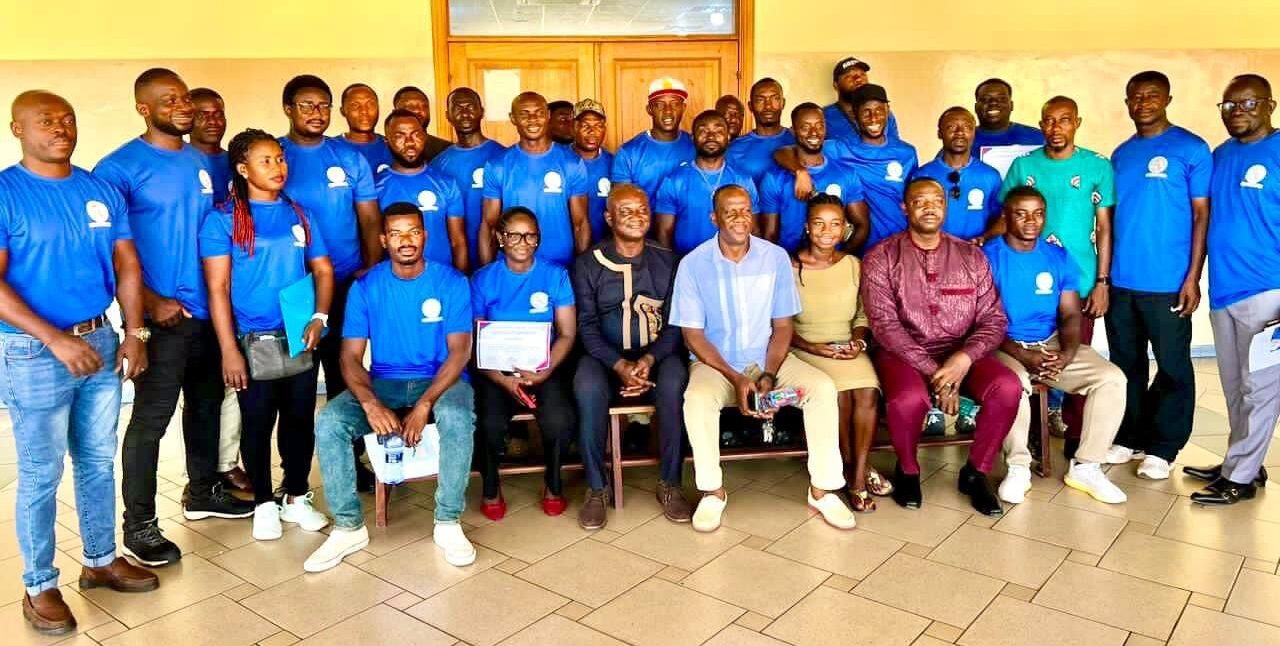




Facebook
Twitter
Pinterest
Instagram
Google+
YouTube
LinkedIn
RSS