


By Seade CAESAR
In 2026, the UAE’s Comprehensive Economic Partnership Agreement (CEPA) program is no longer just a trade-policy headline. It is becoming a practical instrument the UAE is using to reshape its economic relationships with Africa, deepen supply chains, and lock in long-term investment pathways across strategic sectors like logistics, agriculture, aviation, clean energy, and services.
What makes 2026 especially important is that the UAE is now operating on two tracks in Africa at the same time: implementing earlier African CEPAs already in force and signing or advancing new deals with larger, higher-impact partners. Together, these moves are changing how African economies engage the Gulf, and how the UAE positions itself as a preferred partner for African trade and investment.
Why the UAE is pushing CEPAs so hard and why Africa matters
At a simple level, CEPAs reduce friction. They lower or remove tariffs, set clearer rules for services trade, improve investment protections, and create pathways for business mobility and cooperation. For the UAE, that supports a wider objective: grow non-oil trade, strengthen its role as a global commercial hub, and expand outward investment and supply-chain control.
Africa matters in this strategy for three reasons:
Growth and demand
Africa represents one of the world’s fastest-growing demand frontiers, driven by population growth, urbanization, and rising consumption. For the UAE, CEPAs provide early access to expanding consumer markets and public investment programs, allowing Emirati firms to position themselves ahead of competitors as African demand for goods, services, and infrastructure scales up.
Supply-chain advantage
Africa’s role in global supply chains is expanding beyond raw materials into agro-processing, light manufacturing, and energy transition inputs. CEPAs help the UAE secure preferential access to these supply sources while integrating African production into its logistics, ports, and re-export ecosystem, strengthening the UAE’s position as a global trade and distribution hub.
Geostrategic competition
Trade agreements have become instruments of influence as much as commerce. By accelerating CEPAs in Africa, the UAE is competing with other Gulf states, China, and Western economies for long-term partnerships, investment presence, and policy alignment. CEPAs allow the UAE to anchor relationships through binding economic frameworks rather than ad-hoc project diplomacy.
A CEPA is not only about goods. It is economic diplomacy with legal teeth.
The anchor deals shaping the UAE-Africa CEPA landscape in 2026
Mauritius: the “starter” African CEPA that is now operational
Mauritius is a key reference point because it is the UAE’s first African CEPA, signed in July 2024 and in force since 1 April 2025. Even without being Africa’s largest economy, Mauritius matters strategically: it is a services-driven economy with deep links into finance, investment structuring, and international business. An operational CEPA here signals that the UAE is building not only commodity trade routes, but also rules-based services and investment channels into Africa.
In practical terms, 2026 is a year where businesses can move beyond announcements and begin using the real benefits of a CEPA: clearer rules for trade, investment frameworks, and facilitation mechanisms that reduce cost and uncertainty over time.
Kenya: a major East Africa gateway with a signed CEPA
Kenya and the UAE signed a CEPA in January 2025, and Kenya’s parliament has engaged the agreement through its ratification process and reporting, showing the deal is being treated as a serious economic instrument rather than a symbolic handshake. Kenya’s strategic value is clear: it is a regional logistics and aviation hub, a major services economy in East Africa, and a gateway into wider regional markets. For the UAE, deeper integration with Kenya strengthens trade corridors that run through ports, air cargo, and re-export pathways linked to the UAE’s hub economy.
This matters because the UAE’s comparative advantage is not only what it produces domestically, but what it can move, finance, insure, and redistribute through its logistics system.
Nigeria: the 2026 signature that turns the program into “big-league” Africa policy
The most consequential Africa CEPA move in 2026 is the UAE-Nigeria CEPA, signed during Abu Dhabi Sustainability Week in mid-January 2026. Nigeria is Africa’s largest economy by many measures and one of its most important population markets. A CEPA here signals that the UAE is aiming at scale: bigger trade volumes, wider investment pipelines, and strategic sector cooperation.
Reporting from Abu Dhabi Sustainability Week links the agreement directly to expanded cooperation in areas including renewable energy, aviation, agriculture, and climate-smart infrastructure. Nigeria’s own official communications confirm the CEPA was signed on the sidelines of the event. Nigerian media coverage also positions the CEPA as part of a broader effort to boost exports and open global market pathways.
This is where the CEPA story becomes bigger than tariff schedules. Nigeria is actively trying to mobilize climate and development finance, including major green investment initiatives highlighted at the same summit. For the UAE, which has large state-linked investment capacity and global clean-energy interests, that creates a platform for a deeper “trade-plus-investment” partnership.
Republic of the Congo
The UAE and the Republic of the Congo signed their CEPA on 8 April 2025. This agreement is designed to boost economic cooperation and expand market access for goods and services between the two nations. Early implementation focuses on reducing trade barriers and encouraging investment in strategic sectors, reflecting both countries’ interest in strengthening economic ties beyond traditional commodity trade.
Central African Republic
The UAE-Central African Republic CEPA was signed in March 2025. It is intended to increase market access for locally produced goods and reduce tariff and non-tariff barriers. The agreement also provides frameworks for deeper cooperation in infrastructure, technology, agriculture, and other priority areas, and it supports the UAE’s broader aim of integrating new African partners into its global trade network.
Angola
The UAE and Angola signed their CEPA on 28 August 2025, during the UAE president’s first state visit to Angola. The agreement is part of broader cooperation that includes investment pledges and sectoral memoranda on trade, energy, logistics, and infrastructure. Initial implementation is focusing on facilitating greater commercial ties and investment partnerships, reflecting mutual interest in strengthening economic links along Africa’s Atlantic coast.
The expansion map: where the UAE is pushing next in Africa
Beyond signed and operational deals, credible reporting and official statements indicate the UAE is working to extend the CEPA network to additional African partners.
Chad (in advanced talks)
The UAE has been reported to be in advanced negotiations to conclude a CEPA with Chad, where discussions were expected to wrap up by late 2025. These talks target market access and trade facilitation, and coincide with broader UAE-Chad investment dialogues on infrastructure, mining, energy, and logistics. If concluded, the agreement would further extend the UAE’s CEPA footprint into Central Africa.
Rwanda (in advanced talks)
Rwanda has been identified as another African partner in advanced CEPA discussions with the UAE. These negotiations aim to finalize trade and investment provisions that would accelerate bilateral economic ties. Rwanda’s strategic position within the East African Community and regional value chains makes it an attractive future partner for deeper integration under the UAE’s CEPA program.
Ghana (pre-negotiation)
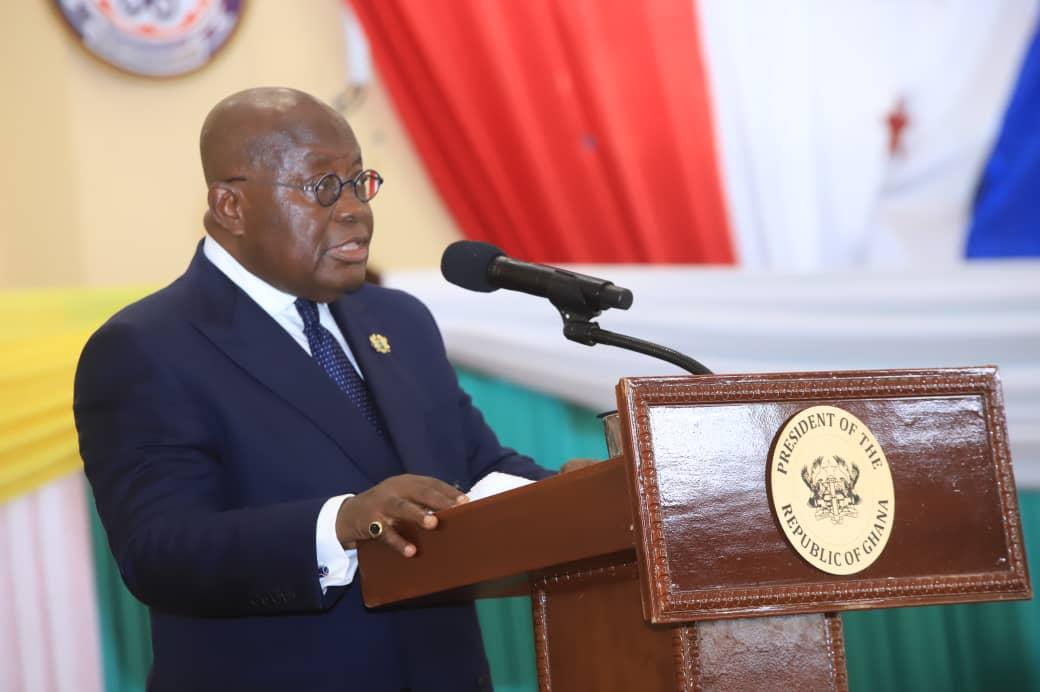
Ghana has formally requested that the UAE begin CEPA negotiations, reflecting interest in expanding bilateral economic collaboration. Although talks had not concluded by early 2026, plans to initiate discussions underscore Ghana’s desire to secure preferential access to UAE markets and attract inward investment, particularly in sectors like trade, services, and technology.
South Africa (pre-negotiation)
The UAE and South Africa agreed in late 2025 to begin discussions on a CEPA to bolster their strong bilateral trade and investment relationship. While negotiations were at early stages as of early 2026, both sides see potential in expanded economic cooperation, especially given South Africa’s large and diversified economy, which could complement UAE trade and investment ambitions in Africa.
Put simply: 2026 is not just about one or two deals. It is a year where Africa is becoming a core theatre for the UAE’s trade diplomacy.
What changes on the ground when a CEPA arrives?
To understand why CEPAs can reshape relationships, it helps to look at the practical channels they usually affect.
Trade corridors: tariffs matter, but predictability matters more
Tariff reductions can be immediate wins for exporters. But for many businesses, the bigger advantage is predictability: clearer rules for customs, standards, dispute processes, and the overall “cost of doing cross-border business.” For African exporters, the UAE is not only an end-market. It is a gateway into re-export markets and a node in global distribution. That is why a CEPA with the UAE can have outsized impact compared to a similar-sized agreement elsewhere.
Services and investment: the quiet engine of the UAE-Africa relationship
African economies increasingly want services growth, not only commodity exports. The UAE’s CEPA model tends to emphasize broad economic partnership, not just goods. That is especially relevant in: logistics and supply chain services, aviation and airport-related services, professional services and business establishment frameworks and digital trade support services where domestic regulation permits. Mauritius is a strong example of why these matters: it sits at the intersection of services and investment structures, which are central to real-world deal-making.
Energy transition and climate finance: why Nigeria’s timing is telling
The Nigeria-UAE CEPA was signed in a context where Nigeria was pushing energy-transition financing and climate-resilient infrastructure investment at Abu Dhabi Sustainability Week. At the same time, the UAE’s clean energy champion Masdar has been scaling globally and publicly framing clean energy and AI-enabled industrial strategy as central to the UAE’s economic future. That combination suggests a likely direction: more UAE-Africa “package deals” where trade facilitation sits alongside project finance, infrastructure investment, and long-term partnerships in energy and logistics.
The opportunities for African economies and businesses
If implemented well, UAE-Africa CEPAs can offer real advantages:
Trade and market access gains
CEPAs lower tariffs and improve predictability, enabling African exporters to access UAE markets and global re-export channels, while reducing transaction costs and improving supply-chain reliability.
Investment and sectoral development
Clearer rules attract UAE capital into logistics, agriculture, energy, and infrastructure, supporting technology transfer, job creation, and productivity growth when aligned with domestic industrial strategies.
What “success” looks like by the end of 2026
By the end of 2026, success for UAE-Africa CEPAs will be measured less by signatures and more by outcomes. This includes visible growth in non-oil trade, smoother customs processes, and lower transaction costs for exporters. Credible investment announcements should translate into projects on the ground, especially in logistics, agriculture, energy, and services. African firms should be actively using CEPA provisions to access UAE markets and re-export channels, while job creation and skills transfer become evident locally. Just as important, governments should show strong implementation capacity, transparent reporting, and stakeholder engagement that ensures CEPAs support long-term domestic competitiveness rather than short-term trade gains.
The post UAE-Africa Comprehensive Economic Partnership Agreements (CEPAs) in 2026: Redefining trade, investment, and economic diplomacy across the continent appeared first on The Business & Financial Times.
Read Full Story











Facebook
Twitter
Pinterest
Instagram
Google+
YouTube
LinkedIn
RSS