


By Edward Boateng OPOKU
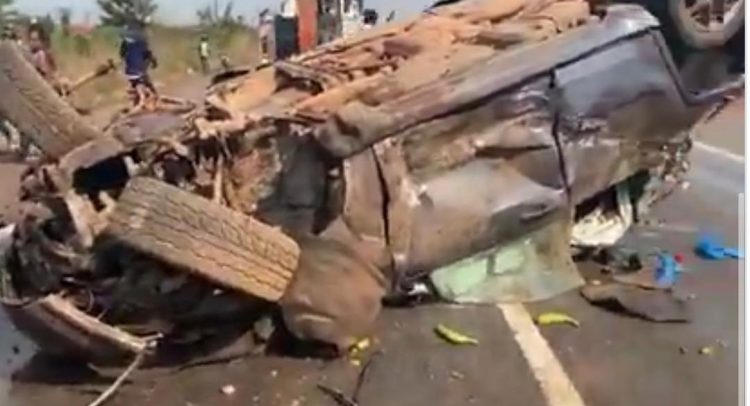
I love documentaries. One of my all-time favourites is ‘Seconds From Disaster’. If you’ve watched even a few episodes, one idea keeps coming up in different forms: accidents are almost never caused by a single mistake. They happen when a chain of factors quietly line up, collide at the wrong moment, and turn an everyday situation into a disaster.
That idea is especially relevant to the recent public debate around accidents involving the Toyota Voxy.
In recent weeks, media discussions have been loud and passionate. On one side are people who believe the Voxy is a great vehicle being badly abused by drivers. On the other are those convinced the real problem lies in the vehicle’s conversion from right-hand drive (RHD) to left-hand drive (LHD).
After my last article, many assumed I sat squarely in the second camp. Not quite.
My position is simpler and perhaps less dramatic: accidents are the result of multiple factors converging, not one silver-bullet cause. And in the case of Voxy-related crashes, three key factors keep appearing together.
Accidents are a system failure, not a single error
Think of an accident like a row of dominoes. One domino falling doesn’t create a disaster. But when several are lined up, poor decisions, mechanical weaknesses, regulatory gaps, the outcome becomes almost inevitable.
A vehicle can be mechanically sound but dangerous at excessive speed.
A skilled driver can still crash in a compromised vehicle.
A well-maintained car can fail catastrophically when overloaded or misapplied.
It’s the combination that matters.
The Three Factors Converging in Voxy Accidents
- Over-Speeding: The Silent Multiplier
Speed is rarely innocent. It doesn’t just cause accidents; it amplifies everything else.
At high speed:
- Braking distances increase
- Minor steering corrections become major swerves
- Mechanical weaknesses are exposed instantly
- Human reaction time becomes insufficient
Many commercial Voxys are pushed far beyond the speeds they were originally designed to sustain consistently, especially under load.
Speed doesn’t ask questions. It simply waits for the weakest link.
- Mechanically Compromised Vehicles
This is where the conversation often gets emotional, and understandably so.
Many Voxys on our roads are:
- Imported used
- Converted from RHD to LHD
- Subjected to years of intense commercial use
- Maintained inconsistently
A conversion alone does not automatically make a vehicle unsafe. However, poorly executed conversions combined with wear, fatigue, and deferred maintenance can compromise critical systems, steering geometry, braking balance, suspension alignment, and structural integrity.
Now add speed to that equation.
A slightly misaligned steering rack at low speed is manageable.
At highway speeds, under load, it can be unforgiving.
- Overloading and Overuse
The Voxy was never designed to be:
- Permanently overloaded
- Run continuously with minimal downtime
- Driven aggressively while fully packed with passengers and cargo
Yet many are used exactly this way.
Overloading:
- Stresses suspension and braking systems
- Raises the vehicle’s centre of gravity
- Increases rollover risk
- Accelerates mechanical failure
Overuse without proportional maintenance quietly sets the stage for disaster.
When the Dominoes Fall Together
Here’s where things get real.
Imagine this scenario:
- A converted, high-mileage Voxy
- Carrying full set of passengers each with luggage
- Travelling at excessive speed
- On uneven or unpredictable road surfaces
Nothing goes wrong… until something does.
A tyre failure.
A sudden obstacle.
A braking emergency.
At that moment, all three factors converge, and the outcome looks “sudden” to observers, but it has been building for months or years.
So, Is the Vehicle the Villain?
No.
And neither is the driver alone.
The real villain is a system that allows all three risk factors to coexist unchecked.
This is why focusing on only one issue, whether driver behaviour or vehicle conversion, misses the bigger picture.
Solutions: Fixing the System, Not Just the Headlines
The good news? Some steps are already pointing in the right direction.
- Vehicle Suitability and Mechanical Oversight
The Authority’s examination of the mechanical condition and suitability of these vehicles for commercial use is a positive and necessary move.
Safety begins with ensuring the right tool is being used for the job.
- Speed Limiting Devices
Speed limiters should not be optional for commercial vehicles.
They:
- Remove temptation
- Reduce crash severity
- Protect passengers, drivers, and other road users
This is not punishment, it’s prevention.
- Enforcement
Rules without enforcement are suggestions.
Regulatory agencies responsible for road safety must:
- Consistently enforce load limits
- Sanction unsafe vehicles
- Monitor compliance beyond checkpoints
Road safety cannot be seasonal.
- Training, Training, Training
Commercial driving is a profession, not just a means of survival.
Drivers need structured training that covers:
- Vehicle limitations
- Defensive driving
- Fatigue management
- Load dynamics
- Basic mechanical awareness
A trained driver is often the last line of defence when everything else fails.
The Bigger Lesson
Accidents don’t “just happen.”
They are engineered by neglect, shortcuts, and silence.
If we truly want safer roads, we must resist the urge to blame a single factor. Vehicles, drivers, regulators, and operators all play a role, and all must be held accountable.
Just like Seconds From Disaster teaches us:
Disasters are rarely loud until the very end.
Let’s start fixing the quiet problems before they line up again.
Happy Motoring…
The post Anatomy of a motor accident: Why crashes are rarely about one thing appeared first on The Business & Financial Times.
Read Full Story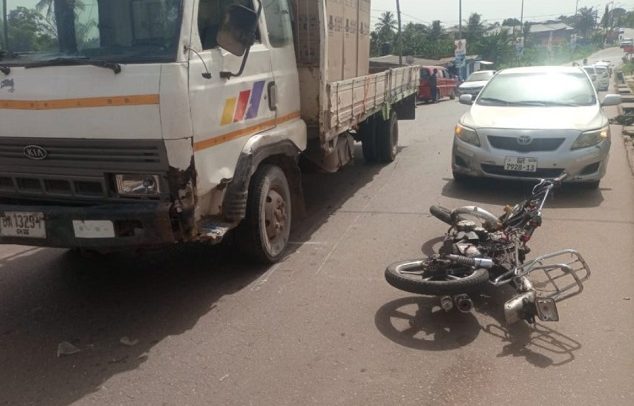





Facebook
Twitter
Pinterest
Instagram
Google+
YouTube
LinkedIn
RSS