


By Lom Nuku AHLIJAH
As of January 2026, new electricity tariffs have taken effect in Ghana. These adjustments are not ad hoc measures, nor are they sudden policy impulses. They flow directly from the Multi-Year Tariff Review (MYTO) process undertaken by the Public Utilities Regulatory Commission, which is designed to realign electricity prices with the underlying cost of service over a defined regulatory period.
The recent joint statement issued by the Trades Union Congress (TUC) and the PURC on December 30, 2025, underscores this point. While acknowledging the impact of the new tariffs on workers’ living conditions, both institutions affirmed that reversing the MYTO decision would carry serious consequences for regulatory independence, sector stability, and the broader economy. In doing so, the statement implicitly recognises that tariff setting, however politically sensitive, remains anchored in economic fundamentals.
For households, businesses, and public institutions, tariff increases are never welcome. In Ghana, they are often perceived as political decisions imposed without sufficient regard for economic hardship. Yet electricity pricing, however sensitive, is ultimately governed by arithmetic rather than sentiment.
The PURC does not set tariffs arbitrarily. In determining electricity prices, the Commission is required to consider the full cost of producing and delivering power. This includes the cost of generation, transmission, and distribution, fuel prices and fuel mix, exchange rate movements, inflation, financing costs, operational efficiency, and system losses. It must also account for capital investment requirements necessary to maintain reliability and expand infrastructure.
The MYTO framework exists precisely because these cost drivers do not change randomly. Fuel prices fluctuate. Exchange rates move. Inflation erodes purchasing power. Assets depreciate. When tariffs are frozen or suppressed in the face of these realities, the financial gap does not disappear. It accumulates quietly within the system.
Ghana’s power sector provides a clear illustration. Decisions to delay tariff adjustments for short-term political comfort have historically created a widening gap between revenue and actual cost. That gap is eventually absorbed by state-owned utilities through mounting arrears, by government through guarantees and fiscal exposure, or by consumers through service deterioration. In effect, the cost is deferred rather than avoided.
The January 2026 tariff adjustments should therefore be understood as corrective rather than punitive. They represent the delayed reconciliation of prices with costs that have existed for some time. The MYTO process merely brings those realities to the surface in a structured and transparent way. As the TUC–PURC engagement itself reflects, the debate is no longer whether costs exist, but how society chooses to absorb them.
This is why tariff debates in Ghana feel cyclical. The same arguments recur because the underlying economic drivers remain unchanged. Electricity cannot be made affordable by ignoring its cost structure. Subsidies without discipline do not eliminate cost. They only redistribute it across time and across society.
For businesses, the new tariffs demand preparation rather than protest. Electricity can no longer be treated as a fixed overhead immune from policy and macroeconomic forces. Energy efficiency, load management, pricing assumptions, and contractual planning must now be integrated into the core business strategy.
For households, the adjustment highlights an uncomfortable truth. There is no such thing as free power. When tariffs do not reflect cost, the burden reappears through taxes, inflation, public debt, or unreliable supply. Transparent pricing, while difficult, is often more honest than concealed subsidies.
From a commercial law perspective, tariff credibility is central to investor confidence. Power sector contracts are structured on assumptions of revenue recovery approved by the regulator. When pricing signals are repeatedly distorted by non-economic intervention, risk premiums rise, financing costs increase, and investment appetite declines. Ultimately, consumers bear those costs.
Electricity pricing, therefore, represents a fundamental policy choice. Costs can be recognised openly through tariffs set under a predictable regulatory framework, or they can be hidden in debt accumulation, fiscal stress, and repeated sector bailouts. The recent TUC–PURC statement reflects an implicit acceptance of this trade-off, even as concerns about wages and cost of living are redirected toward broader economic policy.
Ghana cannot regulate its way out of arithmetic. The January 2026 tariff adjustments, grounded in the MYTO, are a reminder that economic reality always reasserts itself. A credible and sustainable power sector requires tariff policies that are economically grounded, institutionally disciplined, and politically honest. Anything less merely postpones the next adjustment and deepens the next crisis.
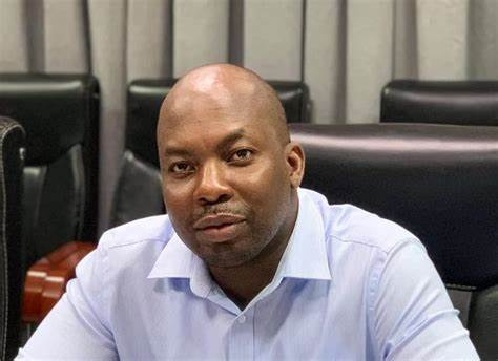
Lom Nuku Ahlijah is a Ghanaian lawyer, academic, Notary Public, and energy sector specialist with extensive experience in commercial law, regulatory governance, and public administration. He is the Immediate Past Head of Department of the GIMPA Law School and continues to serve as a Lecturer, teaching Commercial Law. He is also the Acting Legal and Compliance Officer for GIMPA, supporting institutional governance, regulatory compliance, and contract management.
The post Dynamics of electricity tariffs in the power sector appeared first on The Business & Financial Times.
Read Full Story







Facebook
Twitter
Pinterest
Instagram
Google+
YouTube
LinkedIn
RSS