


If you’re searching for a book to enjoy over the festive holidays or to give as a gift, I’d recommend one of the most intriguing books I read this year: Ray Dalio’s “How Countries Go Broke: The Big Cycle.” This book outlines how countries typically follow predictable borrowing patterns—accumulating excessive debt, implementing poor monetary policies, creating economic bubbles, and eventually declining.
Through historical examples, he demonstrates that debt buildup follows a recogniasble cycle; understanding this process helps individuals identify where a country is in the cycle, allowing them to make informed investment decisions or, for policymakers, choose appropriate actions.
I will briefly explain my understanding of how the debt cycle generally operates and use recent history to show how Dalio’s theory aligns with our economic experience. For context, Mr. Dalio is an investor with more than 50 years of experience and founded Bridgewater Associates, one of the world’s largest hedge funds, managing $125 billion in assets.
Let’s start by exploring why a country like Ghana chooses to borrow and whether borrowing is beneficial or harmful. In a scenario where borrowing isn’t possible, a nation can only consume what it produces at any given time. To increase consumption per person over time, the country must become more productive, which generally happens gradually unless new technologies are adopted to speed up progress.
Borrowing allows us to consume today more than we produce. However, when we borrow, we’re essentially “borrowing” from our future selves—and potentially future generations. The banks and investors who lend to us merely act as go-betweens; ultimately, it’s our responsibility to repay the debt. This holds true by borrowing, we enjoy greater consumption now, but our future selves need to consume less than we produce to pay off the debt—unless we pass the burden onto later generations. Over any period, total consumption must match total production, or debt will accumulate.
So, is borrowing truly advantageous? The answer depends on how the borrowed money is used. If invested in projects that boost productivity, such as education, technology, or manufacturing, our future selves may be able to pay off the debt and still enjoy increased consumption. Problems arise when borrowed funds are used for immediate consumption rather than investment, and productivity fails to grow enough to cover debt payments. This situation is what puts you on our cycle of debt.
Before discussing the cycle, let’s quickly review how the debt market functions. In essence, it’s a marketplace where borrowers—in our case governments—issue debt securities to raise funds. Like other markets, the debt market is guided by supply and demand: governments supply debt and investors provide demand.
Prices are determined where they meet. For example, if Ghana needs GH¢100 million, it issues one million certificates promising GH¢100 plus 20% annual interest for five years. Investors buy these at a price, giving the government its funding. Loans and bonds operate similarly in this context. It’s important to note that debt prices move inversely to interest rates—when prices go up, rates fall, and vice versa.
While governments issue debt to raise funds, investors purchase it mainly to earn interest and preserve the value of their investment. Their total return depends not just on the interest received but also on the real purchasing power after inflation.
The nominal interest rate is the stated yield received by the buyer of debt, which ideally exceeds the rate of inflation. When this is achieved, the investor’s purchasing power remains stable despite general price (not the debt price) changes. The portion of yield remaining after accounting for inflation is referred to as the real interest rate.
The debt cycle begins when a government spends more than it earns, covering deficits by issuing debt. As debt grows, so do interest payments, requiring further borrowing. Every cedis spent by the government ends up in the hands of someone in the economy (often voters), which gives the government an incentive to continue borrowing or supplying debt as long as demand for debt remains strong. Over time, repaying debt can outpace income, especially if interest expenses rise faster than revenue. Tracking interest costs as a share of revenue reveals whether more money is used for debt servicing, which signals declining creditworthiness.
The second phase occurs when the government tries to sell debt in the market and discovers that there is less demand than supply at its preferred price. At this point, the government faces a choice: it can cut spending, typically reducing capital expenditure rather than social expenses such as subsidies and salaries that benefit voters directly. Ironically, it’s the capital expenditure that fuels productivity and income growth.
Still, these reductions aren’t sufficient, so, like any market vendor facing weak demand, the government lowers the price to clear its debt. This drop in price raises interest rates, which means the government must borrow even more. As interest rates rise, economic activity slows down, causing government revenue to decline as well. The government then becomes trapped in a vicious cycle, needing to sell more debt than the market is willing to absorb—leading to further price declines and continually rising interest rates.
At this point, a third participant enters the scene: the central bank. Concerned that high interest rates could trigger a recession, the central bank intervenes to address the imbalance between supply and demand, aiming to raise debt prices and lower rates. It can do this either by purchasing new government debt directly (if permitted by law) at prices above the current market rate, or by buying existing debt from current holders. This process involves “printing money,” which effectively increases the amount of money circulating in the economy. As this continues, it results in more money competing for the same goods, ultimately causing overall price levels—inflation—to rise.
While our simplified debt market assumes only the government supplies debt, in reality, current holders can also sell in secondary markets for bonds and loans. Buyers typically don’t differentiate between new and existing debt if the price is right. As prices drop, investors begin selling to avoid losses, especially when the central bank prints money and raises inflation concerns, causing further sales. As Hemingway noted about bankruptcy, the process unfolds gradually, then suddenly—here, sales escalate into a fire sale.
Debt securities represent a contractual promise to receive a specified amount of currency at a future date. If investors lose confidence in a currency due to inflation-driven debasement, their aversion typically extends to debt instruments denominated in that currency. Consequently, when holders sell off such debt, foreign investors convert their funds and exit the market.
Domestic investors are likewise inclined to divest from the local currency, seeking alternatives such as hard currencies like the US dollar, acquiring gold, or moving assets abroad. In response, central banks often attempt to defend the currency, but after a significant depletion of reserves, may decide to preserve remaining resources rather than exhaust them entirely. This frequently leads to the implementation of arbitrary controls on foreign exchange, accompanied by punitive measures against speculators and citizens perceived as acting against national interests—actions that were previously overlooked. At this point, you notice several and widely varying exchange rates, for the same currency.
The pivotal question is what triggers a rapid exodus following an initial period of gradual selling. Typically, this is caused by unforeseen events such as natural disasters (e.g., pandemics or earthquakes), external shocks like war, or a sharp collapse in commodity prices. Even debt issued in foreign currencies is not protected from this sell-off. When holders of such debt witness the decline in the local currency’s value, they quickly realize that the government will have to exchange significantly more money to repay them. As a result, they often sell their debt to vulture investors and make a swift exit.
The capitulation of central banks signifies the conclusion of the leveraging cycle—a phase characterized by elevated government expenditure, robust economic growth, currency stability, increasing real estate values, and relatively subdued inflation. In the event of a market sell-off, the economy experiences swift deterioration and higher living costs, prompting authorities to initiate deleveraging measures, thereby curbing the rate of debt accumulation in relation to income. Governments generally de-lever by:
- Governments can tighten fiscal policy by raising taxes and cutting spending, which is typically deflationary and slows economic growth.
- If fiscal adjustments aren’t sufficient, they may restructure existing debt; however, since debt represents someone else’s asset, reducing it also lowers their cash flow and spending, further contributing to economic deflation.
- Another option is debt monetization—printing money—which leads to inflation, negative real interest rates, and extra government revenue through higher prices and a weaker currency. While this inflation offsets earlier deflationary effects, it can also reduce living standards.
- Lastly, governments might seek assistance from external sources such as the IMF, or, in some cases, employ aggressive measures like taxing citizens’ savings.
The deleveraging period is often a challenging phase. During this time, the debt cycle frequently intersects with the political cycle, which can result in significant changes in government leadership. Such transitions carry substantial risks, as new administrations may be motivated to alleviate public hardship swiftly. In doing so, they may prematurely interrupt the deleveraging process by reversing fiscal tightening policies—despite claims to the contrary—and may halt or reverse currency depreciation too abruptly.
This approach can sharply raise real interest rates before economic conditions warrant such measures. While these actions may temporarily restore growth and low inflation, the effects are typically short-lived and may inadvertently set the stage for another downturn in the cycle. What might appear to be a series of minor cycles is, in reality, part of a larger systemic pattern that can ultimately culminate in severe and lasting economic damage, as seen in the example of Argentina, once the world’s seventh wealthiest nation in the 1920s.
After Ghana received substantial debt relief through the HIPC program, its debt was GH¢5.2 billion in 2006. Over the next seven years, borrowing increased sharply, raising the debt to GH¢53 billion by 2013. Between 2008 and 2013, real GDP growth averaged 8.75% annually—the fastest in the country’s history—while inflation dropped to single digits. Growth was driven by commodity prices, new oil production, and higher debt-fueled spending. Government revenue rose from GH¢5.3 to GH¢16.5 billion between 2008 and 2012, but 60% of this increase went towards wages rather than capital projects. The cedi remained relatively stable throughout this period. This timeframe corresponds to the leveraging phase previously outlined.
The downturn began in 2013 with falling gold prices, followed by a drop in oil prices in 2014. The cedi lost half of its value within four months. Declining real revenue alongside increased debt servicing obligations prompted the government to seek assistance from the IMF. In response, the authorities implemented stricter controls on foreign currency access and intensified efforts to combat black market activities, contrasting with their previous leniency. Over the subsequent three years, economic growth and inflation averaged 2.75% and 17%, respectively, largely because of fiscal consolidation and debt monetization policies intended to contain debt expansion. By the end of 2016, public debt reached GH¢122 billion, with the debt-to-income ratio increasing to 31% from 10% in 2007. The economic challenges and pervasive public dissatisfaction ultimately led to the government’s removal from office.
If you grasp the mechanics, the election outcome shouldn’t have been surprising; voters often remove governments during the deleveraging phase of a debt cycle, allowing you to anticipate subsequent events. The new NPP administration promised to help voters while acknowledging the country’s heavy debt and vowing stricter fiscal policies.
However, they lowered taxes, raised spending, and abandoned debt monetisation to reduce inflation to single digits by 2018. GDP growth rebounded, averaging 7%—though by now, the underlying reasons should be clear—and they constantly fretted about the stability of the currency. Although things seemed stable by late 2019, there were still concerns—specifically, the interest-to-income ratio had climbed to 39% and total debt reached GH¢218 billion, showing that borrowing was on the rise again. Then came a pandemic, a war, and you can by now finish the story by yourself. The future is not deterministic, but you need to understand the past to see what it is ahead of you. But what do I know?
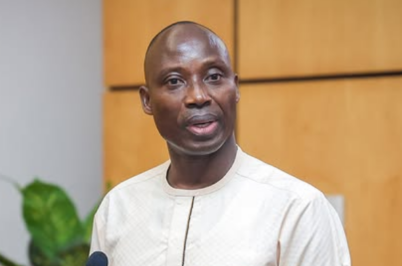
Gideon Donkor, an avid reader, dog lover, foodie, closet sports genius but a non-financial expert.
The post How do Countries Go Broke? appeared first on The Business & Financial Times.
Read Full Story






Facebook
Twitter
Pinterest
Instagram
Google+
YouTube
LinkedIn
RSS