


…changes gear from stability to growth support
By Joshua AMLANU & Ebenezer NJOKU
The Bank of Ghana (BoG) has cut its benchmark interest rate by 250 basis points (bps) to 15.5 percent, extending its easing cycle to a four-year low as falling inflation and improved macroeconomic conditions allow policymakers to shift focus toward supporting growth.
The reduction, announced after the 128th Monetary Policy Committee meeting, marks the Committee’s fourth consecutive rate cut.
Governor Dr. Johnson Pandit Asiama said the decision reflects broad gains in price stability, fiscal discipline and external buffers, which have strengthened confidence in the economy.
“Based on the foregoing considerations, the Committee, the MPC, by majority decision voted to lower the monetary policy rate by 250 basis points to 15.5 percent,” Dr. Asiama told reporters in Accra.
“The Committee will continue to monitor developments closely and take appropriate policy actions to ensure that the gains from macroeconomic stability are translated into sustainable growth,” he added.
The latest cut follows an aggressive easing cycle in 2025. At its last meeting in November, the MPC lowered its policy rate by 350 bps to 18 percent – taking cumulative reductions for the year to 1,000 bps. The earlier moves were driven by a rapid slowdown in inflation at a time when nominal Treasury yields remained high, pushing real interest rates sharply upward.
Inflation has since declined faster than expected. Headline inflation eased to 5.4 percent in December 2025 from 23.8 percent a year earlier, supported by tight monetary policy, fiscal consolidation and currency appreciation. Core inflation – which excludes energy and utility prices – also moderated, pointing to weaker underlying price pressures. Inflation expectations among consumers, businesses and the financial sector remain well-anchored, the central bank said.
Economic growth has gained momentum alongside the disinflation. Data from the Ghana Statistical Service (GSS) show real GDP expanded by 6.1 percent in the first three quarters of 2025, compared with 5.8 percent in the same period a year earlier. Non-oil GDP growth accelerated to 7.5 percent, driven mainly by the services and agriculture sectors.
The central bank’s real Composite Index of Economic Activity (CIEA) rose 8.8 percent in November 2025, up from 1.5 percent a year earlier – reflecting stronger trade, industrial output, private credit and consumption.
Financial conditions have eased sharply. The 91-day Treasury bill rate fell to 11.08 percent in December 2025 from 27.73 percent a year earlier. Average lending rates declined to 20.5 percent from 30.25 percent, helping private sector credit growth rebound to 13.1 percent from 2.0 percent in 2024.
Fiscal performance has also improved. The overall fiscal deficit stood at 0.5 percent of GDP by November 2025, well below the 3.5 percent target, while the primary balance recorded a GDP surplus of 2.8 percent. Public debt declined to 45.5 percent of GDP from 63.1 percent a year earlier.
The banking sector remained profitable and solvent, although non-performing loans stayed elevated at 18.9 percent in December 2025. The central bank said ongoing measures to resolve legacy loans and tighten credit standards should further improve asset quality.
“With stability largely achieved, the focus of policy is now gradually shifting toward consolidating these gains and supporting stronger real sector recovery, job creation and improved financial intermediation,” Dr. Asiama said.
The next MPC meeting is scheduled for March 16–18, 2026, with the policy decision to be announced at the end of the meeting.
The post Central bank extends easing cycle with 250bps rate cut to 15.5% appeared first on The Business & Financial Times.
Read Full Story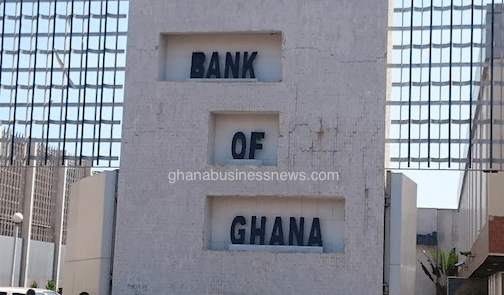









-1-1200x675.jpg)
Facebook
Twitter
Pinterest
Instagram
Google+
YouTube
LinkedIn
RSS