


By Vivian Kai LOKKO
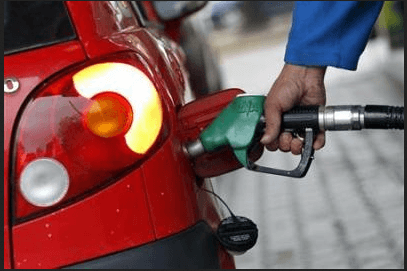
For decades, Ghana’s downstream petroleum industry followed a familiar script. A few dominant brands controlled the pumps, set the tone on quality, and commanded fierce customer loyalty. Local oil marketing companies (OMCs) operated on the fringes—present, but rarely powerful.
That story has now been shattered
Over the past five years, Ghana’s petrol and diesel market has undergone a quiet but seismic shift. Competition has intensified, market leadership has changed hands, and indigenous OMCs—once dismissed are now driving the industry’s most dramatic gains. Consumers are paying less at the pump and a new generation of local champions has emerged.
This transformation did not happen by chance. It was triggered by regulation, sharpened by competition, and sustained by investment in quality.
Breaking the ‘poor quality’ myth
For years, smaller indigenous OMCs battled a stubborn stigma—that their fuel was inferior, adulterated, or unreliable. Today, that perception is rapidly fading.
Many local players have invested heavily in quality control, logistics, and supply chain discipline—and the payoff is visible.
Zen Petroleum stands out as a powerful example.
Its diesel meets ultra-low sulphur European specifications, specially imported for the mining sector. Once unthinkable for a local brand, this level of quality is now becoming a competitive weapon.
Regulatory enforcement has also played a crucial role. In 2012, the National Petroleum Authority (NPA), the industry’s regulator introduced the Fuel Marking Program to combat adulteration by tracking chemical concentrations in fuel.
Tests results from inspections conducted at retail outlets following the introduction of the fuel marking program showed a failure rate of about 30%.
By the end of 2025, this had reduced to just 2 percent a turnaround that has restored consumer confidence.
*The great market shake-up*
Nothing illustrates the industry’s transformation more clearly than the numbers.
In August 2020, GOIL towered over the petrol market, selling more than 27 million litres in a single month. It was followed by Vivo, Total, Q8, and Zoe Petroleum. Indigenous brands like Star Oil, Zen, and Benab trailed far behind—important, but not dominant.
Five years later, the hierarchy has been flipped.
According to NPA data for January to November 2025 (RON 91 petrol):
* Star Oil surged to the top, selling over 422 million litres
* GOIL followed with 241 million litres
* Vivo recorded 209 million litres
* Total sold 147 million litres
* Zen Petroleum broke into the top five with 102 million litres
Star Oil—once outside the top ten—has overtaken Goil the long-time market leader. Zen has leapt from ninth place into the industry’s elite – top 5. It is a stunning reversal few would have predicted just half a decade ago.
Behind them, a new wave of local competitors—Benab, Dukes, IBM, Frimps, and Allied Oil—is closing the gap. Others, including JP and Icon though not yet in the top ten, are winning customers with sharply competitive pricing that often undercuts even the biggest brands.
How local players cracked the code
Over the years, foreign-owned OMCs and GOIL dominated through deep pockets, aggressive advertising, and entrenched brand loyalty. That advantage is no longer guaranteed.
Local OMCs have become deliberate and strategic—investing in:
* Bold rebranding and station upgrades
* Heavy visibility on social media
* Loyalty schemes and promotions
* Cleaner, more modern stations
* Aggressive but targeted pricing
* Improved incentives for franchise operators
The result is a shift in perception. Middle-class consumers, once skeptical, are now willing to switch—and stay.
*Policy winds at their backs*
Government policy has accelerated this transformation.
The move to full deregulation created a more level playing field, allowing price competition and operational flexibility. Then, in October 2024, Parliament passed Ghana’s Local Content Law, restricting OMC ownership to Ghanaians.
Only legacy operators—Puma, TotalEnergies, Vivo Energy and So Energy were exempted, having existed before the law came into force. For local companies, the message was clear: this market now belongs to them.
The hidden cost of a price war
Yet success has brought new tensions.
Intense competition has triggered a fuel price war, driven by selective price reductions that favour highly competitive urban centres. Rural and less competitive areas despite contributing equally to the Unified Petroleum Pricing Fund (UPPF)—often pay more.
The Institute for Energy Security (IES) warns that this trend undermines Ghana’s Price Uniformity Policy and weakens the very mechanism designed to protect vulnerable consumers. Other stakeholders argue the competition is becoming unhealthy and insist Price Floor Regulation introduced in 2024 to check this must not be abolished.
A new era, new questions
Ghana’s downstream petroleum sector is no longer defined by legacy dominance or foreign control. Indigenous OMCs have rewritten the rules—through quality, branding, and ruthless competition.
The next challenge is clear: how to sustain this momentum without sacrificing fairness, stability, and national cohesion.
The author is the Editorial Lead for Business Outlook with Vivian Kai Lokko, a high-impact digital platform for smart conversations on business, leadership, and the economy.
The post How fuel underdogs became market leaders appeared first on The Business & Financial Times.
Read Full Story





Facebook
Twitter
Pinterest
Instagram
Google+
YouTube
LinkedIn
RSS