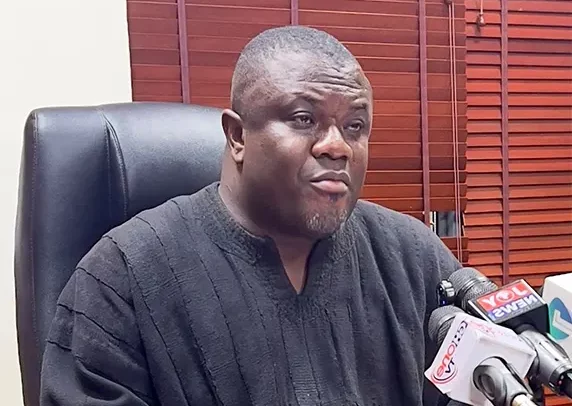
...investing US$400m in 2013 Brian Maxted, Chief Executive Officer of Kosmos Energy, one of the partners in the Jubilee oilfield, has said that there are a lot of options to deal with the storage of the associated gas, assuaging concerns that the delays in the development of Ghana’s gas infrastructure could force gas flaring. “We have got enough options to ensure that we do not compromise the oil development...We will not undermine the gas storage and we will not undermine the ability to produce oil,†he told journalists on the sidelines at the opening of the company’s ultra-modern office complex at Dzorwulu in Accra. “We are going to continue oil production for the next 20 to 25 years at Jubilee, and we will find a solution to the gas one way or another. Those solutions go way beyond when the gas infrastructure will be on stream and operational,†he insisted. The gas could be injected into other reservoirs and stored, he said, even though getting the gas onshore for power generation is more crucial for him. “I think you are putting too much emphasis on the delay of the gas. I want to see the gas come to shore primarily because it is a cheap form of energy for the people of Ghana. It would mean that you don’t need to burn oil to generate electricity,†he said. Government made it clear from the beginning of oil production that it was not going to allow the flaring of associated gas from the Jubilee oilfield, both for environmental reasons and due to the urgent need of the gas for power generation. Delays in the “early phase†Gas Infrastructure Development Project, which began in early 2012, has however led to speculation that in order to save the oil reservoir from possible damage, operators of Jubilee may be forced to flare the gas. This is especially so because the operators had said earlier that the gas could not be re-injected into the reservoir beyond a certain period. Asked whether the reinjection of the gas into the oil reservoir could jeopardise the reservoir, Brian Maxted admitted that “potentially it could; that’s a factâ€, adding that the oil and gas business is a very technical one where there are always threats to the development of oilfields. He insisted, however, that in this specific case the partners have enough options to ensure oil production is not jeopardised. Kosmos Energy has a working interest of 24.1% in the Jubilee oilfield, which currently produces 110,000 barrels of oil per day, and 19% of the Tweneboa, Enyira and Ntomme (TEN) project. Brian Maxted disclosed that the company is investing US$400million in Ghana in 2013 to cover its commitments in Jubilee and other projects. By Basiru ADAM
By Evans Boah-Mensah The Ghana Internet Service Providers Association (GISPA) has asked Government to strongly consider waiving taxes on modems used to access the Internet, otherwise known as terminal equipment. According to GISPA, whose membership comprises all firms authorised to provide Internet services to homes and offices, taking taxes off Customer Premises Equipment, access modems, dongles, among others, will help to reduce the cost of entry into the Internet sector and improve the Internet access rate in the country. GISPA made the appeal in Accra when members of the association called on the Minister of Communication Edward Omane Boamah, and his deputy, Victoria Lakshmi Hamah, to offer their support to the newly-appointed duo mandated to lead the formulation and implementation of policies to guide growth in the communication sector. The Internet Service Providers’ appeal for taxes on access modems to be removed mirrors Government’s previous decision to waive import duties on mobile voice access devices, specifically mobile phones, which has helped to shoot-up access to mobile phone telephony services and subscription rates. “As part of efforts to improve Internet usage in this country, we are faced with the issue of taxes on terminal equipment. If you take the mobile network operators, there are no taxes on their devices. “But when it comes to purely Internet service provision, we pay huge taxes on the equipment that the users are going to use. One of the reasons why growth in the Internet services sector has not really reached the level we want is that the cost of entry is always high. “We are looking to work with you so that we can look at some of these taxes, and make sure that we get more users to have Internet access to reduce the cost of entry,†said the President of GISPA, Ernest Brown. The Minister of Communication, Edward Omane Boamah, said Government sees the Internet industry as a critical sector needed to empower people and improve economic activities, and will always support private sector interventions that enhance access to technology services. “In terms of subscription to mobile telephony, the figures are way ahead of the use of Internet in Ghana, which is why Government will always engage the sector to provide essential services to people.†He said the need to increase Internet access also raises a new challenge as to how to realign revenue generation without cutting Government’s source of revenue for development. He said Government is aware of the unhealthy and strained relationship between ISPs and traditional voice network operators, and has arranged to meet the Ghana Telecom Chamber to help ensure that the work of the two parties is complementary and in tandem with each other for betterment of the industry. According to the International Telecommunication Union (ITU) report for last year, the Internet user population of the country is now 14 percent, which suggests that one in seven Ghanaians now has access to the Internet, an improvement over what used to pertain in the country two years ago when only one out of 10 Ghanaians had access to the Internet. The Internet penetration rate in the country, however, is far off the more than 100 percent penetration rate recorded in the voice telephony sector. Some analysts argue that the penetration rate of the country could be higher than the 14 percent reported by the ITU, as more people now access the Internet on their mobile phones in areas where fixed or wired Internet subscription is non-existent. According to the ITU, the country’s performance in the Internet sector last year has placed Ghana as the 15th-best country in Africa in terms of Internet users per population. Ghana, which was the first country in sub-Saharan Africa to pioneer Internet usage in homes and offices in 1993, now falls behind countries like Seychelles, Mauritius, South-Africa, Cape Verde, Botswana, Namibia, Gabon, Kenya, Zimbabwe, and Swaziland. Industry players have thus called for regulatory and policy interventions to propel growth in Internet usage, as the entry of international bandwidth providers has helped to bring down by about half the cost of accessing Internet services in the country -- resulting in enhanced Internet user-experience.

By Dominick ANDOH The banking hall remains customers’ most preferred channel for transacting banking business in Ghana, an April 2013 Africa Banking Industry Customer Satisfaction Survey by KPMG, the global accounting firm, has revealed. The report said in spite of heavy investment in technology by banks to encourage the use of alternate channels in banking -- such as ATMs, Internet banking, Point of Sale terminals (POS), and mobile banking -- consumers prefer to use a bank branch. Six out of 10 respondents said they withdraw cash using the branch, while 83 percent pay their bills at a bank branch. Comparatively, only 8 percent of customers use the Internet for the same purpose. Customers also prefer to walk into a bank branch to check their balances, with 56 percent of respondents admitting to checking their balances at the branch, while 38 percent use the ATM and only 3 percent use the mobile-banking platform. There are currently 26 registered commercial banks and 889 bank branches. Banking penetration currently stands at about 30 percent of the Ghanaian population of about 25 million. The relatively low penetration is attributable to a myriad of reasons, including the multiplicity of bank charges on customer accounts and the lack of products that directly meet the needs of the bulk of the population. Travel distance and the amount of paperwork involved are also among the barriers to adopting banking services. Ghana’s banking sector had a total asset base of about GH¢25billion (US$13billion) in 2012. According to the Economist Intelligence Unit, this is expected to almost US$18billion by 2015. Though the survey revealed the dominance of branches and the Automated Teller Machine (ATM) over other banking channels in Africa, it also predicted exciting prospects for the adoption of alternative payment channels. Analysts reckon that it costs about US$500,000 to put up a standard branch of a bank. The cheap cost of using agents and technology -- which translates into lower charges and lower capital expenditure -- is a key benefit that is expected to draw banks into branchless banking. Branchless banking involves the delivery of banking services outside of conventional bank branches, often using non-bank agents and relying on information and communication technology (ICT) to transmit transactions. The inaccessibility of certain places and overhead costs associated with establishing branches nationwide are some key challenges that branchless banking, which integrates alternative channels, is expected to remedy. However, to achieve the desired results there is need to continuously create awareness about the use of alternative channels to increase banking penetration in the country. According to the report, customer-loyalty and advocacy for local banks is below the overall average in a total of 14 countries surveyed by KPMG. These include Angola, Botswana, Cameroon, Chad, Côte d’Ivoire, Kenya, Nigeria, Senegal, Sierra Leone, Tanzania, Uganda, Zambia and Zimbabwe. For instance, in Ghana 44 percent of respondents said they would repeat business with their bank, while 55 and 70 percent of respondents said the same in Kenya and Nigeria respectively. Fifteen percent of the customers surveyed in Ghana also expressed the likelihood of changing their bank, citing service-quality as the top reason for changing. The inaugural edition of the KPMG Africa-wide Banking Industry Customer Satisfaction Surveycovered over 25,000 retail banking customers from 14 countries across Africa.
By Dominick Andoh The Social Security and National Insurance Trust (SSNIT) says it will not relent in its pursuit of all monies owed the Trust, and will prosecute defaulting employers. As at February 2013, outstanding payments to the Trust stood at GH¢426million -- of which private establishments owed GH¢88million and the Controller and Accountant-General owed GH¢302million. “The employers are always defaulting, so we are taking them to court and prosecuting them. After their prosecution they will probably pay a judgement debt, and they will also arrange to pay the arrears while paying the current [amount owed],†Corporate Affairs Manager for SSNIT Eva Amegashie told the B&FT in an interview. “The exercise is ongoing; it is not a one-off thing. We have area prosecutors and that is their job,†she said. The Trust last February was able to retrieve an amount of GH¢960,410 from defaulting employers and has initiated court action against 17 defaulting companies in the Central and Western Regions. The Trust has also secured bench warrants for the arrest of directors and owners of the 17 companies, for defaulting in the deduction and payment of their employees’ social security contributions.The entities, according to the Trust, were indebted to the tune of GH¢39million as at the end of December 2012. The defaulting companies in the Western and Central Regions include Filand Plant Hire Limited in Tarkwa; Allied Oil Filling Station at Enchi; and Esther Preparatory School at Huni.
The Electricity Company of Ghana (ECG) has been directed to conduct a nationwide inspection of all markets to check and disconnect all illegal electrical connections. According to a statement signed by a Deputy Minister for Information and Media Relations, Felix … Continue reading →
Accra , May 07, GNA - Kosmos Energy said on Tuesday it would invest 400 million dollars in its operations in Ghana this year, as part of a long term commitment to the Jubilee Oil field and other projects.
InquirerNokia teases the Lumia 928 in iPhone 5, Samsung Galaxy S3 camera ...InquirerFINNISH PHONE MAKER Nokia has shown off the worst kept secret in smartphone history, the Nokia Lumia 928, in a video ahead of its unveiling next week. On its Lumia 928 holding page that it put up yesterday Nokia has revealed a photo of the device ...Ad says it all: Nokia Lumia 928 confirmed with PureView cameraFirstpostLumia 928 is real, coming: Nokia - Financial ReviewThe Australian Financial ReviewNokia teases new Lumia smartphone in magazine adLos Angeles TimesFinancial Post -Chicago Tribune (blog) -Economic Timesall 317 news articles »
By Edward Adjei Frimpong, Bui Efforts to addressing the current energy crisis bedevilling the country has received a massive boost as President John Mahama last Friday inaugurated 133 megawatts from the Bui Hydroelectric Dam in the Brong Ahafo Region into the national electricity grid. Although the 133MW cannot completely suppress the energy problem which has resulted in power rationing, it indicates the prospects and strides of players in the energy sector who since the beginning of this year have been working tirelessly to find solutions to the energy deficit that has rocked Ghana largely because of damage to the West African Gas Pipeline. The entire 400MW Bui Hydroelectric Dam project is about 92% complete and in its final stages of construction. Dry and wet tests -- which were to verify proper, complete and satisfactory erection of all the subsystems for the first generating unit -- were carried out and successfully completed in April this year and the plant is now generating 133MW into the national electricity grid. The rest of the plant should be available by the fourth quarter of 2013 while other associated and non-power works on the project will continue till the second quarter of 2014. In his inaugural speech, President Mahama stated that the damage to the West African Gas Pipeline exposes the fragility of Ghana’s power supply in the face of the ‘geometric increase’ in demand for domestic, commercial and industrial energy. “For many developing countries, an increase in Gross Domestic Product (GDP) is accompanied by growth in energy consumption per capita. Ghana’s energy challenges are consequential of an expansion in the economy coupled with growing demand by the populace for power. With an average GDP growth of 8% per annum, Ghana’s energy demand-growth is hovering around 7-10% yearly, “he said. To this end, Government is not only working to end the current load-shedding but to also ensure that Ghana enjoys energy security in the next 20 years in order to make us a net exporter of power into the West African pool of energy to the benefit of power-deficient sister-countries, the President noted. “Ghana’s energy security is dependent on producing and processing our gas reserve, and for that matter I have take personal interest in the Ghana Gas Project at Atuabo in the Western Region -- asking for regular briefings on its progress. I am optimistic that the end-of-year target to bring the gas on stream is realisable,†he added. President Mahama continued that with the completion of a pilot 2MW solar plant by the Volta River Authority in Navrongo, discussions are steadily underway to also see a significant addition of renewable energy into our power mix, adding that plans by independent producers are far-advanced to put 400MW of solar power into the national grid at Kusugu in the Northern Region. The President later inaugurated a 161kv substation at Kintampo that is meant to integrate evacuated power from the Bui Generating Plant into the national grid. Mr. Jabesh Amissah-Arthur, CEO of Bui Power Authority who numerated the components of the project, stated that four transmission lines are being constructed to aid in evacuation of power from the Bui Generating Station into the national grid. He said three lines heading to Sawla, Kintampo and Techiman are about 98% complete, while the fourth line to Sunyani is also close to 73% complete. Touching on other ancillary projects, Mr. Amissah-Arthur revealed that work has taken off on construction of a landing ramp to support fishing efforts in the Bui reservoir, and to enable effective monitoring and control of access to the reservoir as well as contact with the lake in the interests of public health and sustainable fisheries. “Another auxiliary project to the Bui Generating Plant is an irrigation scheme, which is expected to cover an estimated 30,000 hectares of land. The proposed area is located about 32km north-east of the dam-site. A consulting firm has been engaged to conduct detailed feasibility studies of the proposed area, and also provide detailed designs for the development of 5,000 hectares as the first phase of development,†he pointed out. The Bui Project started in 2007 and experienced a shortfall in project funding -- arising primarily from unanticipated effects of the recent global economical crunch, unforeseen essential works, and inadequacy of budget allocations for some line items in the Engineering Procurement and Construction (EPC) Contract. Government has however secured the additional required funding totalling US$168.4million from the Eximbank in China.
Sir Alex Ferguson has retired as the manager of Manchester United, the club confirmed on Wednesday morning.
By Patrick PAINTSIL Sirius Capital Limited, an asset management company, has launched the “Sirius Opportunity Fundâ€, an open-ended money market mutual fund, in Accra. The fund will invest in fixed-income assets in both developed and emerging markets to create wealth for its clients. It will be managed by experts in the money market industry, with CAL Bank as its custodian. With a minimum amount of GH¢20, one can have a share in the 600,000 units on offer. The fund has an initial price offer of GH¢300,000 spanning a 21-day period, after which it becomes limitless and open to more investments. The price per share is 50 pesewas. Franklin Benefo, Chief Executive Officer of Sirius Capital, explained why the Fund has been launched at this particular time: “Current statistics show that the West African sub-region is expected to experience the highest economic growth, with Ghana tipped to record the second- highest growth after Niger. “These projections require that capital market operators strategically position themselves to take advantage of the opportunities that the imminent boom presents, and Sirius Capital is no exception.â€He said it is about time Government considered it an economic responsibility to develop and nurture a vibrant capital market in order to counter the incidence of capital flight, which is a threat to economic growth. “When capital flight is reversed, Government will be building the capacity to develop a strong locally-developed capital base, thereby creating more jobs and enriching the lives of the people,†he said. Mr. Benefo touched on some benefits of the Fund: “With the introduction of Sirius Opportunity Fund, we are committed to giving our shareholders varying opportunities for long-term portfolio growth. “The fund offers one an opportunity to become rich through consistent investment over a period of time. Investors can use their contributions to acquire basic needs or as retirement income. “At Sirius Capital, our focus is to reward clients with lifelong wealth returns -- no matter how the market turns, with its alternative investment solutions which can turn little investments into profit-making ventures.†He said the fund will be manned in an ethical manner, and will also provide clients with professional and cutting-edge services.
By Bernard Yaw ASHIADEY The Trade and Investment Framework Agreement (TIFA) that is being considered by the US Government with the Economic Community of West African States (ECOWAS) will help goods move more easily and faster within the sub-region, Sam Ntum, a Senior International Trade Specialist of the Illinois Department of Commerce and Economic Opportunity, has told the B&FT. Announced on March 29 by the acting United States Trade Representative (USTR), Demetrios Marantis, during a visit to Washington of President Ernest Bai Koroma of Sierra Leone, President Macky Sall of Senegal, President Joyce Banda of Malawi and Prime Minister José Maria Neves of Cape Verde, the US believes the framework agreement can significantly contribute to economic growth and increase international competitiveness on both sides of the Atlantic. “I think that President Obama would want to strengthen the relationship with ECOWAS, which covers a whole bloc of countries. So even though there are individual agreements with countries, having an agreement with a regional economic bloc will be stronger,†Mr. Ntum said. If concluded, the TIFA will create opportunities for US companies interested in doing business in West Africa, and will assist in addressing impediments to U.S. trade and investment in the region. It would also provide a forum for discussion of topics relevant to economic integration efforts in West Africa. The TIFA, Mr. Ntum said, will work to make sure that the boundaries within ECOWAS countries are eliminated to allow for free movement of goods to stimulate the economies of these countries and increase the amount of trade. Mr. Ntum cited the example of the East Africa Economic Community, which is one of the leading regional economic organisations in sub-Saharan Africa and has made great strides in recent years toward integrating the economies of its member states. It has established a free trade area and a customs union and is working toward a common market. On July 16, 2008, the United States and the East African Community (EAC) signed a United States-EAC TIFA in Washington, DC. Trade ministers and other senior officials from the five EAC member-states -- Burundi, Kenya, Rwanda, Tanzania, and Uganda -- witnessed the signing. Mr. Ntum was speaking on the sidelines of a US-Ghana Breakfast Meeting in honour of a trade mission to Accra from the state of Illinois. Organised in collaboration with the American Chamber of Commerce, Ghana (AMCHAM), the three-day visit which ends today seeks to build relationships with US business owners and state officials; understand the opportunities offered by US businesses; and enjoy pre-screened meetings with US manufacturers, exporters, and construction experts. The meetings will be tackling major industry sectors like manufacturing, energy (renewable), pharmaceutical products, construction, housing, oil and gas, cosmetics, engineering and machinery, medical equipment, and imports and exports. Some of the companies participating in the programme include Green Innovation & Technology Inc; Ethno Solutions; Bennu Group-Ability Engineering Technology Inc; MI-Jack Products Inc; Kofa International; Masterpiece Products Inc; Lodaat LLC; Natural Enrichment Industries; and Johnson Publishing Co. DBA Fashion Fair Cosmetics.
Telegraph.co.ukAfter Successful Year, Manchester United's Alex Ferguson To Retire As ...ForbesManchester United's Alex Ferguson will retire at the end of this season the club announced on Wednesday. (Photo: Getty Images). Alex Ferguson's 13th Premier League title as manager of Manchester United will be his last. Early on Wednesday, Manchester ...'I built a club, not just a team': Sir Alex Ferguson steps down after 27 trophy-filled ...The IndependentAlex Ferguson factfileTimes of IndiaLeave your tributes for retiring Man Utd boss Alex FergusonThe SunFirstpost -Daily Mailall 470 news articles »
Stanbic Bank has closed a US$20.15million loan deal with Western Diamond Cement Limited, a company in the West African Cement SA (WACEM) Group, to build a cement production plant in the Western Region. The one million metric tonne per annum cement factory will be located at Egyam Bokro near Takoradi. Production will start in 2014. The current cement production capacity in Ghana is 5.2 million metric tonnes per year. The factory brings to four the number of cement production factories operating locally, with an additional one bagging imported cement. Speaking at a signing ceremony in Accra, the Chairman of WACEM Group Manubhai Jethabhai Patel said the Group is committed to developing the natural resources of countries they operate in, and this applies to Western Diamond Cement Limited. “Our group seeks to develop the local resources of the countries we operate in for the benefit of the people. That is why we invest in the basic needs of industry. We move into countries to help in the infrastructure development process. This facility from Stanbic Bank will go a long way to ensure that we achieve our aim of making cement easily accessible to the people of Ghana,†he said. WACEM has two associate companies currently operating in Ghana, namely Savanna Diamond Cement Limited (SDCL) in the Northern Region and Diamond Cement Ghana Limited (DCGL) in the Volta Region. Commenting, Chief Executive of Stanbic Bank Ghana Alhassan Andani said: “Our purpose as a bank is to improve lives. In our activities and operations, we commit to ensuring that the end results bring progress to the people. As a developing economy, cement is critical to the infrastructure development process and we are delighted to be financing a project that will make cement easily available to Ghanaians.†Stanbic Bank’s relationship with the WACEM Group started in 2011. WACEM has cement factories in most parts of West Africa including Nigeria, Cote D’Ivoire, (Nigeria and Cote D’Ivore are in project stage) Niger and Burkina Faso, and has recently commissioned a factory in Mali. Stanbic has also in the past secured financing for a number of high-ranking businesses, all aimed at expanding and contributing to development of the economy’s Corporate Sector. Head of Stanbic Corporate and Investment Banking Unit Kwamina Asomaning said: "Stanbic Bank CIB has consistently demonstrated its commitment to support Ghana's infrastructure base. Cement is crucial in any physical development agenda. Adding a fourth factory to the local cement production structure will mean more jobs to people, and improvement in incomes. We enter into partnerships which produce results that matter." The Head of Investment Banking at Stanbic Bank, Sam Botchwey, said the deal with Western Diamond Cement Limited is yet another manifestation of Standard Bank Group’s unique financing capabilities. “This landmark deal underscores the structuring and execution capacity of Stanbic Bank and Standard Bank Group as a whole. Our vast network in Africa and across the globe enables us to leverage skills and synergies across borders to provide solutions and connect our clients to resources that move their business forward,†he said.
The concept of impact-investing is growing in popularity among the global investment community, encouraging investments into companies and funds with the intention of generating positive, measurable social and environmental impact alongside a financial return. Increasingly, potential local and international investors are using independently assessed fund rating systems, such as the Global Impact Investment Rating System (GIIRS), to assess the social and environmental impact of South African and African companies and funds as part of their investment selection criteria. According to Herman Marais, managing partner at Agri-Vie, the sub-Saharan private equity fund investing in food and agribusiness, impact-investments differ from socially responsible investing which uses a negative-fund-screening approach to avoid ‘harmful’ companies. “Impact investors use, in addition, a positive-screening approach and actively seek to invest capital in businesses and funds that can harness business and investment disciplines to solve social or environmental challenges in a sustainable manner. It is geared toward positively influencing fund manager practice and offer investors market-rate, or even market-beating financial returns.†He explains that against a backdrop of food security issues, environmental challenges, employee well-being and global upheaval as a result of stagnant and volatile financial markets, the GIIRS utilises a ratings and analytics approach, similar to Morningstar, which is intended to change investor behaviour and unlock the potential of this new asset class. “The GIIRS recognises the positive impact generated by a fund and its investee companies, and provides investors with rigorous, transparent, comprehensive and comparable ratings of a fund’s impact -- grading the fund’s impacts on a scale of one to five stars and an overall score.“It also allows investor companies to allocate investments into the most ideal fund of their choice, benefitting from benchmark reporting performances while tracking the impact of their investments,†says Marais. Three of Agri-Vie’s investments recently received five-star international ratings from GIIRS, outperforming international indices: Agri-Vie invests for above-average financial returns and optimum impact. The GIIRS Fund Rating is comprised of a weighted average of the fund’s ‘Investment Roll-up’ score and its ‘Fund Manager Assessment’ score. To determine the investment roll-up, a weighted average of the scores of investments in the fund’s portfolio and the total amount invested in each investment (company) are aggregated, which comprise four impact categories: Governance; Workers; Community; and Environment. The Fund Manager Assessment score is measured against three categories regarding a fund’s policies and practices in deploying and managing its capital: Targetted for Investment; the Investment Criteria; and Portfolio Management. The Agri-Vie Fund has completed eight investments across Southern and East Africa and has completed more than 60% of its investment programme. Agri-Vie is among the highest rated impact investments internationally in the food & agribusiness sector. Marais says that the fund is also on track to delivering its targetted, risk-adjusted return in keeping with private equity investment performance benchmarks in emerging markets. “The fund’s mission is to generate an above-average investment return, as well as demonstrable socio-economic development and environmental impacts through its private equity investments in food and agribusinesses, and envisages completing its current investment programme over the next two years.†The Agri-Vie fund manager intends to introduce further investment opportunities to the market in due course. In December Agri-Vie won the Agribusiness Investment Initiative of the Year award at the African Investor Agribusiness Investment Awards 2012.
Woman claims Mutula fathered sonThe Standard Digital NewsNairobi, Kenya: The High Court has ordered DNA samples be taken from the body of the late Mutula Kilonzo following an application by a woman who claims he is the father of her seven-year-old son. Justice Luka Kimaru said the samples will be used to ...and more »
By Bernard Yaw ASHIADEY Hisense Ghana, a subsidiary of Chinese-based Hisense International, has launched its state-of-the-art satellite television sets at a ceremony in Accra. Managing Director of Hisense Ghana, Diana Abusuayedom-Quarshie, said the company is focused on churning out various technological products that meet the growing needs of its customers based on four key elements: high technology, quality, integrity and responsibility. “Our energy-saving products are environmentally friendly and have supported various humanitarian ventures globally. Our vision of embedding the Hisense brand in the minds of Ghanaians has not changed; that is why our comparative advantage has been our price and high quality,†she said. In a presentation of the qualities of the satellite televisions, Marketing Manager John Adjetey said: “Hisense Satellite TVs solve the problems of range and distortion by transmitting broadcast signals from satellites orbiting the Earth. Since satellites are high in the sky, there are a lot more customers in the line of sight. Satellite TV systems transmit and receive radio signals using specialised antennas called satellite dishes. Hisense Satellite TV customers get their programming through a direct broadcast satellite (DBS) provider, such as DirecTV or DISH.†He added that people in remote areas can get satellite television even if they are not able to receive cable services. “The pictures provided by satellite are far sharper than either cable or off-air broadcast. It provides digital information and text services; satellite television gives you access to channels and programmes that can never be offered through cable; and it gives you news coverage which is live and unedited so you do not have to watch the chopped-up version.†Other benefits include accessibility to international programmes, availability of innumerable music services of extraordinary quality, and it also allows you to listen to both FM & AM local radio stations clearer, even from afar. Mr. Adjetey said the satellite TVs come with a five-year warranty, and free delivery and installation.Some of the local and international channels shown on the satellite TVs include 4Kids, Adhyie TV, Adom TV, Cine Afrik, Elijah TV, Hitz TV, Joy TV, Joy Sports, Nhyria TV, Our TV, Real TV, Silicon TV, The Jesus TV, TV3, TV Africa, and TV Gold. Hisense International has 19 production plants and six research and development centres around the globe. Hisense brands are sold in about 130 countries with sales revenue of about US$11.3billion in 2011.
Facebook
Twitter
Pinterest
Instagram
Google+
YouTube
LinkedIn
RSS