


THE government is stepping up investment in technology-enabled larval source management (LSM) to tackle the threat posed by emerging invasive mosquito vectors that transmit malaria.
Following confirmation of the Anopheles stephensi mosquito in the country in 2023, the Deputy Minister of Health, Grace Ayensu?Danquah, said the use of advanced technologies had become crucial to complement traditional malaria control interventions, sustain recent gains, and prevent further transmission.
She was speaking at the opening of a two?day high-level workshop on technology-enabled LSM for malaria elimination in the African region, held in Accra yesterday.
Organised by the National Malaria Elimination Programme (NMEP) of the Ghana Health Service (GHS) in partnership with SORA Technology, the workshop, on the theme “From Mapping to Action: Tech?Enabled LSM for Malaria Elimination,” sought to explore how advanced technologies are transforming malaria prevention globally.
Anopheles stephensi, first detected on the African continent in 2019, is known to transmit two malaria parasites: Plasmodium falciparum and Plasmodium vivax, which pose a high risk of severe illness and death.
Unlike traditional Anopheles mosquitoes, the vector can breed in a wide range of water sources and survive in extremely high temperatures during the dry season, when malaria transmission typically declines.
Dr Ayensu?Danquah said Ghana was taking lessons from countries such as Djibouti, which had nearly achieved malaria elimination before the detection of Anopheles stephensi led to a sharp rise in cases, and was therefore acting swiftly to curb the threat.
“The World Health Organisation projects that 126 million additional urban Africans could face malaria unchecked. LSM is the precise countermeasure required to control Anopheles stephensi. Ghana is therefore investing in technology-enabled LSM as both an accelerator of our elimination agenda and a defensive bulwark against emerging threats,” she stated.
The Deputy Director?General of the Ghana Health Service, Caroline Reindorf Amissah, highlighted recent progress in the malaria response, noting that deaths declined from 146 to 74 by the end of 2024.
“We surpassed our national target of 95 deaths by a considerable margin. Malaria prevalence among children under five has fallen from 27.5 per cent in 2011 to 8.6 per cent in recent surveys,” she said.
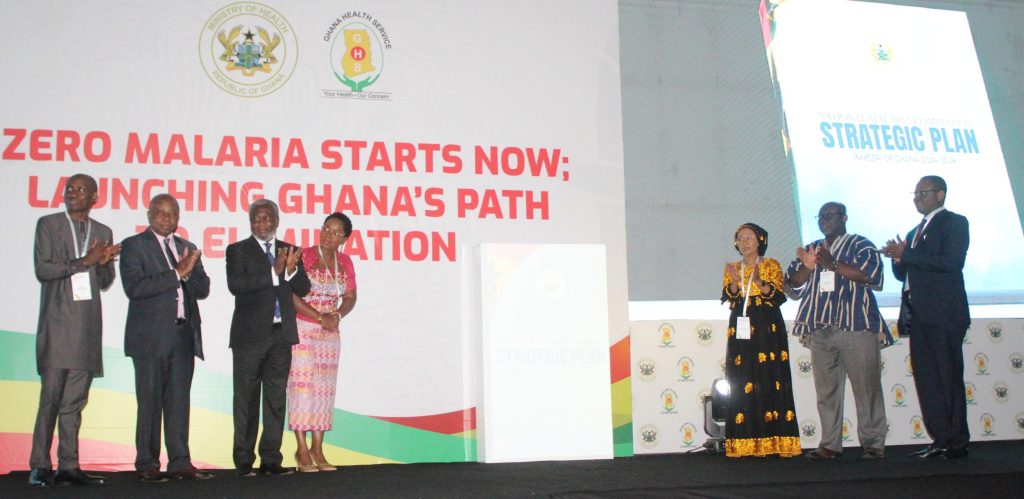
Despite the gains, Dr Amissah stressed the need to accelerate efforts to meet the targets of the National Malaria Elimination Strategic Plan 2024–2028, which aims to reduce malaria mortality by up to 90 per cent, cut incidence by 50 per cent, and eliminate malaria in 21 districts within the Greater Accra Region.
“To achieve these targets, we must embrace every effective tool at our disposal, and we welcome opportunities for bilateral cooperation to advance technology-enabled malaria control in Ghana and across Africa,” she added.
The WHO Country Representative, Fiona Braka, emphasised that data-driven and evidence-based LSM remained critical for optimising vector control and maximising efficiency in the global response, and encouraged African countries to give the approach serious consideration.
BY ABIGAIL ANNOH
Follow Ghanaian Times WhatsApp Channel today. https://whatsapp.com/channel/0029VbAjG7g3gvWajUAEX12Q
Trusted News. Real Stories. Anytime, Anywhere.
Join our WhatsApp Channel now! https://whatsapp.com/channel/0029VbAjG7g3gvWajUAEX12Q
The post Ghana steps up tech fight against invasive malaria mosquito appeared first on Ghanaian Times.
Read Full Story






Facebook
Twitter
Pinterest
Instagram
Google+
YouTube
LinkedIn
RSS