


By Kizito CUDJOE
The country’s long-held ambition to generate nuclear power by 2030 is slipping out of reach despite more than a decade of groundwork and steady institutional progress, a leading nuclear expert has revealed.
Dr. Archibold Buah-Kwofie, Director-Nuclear Power Institute (NPI) at the Ghana Atomic Energy Commission (GAEC), said the country’s original timeline that envisaged the first commercial nuclear power plant coming onstream by end of the decade is no longer feasible.
Speaking at a high-level roundtable organised by the Institute of Economic Affairs (IEA) in Accra, he explained that while important milestones have been achieved since the nuclear roadmap was launched in 2015, sheer complexity of the process has inevitably pushed the programme beyond its initial schedule.
The delays, it emerged, are tied to regulatory requirements, infrastructure readiness and financing arrangements that have combined to slow progress – reflecting the inherently long lead times associated with nuclear power development across the world.
Dr. Buah-Kwofie described nuclear energy as a transformational undertaking that demands long-term commitment, policy consistency and careful sequencing of activities.
“It is also a very geopolitically significant activity,” he noted, adding that Ghana’s programme remains one of the most advanced in West Africa and could position the country as a strategic anchor for nuclear development in the sub-region.
He maintained that nuclear power presents a dependable baseload option capable of underpinning industrialisation and sustained economic growth, particularly at a time when the country’s traditional energy sources are coming under increasing strain.
Ghana, he observed, has already exploited about 70 percent of its viable hydropower potential. The remaining opportunities are relatively limited and, in some cases, compromised by the effects of illegal mining which continues to degrade water-bodies and reduce their long-term viability.
On the thermal side, he noted that although the country began utilising natural gas in 2008 following discoveries in 2006, projections under the national gas master plan suggest output could begin to decline by 203 – with early warning signs already evident.
This outlook is significant, given that thermal generation currently accounts for roughly 62 percent of Ghana’s energy mix. Such dependence, he warned, leaves the system exposed to fluctuations in global oil and gas prices… factors largely beyond the country’s control.
Recent swings in international fuel prices, he said, underscore the vulnerability of relying heavily on imported or externally priced energy sources, with direct consequences for electricity tariffs and overall energy security.
Against this backdrop, Dr. Buah-Kwofie pointed to ongoing international efforts led by the International Atomic Energy Agency and International Renewable Energy Agency to integrate nuclear energy with renewables, such as solar, in order to build more resilient and balanced energy systems.
“There is a lot of research going on. We are also doing some work locally,” he said. “It shows clearly that no country can rely on a single energy source if it wants a robust and secure system.”
He added that many countries now treat energy security as a matter of national security, an approach Ghana must begin to adopt as it plans for its long-term power needs.
In line with international best practice, the International Atomic Energy Agency recommends establishing three key institutions to drive nuclear development: the Ghana Nuclear Power Programme Organisation (GNPPO), an independent regulator established under the Nuclear Regulatory Authority Act, 2015 (Act 895) and a project developer that ultimately transitions into being the plant’s owner-operator.
Dr. Buah-Kwofie noted that these institutions are already in place and playing their respective roles, marking an important step toward building a credible and internationally compliant nuclear programme.
However, he expressed concern about the current state of the programme’s central coordinating body, which was established at the nuclear initiative’s outset in 2015.
According to him, the body – then located within the Ministry of Energy and Green Transition and chaired at the deputy ministerial level, with membership drawn from various ministries and agencies – has become largely inactive over time.
While phase one activities were successfully driven by the Ghana Atomic Energy Commission, he said the transition to phase two, which is more project-oriented, demands a stronger and more coordinated institutional arrangement.
He therefore called for reactivation and strengthening of the coordinating body, stressing that it must be made fully functional and better-aligned with the programme’s technical demands.
He also recommended that the Nuclear Power Institute be formally embedded within the country’s governance framework to provide sustained technical leadership and ensure continuity in implementation.
Equally important, he emphasised a need for reliable and dedicated funding to support both the coordinating body and its technical arm – warning that without sustained financial backing, progress in the current phase could face further delays.
Ghana is currently in phase two of the International Atomic Energy Agency’s milestone approach, having completed phase one and submitted its report to government in 2019.
The roundtable was held under the theme ‘Powering Ghana’s Industrial Future: The Role of Nuclear Energy in Energy Security and Sustainable Development’.
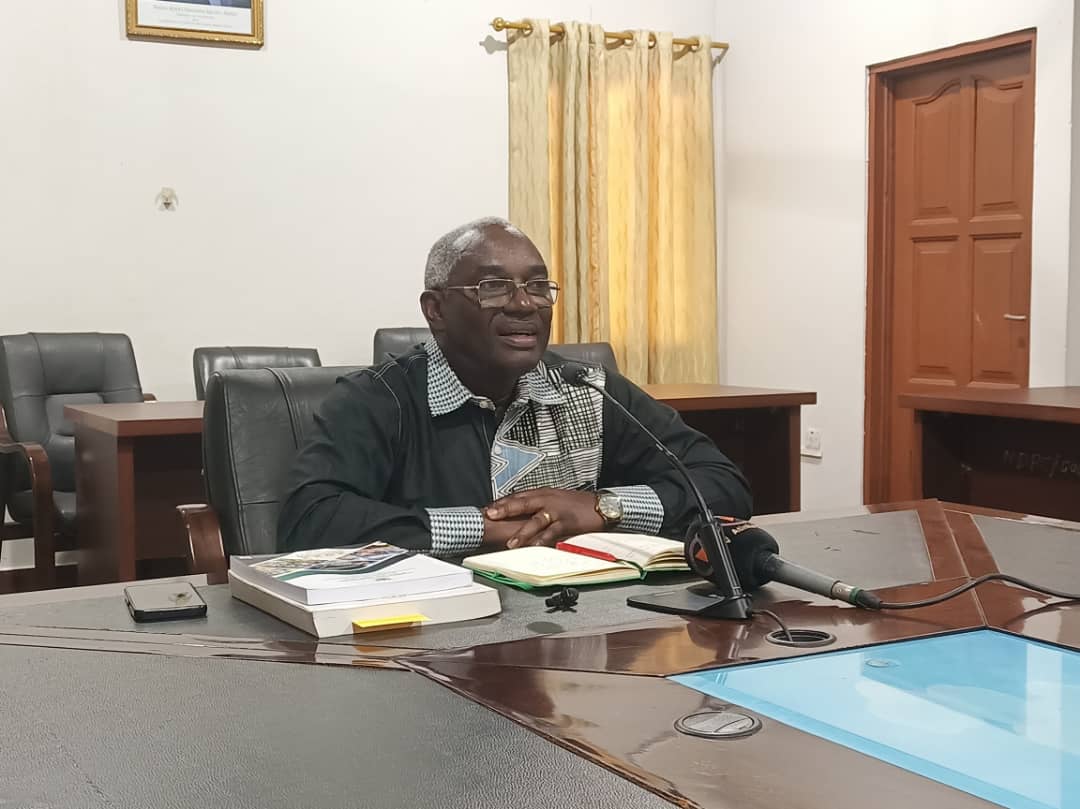
Dr. Archibold Buah-Kwofie, Director-NPI
The post Gov’t unlikely to meet 2030 nuclear power target despite progress appeared first on The Business & Financial Times.
Read Full Story





Facebook
Twitter
Pinterest
Instagram
Google+
YouTube
LinkedIn
RSS