


By Edward Adjei FRIMPONG
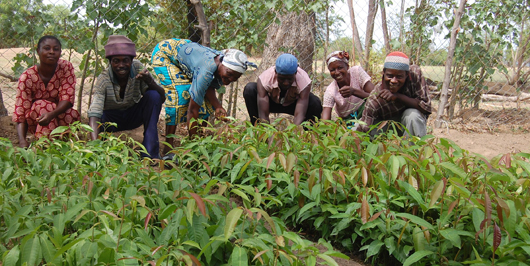
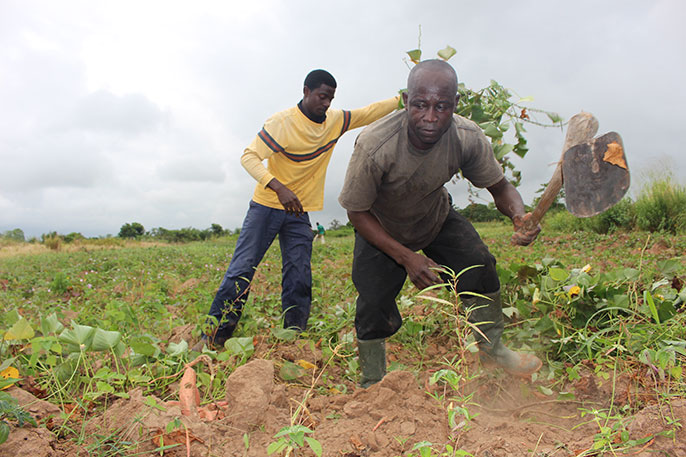
Across vast stretches of northern Ghana, smallholder farmers cultivate cereals, legumes and tuber crops beneath an increasingly unpredictable sky.
Farming there is more than an occupation — it is survival. Agriculture remains the backbone of rural livelihoods, sustaining household food security and providing modest incomes in communities that have depended on the land for generations.
In recent years, however, that foundation has come under sustained strain. Delayed rains, rising temperatures and prolonged dry spells have disrupted planting cycles and reduced yields.
Many households have slipped into economic hardship, while food security concerns have intensified. For thousands of farmers, the objective has shifted from increasing output to simply coping with climate uncertainty.
For decades, efforts to diversify crop production in northern Ghana have yielded little results due to limited technical support, inadequate financing and weak market incentives. The idea of introducing high-value crops suited to semi-arid environments circulated among development practitioners, yet no meaningful breakthrough materialised — until pineapple entered the equation.
From concept to pilot
In 2024, the U.S. Government–funded Feed the Future Ghana Mobilizing Finance in Agriculture (MFA) project launched a pilot initiative to test pineapple cultivation in northern Ghana. The intervention followed the success of a similar pilot in the Ashanti Region. The objective was both economic and strategic: to introduce a crop with established domestic and export markets, capable of withstanding climate stress better than some traditional staples, while raising household incomes.
The initiative signalled a shift in agricultural adaptation thinking — away from coping mechanisms toward structural transformation of production systems. Under the pilot, 15 acres of pineapple were established across six districts in the Northern, Upper East and Upper West Regions. The districts included Tamale, Gushegu, Karaga, Bawku West, Sissala East and Sissala West. Locations in northern Ghana, where pineapple had never been cultivated commercially, were deliberately selected as test grounds.
A total of 60 farmers who benefitted from the pilot project received about 300,000 pineapple suckers (planting materials), with each farmer cultivating an average of a quarter acre. Beyond the direct beneficiaries, other farmers also participated in training on agronomic pineapple production techniques delivered by a technical team comprising representatives from MFA and the Ministry of Food and Agriculture (MoFA).
Market logic behind the bold move
The former Chief of Party for MFA, Dr. Victor Antwi, explained the commercial rationale underpinning the initiative. “We realised that most of the pineapples consumed in northern Ghana were produced in southern Ghana.
By the time they are transported to the north, mechanical damage results in significant post-harvest losses, making pineapple very expensive in that part of the country.” He also noted that hospitality facilities in northern Ghana consistently patronise pineapple because of their clientele, creating a strong and reliable market base.
Dr. Antwi further indicated that the establishment of the Tamale International Airport presents a strategic export gateway should production expand in the coming years. “Another important factor is that once there is a strong production base, it motivates investors to add value. That will expand the market base for farmers and generate employment,” he said. The economic case is clear: reduce transport losses, meet local demand, stimulate agro-processing investment and tap into export channels.
De-risking the agronomy
From conceptualisation to implementation, scepticism surrounded the idea of cultivating pineapple in northern Ghana. Concerns about soil suitability and harsh climatic conditions raised doubts about whether the crop could survive, let alone thrive.
The Lead Technical Advisor for the pineapple project, Kofi Adade Debra, noted that rigorous site selection and soil suitability assessments were conducted before implementation. “The successful trials in the Ashanti Region began in October, a relatively dry period in southern Ghana that is comparable to the arid conditions in northern Ghana. This demonstrated that pineapple could perform well in the north and informed the decision to launch the pilot project,” he said.
He added that the succulent nature of pineapple leaves enables the plant to store water and gradually release it during periods of moisture stress — a critical adaptation trait under northern conditions.
To mitigate prolonged dry spells, all planting sites were located near water sources to facilitate irrigation. At Bulugu in the Gushegu Municipality, for instance, the pilot site was established approximately 70 metres from the community’s main dam to ensure reliable water access.
“In terms of soil suitability, we selected well-drained soils. Planting pineapples in swampy areas increases the risk of fungal diseases such as root rot. That is why sandy loam, well-drained soils were preferred,” Mr. Debra explained. The agronomic design sought to de-risk production while demonstrating replicability.
Farmers see a new path
By December 2025, farmers in Bulugu and Tamale had harvested their first pineapples, igniting fresh hope and renewed optimism about a new agricultural pathway. In Bulugu, pineapple plants stretching across the savannah have become symbols of possibility.
For 51-year-old Yusif Alhassan, a beneficiary of the pilot, the shift reflects years of mounting frustration. Yields from maize and soya have declined steadily, even as input and labour costs have risen.
“In the 2025 farming season, I cultivated three acres of soya and four acres of maize, harvesting just six maxi bags and four bags respectively. What has compounded the situation is the underpricing of produce. But looking at the output from the pineapple farm, which I cultivated jointly with colleagues, and the returns from the first harvest, it gives me hope for diversification and a better livelihood,” he said. For him, pineapple offers not merely income, but strategic insulation against market volatility.
Another farmer, 38-year-old Mohammed Zakaria Nantogma, detailed the financial strain of conventional cropping. In 2025, he invested GH¢22,050 to cultivate seven acres of soya and two acres of maize. By December, farm-gate prices stood at GH¢400 per 100kg bag of soya and GH¢300 per bag of maize. Based on output and prevailing prices, he projected revenue of GH¢10,800 — implying a loss of GH¢11,250.
After years of low returns from soya, maize and groundnut, he has pivoted toward pineapple. “The income from just the first harvest surpassed what I earned from my traditional crops,” he said. “I am now committing my time and resources to pineapple as a long-term source of livelihood.” The shift illustrates how market-linked diversification can alter rural risk profiles.
Pest and disease management
Introducing a new crop into a new ecological zone carries risks, particularly around pest and disease management. For many farmers, pineapple was unfamiliar territory. Knowledge of managing mealybugs and fungal infections was limited.
The project, therefore, prioritised integrated pest and disease management training. Farmers were instructed in field monitoring, the correct application of approved agrochemicals and sanitation practices to reduce pest transmission. Training also promoted low-cost, locally available solutions, including extracts from neem trees and chilli peppers.
According to the Lead Technical Advisor, these interventions significantly improved plant survival rates, aligning them with benchmarks in established pineapple-producing zones in southern Ghana. Capacity-building, rather than subsidy dependency, formed the backbone of the intervention.
Scaling up production
With viability demonstrated, the conversation has shifted toward scale. Expanding pineapple production in northern Ghana will require coordinated action across the agricultural value chain.
Financial institutions must assess tailored credit products for horticultural investments. The government must strengthen extension capacity. Development partners must maintain technical support frameworks.
Pineapple’s commercial profile distinguishes it from many traditional staples. It feeds into Ghana’s fresh fruit markets, juice processing industry, hospitality sector and export trade. Demand is both consistent and expandable. For farmers navigating climate volatility, market assurance ranks nearly as high as weather resilience.
It is, therefore, imperative for MoFA to strengthen the capacity of Agriculture Extension Agents (AEAs) in pineapple production and horticulture management. Extension officers must then transfer this expertise to farmers.
Financial institutions will need to integrate horticultural products into their agricultural lending portfolios. Traders and processors must establish firm off-take arrangements. Development programmes should sustain technical capacity-building. Farmers must adjust land-use planning to accommodate longer-cycle crops. The shift from subsistence cereals to commercially-oriented horticulture requires ecosystem alignment.
Conclusion
The 15-acre pilot may appear modest in scale, but its implications extend well beyond its footprint. It challenges assumptions about agro-ecological limitations in northern Ghana. It reframes climate adaptation from reactive coping to proactive diversification. And it introduces a commercially viable crop into a region seeking economic transformation.
Rather than focusing solely on preserving traditional staples under stress, development actors are now expanding the agricultural portfolio to strengthen rural economies. If scaled thoughtfully, pineapple could evolve from a pilot experiment to an anchor crop — reducing post-harvest losses, stimulating agro-processing, supporting exports and increasing farmer incomes.
The success of the initiative now hinges on whether policy-makers, financiers and private investors recognise what the pilot has demonstrated: that climate-smart agriculture in northern Ghana is not merely about survival — it is about strategic growth. And in the savannah, where uncertainty has long shaped livelihoods, that shift in mindset may be the most valuable harvest of all.
The post Beyond survival: Pineapple emerges as a climate-smart lifeline for farmers in Northern Ghana appeared first on The Business & Financial Times.
Read Full Story





Facebook
Twitter
Pinterest
Instagram
Google+
YouTube
LinkedIn
RSS