


…This is a summarized article of that which was published in the Third Edition of the national insolvency journal, Corporate Insolvency and Restructuring Journal
By Michael Sumaila NLASIA
On March 3, 2025, during the National Economic Dialogue (NED), the Minister for Finance, Dr. Cassiel Ato Forson, expressed concern about the severe operational and financial difficulties facing Ghana’s State-Owned Enterprises (SOEs) and Joint Venture Companies (JVCs), cautioning that immediate reforms are required to stop further economic decline. According to him, a greater number of SOEs and JVCs, spanning critical sectors such as energy and agriculture, have been identified for restructuring as the government seeks to curb fiscal risks and improve efficiency.
Previously, the fate of an insolvent company was liquidation, which results in a permanent end of the company and the distribution of its assets to creditors, since the company’s liabilities far exceed its assets, and it cannot pay its debts as they become due. While liquidation remains a viable option, it poses threats to job losses and their ripple effects, as well as a general loss of government revenue through taxes.
The introduction of the Corporate Insolvency and Restructuring Act, 2020 (Act 1015) and the Amendment Act 1031, commonly referred to as CIRA, has presented a significant paradigm shift from the liquidation of insolvent companies. CIRA provides an opportunity to rescue a company struggling to meet its debt obligations. The process involves administering the company, making adjustments to its operations, and modifying its balance sheet to restore the business to financial stability and health. The purpose of restructuring SOEs is to preserve their operations and resources to ensure job security and contribute to wider economic prosperity.
Although CIRA provides for the administration and official winding-up of insolvent companies, SOEs, which are body corporates not incorporated under the Companies Act, 2019 (Act 992), undergo restructuring through the processes in CIRA and other relevant laws.
The role of SIGA
The State Interests and Governance Authority (SIGA), established under the SIGA Act, 2019 (Act 990), is mandated to oversee and administer the State’s interest in Specified Entities, including SOEs. Section 4 of Act 990 stipulates the functions of SIGA to include the following:
The Authority will (a) consult with the relevant sector ministers in order to evaluate the mandates of State-owned enterprises and other government agencies and recommend changes to the relevant sector minister; (ii) assess the organizational structures and strategic plans of State-owned enterprises and other State entities and recommend changes to the relevant sector minister in order to accomplish the goals outlined in section 3;
As part of its obligations under Act 990, the State Ownership Policy and the Public Financial Management Regulations, 2019 (L.I. 2378), SIGA conducts an annual performance review and publishes the official list of Specified Entities under its oversight. Thus, SIGA’s annual reports are useful to guide SOEs in their operational and financial obligations. In the restructuring, SIGA helps SOEs with performance management and recapitalization to ensure these organizations run profitably, effectively, and efficiently to advance Ghana’s socioeconomic growth.
Restructuring
A company has to be restructured when it faces significant financial difficulties or when there are issues with its operations. Most of the time, it is a vital component of a larger economic reform program that aims to lessen the fiscal risks and budgetary burden provided by the SOE while also improving the governance and efficacy in providing essential services. Restructuring usually involves modifications across two main dimensions:
- Financial – Focuses on restoring solvency and liquidity:
This is driven by the need to reduce the company’s financial load on public coffers, both explicitly and implicitly, particularly by lowering the fiscal risks that go along with it. Operational restructuring and financial measures like debt workouts, arrears clearance, asset sales, and capital infusions are frequently combined in such restructuring. A thorough inventory of current liabilities by creditor category, instrument type, and maturity profiles is typically necessary for this process.
- Operational – Focuses on restoring future performance and viability
This can be achieved, for example, by redefining the company’s organization, business model, and product mix; by dividing, merging, relocating, or selling off portions of its operations; by enhancing capital intensity and product quality through the acquisition of new machinery, technology, or other assets while altering the workforce’s skill mix; and by reducing expenses across all areas of operations. In many cases, SOE and reform also involve staff reduction.
Generally, three steps are involved in a successful SOE restructuring. First, identifying the challenges the company is facing is essential. If the diagnosis shows that the SOE or JVC may be viable and should remain under state control, the next stage is to formulate a plan and consider restructuring possibilities. The final phase entails executing the plan, monitoring developments, assessing results, and making any necessary adjustments in consultation with stakeholders. By implementing these restructuring methods, insolvent SOEs are expected to navigate the quagmire of their saddling debt to achieve a healthy financial status. Source: World Bank’s Model for Restructuring of SOEs
Identifying challenges facing SOEs and JVCs
The crucial initial step before launching a SOE restructuring program is to thoroughly diagnose the enterprise’s situation and issues. In this article, the following diagnostic assessment shall apply:
- the legal and institutional framework that governs SOE.
- the SOE’s financial performance.
- the SOE’s operational performance and organizational effectiveness.
A licensed Insolvency Practitioner (IP) is required to develop a restructuring plan for implementation.
Implementing the Restructured Plan
The implementation should be conducted under the supervision of SIGA. SOE restructuring, like private enterprise restructuring, aims for some short-term successes but is usually a medium- to long-term process that could take up to ten years to finish. In many cases, it can be a permanent, continuing process. It requires careful and detailed planning, continuous monitoring and evaluation, and fine-tuning as necessary during implementation. It makes sense to appoint a restructuring implementation team to oversee the process and to continue the process of consulting stakeholders as changes take place.
The difficulty of the restructuring process will be inevitable, but while at it, there must be rigorous monitoring and evaluation of the process. A results framework must be developed for a thorough analysis of the periodic performance of the company. Continuous monitoring and evaluation of the results framework is also necessary to assess the extent to which the desired benefits are being achieved and whether the unfolding costs are in line with the original projections.
Conclusion
This article highlights the processes the government of Ghana can undertake to rescue insolvent SOEs rather than liquidation. The government of Ghana needs to prioritize the restructuring of SOEs in distressed situations to improve their efficiency, reduce inefficiency, and restore financial stability to ensure job security and contribute to wider economic prosperity. The approach to restructuring a distressed company depends on the nature of the challenges, the interests of the parties involved, and the results of a thorough business review.
>>>the writer is a Lawyer and Member of the Chartered Institute of Restructuring and Insolvency Practitioners (CIRIP)
The post Restructuring our insolvent state-owned enterprises: A rescue from collapse appeared first on The Business & Financial Times.
Read Full Story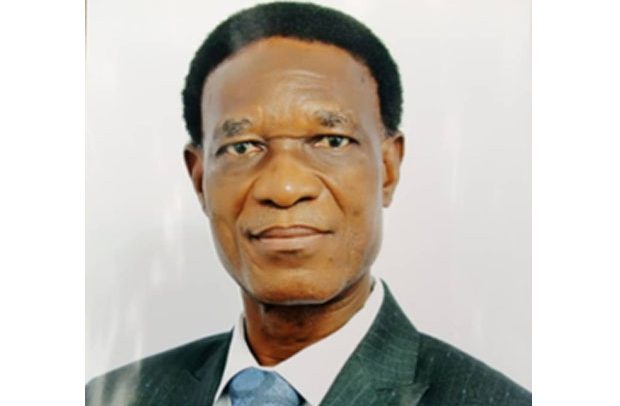


Facebook
Twitter
Pinterest
Instagram
Google+
YouTube
LinkedIn
RSS