


Ghana’s inflation rate fell to 5.4 percent in December 2025, extending a disinflation trend that has now lasted 12 consecutive months.
The rate slowed from 6.3 percent in November 2025 and 23.8 percent in December 2024, marking a decline of 18.4 percentage points over the year.
The December outcome is the lowest inflation reading since the consumer price index was rebased in 2021, demonstrating a sustained shift toward price stability amid improving macroeconomic conditions.
On a month-on-month basis, inflation stood at 0.9 percent in December, meaning prices increased modestly between November and December 2025. While short-term price movements persist, they are now occurring within a stable and clearly downward long-term trend.
A breakdown of the data shows that inflation eased across most major components of the consumer basket. Food, non-food, goods, and both locally produced and imported items all recorded slower price increases compared with November, pointing to broad-based disinflation rather than relief driven by a single category.
Food inflation, which accounts for about 43 percent of household spending, fell to 4.9 percent year-on-year in December, down from 6.6 percent in November and 27.8 percent a year earlier.
This represents a 22.9 percentage point decline over the past 12 months, providing meaningful relief to household budgets. However, food prices rose 1.1 percent month-on-month, reflecting seasonal and short-term supply pressures.
Non-food inflation also moderated, easing to 5.8 percent in December from 6.1 percent in November and 20.3 percent in December 2024. This marks a 14.5 percentage point decline over the year, with month-on-month non-food prices rising by a modest 0.6 percent, indicating contained pressure.
Disaggregated food data show that the slowdown was broad-based across all major subclasses, led by vegetables, cereals, fish and meat products. While prices fluctuated month-to-month due to seasonal factors, most food groups recorded modest increases or outright declines by December.
Trends in both food and non-food inflation confirm a clear easing in price pressures. Food inflation fell from 27.8 percent in December 2024 to 4.9 percent in December 2025, while non-food inflation declined from 20.3 percent to about 5.3 percent over the same period. Month-on-month volatility remains, but the direction is unambiguous: inflation pressures have eased substantially.
Goods inflation, which accounts for nearly three-quarters of the CPI basket, slowed to 5.8 percent in December from 7.3 percent in November and 23.1 percent a year earlier, a decline of 17.3 percentage points over 12 months. Goods prices rose 0.8 percent month-on-month, providing relief where it matters most for consumers.
Services inflation edged up to 4.5percent in December from 3.3percent in November, but remained well below the 15.4percent recorded a year earlier. Over the year, services inflation declined by 10.9 percentage points, even as prices rose 0.9percent month-on-month.
Inflation for locally produced items slowed to 5.9percent in December from 6.8percent in November and 26.4percent a year earlier, a 20.5 percentage point annual decline.
Imported inflation also eased to 4.3percent, down from 5.0percent in November and 18.0percent in December 2024, reflecting a 13.7 percentage point fall over the year. This suggests easing price pressures from both domestic production and imports.
Regional data showed significant variation. The Eastern Region recorded the highest year-on-year inflation at 11.2percent, up slightly from November but well below its level a year earlier. The Savannah Region posted the lowest inflation at minus 1.2percent, indicating outright price declines over the year. On a month-on-month basis, prices fell in the Northern, Western North and Upper East regions, while other regions saw modest increases.
Five regions — Eastern, Greater Accra, Ashanti, Central and Western — together accounted for more than 80percent of overall inflation, reflecting differences in supply conditions, transport costs, storage capacity and market access across the country.
The post Inflation ends 2025 at 5.4% from 23.8% in 2024 appeared first on The Business & Financial Times.
Read Full Story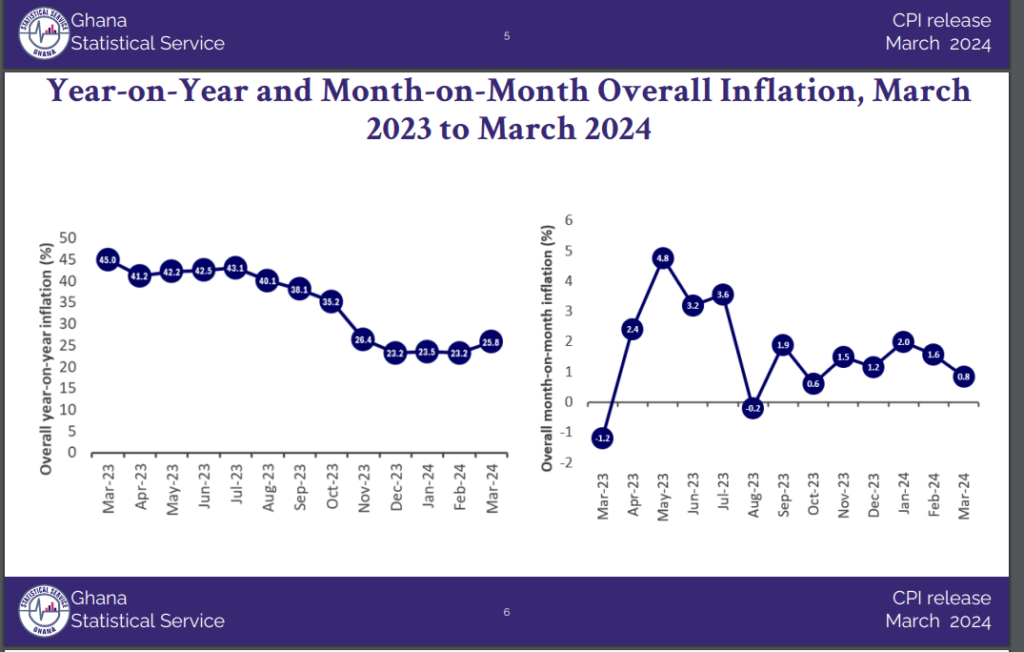







Facebook
Twitter
Pinterest
Instagram
Google+
YouTube
LinkedIn
RSS