


By Juliet Aguiar DUGBARTEY
Alexander Gabby Hottordze, Chairman of the Parliamentary Select Committee on Trade, Industry and Tourism, has highlighted government’s commitment to supporting local industries and securing jobs in the rubber sector.
“We are backing government in the full implementation of restrictions on raw rubber exportation as announced in the 2026 Budget. This aligns with President Mahama’s vision of industrialization through local sourcing of raw materials, value addition and job creation,” he said.
He explained that the President insists that no product should leave Ghana unprocessed and that factories must have the raw materials they need to operate efficiently under a 24-hour economy.
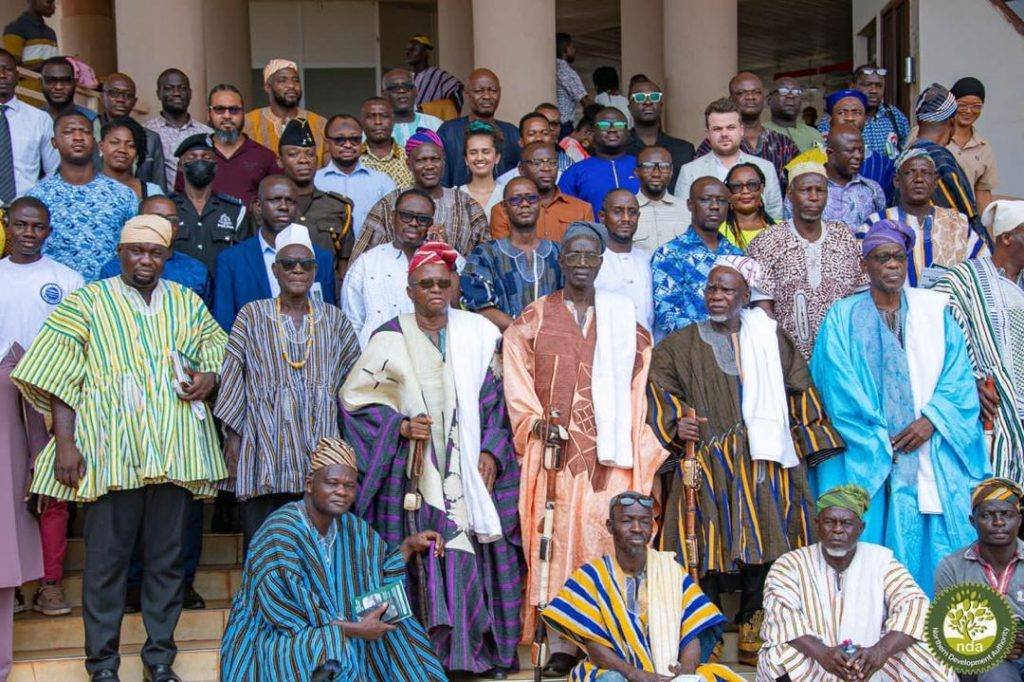
Mr. Hottordze made these remarks when the Parliamentary Select Committee on Trade, Industry and Tourism visited the factory site of Ghana Rubber Estates Limited (GREL) at Abura in the Ahanta West Municipality of the Western Region.
He stressed that Parliament will ensure that any move to export raw rubber is done in consultation with local processors, adding that restricting raw rubber exports is necessary to protect jobs, increase local production and boost revenue.
“When factories operate at full capacity, more jobs are created, revenue increases and crime reduces. This benefits everyone, from farmers to workers and supports national economic growth,” he said.
He further assured industry players that Parliament is working with relevant ministries and committees to enforce laws and subsidiary legislation that protect local industries.
“What is fairer than ensuring factories in your own country are functioning, people have jobs, revenue grows and the President’s vision is achieved?” he asked.
Briefing the Committee, Perry Achempong, Secretary of the Association of Natural Rubber Actors Ghana (ANRAG), pointed out that more than 45% of locally produced rubber is exported unprocessed, leaving factories operating at just 28% capacity between January and September 2025.
“Exporting raw rubber is costing the country jobs and foreign exchange. Workforce reductions of almost 25% have already occurred this year,” he said.
He emphasised that local processing protects jobs across the value chain, from farmers and aggregators to transporters, while boosting revenue and foreign exchange.
“There is no job loss when we process rubber locally; instead, there is more to gain through value addition,” he added.
The government’s 2026 Budget proposes restricting raw rubber exports, a policy widely welcomed by industry stakeholders as key to restoring the sector. Mr. Acheampong noted that with the right measures, including a National Rubber Development Programme, factories could reach up to 100% capacity and create more jobs.
He also noted that neighbouring Ivory Coast, Liberia and Guinea-Bissau have already banned raw rubber exports to protect their domestic industries.
“Ghana’s move aligns with sub-regional efforts to promote value addition, industrialisation and employment creation”, he added. porting local industries and securing jobs in the rubber sector.
“We are backing government in the full implementation of restrictions on raw rubber exportation as announced in the 2026 Budget. This aligns with President Mahama’s vision of industrialization through local sourcing of raw materials, value addition and job creation,” he said.
He explained that the President insists that no product should leave Ghana unprocessed and that factories must have the raw materials they need to operate efficiently under a 24-hour economy.
Mr. Hottordze made these remarks when the Parliamentary Select Committee on Trade, Industry and Tourism visited the factory site of Ghana Rubber Estates Limited (GREL) at Abura in the Ahanta West Municipality of the Western Region.
He stressed that Parliament will ensure that any move to export raw rubber is done in consultation with local processors, adding that restricting raw rubber exports is necessary to protect jobs, increase local production and boost revenue.
“When factories operate at full capacity, more jobs are created, revenue increases and crime reduces. This benefits everyone, from farmers to workers and supports national economic growth,” he said.
He further assured industry players that Parliament is working with relevant ministries and committees to enforce laws and subsidiary legislation that protect local industries.
“What is fairer than ensuring factories in your own country are functioning, people have jobs, revenue grows and the President’s vision is achieved?” he asked.
Briefing the Committee, Perry Achempong, Secretary of the Association of Natural Rubber Actors Ghana (ANRAG), pointed out that more than 45% of locally produced rubber is exported unprocessed, leaving factories operating at just 28% capacity between January and September 2025.
“Exporting raw rubber is costing the country jobs and foreign exchange. Workforce reductions of almost 25% have already occurred this year,” he said.
He emphasised that local processing protects jobs across the value chain, from farmers and aggregators to transporters, while boosting revenue and foreign exchange.
“There is no job loss when we process rubber locally; instead, there is more to gain through value addition,” he added.
The government’s 2026 Budget proposes restricting raw rubber exports, a policy widely welcomed by industry stakeholders as key to restoring the sector. Mr. Acheampong noted that with the right measures, including a National Rubber Development Programme, factories could reach up to 100% capacity and create more jobs.
He also noted that neighbouring Ivory Coast, Liberia and Guinea-Bissau have already banned raw rubber exports to protect their domestic industries.
“Ghana’s move aligns with sub-regional efforts to promote value addition, industrialisation and employment creation”, he added.
The post Parliamentary Select Committee on Trade, Industry and Tourism backs ban on raw rubber export appeared first on The Business & Financial Times.
Read Full Story








Facebook
Twitter
Pinterest
Instagram
Google+
YouTube
LinkedIn
RSS