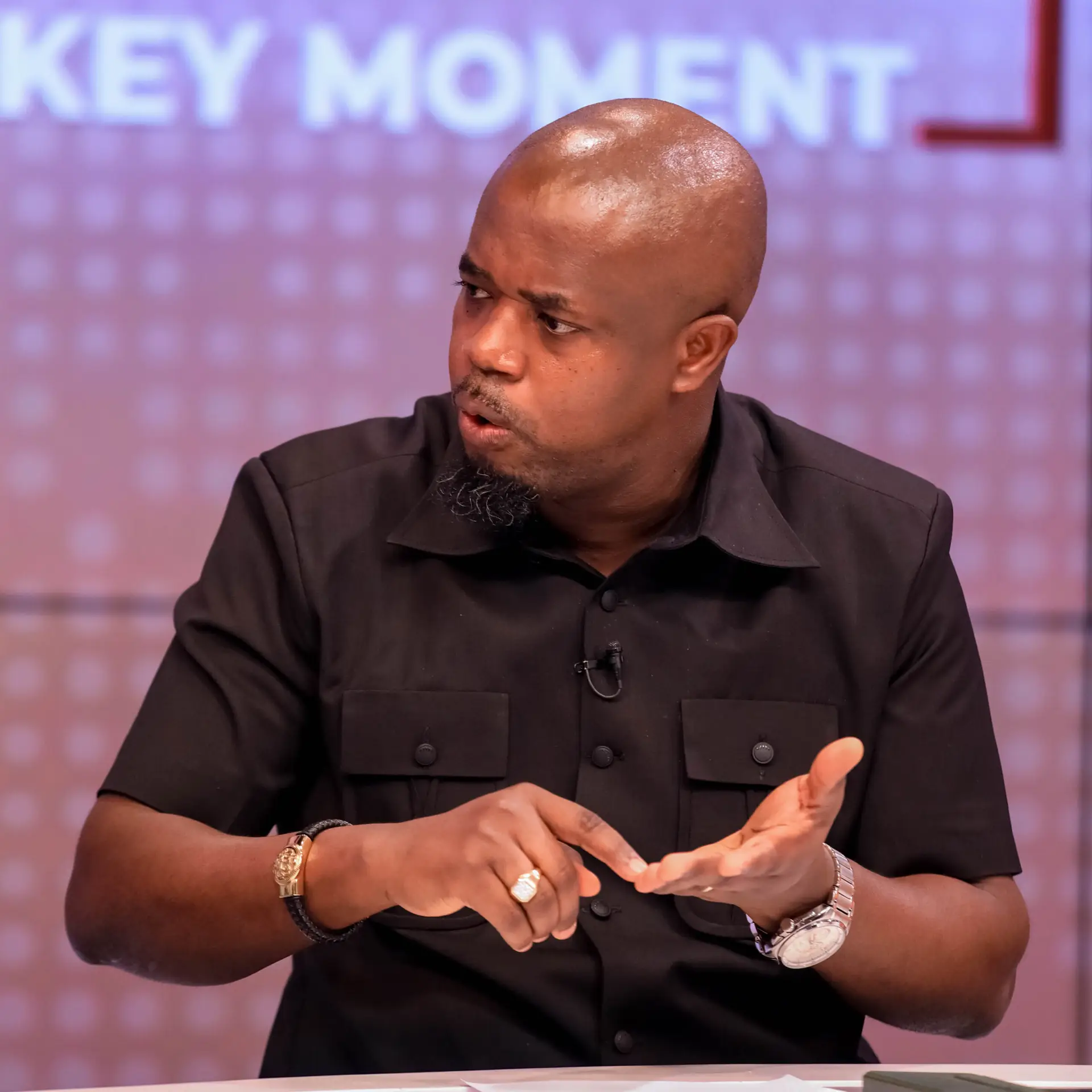
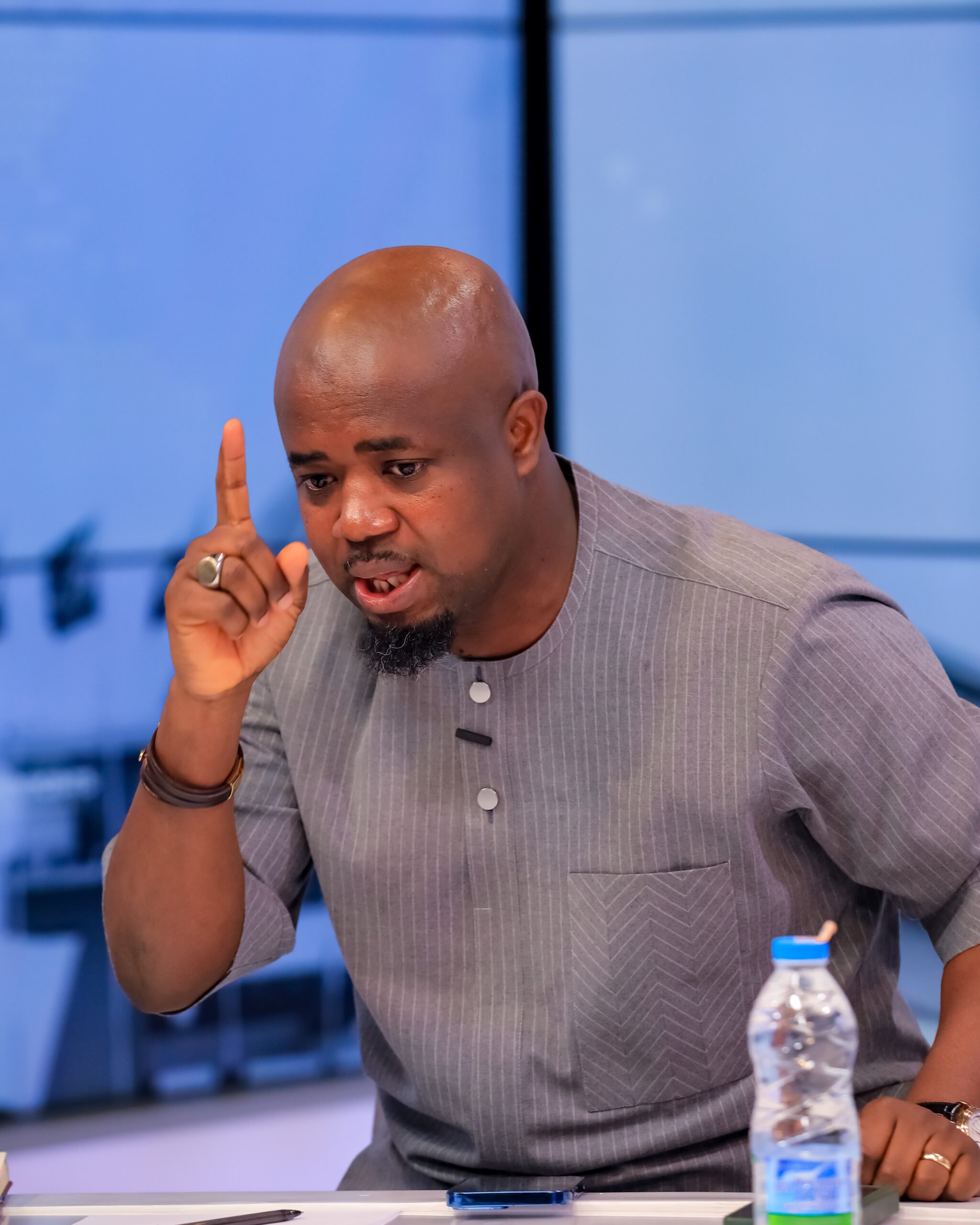
The chiefs, elders and the people of Afife Traditional Area have installed Torgbui  Gbewoaza I as their Ngoryifia (development chief). Known in private life as Mr William Kwaku Dogbey, Torgbui  Gbewoaza , until his installation, was the Managing Director (MD) of Wilkado Construction Works Limited, a general building and civil construction company in Accra. Present at the ceremony were Torgbui Tenukpo Azadagli III, Fia of Tadzewu; Torgbui Agbeve Ayirim III, Dufia of Agbevekorpe, and Regent Yao Avornyo of Dufia Ayivor Stool. At the event, Torgbui Adzaklo V, Dusifiaga of Afife and President of  the Afife Traditional Area Chiefs Association (ATACA), extolled the good works of Torgbui Gbewoaza I and urged him to help develop the Afife area. He expressed the hope that Afife would witness a reawakening, which was long overdue. He pledged the support of all the other chiefs, assembly members, unit committees and people o the area for any initiative that the newly installed development chief would undertake. For his part, Torgbui Gbewoaza I, asked all the people to allow peace to prevail in the area, stating that in the absence of peace, development and prosperity would elude the area. He also asked all the chiefs and heads of institutions in the area to furnish his office with their contacts and  developmental plans as soon as possible since he was determined to hit the ground running. According to him, he would execute programmes for the development of the Afife Traditional Area by mobilising all resources within his reach to uplift the image of area.   Â
An armed robber last Wednesday shot and killed the caretaker of a house at Atwima Maakro in the Atwima Nwabiagya District of the Ashanti Region, for daring to attack his accomplice with a machete. This was less than 48 hours after a similar incident occurred at Babaso on the Ejura-Dome road, also in the Ashanti Region. The deceased, known only as Ibrahim, aka Akonta, believed to be about 35 years, was said to have slashed one of the two armed robbers who stormed the house in the night. His accomplice, who was wielding a gun, had by then ordered the owner of the house and other people to get out of a car and lie on the floor,  but he became angry and shot Ibrahim twice at close range, shuttering his skull.  How it happened Briefing the Daily Graphic, the Crime Officer of Abuakwa District Police, Assistant Superintendent of Police (ASP) Jeremiah Alala, said the incident occurred around 9:40 p.m. on Wednesday, when a businessman, Mr John Agyei, who had moved to the area about two weeks earlier, returned home and was entering his house in his car. He said the armed robbers who had laid ambush in the area, rushed in when a member of the household opened the gate for the car to enter. The robbers then ordered the people in the car to lie down on the floor, searched their pockets and took their money and mobile phones. ASP Alala said on realising that Ibrahim was not among those who had been taken ‘hostage’, the robbers asked of his whereabouts.  Ibrahim, who was in one of the rooms and was aware of what was happening, came out with a machete and attacked one of the robbers, prompting the other to retaliate by shooting him twice in the head. The robbers then run away. ASP Alala appealed to the public not to try and defend themselves during such attacks to save their lives. He reiterated his call on the public, as much as possible, to abide by the dictates of robbers in such instances and rather look out for tips that would aid investigations. ASP Alala said the police had noted a trend in the operations of the robbers and were studying it to come up with new strategies to combat them.
Government says it remains opposed to the decision of the University of Ghana, Legon, to toll roads used to access the university campus.  Despite the arguments put forward by the University, and reports suggesting that parliament has okayed the decision, Chief of Staff at the Presidency, Mr. Prosper Bani, insists that government will prefer that the motoring public is not burdened by the University authorities. He told Graphic Online on Saturday that as indicated by the Minister for Roads and Highways, acting on behalf of Government, the cost of rehabilitating the university roads could be absorbed into the Ministry’s budget, instead of having motorists pay the tolls. He said Government had expected that with this offer, the authorities of the University of Ghana would abandon plans to implement the toll collection scheme.  Mr. Bani indicated that government is unhappy with the nuisance, inconvenience and annoyance for motorists generated by the decision. He has accordingly urged the authorities of the University of Ghana to rescind their decision in consideration of the hardship, concern, and disaffection of motorists and the affected general public.  The Chief of Staff reiterated that Government is ready, as already communicated, to work expeditiously with the University on the most effective way for Government to absorb the cost of rehabilitation of the campus roads.
The police in Kumasi are investigating the circumstances surrounding the disappearance of a supposedly stillborn baby at the Komfo Anokye Teaching Hospital (KATH) last Wednesday. While the hospital maintains that the baby was born dead at dawn that day, its parents doubt the assertion because they cannot find the body.  Stillbirth The Public Relations Officer (PRO) of KATH, Mr Kwame Frimpong, told the Daily Graphic that the death of the baby was not in doubt, as the documents which its mother, Swabia Abdul-Mumin, had thumbprinted clearly indicated that she was aware the baby had been stillborn. He said at a meeting between the family and the hospital authorities last Thursday, Swabia admitted before everybody present, including her mother-in-law, that her dead son had been shown to her. The body of the baby, who, according to the records of the hospital, had been stillborn, was supposed to have been sent to the mortuary by the mortuary attendant but it was rather picked up by the cleaner who tidied up the Maternity Ward that day. According to information gathered from the hospital and the police, the cleaner, Baba Abeley, claimed to have picked up the baby’s body that was in a box, together with two others, to the incinerator for burning.  Mr Frimpong, however, pointed out that the last time the incinerator was used was February 1, 2014, and that Abeley’s claim could not be ascertained. He said that was what compelled the authorities to hand Abeley over to the police. Besides, the disposal of bodies “is the work of the mortuary man and not the cleanerâ€. The normal practice with neonatal deaths at the hospital, according to the PRO, was that the bodies were usually wrapped in plastic bags and labelled with the names of the mothers and the babies’ weight and times of death and kept at the mortuary for some time before “they are given mass burialâ€. He claimed that 80 per cent of families did not care about what happened to the bodies after they had been told their babies had died. He promised the public that the hospital would not shield anyone, adding, “We are prepared to collaborate with the police to unravel the mystery surrounding the disappearance of the body.† Police account Meanwhile, the Public Relations Officer of the Ashanti Regional Police, Assistant Superintendent Police (ASP) Mr Mohammed Tanko, said the suspect had been released on police enquiry bail, while investigations continued. He said the suspect told the police that on the day in question while cleaning the Maternity Ward, one of the nurses on duty told him to cart the box containing the dead bodies away. According to Mr Tanko, Abeley said he realised that one of the boxes was heavy and when he opened it, he realised that it contained three bodies of babies. Abeley said he took the box to where he normally burnt waste and when he was about to burn it, he was called to do something else. Abeley claimed that on his return, the box was nowhere to be found. Mr Tanko said the police were trying to establish whether or not the baby had died.
Six schools in the Shama District in the Western Region are to benefit from a one-year free subscription of the Junior Graphic through the sponsorship of an individual, Ms Eunice Yaa Boatemaa Ntim, the Head of the Harbour Branch of Zenith Bank. The sponsorship is Ms Ntim’s contribution to the effort at inculcating the reading habit in pupils of the schools, namely, the Nkwantakesedo Primary, Inchaban Catholic Primary, Aboteriye Ahamadiya Primary, Beposo Borkokope Catholic Primary, Bosomdo Primary and Abuasi Methodist Primary.  Reading clinic Reading the newspaper will form an integral part of the school reading clinic initiated by the District Chief Executive (DCE), Mr Enoch Kojo Appiah, to help the children form the habit of reading. At a ceremony in Takoradi at which the first subscription copies were handed over to the schools, Ms Ntim said children represented the hope of the country and, therefore, it was important for them to be supported to guarantee their future development. “Going through the contents of the Junior Graphic, I realised that it would serve as good material and one of the learning tools for deprived schools,†Ms Ntim said. She expressed the hope that the support would go a long way to enhance the reading habit in the children. “I hope the institution of the reading clinic will enhance their understanding of various areas covered in the paper,†she added. She was optimistic that the examination questions and the pieces of advice published in the paper would also be beneficial to the pupils. Ms Ntim commended the Junior Graphic for developing content that purely dealt with the needs of children, such as providing solutions to examination questions, offering pieces of advice and offering opportunity for networking.  DCE  Mr Appiah also presented dictionaries to the six schools to help the pupils in reading and understanding of English. He said one of the biggest challenges in the district was the falling standard of education in the past few years, but he noted that through interventions such as the reading clinic, there had been a significant improvement. He said the assembly was seeking sponsorship for a mock examination for the final-year junior high school students in the district to help them answer examination questions properly. Mrs Memunatu Mahama, the Zonal Manager of the Graphic Communications Group Limited (GCGL), urged the children to pay serious attention to the content of the paper. She commended Ms Ntim and the assembly for the initiative and said the GCGL was ready to partner corporate bodies to reach out to more schools. The GCGL donated 50 more copies to the weekly subscription to the beneficiary schools.
The notorious robber, Johnson Kombian, who once broke jail and suffered penalty for it, has been accused of murdering two policemen. Kombian is facing two counts of murder and one count of conspiracy. The Fast Track High Court, which was billed to hear the case yesterday, adjourned proceedings to March 4, 2014 because the accused person was absent. The presiding judge, Mr Justice Mustapha Habib Logoh, directed officials of the Ankaful Prison in Cape Coast to bring the accused person to court on the next adjourned date. A Chief State Attorney, Mr Anthony Rexford Wiredu, had prayed the court to adjourn proceedings to enable the prison officers to produce Kombian at the next hearing.  Nature of Offence  Kombian, alias Garkun (meaning “death fearsâ€), and his accomplices, who are currently on the run, are alleged to have ambushed three policemen on October 17, 2010 and succeeded in killing two of them. The deceased are Constable Prince Agyare and Constable Owusu Frimpong. The third policeman, Corporal Osei Bonsu, who sustained gunshot wounds, survived.  Facts of the case The facts of the case are that Kombian allegedly conspired with his friend, Kofi Naaman, alias Accra Boy, to rob Djato Mathias and then attempted to kill him. Kombian was arrested, tried and sentenced to serve six years in prison by the Circuit Court in Tamale but he escaped while serving his jail term   Nakpanduri Terror According to the prosecution, Kombian sought refuge at Nakpanduri in the Bunkprugu Yunyoo District in the Northern Region, which happened to be his home town. On October 17, 2010, the accused person and his accomplices received information that a number of policemen had been detailed to perform duties at the Nakpanduri Scarp. Suspecting that the policemen had been assigned to pick him up, Kombian and his friends, who were also labelled as notorious robbers by the prosecution,  ambushed and attacked the three policemen. They allegedly fired gunshots at the deceased policemen who were then on a motorbike. The policemen fell into a 10-metre long valley in the process. The accused person and his group continued to fire sporadically into the valley, with the hope of killing the policemen, who also retaliated with occasional gun fire. Agyare made a distress call while firing back at Kombian and his gang from his hide out.  More fire After 30 minutes of firing, Kombian and his gang stopped, and on realising that the gunshots had ended, Agyare and his colleagues mistakenly thought their attackers had left. They, therefore, came out of their hideout and were subjected to more gun fire. Help finally came for Agyare and his colleagues while Kombian and his accomplices bolted. The wounded policemen were conveyed to the Nalerigu Hospital but Agyare was later pronounced dead. Frimpong died later, while Bonsu was transferred to the Police Hospital in Accra where he was treated and discharged.  The escape Kombian escaped to Togo after the incident but he was later picked up by the Togolese authorities and handed over to the Ghanaian authorities. The accused person was convicted by the Circuit Court, presided over by Mr Justice E. Kyei-Baffour, and sentenced to serve five years’ imprisonment for escaping from lawful custody. The accused person, who is currently serving an 11-year jail term, was subsequently put before the District Court which committed him for trial at the Fast Track High Court. Writer’s email: [email protected].
Vice-President Kwesi Bekoe Amissah-Arthur has advised the public to assist the police in their quest to maintain peace and order in the country. Though the police are the lead institution charged with maintaining law and order in the country, the Vice-President said “the fact remains that this responsibility does not rest with the police alone. Citizens are equally enjoined to assist the police achieve the goalâ€.  Get-together In a speech read on his behalf at the end-of-year get-together at the Police Headquarters in Accra yesterday, dubbed West African Security Services Association (WASSA) 2013, Mr Amissah-Arthur noted that the performance of the police in the recent past had received very appreciable public commendation and rating. Attributing the good work of the service to innovations such as the visibility and accessibility patrols introduced in February 2013, he urged the police not to rest on their oars but strive to become a world-class service. On the welfare of police personnel, the Vice-President said the government was concerned about it, since “a sound mind resides in a sound bodyâ€. The WASSA get-together is an annual celebration during which members of the security services interact, relax, reflect on and strategise for the year ahead. It can be traced to the Gold Coast era when security services socialised and made merry after a tedious year’s work.  2013 was eventful In a welcome address, the Director-General of Services, Commissioner of Police (COP) Mr James Oppong–Boanuh, said 2013 was eventful in the field of crime combat, protection of life and property and police services in general. He entreated the police to remember that innovation and change had become part of policing “and if we fail to innovate, we will be left behind,†and reiterated the call on the public to support the police in the discharge of their duties.  Mr Oppong–Boanuh also stated that it was the responsibility of the police to court the support of the communities in which they served in order to win their trust and confidence. “Our clarion call for this year is for massive public support for our operational strategies to enable us to discharge our duties.†He advised police personnel to eschew all negative practices which dented the image of the service.  Honouring fallen heroes The occasion, which saw top police officers dancing to tunes played by the Ghana Police Band, the leading police gospel musician, Superintendent of Police (SP) Kofi Sarpong and the ace highlife musician, Kojo Antwi, was also used to honour police officers who died in the course of duty in 2013. Writer’s email: [email protected]
A 29-year-old policeman stationed at Agona Nyakrom in the Central Region has been remanded in prison custody for allegedly defiling an 11-year-old primary schoolgirl. The accused, Escort Constable Dickson Nyame, is said to have forced  the victim’s two other siblings aged seven and five to caress and suck his penis in a bush. After that, he allegedly grabbed the 11-year-old and defiled her, as her siblings looked on helplessly. He was charged with three counts of defilement and indecent assault but he pleaded not guilty to all the charges and was subsequently remanded to reappear on February 20, 2014. Prosecuting, Chief Inspector Ivy A. Agadia told the Swedru Circuit Court, presided over by Atta Sampong, that the victims were all pupils of a primary school at Agona Nyakrom and lived with their parents.  She said about 3 p.m. on January 12, 2014, the victims were with their 15-year-old brother, a bar attendant, when the accused, who was a regular patron at the drinking bar, went there to buy GH¢1 worth of the local gin, popularly known as ‘’akpeteshie’’. She said that after the accused had finished drinking the gin, the bar attendant asked the victims to collect the money from him. The accused, however, demanded that the victims follow him to his house for the money, since he had no money on him, to which they obliged. Chief Inspector Agadia said that the accused, on his way home, took the victims through a bush, having in mind the intention to abuse them sexually. She added that the accused quickly sat on the ground in the bush, pulled out his manhood and asked the victims to caress it, after which he forcibly had sexual intercourse with the 11-year-old girl and drove them away. The victims, on reaching home, narrated their ordeal to their parents, who lodged a complaint, leading to the arrest of the accused. Â
The University of Ghana, Legon acted within the law in its imposition of tolls for the use of its roads, the Parliamentary Select Committee on Roads and Transport has said. The Vice-Chairman of the committee, Mr Theophilus Tetteh Chaie, told the Daily Graphic that the University of Ghana Act, 2010, (Act 806) empowered the institution to impose the tolls. He said after a meeting with the Vice-Chancellor of the University of Ghana, Professor Ernest Aryeetey, and some members of the University Council on Thursday, the committee had arrived at a decision and would forward its recommendations to the House for appropriate action. He said it was revealed during deliberations with officials of the university that it (university) secured a loan of GH¢1.3 million to rehabilitate the roads and, therefore, in the opinion of the committee, if the government or the public was against the collection of the tolls, then the government must absorb the loan. Alternatively, he said, the government could initiate moves to have the law which empowered the university to charge the tolls repealed or construct the road behind the Gulf House in Accra and the Haatso Road to ease pressure on the university’s roads. If those two roads were constructed and drivers still wanted to use the university’s roads, he said, they would not complain if they were asked to pay tolls.                 Mr Chaie, who quoted copiously from  Act 806 during the interview, said those were part of the recommendations that the committee would make to the House for a decision.  Act 806 Article 16  (1) of Act 806, which deals with the powers of the University Council, states: “Subject to the provision of this Act, the University Council shall have the power to do or provide for any act or thing in relation to the university which the council considers necessary or expedient in its capacity as the governing body of the university.“ Section 16 (2) states: “The conferment of particular powers on the University Council by other provisions of this Act shall not be taken to limit the generality of this section.†Section 23 (1) (a) states that the university shall have power for any purpose which the council considers necessary or expedient, or (b) for the purpose of the performance of the functions of the university, to acquire and hold movable or immovable property, sell, lease, mortgage or otherwise alienate or dispose of that property and to enter into any other transaction.  Section 24 (1) states: “The funds of the university include (a) subventions from the Government of Ghana; (b) moneys that accrue to the University in the performance of its functions consisting of (i) fees paid by students duly registered by the University; (ii) fees, charges and dues in respect of services rendered by or through the university;(iii) proceeds from the sale of publications of the university (iv) grants, subscriptions, rents and royalties; (c) interest from investments; (d) endowments, donations and gifts; and (e) moneys from any other source approved by the council.†Mr  Chaie relied on those clauses, among many others, to drive home his point. “They are free to acquire property, enter into contracts, secure loans and devise ways to pay back the loans,†he said, adding, “This law was passed to enable them to expand infrastructure and not rely on the government for funds to embark on projects,†he said. He  quoted Section Three Subsection Two of the  act, which states: “ A person who is not a member of the university shall not enter the premises of the university or have access to the facilities or privileges of the university without the permission of the university†and said clearly, most people who passed through the university daily had no business there and there was nothing wrong with the authorities exacting tolls or charges on them.  1992 Constitution Mr Chaie’s position notwithstanding, Article 174(1)- (2) of the constitution states:â€No taxation shall be imposed otherwise than by or under the authority of an Act of Parliament.† “Where an act, enacted in accordance with clause (1) of this article, confers power on any person or authority to waive or vary a tax imposed by that act, the exercise of power of waiver of variation, in favour of any person or authority, shall be subject to the prior approval of Parliament by resolution.† Legon could still charge tolls after payment of loan According to him, the university’s roads deteriorated severely during the construction of the N1 Highway because the Ministry of Roads and Highways prevailed upon the university authorities to allow its premises to be used as a thoroughfare and it was time for the institute to raise money to repair its roads and devise measures to recoup its investment. “Even after the loan secured by the university is paid,† he said, it could still charge the tolls if it wanted to because the roads would have to be maintained.

The Madina Magistrate Court, presided over by Mr Ernest K. A. Adjanor, has sentenced a 28-year-old unemployed man, Dicko Haruna, to 12 months’ imprisonment with hard labour for fraud. Haruna, a Malian, was sentenced on his own plea of guilty. The prosecutor, Deputy Superintendent of Police (DSP) Patience Mario, said in July 24, 2013, Haruna met the complainant, Enoch Ndibol, in Accra Central and pretended to have lost his way. He therefore pleaded with him to direct him to the Kwame Nkrumah Memorial Park. On their way to the park, the prosecutor said, Haruna told Ndibol he was into money doubling business and gave his mobile phone number to Ndibol and asked him to call him later for a deal. DSP Mario said later, Ndibol and a witness in the case met Haruna around the Independence Square in Accra, where he showed them a GH¢1 note and told them it was counterfeit, and that he could change it to real money. The prosecutor said Haruna then collected GH¢4 in GH¢1 denominations from Ndibol, and added them to his note and poured some liquid on them. After some time, he gave the money back to Ndibol to check if it was genuine money. She said when Ndibol told him it was real money, Haruna brought out eight bundles of black paper cut to the size of the local currency notes and then asked Ndibol to bring him $6,000 so that he could change the said black papers into $40,000. The prosecutor, DSP Mario, said on July 24, 2013, Haruna met Ndibol at East Legon, a suburb of Accra, apparently to collect the $6,000 from him. According to the prosecutor, Ndibol alerted the police, who waylaid Haruna and arrested him. When Haruna was searched after the arrest, the police found GH¢1 note and eight bundles of black papers cut in the shape and size of cedi notes. Haruna, DSP Mario said, claimed the items were given to him by a certain man but had refused to mention the name of the person or lead the police to the fellow. Mr Adjanor also said the black pieces of paper should be set ablaze in public, which has been done accordingly. Â
The Agona Swedru Circuit Court, presided over by Mr Yaw Atta Sampong, has imposed a GH¢1,800 fine on a driver, Yaw Yeboah, for reckless driving which claimed the lives of a taxi driver and a passenger on the spot on the outskirts of Mankomeda, near Awutu Bawjiase in the Central Region. Richard Armah, the taxi driver, and Veronica Darko (43), a passenger, died in the accident. The survivor of the accident, Lucy Arthur, 33, sustained injuries and had to be hospitalised for some time before she was discharged.Yeboah, 36, who initially pleaded not guilty to the charges of careless and inconsiderate driving and negligently causing harm, later changed his plea to guilty, prompting the judge to convict him on his own plea. Yeboah would serve two years’ imprisonment if he failes to pay the fine. The Akyem Swedru Circuit Court judge, Mr Sampong, doing additional duties, further ordered Yeboah to compensate Lucy with GH¢200, despite the fact that he paid for the medical bills, as well as the funeral expenses of the accident victims. The prosecutor, Inspector Alfred Boatey, said Yeboah was a Kasoa-based driver who was in charge of a tipper truck loaded with quarry chippings from Kasoa enroute to Bawjiase on November 23, 2012, at 6:05am. The prosecutor said Yeboah was negotiating a curve on the outskirts of Mankomeda when he veered off his lane into the lane of an oncoming vehicle and crashed into the taxicab being driven by Armah. According to Inspector Boatey, both vehicles got badly damaged but that it was the taxicab which got damaged beyond repair, with its driver (Armah) and a passenger aboard it (Veronica Darko, 43) dying on the spot. Inspector Boatey said the two bodies were deposited at the Winneba Municipal Hospital mortuary where an autopsy was performed after which they were released to their respective relatives for burial. He said the duplicate docket was sent to the Attorney-General’s Department in Cape Coast which later directed that Yeboah should be charged with the offences as stated on the charge sheet. Â
A thirty-three-year-old Thai woman had the rude shock of her life when she was raped by unidentified armed robbers at her residence in Kumasi. The victim, who claimed to be a virgin, lived in a rented apartment with two of her sisters and a Ghanaian brother-in-law. The robbers, she said, attempted raping the other two ladies but they were spared because they were in their menstrual period, but were made to look on while their sister was being raped. The three ladies operate a traditional massage centre located within their residence. Apart from the rape, the robbers made away with a cash of GH¢5,500 and US$800. Other items the robbers took away included a laptop, jewellery, seven mobile phones and a generator. The robbers locked up the victim and her sisters in the toilet and ransacked the premises making away with the valuable items. The KNUST Police have initiated investigations into the matter. Â
About 2,600 students from the Mampong School for the Deaf in the Eastern Region have benefited from a free ear-screening exercise. Some of the students were given ear moulds and hearing aids to improve their hearing, while others were given free ear washing, after they had been screened. The exercise, which lasted for three days, was organised by the Ministry of Gender, Children and Social Protection and the National Council for Persons with Disability (NCPWD) in collaboration with Starkey Hearing Foundation (SHF), a non-governmental organisation based in the USA. Students with hearing impairment from the Volta, Brong Ahafo and the Ashanti regions as well as Adjei Kojo in the Greater Accra Region will also benefit from the exercise. Gender Minister Speaking at the function in Accra, the Minister for Gender, Children and Social Protection, Nana Oye Lithur, said that her outfit was committed to ensuring the wellbeing of persons with disabilities. She said the ministry would support any effort targeted at the reduction of isolation, poverty, illiteracy and inequalities in society. “The government of Ghana on its part recognises the existence of inequalities for opportunities among marginalised persons including persons with disabilities and the need to strategise through a pragmatic approach to bridge the gap,†she added. She lauded SHF for the initiative it had embarked upon and encouraged all persons with hearing impairment to participate in the three-day exercise. NCPWD Director For her part, the Programmes Director of the NCPWD, Ms Amanorbea Dodoo, noted that the exercise would assist the beneficiaries to be independent. Ms Dodoo was happy that a lot of the students had the opportunity to re-assess their hearing impairment. With the provision of the hearing aid and ear moulds, the director said she was hopeful that majority of the beneficiaries would have their problems corrected through a gradual process. The founder of SHF, Mr William F. Austin, indicated that his organisation was prepared to assist persons with disabilities, especially those with hearing impairment. In all, Mr Austin said millions of people the world over had benefited from free ear screening from the organisation. Â
Small Scale illegal Miners (popularly referred to as galamsey) have desecrated about 30 graves belonging to the people of Kpalsko-Zangoyiri in the Bawku-West district of the Upper East Region. Quite apart from this, the illegal Miners have not spared an area of about five kilometers radius destroying trees and water bodies in the course of their activities. Due to persistent complaints from the people of the area about the activities of the Illegal Miners, the Bawku-West District Security Committee (DISSEC) in collaboration with the Bawku- West Police Command organized a swoop and arrested 34 of the Illegal Miners. The Bawku- West District Police Commander, Assistant Suprintendant of Police (ASP) Mr. Christian Dogbatse said those arrested would be screened and those found culpable would be processed for court, indicating they will be charged for mining without license as well as conspiracy to engage in illegal mining. The District Chief Executive for Bawku-West, Mr. Ayamde Simon Agbango said areas in which illegal mining in the district takes place included Widnaba, Sapelga, Teshi, Kusanaba and Zangoyiri, adding that it was in Zangoyiri that it was carried out in a massive scale. He said following the directive from the Presidency for the various Security Committees of the Metropolitan, Municipal and District Assembles to combat the menace of galamsey in their jurisdictions, the Bawku-West District decided to embark on a sensitization campaign to educate the miners on the dangers of illegal mining and on the need to stop their activities. He said those at Zangoyiri did not heed to their appeal and continued degrading the environment and coupled with persistent complaints from the people DISSEC embarked on an operation leading to the arrest of 34 people but said the miners numbered about 500 in the area. He said the DISSEC in collaboration with the Police High Command would continue with the operations until the small scale illegal miners were flushed out from the district. Mr Agbango called on the Minerals Commission to consider opening their offices in the various district to make the processing and acquisition of mining permits less cumbersome as most small scale miners complain of frustrations from the Minerals Commission in the acquisition of mining lincences. Â
 The Tema branch of the Association of Ghana Industries (AGI) has urged the government to consider investing more in renewable energy to sustain the energy sector. Considering the variables which inform the adjustment in electricity tariffs, including the depreciation of the cedi and increasing crude oil and gas prices, the association said the government should consider solar and other renewable energies to generate power. The Tema Regional Chairman of the AGI, Mr Charles Mensah, made the submission at a stakeholders’ meeting organised by the Public Utilities Regulatory Commission (PURC) in Tema to discuss the automatic adjustment formula (AAF). The AAF is a pricing mechanism adopted by the PURC to track and incorporate movements in key uncontrollable determining factors to reflect the cost of electricity and water supply quarterly. Research important Mr Mensah said to ensure sustainable and reliable energy in the future, the government needed a long-term initiative to complement the current source of energy in the next five years and beyond. He recommended that the government invest in research to find a lasting solution to the current crisis. While acknowledging the problems facing the utility providers due to the economic hardship, Mr Mensah said it was necessary to plan for the long term. He further urged the PURC to serve notice to industry players of increment in tariffs so that they could factor it in their budgets. Why solar energy should be considered Explaining that renewable energy should be considered in the near future, the Director of Planning and Business Development of the Volta River Authority (VRA), Mr Bernard Kofi Ellis, said the Ghana National Gas Company was not in a position to meet the local demand for gas. He said although the thermals needed about 320 million cubic metres of gas per day to function at full capacity, Nigeria was currently producing 70 million cubic metres through the West African Gas Pipeline. He said even if Ghana Gas started producing about 90 million cubic metres of gas, it would add up to make 160 million cubic metres, which would still not meet the target of 320 million cubic metres needed per day. He added that the demand for gas for electricity production was likely to increase to about 1,000 cubic metres in 10 years due to additional thermal plants.  Therefore, he said, as long as Ghana depended on crude oil to support the production of electricity, the tariffs would continue to be high because the prices were rising. Draft policy The AGI consultant on energy, Mr Andrew Lawson, said the government needed to consider drafting a policy on solar energy to make it easy and attractive to use by individuals and the country as a whole. Citing the case of Australia, Mr Lawson said that government subsidised the use of solar energy, which made it cheaper for individuals to use in that country. Responding to the submission by the AGI, the Executive Secretary of the PURC, Mr Samuel Sarpong, said solar energy came with its own challenges, such as the high cost involved in its production, especially with the initial cost. However, he said the commission had already considered solar energy and was hopeful that the current prices of the generation facilities of solar power would be reduced for Ghana to be able to adopt solar energy. He added that currently, research into renewable energy was going on in Navrongo in the Upper East Region.  Â
The government has invested about US$750 million into the provision of safe water across the country, Mr. Felix Ofosu-Kwakye, Deputy Minister of Information and Media Relations, has announced. This he said underlined the determination to achieve universal access to water. It is projected that about 85 per cent of the urban population would enjoy adequate water supply by 2015 and that for rural communities put at 76 percent. Mr. Ofosu-Kwakye said this when he interacted with journalists in Kumasi during a working visit. He said it remained focused on the job of making things better and spoke of various interventions to create jobs, improve the health, energy, education, agriculture and other sectors of the economy. He also made reference to the enormous effort made to increase the police strength to fight crime and assure the people of security protection. Currently the police-public ratio stood at “1:724â€, and he said this was inadequate and needed to improve. Mr.Ofosu-Kwakye said the government had targeted to achieve the globally accepted ratio of 1:500 and that it was on the basis of this that over the last two years about 1,000 four-wheel drive vehicles had been supplied to the police to enhance its operation. Â
The Vice-President, Mr Kwesi Bekoe Amissah-Arthur, has said the provision of decent accommodation for the police remains a top priority of the government. Mr Amissah-Arthur, who is also the Chairman of the Ghana Police Council, gave the assurance when he handed over four blocks of flats to the police administration at a ceremony in Accra yesterday. Shortage of residential and office accommodation for police personnel has for years remained a major challenge of the Ghana Police Service which has been adopting various measures such as collaborating with the private sector to find a solution to the problem. The handover of the houses built at the Cantonments Barracks in Accra, brings to seven such facilities, comprising 42 apartments for police officers. The latest blocks of flats contain 24 apartments. Vice-President Amissah-Arthur said the next meeting of the Police Council would focus on improving on accommodation for police personnel. He said the Police Administration had on its drawing board a major project which was aimed at providing 2,000 units of houses for its personnel. “Even as we wait for this major project, we will examine at the next Police Council meeting the improvement of accommodation and the provision of quality accommodation for police officers.†For the sustainability of the flats, he urged the police personnel who would occupy them to ensure its maintenance, while the police administration also pursues a regular inspection of the place. MoU in 2008 The Director General of the Technical Division of the Ghana Police Service, Deputy Commissioner of Police (DCOP), Mr Frank Adu-Poku, said the memorandum of understanding (MoU) for the project was signed between the police and private investors, Gold Key Properties and Alema Properties Limited, in October 2008. The three-phased project, he said, comprised the construction of the seven-block modern housing unit to replace 22 old bungalows, development of the Cantonments police station with office accommodation for the various units of the service and the redevelopment of the available land for commercial purposes. He pleaded with the government to enter into more agreements with private investors to develop land for the police such as those in Accra Central and Airport, to reduce the accommodation problem facing the service. Replacing old bungalows The Director of Gold Key Properties, Mr Joseph Torku, explained that the company was tasked with “mobilising financial and technical resources for the replacement of the 22 dilapidated bungalowsâ€. He expressed interest in venturing into more of such projects with the government to solve the housing needs of public workers. Tour of Police Hospital project Later, Vice-President Amissah-Arthur toured the £4 million police hospital redevelopment project aimed at improving healthcare delivery in the metropolis. The project, which is being undertaken by the International Hospitals Group on a turnkey basis, was started in 2003 but work was halted at a point as a result of lack of funds. The local contractor, Mr Harry B. Sintim-Aboagye, promised the Vice-President that the project would be completed on schedule in April 2016. He said adequate funds had been secured for the completion of the project on schedule. Â
A 20-year-old nursing mother, Aseye Avi of Abutia-Tegbleve in the Volta Region is in the custody of Anyirawase Police for allegedly killing her 66-year- old mother. Aseye was alleged to have hit her mother’s head with a pestle. Her mother, Gadzi Abla, died while being taken to the Ho Municipal Hospital. Police sources said the late Gadzi and Aseye quarreled over Aseye’s new boyfriend who was said to have dated two other women in the same family. In the course of the quarrel the late Gadzi allegedly snatched Aseye’s mobile-phone given to her by the new boyfriend and smashed it on the ground. The sources said this prompted Aseye to reach for a pestle with which she hit the late Gadzi’s head. The scream of the deceased attracted some neighbours who were rushing her to the Hospital before she died. A source at Abutia told the Ghana News Agency that Togbe Bese, Chief of the Community and husband of the late Gadzi and Aseye’s father broke down in tears lamenting his wife’s death and his daughter’s arrest. Aseye, described as the ninth child of the couple, was said to be the bread winner of the family. Â
The price of sachet water popularly known as "pure water" has been increased by 50 percent. This means consumers will have buy it for 15 pesewas instead of the current price of 10p. The 50 percent increment is as a result of losses incurred by producers, according to Magnus Nunoo, President of the Sachet and Bottled Water Producers Association. He noted that the increment, which was supposed to take effect in October 2013 after Parliament passed a 10% environmental tax on plastics, was stopped due to public outcry. But Magnus Nunoo in an interview with CitiNews said the time is now to ensure the survival of the industry. “We are asking all our members to comply with the 15p because there is no way you can survive on the current price of 10p per sachet,†he added. Â
Minister of Energy Emmanuel Armah Kofi Buah says government is determined to ensure that challenges within the power sector are brought under control. According to the Minister, the annual energy demand which stands at 12 percent -- up from 10 percent-- presents enormous challenges which must be tackled head-on if the country is to attain a marked level of development. Mr. Buah was speaking at the inauguration of the boards of the Bui Power Authority and the Energy Commission yesterday at the Ministry. Chairman of the Bui Power Authority, Johnson Asiedu Nketiah, said the board will ensure the 400 megawatt facility's contribution to the country's energy supply is enhanced. "We will put in efficient operation capacity so the nation benefits from its investment," Mr. Nketiah said after being sworn in. He said government must harness the capacity of the artisans used in construction of the dam for other hydroelectric dam projects, rather than allow such expertise to dissipate. Other members of the board include Theresa Nyarko-Fofie, Kwame Twum Boafo, Joseph Akati Saaka, Kwasi Agyeman Gyan-Tutu, Dr. Kofi Nketsia Afful and Jabesh Amissah Arthur. President John Mahama last year inaugurated the US$622million Bui Hydroelectric Dam, which will contribute a further 400MW to the country’s energy supply. The Minister also inaugurated a six-member board of the Energy Commission headed by Dr. Kwame Ampofo. The other members of the board are Dr. Syvana Rudith King, Innocent K.A. Akwayena, Dr. Isaac F. Mensa-Bonsu, Stephen Duodu and Dr. Ofosu Ahenkorah. Â
Facebook
Twitter
Pinterest
Instagram
Google+
YouTube
LinkedIn
RSS