Chairman of the National Peace Council, Reverend Professor Emmanuel Asante says there is the need for the country to engage proper scientific methods in tackling the economic challenges facing the country. According to him, prayer is not the only panacea to solving the economic difficulties in the country. He said Monday morning on RadioXYZ that in as much as life should be seen in a holistic manner, “simply praying will not turn the economy around but it is prayer and action.†Rev Asante was commenting on a prayer by Archbishop Nicholas Duncan-Williams to save the falling local currency. The General Overseer of the Christian Action Faith Ministries (CAFM) on Sunday led his congregation to pray fervently for the recovery of the fast depreciating Ghana Cedi. However, Rev Asante noted that although there was nothing wrong with Archbishop Duncan-William’s prayer, there was the need for Christians to advise and preach against those elements that cause economic hardships in the country. “Whatever it is, I believe as a reverend minister, he was concerned about the well-being of our economy and this is what he has proffered and what he put forward was to pray for God to do something about it. God is a prayer answering God but that is not the only panacea to the problem that we have. We need to go further and the technocrats will do what they need to do and we will continue to pray for those who have the technical know-how to push our economy forward but we believe that with God all things are possible,†he said. Sharing the same sentiments, retired Diplomat, Mr K. B. Asante also stressed that “God will not stop the free fall off the cedi if we don’t change our ways and if we don’t take the appropriate economic measures which will help us through these difficult times.†He expressed worry over the economic policies and measures which have led to the increasing importation of goods and services to the detriment of local industries. “The fall of the cedi is due to a fundamental weakness of the economy and you have to solve it…God has given us enough brains and enough know-how to manage these problems and solve them. It is not by divine intervention. It is because of our wayward ways,†he said. “What are we doing with our dollars? We use them to buy cars which are too sophisticated for our roads…machines, kenturkey chicken and the like. Now you do this and you don’t work that hard to produce and you still expect to import these things very cheap. No!,†he emphasised. Mr K. B. Asante called on authorities to “sit up and tell us the truth. Palliatives won’t help. No injection of dollars by the Bank of Ghana will save the falling cedi.’  Click to listen to Archbishop Duncan-Williams' prayer
The Motor Traffic and Transport Department (MTTD) recorded 2,570 motorbike accidents between January and December last year. As of the middle of January this year, the department had recorded 36 of such motorbike accidents. The Accra Central Commander of the department, Chief Superintendent of Police, Mr Anderson Fosu–Ackaah, told the Daily Graphic that  it was difficult to tell whether the accidents involved commercial motorbike operators, popularly called Okada. Challenges He said the major challenge confronting the police in the fight against the booming Okada business was how to differentiate between a private motorbike user and a commercial one. “It is difficult knowing which motorbike rider was using the bike for commercial or private use,†he said. Measures Mr Fosu-Ackaah said the police had identified a number of operating joints for the Okada riders and would take appropriate steps to halt the practice. He mentioned Odorkor, Abossey Okai, Circle, Railways, Ghana Post and the central business district of Accra as areas where many of them operated. He, however, said because of the mobility of the riders, they shift locations from time to time, as well as move away from their locations upon seeing the police approach. Advice Mr Fosu-Ackaah advised members of the public to desist from patronising the Okada business because it was risky. Besides, he said, the operation was not covered by law.
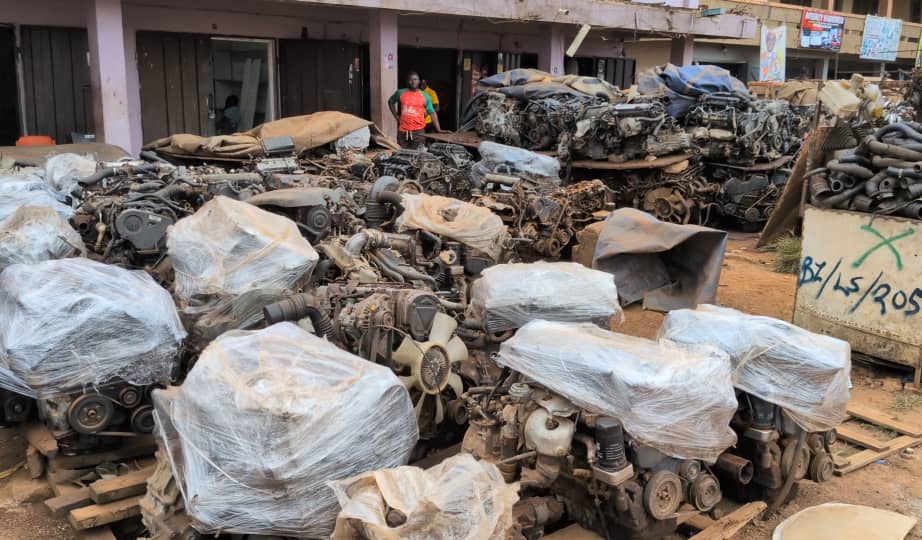
 Ambassador-designate, Dr. Tony Aidoo has described as "comic relief", a prayer by Archbishop Nicholas Duncan-Williams to save the local currency which is falling at a meteoric speed. The General Overseer of the Christian Action Faith Ministries (CAFM) on Sunday led his congregation to pray fervently for the recovery of the fast depreciating Ghana Cedi. “…I hold up the cedi with prayer and I command the cedi to recover and I declare the cedi will not fall; it will not fall any further. I command the cedi to climb. I command the resurrection of the cedi. I command and release a miracle for the economyâ€. The US dollar, which sold at Ghc2.20 on the local foreign exchange market before Christmas last year, now sells at Ghc2.60. The British pound, which sold at Ghc3 now sells at Ghc4.20. The euro and CFA are also selling at Ghc3.50 and Ghc4.80 respectively. The rate of fall of the local currency has baffled managers of the economy and frustrated businesses that import products and students pursuing international programmes that make dependent on foreign currencies. The Archbishop Sunday prayed for among other things, the stability of the cedi. But speaking Monday on the Super Morning Show on Joy FM, Dr. Tony Aidoo said the act by the Archbishop "is a big problem for us because it goes to enforce the [un-developmental] attitude of Ghanaians". "We woke up this morning to hear from Archbishop Duncan-Williams that he commanded the cedi [sic] to come down. At best it's a comic relief," he said. "...Is he going to command the people [traders] at Abossey-Okai not to go to China and Japan to import the spare parts? How is he going to feed those people?...What kind of attitude is this?" The Head of Policy Monitoring and Evaluation at the presidency maintained that, "For us to change the economy we need to cultivate a developmental culture; that's the starting point [and] it's a way of life". "...In any society which has excessive religiosity...you attribute everything that is positive to God and everything that is negative to the devil...and then you become vulnerable to exploitation of the clergy". "It is only lazy people who become excessively religious because they want to transfer their responsibilities to others to solve," he asserted. Dr. Tony Aidoo believes that attitudinal change and a change in the structure of the economy what required to stabilise the cedi and not prayers. Click to listen to Dr Tony Aidoo's take on Archbishop Duncan-Williams' prayer for the falling cedi
AB & David, an African law firm, has inaugurated its West African offices in Accra. The inauguration of the office complex is part of the firm’s drive to constantly improving services to clients and expanding its urge as a top-notch legal service provider in investment, trade, business and commercial activities. The Chief Justice of Ghana, Mrs Georgina Wood, who inaugurated the offices, acknowledged AB & David’s strides in areas that were currently relevant to clients. She said the practice of law had moved beyond the courtroom and the filling of writs and summons in transaction structuring, public and private partnerships, alternative dispute resolution and project financing. “Clients are becoming increasingly sophisticated and now demand value for money and want lawyers who understand business,†she pointed out. Unfortunately, she added, the legal profession had become notoriously averse to change and many lawyers had not realised that their practices needed to adapt to this fast changing environment. She warned that the days of the “one man practitioners†appeared to be numbered and challenged local firms to look at building a modern legal practice to respond to the needs of local clients. New pace in legal practice The Attorney General and Minister of Justice, Mrs Marrieta Brew Appiah-Oppong, said the AB & David had set a new pace in legal practice in the country and internationally. She said a new era with new dynamics in legal services had dawned and the firm was meeting the trend with its international practice (beyond Ghana’s borders). The immediate past President of the Association of Ghana Industries, Nana Owusu Afari, highly commended AB & David’s business culture, which sometimes included pro bono services to businesses and entrepreneurs. He said AB & David had shown such an immense understanding of the industry that it was elected to the prestigious Economic Advisory Committee of the AGI. He said the firm had also won twice in a row (in 2011 and 2012), the AGI’s accolade as the Best Business Promotion firm in Ghana. “For businesses, time is money and businesses appreciate when the lawyer does not use legalese to waste time,†he added. The Executive Chairman of AB & David, Mr David Ofosu-Dorte, said the changing phase of the firm was in keeping with changing times where clients were made to matter in all the interactions they had with the firm, including visiting the firm’s premises. A Managing Partner of AB & David, Isabel Boaten, said the firm was strengthening its commercial perspective as well as its African presence, by its remodelled offices and other initiatives.
Police in Kumasi on Monday morning fired teargas and warning shots to disperse demonstrators at Duase and Kenyase near Kumasi. The demonstrators were protesting against the poor conditions of roads in the area, especially on the Kumasi - Antoa road. Reports said one person who sustained a gun-shot wound was feared dead. Six other injured persons have been sent to hospital for treatment. One of the injured persons, identified as Kwame Okyere, who sustained a gun shot wound between the right eye and the ear has been sent to the Komfo Anokye Teaching Hospital (KATH). Hospital authorities confirmed to Graphic Online that he was responding to treatment. The demonstrators erected barriers on the main Kumasi - Antoa road, preventing the free flow of traffic and leaving commuters stranded. Police personnel from Kenyase who were at the scene and could not disperse the demonstrators called for re-enforcement from the Buffalo Unit who were said to have fired teargas and warning shots to disperse the crowd.
An articulated truck ran into the newly constructed tollbooth at Pobiman on the Accra-Amasaman road last Friday night. The incident happened when the driver of the truck, who was said to be carrying about 630 bags of cocoa from Nkawkaw to the Tema port, ran over the speed humps just before the tollbooth, which was yet to be inaugurated, and lost control. The driver, Prince Yeboah, was said to have sustained injuries but received treatment at a nearby clinic and was discharged; the mate was also in good condition after treatment. The incident, which occurred around 9:30 p.m. last Friday night, destroyed one of the tollbooth structures and completely dismantled the truck with registration number AS 1756X, displacing some of the cocoa bags. When the Daily Graphic visited the scene on Saturday, the owner of the cocoa (OLAM Ghana) was unloading the cocoa onto another truck. An eyewitness told the Daily Graphic that the driver had no choice but to run into the tollbooths because there were other vehicles behind him. "There was no one in the tollbooth because it was a new one and was not yet in use," Paa Yaw, another truck driver, said. He added that when the incident happened, there were some police officers on duty at the tollbooth so they helped to manage the situation by stopping residents from looting the cocoa. The Eastern Zonal Manager of OLAM Ghana, Mr Kwame Appiah, who was also at the scene at the time of the visit, said about 23 bags of cocoa were displaced while some were stained with oil (which spilled from the truck). He said the accident truck and two other trucks loaded the consignment from Nkawkaw on Friday afternoon and were transporting it to the Tema port to be exported. However, he added that due to the accident, the cocoa had to be sent for re-examination by the (COCOBOD) before it could be exported.
The Accra Metropolitan Assembly (AMA) and Zoomlion Ghana Limited, a waste management company, have warned that Accra will continue to experience flooding if the residents do not change their attitude towards sanitation in the city. Commenting on last Friday’s flood in Accra, following a heavy downpour, the Chief Executive Officer of AMA, Mr Alfred Okoe Vanderpujie, said although the AMA would continue to remove silt from the drains within the metropolis to prevent flooding in future, the bottom line was that  residents should change their poor attitude to sanitation. “We will continue to clear the drains of silt and educate the public on the dangers of dumping refuse into open drains,†he said. Mr Vanderpujie said the Public Health Department of the assembly would also be vigilant and arrest individuals who breached the bye-laws onsanitation within the metropolis. He expressed the hope that the implementation of the Accra sanitation sewer and storm water drainage alleviation project to construct storm drains would help to reduce flooding in the national capital. Sharing his perspectives on sanitation in Accra in the aftermath of last Friday’s floods, the Communications Manager of Zoomlion Ghana Limited, Mr Robert Coleman, said it was unpardonable that the government would spend huge sums to clear the drains of silt and clear rubbish from the metropolis “only for citizens to religiously dump waste into open drains that have been clearedâ€. “I find it very difficult to believe that even after several drains have been cleared of silt by the AMA, especially the primary drains, and Zoomlion clearing over 400 secondary drains, Accra is still flooded in an hour of rainfall,†he said. Explaining further, Mr Vanderpujie said the assembly was currently awaiting the necessary work to be done by the Ministry of Finance for Ghana to access $595 million loan from the Export-Import Bank (EXIM) of the United States of America (USA) for the execution of the sanitation and storm water project. When completed, he said, the project would eliminate Accra’s flood situation. The project involves, among other things, clearing of silt, dredging new siltation ponds, and the removal of rubbish from the Odaw drains and the Korle Lagoon. Mr Coleman said during visit to the flooded areas after the rainfall, a team from his company found that revealed that heaps of rubbish had choked the gutters, blocking the free flow of water. He, therefore, suggested that an immediate directive must be given by the Ministry of Local Government and Rural Development for the establishment of a sanitation court in every sub-metro. “The ministry should make it mandatory for every district or municipal assembly to have a sanitation court that will prosecute residents who abuse the environment,†he said. Unpardonable offence Mr Coleman said the sanitation courts  would also generate funds internally for the government to continue to carry out its agenda on the management of waste. “Now that the drains are choked, where are we going to get the money to desilt the drains? But if we are able to prosecute offenders, the money generated can be directed into such activities,†he added. Sanitation laws On sanitation laws,  Mr Coleman said it was high time the laws were amended “to bite instead of barkingâ€. “The bye-laws now do not serve as a deterrent to others. How can you fine someone GH¢3 for flouting the law when you can fine the individual GH¢100 or more to let them know the seriousness of the offence they have committed?â€Â He also called on all religious leaders to preach about sanitation to their congregation at all times. Last Friday, some parts of Accra were plunged into flooding after nearly an hour of torrential rain. While a number of streets were submerged by the flood, companies, including the New Times Corporation, publishers of the Ghanaian Times and  the Weekly Spectator; the Metro Mass Transit, the Odawna Clinic, auto shops along the Graphic Road, and some homes were flooded and their occupants had to be evacuated. The situation also brought activities in the metropolis to a halt as vehicular traffic was intense and commuters had to walk long distances to catch vehicles to their various destinations.
The Crops Research Institute (CRI) of the Council for Scientific and Industrial Research Institute (CSIR) has held a field day on livestock feeding, production and management for livestock farmers. The field day was under the Innovation Platforms (IPs) project being implemented by the CRI for promoting farming, especially livestock production at Amantin in the Brong Ahafo Region. The day formed part of a three-regional annual review and planning workshop on Sustainable Intensification of Integrated Crop and Small Ruminant Production System in West Africa at the institute at Fumesua, near Kumasi. The field work was attended by over 100 crop and livestock farmers from Atebubu and Amantin in the Brong Ahafo Region. The farmers were taken through the management, packaging and storage of maize straw, cowpea haulm and rice straw, which are said to be the best feed for livestock as well as having marketing potential in the sub-Saharan African country. Â Â Â Speaking to the farmers, Dr Hans Adu-Dapaah, Director of CRI, said the field day was to educate the farmers on other income-generating avenues after harvesting their farm produce. He said most of the maize and rice straw, burned after harvesting, could be used to feed animals or exported to neighbouring countries for income. He stressed the need for farmers to adopt scientific means of farming practices and livestock feeding to ensure their animals were healthy. Alhaji Yusif Bunbas, a participant, expressed his appreciation to the research officers at the CRI for their research, which has improved agricultural production, especially maize production in the area. Â Â He said the introduction of the new livestock feeding would help improve the health of their livestock and also reduce post-harvest waste.
The objective of the UN Convention on the Rights of the Child (CRC) is to protect children from discrimination, neglect and abuse. It is the principal children's treaty, covering a full range of civil, political, economic, social and cultural rights. The convention is the first legally binding international treaty to give universally-recognised norms and standards for the protection and promotion of children's rights in a single text. The UN General Assembly adopted the CRC and opened it for signature on November 20, 1989 (the 30th anniversary of its Declaration of the Rights of the Child). Ghana was the first country to sign the convention in January 29, 1990, and ratified it in February, 1990. It came into force in September 1990, after it was ratified by the required number of nations. Currently, 193 countries are party to it, including every member of the United Nations except Somalia, South Sudan and the United States. Foundation of CRC The convention rests on a foundation of four general principles that express its philosophy and offer guidance to national programmes for putting that philosophy into effect. These principles are non-discrimination, best interests of the child, right to life, survival and development and views of the child. Enactment of the Children’s Act Ghana followed up the ratification of the CRC with the enactment of the Children’s Act, 1998 (Act 650) to reform and consolidate the law relating  to children, to provide for the rights of the child, maintenance and adoption and regulate child labour and apprenticeship. A statement issued by the United Nations Children’s Fund (UNICEF) to mark the 25th anniversary of the CRC touched on some of the striking inequities facing children. It said although Ghana had made progress on child well-being, the latest data from the 2011 Multiple Indicator Cluster Survey (MICS) showed that disparities still needed to be bridged. According to the MICS, in spite of the economic growth, huge disparities still exist, and unequal distribution of resources among the north and the south, rural and urban, poor and rich continue to grow rather than decline. Children living in rural areas As a result, Ghanaian children living in rural areas experience higher levels of infant and under-five mortality compared with those living in urban areas. A child in the Upper West Region is nearly three times more likely to die before the age of five than a child born in the Greater Accra Region. Evidence revealed from the MICS survey also showed that even though primary net education rate was about 84 per cent for Ghana, nearly half a million children were still not enrolled despite universal free basic education. The UNICEF report, ‘Every child counts – revealing disparities, advancing children’s rights’, throws light on the importance of data in showing where the most pressing issues mitigating against children are and how data can be utilised in making progress for children. “In Ghana, UNICEF is a knowledge centre on children because of the various surveys we have undertaken in collaboration with the government. These have helped to expose where the conditions are worse for children and to advocate for more work to be done,†said Susan Ngongi, UNICEF Ghana Representative. Worse conditions that some children encounter are children who find themselves in exploitative labour that affects their health, education and growth and development. Parents’ obligation Parents have an obligation under the CRC and the Children’s Act to exercise their parental responsibilities. It also acknowledges that children have the right to express their opinions and to have those opinions heard and acted upon when appropriate, to be protected from abuse or exploitation, and to have their privacy protected, and it requires that their lives are not subject to excessive interference. The report says that a lot of progress have been made since the CRC was signed, and in the run up to the culmination of the Millennium Development Goals. However, it calls for much more to be done. The report notes that "being counted makes children visible, and this act of recognition makes it possible to address their needs and advance their rights." The convention deals with the child-specific needs and rights. It requires that states act in the best interest of the child. For this reason, the governments of countries that have ratified the convention are required to report to and appear before the United Nations Committee on the Rights of the Child periodically to be examined on their progress with regards to the advancement of the implementation of the convention and the status of child rights in their country. Ghana’s Children’s Act provides a very powerful legislation for the protection and promotion of children’s rights. While it is necessary to commend the government for ratifying the CRC and enacting the Children’s Act, there is still the need for all those who have the interest of children at heart to show the commitment to improve the situation of children and do more in helping them to reach their full potential.
The acting Director of the Department of Gender at the Ministry of Gender, Children and Social Protection, Mrs Catherine Bob-Milliar, has urged women to take up leadership roles to help improve their representation in decision-making. She said women constituted majority of the country’s population, so it was necessary for them to be well represented to make meaningful impact on national development. “If you cannot take up leadership positions, encourage your daughters in the universities to participate in such roles,†she said. Mrs Bob-Milliar said this at a meeting of the Women Organisations Meeting (WOM) Network held in Accra. The meeting was attended by representatives of women groups and networks in the country to interact with officials of the department on their concerns. Mrs Bob-Milliar said the ministry recognised the vital contributions made by the various women groups towards women empowerment and gender equality in the country and gave the assurance that they would be encouraged to perform more effectively. Open Forum In an open forum, the women expressed concern about the plight of kayayei (female porters), unequal opportunities for women’s advancement, lack of funds for women’s groups and the proliferation of unregistered women’s groups in the country. The women also called on the ministry to revive the women’s groups by organising educational programmes for them to be abreast of current trends for development. They suggested that all women groups be brought together as one body to aid the development agenda of women in the country. Response Responding to concerns raised by the women, Mrs Bob-Milliar said their grievances would be communicated to the ministry for redress. She, however, indicated that issues concerning the ‘kayayei’  were very complicated because all attempts by the ministry to make them return to their various communities after they had acquired skills had proved futile.Â
The University of Ghana has begun the collection of road tolls despite a legal challenge to its action. Two students of the university have brought an action against the authorities in their capacity as Ghanaians praying the Supreme Court to stop the university from charging the said road tolls. They are, accordingly, urging the highest court of the land to declare the action of the university as unconstitutional. Ernest Victor Apau and Musah Mustapha, per their reliefs, are seeking the court to perpetually restrain the university and its agents from charging motorists who ply the university’s routes. The university is being sued as an entity. Joined to the suit is the Attorney-General. Reliefs being sought The writ, dated January 29, 2014 and filed on behalf of the applicants by Mr Egbert Faibille, a legal practitioner, came about as a result of the university’s plan to charge road tolls with effect from February 1, 2014. The reliefs being sought by the applicants include a declaration that upon a true and proper interpretation of Article 174 (1) of the 1992 Constitution, the road usage and user charges the university sought to introduce amounted to taxation. A move by the university to exempt some of its members of staff from paying the road usage and user charges, according to the applicants, was in violation of Article 17 (1) (2) and (3) of the 1992 Constitution. They also see that move as an abuse of discretionary powers and are, therefore, praying the court not to countenance it. The applicants are arguing that the action of the respondents had violated Article 174 (1) of the 1992 Constitution, because the tolls were introduced without an Act of Parliament. They are further praying the court to grant any other relief it (the court) deemed fit. A date is yet to be fixed for the hearing of the writ. Toll payment Meanwhile, the authorities began the collection of the tolls last Saturday, February 1, 2014 at four toll booths, resulting in heavy traffic at the university’s main entrances. The booths have been mounted at the main entrance at Okponglo, Lingate, located on the Achimota-GIMPA road, TF, on the North Legon Road and the Banney Hostel, opposite the Presbyterian Secondary School. Commercial drivers pay GH¢2 for entry and the same for exit, private car drivers including students pay GH¢1 and heavy duty trucks are made to pay GH¢3. Students can, however, pay GH¢100 per month to avoid paying the daily toll. Lecturers of the university and their dependents, senior staff members, personnel from the armed forces and the police service, as well as those from the fire service, are exempted from the tolls. Complaint Many of the taxi drivers who plied the university’s routes paid the tolls amid protests, calling on the authorities to quickly reverse their decision in order not to have a negative effect on their work on campus. According to them, if the issue was not addressed, they would be compelled to increase their fares. Already the drivers who convey passengers to various parts of the campus for a previous fee of GH¢3 now charge GH¢6, while those who charged GH¢1 now take GH¢1.50 or GH¢1.70
The District Security Committee (DISEC) of the Upper Denkyira West District in the Central Region last Thursday arrested three foreigners involved in small-scale mining, in a renewed exercise to flush out illegal miners from the district. When the DISEC team, led by the District Chief Executive, Mr Ambrose Amoah-Ashyia, struck at Ampabena Betenase, the three suspects, all Chinese nationals, took to their heels towards the bush, but the security officers pursued and arrested them. Initially, one of them attempted to release a dog on members of the team, thinking that they were only civilians, but when he saw the security personnel, he abandoned that ‘tactical move’ and bolted. The suspects were subsequently handed over to officials of the Ghana Immigration Service (GIS) for investigation after which the necessary action would be taken against them. Assistant Controller of Immigration, Mr Daniel Tetteh Lomotey, who is in charge of the Upper Denkyira West and Upper Denkyira East districts, said after the investigations, a report would be sent to Accra for further action. Illegal foreign miners return A large number of foreigners, mostly Chinese nationals, have returned to the mine sites in the Upper Denkyira West and Upper Denkyira East districts, a few months after a major national exercise was undertaken to flush them out. The vast lands that were degraded and abandoned by the foreign illegal miners in the districts are yet to be reclaimed because the cost involved, the Daily Graphic learnt, is huge. The illegal foreign miners who were arrested in the national exercise last year were subsequently deported to their home countries. But in spite of that exercise, which prompted diplomatic intervention from the Chinese government, and the falling price of gold on the world market, the foreign illegal miners still found it lucrative to return to the ‘galamsey’ business. New security strategy But the DISEC says it will not relent in pursuing them, as it solicits the support of chiefs, opinion leaders and members of the communities in the renewed fight against illegal mining in the two districts. According to the DCE, the exercise would not be a nine-day wonder, and he cautioned the illegal miners to desist from their operation because the DISEC would continue to pursue them. He said illegal small-scale mining had been a menace in the Upper Denkyira West District, considering the damage it had caused to large parcel of lands. He said the district assembly would endeavour to find ways of reclaiming the vast degraded lands. Oil palm seedlings Meanwhile, the Minerals Commission has distributed 180,000 oil palm seedlings to farmers in the two districts to plant on about 3000 acres reclaimed after mining activities. The initiative is under a five-year project by the commission with the view to restoring the land to good use after mining and giving alternative livelihood support to farmers. Mr Zoogah said the nursing of the  seedlings project was a replication of an earlier one project undertaken by the Minerals Commission at Prestea in the Western Region. Writer’s Email: [email protected]
The Aduana clan and descendants of Nana Kyei Fram at Ayigya in Kumasi  is calling on the Asantehene, Otumfuo Osei Tutu II, and for that matter, Manhyia Palace, to, as a matter of urgency, act on its declaration to stop the Asakyiri family of the Topre Stool from occupying the royal stool at Ayigya. They are also calling on the Manhyia Palace to act on a petition brought before it by the Odikero of Ayigya, Nana Kyei Fram II, who sought to declare that members of the Asakyiri family were not qualified to rule the Ayigya community. Making the appeal through the Daily Graphic in Kumasi, a spokesperson of the Aduana clan, Mr Kwaku Amoa, 48, said the authority of  the Aduana clan and descendants of the Kyei Fram dated back to primitive Ayigya and that occupants of the Topre stool, who claimed to be  rulers of the Ayigya Traditional Community, were strangers. His appeal comes in the wake of a power struggle that has engulfed the two gates as to who is the rightful gate  to rule the Ayigya community. While the Aduana clan claims they are the true traditional rulers of Ayigya, the Asakyiri occupants of the Topre Stool have put in a counter claim that they are the rightful clan to occupy the stool and that in case of the death of the occupant of the stool, every member ( including the Aduana clan) must pay allegiance to the Asakyiri Stool for the usual rituals to be performed before burial can take place. Mr Amoa recalled that when his mother, Obaapanin Akosuah Tawia, died in 2011, at the ripe age of 115,  a fitting royal burial was denied her as  the Asakyiri family members felt the Aduana clan members should have presented drinks (as was the custom) before they could go on with the burial. He said when his family members disagreed and went on with the burial, the Asakyiri family members removed the dead body and that since then, he and the descendants of Kyei Fram have never found the mortal remains of Obaapanin Tawia. “This power struggle must cease. It is about time the Manhyia Palace put its feet on the ground and prevent the Asakyiri family members from causing mayhem in the Ayigya area and set the records straight that the Asakyiri clan members were indeed not the true rulers of the Ayigya Traditional Area. Manhyia must act now!,†he stressed. The Odikro of Ayigya, Nana Kyei Fram II, who has reigned for 20 years, petitioned the Manhyia Palace during the reign of the Asantehene, Otumfuo Opoku Ware II, and has also petitioned Otumfuo Osei Tutu II to intervene in the matter and set the records straight as to who, between the two gates,was the rightful clan to rule the Ayigya Traditional area but to no avail. A copy of the petition made available to the Daily Graphic prayed the Asantehene to settle the matter for Ayigya to progress in development.
There may be some relief in sight for power consumers as the country is in the final lap of negotiations for Ghana Compact ll under the Millennium Challenge Account (MCA) that focuses on the energy sector. Mr Jonathan O. Bloom, Deputy Vice-President of the Millennium Challenge Corporation (MCC) for Africa, has given an assurance that the Compact ll was due to take off by the middle of the year. In an interview on the second compact in Accra last Friday, Mr Bloom explained that the processes leading to its take-off had unusually gone on for a long time because its focus was on energy, which is a complicated sector. The compact, which is expected to last for about five-and-a-half years, is designed to deal with energy challenges in the country. The decision to focus on energy, Mr Bloom stated, was born out of a study conducted by the MCC and the government on what was drawing back economic development “and power turned out to be one of the major actorsâ€. “We’ve been going on for three years now, which is an unusually long time, but because we are tackling one of the biggest problems in the country – we are seeking access to reliable power, it is a difficult problem to solve,†he said. Cause of delay Speaking to the concern from various quarters on the delayed take-off of Compact II, he said “there has been a team that has come several times, because the critical process for the MCC is to prepare in great detail to know what is going to be done by who, when, with what result to expect, through what mechanisms, for what amounts of money, and so we design all that with a team from (Millennium Development Authority) MiDA.†While admitting that the components of Compact II were still being defined, he said they were likely to be three modules – demand side management (helping to ensure efficient use of electricity); investments in ECG to improve distribution, reach, access for poor consumers and for businesses, and building an enabling environment (investments in capacity of the rest of the systems – generation and fuel supply). He said when the processes were through, they would have to be approved by the MCC Board, followed by several months of preparation “and it’s only at the end of that, that the big money starts to flowâ€. Mr Bloom said it was his hope that the processes would be approved by the board, which would pave way for the signing ceremony for work to start on the second compact, which he estimated to be worth hundreds of millions of dollars. He, however, stated that the greater part of the work, which he described as “the large drawingsâ€, would be done in 2015. Critical areas Mr Bloom said some of the critical areas identified were finishing up the reforms of the Electricity Company of Ghana Ltd (ECG), which was central to the whole process; completion of the gas sector; ensuring  adequate fuel supply for generating electricity, and assisting investors to build their electricity generation capacity. He commended the government of Ghana and other stakeholders for identifying a problem and knowing the solutions, but said the hard part was doing it, because people naturally were not susceptible to change. Tariffs and investments He also lauded the government for initiating some reforms in the energy sector towards getting the compact started, saying the efforts made on tariffs were very significant and that “it’s been good progress on structuring the supply of gas,†while there had been some studies on ECG that had already begun to improve the sector. “The decision that the Public Utilities Regulatory Commission (PURC) made in October, 2013 to raise tariffs substantially was a politically courageous decision. It was necessary, but it requires courage. In many countries they cannot advance because their leadership doesn’t make those hard decisions. So I congratulate the government on making those hard decisions, but it takes time,†he stated. According to the MCA Deputy Vice-President for Africa, no matter the contributions made by the MCA, “the real money would come from private investors, both Ghanaian and international, who are willing to build the generating facility in exchange of the electricity distributedâ€. He said the initial US$8 million grant agreement signed between the Government of Ghana and the MCC in July 2013 was not part of the actual compact II amount, but was to facilitate feasibility studies in engineering and consultancies, and had greatly contributed to the progress made so far towards the compact’s take-off. “That US$8 million has substantially been spent and it is essentially what has enabled us to make a lot of progress,†he said. On whether the power situation would improve with the implementation of Compact II, he replied with an emphatic yes, but cautioned that the real impact would not be felt until some decades; because it would take time to build plants, ensure power generation and do all other associated works. Writer’s email: [email protected]
A Ssevere rainstorm last Thursday hit Osiem in the West Akyem municipality ripping off the roofs of about 25 buildings. A two -year-old boy who sustained injuries from falling debris during the rainstorm, was treated and discharged from the Hawa Memorial Savior Hospital in the town. A number of inhabitants who have been forced to stay with relatives and friends, have engaged artisans, especially carpenters to re-roof their buildings. Some other victims, however, said they did not have the resources to re-roof their buildings. The Eastern Regional Co-ordinator of the National Disaster Management Organisation (NADMO), Mr Ransford Owusu Boakye, who was at the scene to assess the situation said efforts were being made to deliver relief items to the victims and to assist them to re-roof their buildings.
Forty-one widows at Agona Oketsew in the Agona East District in the Central Region have been presented with items to help them take care of some of their basic needs. The items, worth GH¢2,000, included rice, cooking oil and tins of sardines and tomato paste. The presentation was made possible as a result of a collaboration between the Mbrantsehen of the town, Nana Kobina Nyarkoh I, and Mr Tim Davis, the Director of N’Jul Rest Stop. Addressing the gathering, Mr Davis said the items were their widow’s mite towards their upkeep. He noted that though the women were very supportive of their husbands in the upkeep of the home, they were disadvantaged because of the death of the husbands and that they needed to be supported in order to take up “fatherly†responsibilities as well. He urged the widows to come together and form an association so that they could be trained in some trade and be able to acquire entrepreneurial skills to engage in income-generating ventures. He encouraged them to be strong, as there was hope for the future and also assured them of his continuous support. Nana Nyarkoh encouraged the widows to be focused and engage in businesses that would help them to lead decent lives in the absence of their husbands since they had the capacity to do better without their husbands.
Hundreds of people from all walks of life are trooping to Adomfe, a small town in the Asante Akyem South District in the Ashanti Region, to fetch water from a borehole which is believed to heal all manner of illnesses. They are not perturbed by any cost – be it money, distance or long queues for hours and days – to fetch the water for their personal use and for their relatives and friends, far and near. One gallon (popularly called Kufuor gallon) of the borehole water is being sold for GH¢10 to visitors and GH¢1 to community members. And when the Daily Graphic visited Adomfe last Friday, a day reserved for visitors to fetch the water, there were long queues of people carrying gallons. The atmosphere was one of mixed feeling, with people who were fortunate to fetch the water wearing smiles on their faces, while anxiety was written on the faces of those yet to have their turn. News about the healing potency of the Adomfe borehole water has even gone beyond the shores of Ghana, as some Ghanaians living abroad call their relations back home to go fetch the water for their ailing relatives. Some residents of Adomfe are said to be doing brisk business, fetching and selling the borehole water to visitors. The Daily Graphic learnt that some pastors had visited the borehole site, while other prominent people had also sent emissaries to fetch the water for them. Testimony The only proof of the healing power of the borehole water lies in the testimonies of people who have used it. “This water is very good. I have used some already and it’s good; that is why I’ve come for more,†an elderly woman told the Daily Graphic, as she carried a gallon of the borehole water on her head with broad smiles on her face. Madam Yaa Fosu Hemaa was waiting patiently for her turn to fetch the water after joining the queue for more than five hours before the visit of the Daily Graphic. “I have an ear problem and after putting some of the water into my ear, I felt an improvement in my condition. So I’ve come to fetch more of the water,†she said. In another instance, a man was said to have testified that his wife could not take seed again nine years after giving birth to their only child, but after drinking the borehole water, she had become pregnant. The power of these testimonies had lured Madam Akua Comfort from Ohene Nkwanta at Konongo-Odumase to Adomfe with a ‘Kufuor gallon’ to fetch the water for her ailing mother who is stricken with waist pain and swollen legs. “I have a heart problem and so I’ll also drink some of the water,†she added. However, one woman the Daily Graphic spoke to in town was not enthused about the borehole water because after drinking it, she said “I did not see anything.†Background The borehole was sunk in September 2008, but, according to Mr Wilberforce Obeng Anane, popularly called WO Anane, the people abandoned it for five years. That was because they did not find the water suitable for cooking and, when they used it for washing and bathing, the soap did not lather. He said he later learnt that the borehole water was hard water, hence the inability of soap to lather when the water was used for bathing and washing. Mr Anane, who is the Financial Secretary of the Water and Sanitation Committee at Adomfe, said having read about hard water from the science notes of his nephew in junior high school and also done further research into it, he discovered the health benefits of the water and started proclaiming same to the people. He said following the promotion of the water, some people tried it and immediately many of them started giving testimonies of its healing potency against diabetes, heart diseases, abnormal menstrual cycle and other sicknesses. What is hard water? According to scientists, water is considered to be hard when it has relatively high levels of calcium and magnesium and other metals. Water is referred to as hard because it requires more soap for a good lather, making it harder to clean with than soft water, which, unlike hard water, contains few of calcium and magnesium and other metal cations. Scientists say hard water is not harmful to human health. Rather, it has many health benefits when compared to soft water because calcium and magnesium are considered essential nutrients required in diet to maintain healthy body functions. “Calcium is a critical component of bone, and has many positive effects on the body, as well as the prevention of serious life-threatening and painful ailments like osteoporosis, kidney stones, hypertension, stroke, obesity  and coronary artery disease,†according to information from a website on chemistry: http://chemwiki.ucdavis.edu. “Magnesium also has positive health effects because inadequate amounts of magnesium in the body increase the risks for health problems, such as hypertension, cardiac arrhythmia, coronary heart disease, and diabetes mellitus. “Studies done on the health effects of hard and soft water have shown that people who drink greater amounts of soft water have much higher incidences of heart disease, as well as higher blood pressure and cholesterol levels and faster heart rates, than those who drink mostly hard water,†it added. Scramble for Adomfe hard water The source of hard water at Adomfe is believed to be rocks beneath the ground on which the borehole was sunk. In view of the high patronage, the managers of the boreholes have scheduled days on which visitors and community members are allowed to fetch the water. The borehole is opened to visitors on Tuesdays, Fridays and Sundays, while the community members are given access on the remaining days – Mondays, Wednesdays, Thursdays and Saturdays. Upon arrival, one has to register and wait for his or her turn to be served according to the numbering on the registration list in an orderly arrangement supervised by Mr Anane. However, Mr Anane gives room for what he termed as “consideration†to people with special needs, such as the aged and the sick, who are served earlier than their position on the registration list. Some of the community members complained that whereas they were restricted to the number of gallons with which they could fetch the water, visitors were allowed to fetch as many as they could. Business Meanwhile, some community members are cashing in on the situation by fetching the water at a low cost of GH¢1 and selling it to visitors at GH¢10. But there are concerns about dubious business practices, as some people allegedly mix the borehole water with tap water for sale to unsuspecting visitors. The Gyaasehene of Adomfe, Nana Boakye Yiadom, advised visitors to endeavour to fetch the water from the borehole in order not to fall prey to such fraudsters. He appealed to the government to support the community with a big water tank in order to ensure that people, especially those who travelled long distances to the place, could fetch the water in good time. Commercial drivers plying routes from Adomfe to Konongo and other surrounding towns are also making brisk business, given the increased human traffic to and from Adomfe. Writer’s Email: [email protected] {gallery}healingwater{/gallery}

The body of Komla Afeke Dumor, who passed away in London on January 18,  2014, will be flown to Accra at about 8 p.m today. Dumor’s body will be formally received by the Paramount Chief of Aflao Traditional Area, Togbe Amenya Fiti V, a delegation of chiefs from Aflao where Komla was a youth development chief,  the clergy from the Roman Catholic Church, as well as members of the Dumor family. A statement signed and issued in Accra by Ms Esther Cobbah,  the Dumor family spokesperson, said arrangements to enable the public to be part of the arrival of the body of Dumor would be announced in the course of the day. The statement further said information could be obtained at www.komla-dumor.com and [email protected] as well as on hotline, 0303 932 383. It provided further media contacts as Amb. Patrick R. D. Hayford, 020 601 309; Ms Esther A. N. Cobbah, Stratcomm Africa 28 Samora Machel Road, Accra 023 084 7021 Komla Dumor, was the son of Professor Ernest Dumor, the first Chief Executive Officer of the National Identification Authority (NIA) and a former member of the Electoral Commission of Ghana and Professor of the University of Cape Coast.  Dumor was a well-respected international broadcast journalist who worked for the BBC. He previously hosted the Super Morning Show on Joy FM in Accra for almost a decade before joining the BBC in 2007 He is survived by his wife Kwansema and three children. He was the brother of Mrs Mawuena Trebarh, Chief Executive Officer of Ghana Investment Promotion Centre (GIPC), and Dr Korshie Dumor, a medical doctor currently practising in the USA. Meanwhile, the BBC last Saturday held a memorial service for Komla Dumor. The memorial service, which was held at the St. Martin-in-the-Field Church at Trafalgar Square, London was attended by his friends, family and colleagues at BBC. Speaking at the memorial service, Ms Josephine Hazeley, the Deputy Editor of the BBC Africa Service said Komla had shown that Africans could be understood. “Komla represented all that is good in Africa. He has opened doors and we have to make sure those doors are never banged or closed anymore. He has broken the glass ceiling,†she said Dumor, who passed on at 41, was reported to have died after a cardiac arrest.
Facebook
Twitter
Pinterest
Instagram
Google+
YouTube
LinkedIn
RSS