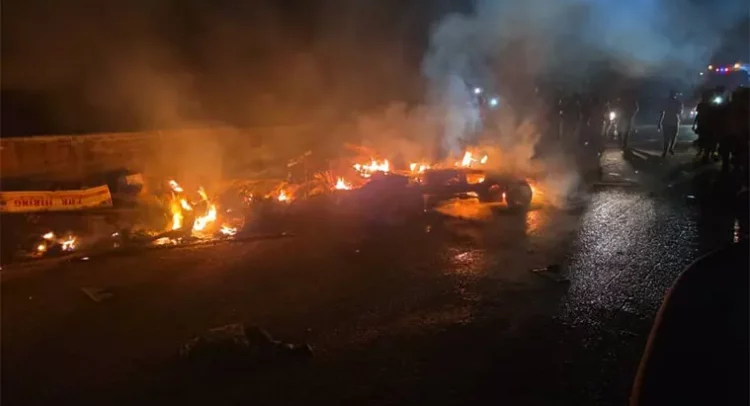
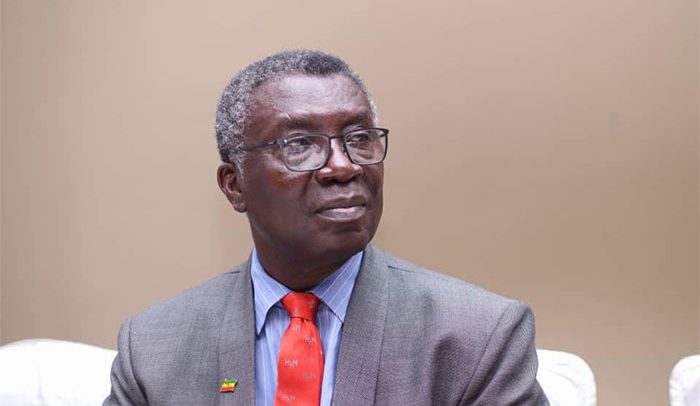
The National Coordinator of the National Disaster Management Organisation (NADMO), Mr Kofi Portuphy, has said the organisation is currently adequately equipped to take charge of disasters in the country. “Our readiness is even more enticing because we have built and are ready to operate a national world emergency operations centre where we will put all equipment needed for early warning systems,†he said. He added that the centre, when in full operation, would also pass on information to all disaster management collaborators as quickly as possible “so that our response will be betterâ€. “We have been trained already by the Americans so we can pick the information and wherever in the city, wherever in the country, we can easily locate areas which would make our response better,†he added. Mr Portuphy made these statements at the opening ceremony of a one-week  international disaster management course for security agencies in Accra yesterday. The training, which brought together 50 security personnel from the various agencies, was intended to improve their efforts to manage natural and man-made disasters and was organised by NADMO with funding from the British High Commission. Participants would be trained by professors from the Bournemouth University Disaster Management Centre, a university based in the United Kingdom that specialises in disaster management. Some of the topics to be treated include; principles and objectives of sound disaster management; introduction to risk analysis and dealing with mass casualties, among others. Mr Kofi Portuphy also said the programme, which was the fourth in the planned series, was essential for disaster prevention and that so far, over 300 Ghanaians from the various security agencies, the private sector, and  non-governmental organisations had received training in disaster management. Mr Portuphy urged the participants to utilise the knowledge they had acquired from the training for the benefit of the country. In his address, the Director of Bournemouth University Disaster Management Centre, Mr Richard Gordon, said the course aimed at sharing the best practices in disaster management. “This course also aims at encouraging integrated expertise across different agencies to respond effectively to disaster management,†he said. Â
 An acute water shortage has hit  Sekondi/Takoradi since mid December 2013 as a result of heavy silt deposit at the intake point at Daboase which is  preventing regular flow of water for treatment. In a few areas where the taps are flowing, the pressure is very low and it takes hours for households to get enough water. Most residents now draw water from untreated sources , while others use sachet water  for domestic use. Affected areas Affected areas include the Sekondi township, Komfoase, Ekuase, Esikado, Bakayire, and Bakoano, South Kweikuma, Adiembra, Adiembra-Ridge, Kojokro and other areas which derive their water supply from the Daboase intake. Both the young and old in those areas queue for long periods to draw water from abandoned wells near the Mutual Health Office in Sekondi and the Sekondi Shell Fuel Station and another well at Nana Aboa in Sekondi. Mr Abraham Cudjoe,  a resident of Bakano, said the water shortage had affected his daily routine for over a month now. “I have to walk for over 30 minutes to get to where I can fetch water. Most of the time, I have to join a queue for more than an hour before it gets to my turn,†he said. Solving the problem The Regional Manager of the Ghana Water Company, Mr Daniel Moumaala, acknowledged the problem and said the company was in the process of  engaging an excavator to clear the debris from the Daboase intake point to enable water to flow through the system for treatment. Unfortunately, he said the company did not have an excavator in Sekondi/Takoradi,  so “we have to turn to  the mining companies at Tarkwa or contact Zoomlion in Accra to send one to the region to undertake the task.†He expressed the hope that soon the intake would be cleared to ensure free flow of water. Â
 The families of the four persons who died during the coronation of the chief of Ekumfi Esarkyir last Saturday have called on the police to expedite investigations into the case and release the bodies to them for burial. According to them, some of the deceased persons were Muslims, whose bodies needed to be interred some few moments after their death. They made the call yesterday when the Central Regional Minister, Mr Samuel Sarpong, and some members of the Regional Security Council visited the community to express their condolences to the families for the loss. They further appealed to the regional minister to get support for the family of one of the deceased who left behind six children and a pregnant wife. The call comes in the wake of the shooting in which an ex-police officer, Anthony Forson, 60, accidentally shot and killed the four at the coronation of the new chief, Nana Essel VII. The deceased include Bestman Arthur, 17, a first-year student of TI Ahmadiyya Senior High School; Kojo Anthony, a junior high school leaver; Samuel Edumadze, 13, a primary five pupil of the Esarkyir District Assembly Methodist School, and 40-year-old Kofi Nyaago from Ekumfi Ekroful. The cheerful procession became chaotic when Forson tried to fire a musket, which failed to respond. After the gun failed, Forson was said to have re-loaded it and adjusted it, but before he could press the trigger again the gun went off killing the four and injuring two others. One of the injured, who is in critical condition, has been referred to the Korle Bu Teaching Hospital in Accra.   Mr Sarpong used the occasion to ask the security agencies to enforce the use of gunpowder rather than live bullets for musketry. He noted that the use of bullets in guns at festivals and other traditional gatherings had become rampant and in recent times caused enough harm. The District Chief Executive for Ekumfi, Mr Ibrahim Dawson, said the assembly would support the bereaved families to bury the dead. The Saltpond Police Commander, Deputy Superintendent of Police, Mr David Ashong, later told newsmen that checks had showed that Mr Forson's gun had been licensed and he had a permit to use it. He, however, said the docket on the case would be sent to the Attorney General's Department for advice. Â
 Baron Water House Limited, manufacturers of Ice Pack sachet water,  has dedicated its new dispensers  bottle unit  at a ceremony in Accra. The new unit, which has three plants is used  in the production of ice pack sachet water in the country. The event was also used to express the company's appreciation to God for  His guidance throughout 2013. Speaking at  a thanksgiving service to mark the occasion, the Managing Director of the company, Mr Ellis Clottey, urged the workers to remain focused,  disciplined and  to work hard to sustain the future of the company. He said 2013 came with a lot of challenges, which nearly saw the closure of the company. According to him, the inconsistent flow of water affected the company,  since part of its  water supply depends on the Ghana Water Company. He said packaging materials was another challenge faced by the company due to  the influx of other smaller pure water’ manufacturing companies. He appealed to the government to make water cheaper to the average person to buy. Â
Barely a week after the arrest of a Nigerian by sniffer dogs at the Kotoka International Airport (kia), another Nigerian is in the grip of officials of the Narcotics Control Board (NACOB) for ingesting pellets of heroin. Chika Macillinus Umeugokwe, a 31-year-old trader, was arrested last Saturday, January 11, 2014, shortly after boarding a taxi at the KIA on his arrival from Pakistan. His two accomplices, however, managed to escape. When he was taken to the NACOB headquarters, he allegedly expelled 69 pellets of heroin weighing one kilogramme with a street value of $80,000. Arrest of suspect Briefing the Daily Graphic in Accra yesterday, the Deputy Executive Secretary of NACOB, Nii Lantey Blankson, said the suspect claimed he had swallowed 77 pellets of heroin but vomited some in Pakistan before setting off. He said the arrest of Umeugokwe brought to six, the number of Nigerians who had so far been arrested at the airport for drug trafficking within a month. According to him, Umeugokwe left Nigeria somewhere in November, last year, for Ghana by road and left the following day on board Kenya Airways to Nairobi and continued with Ethihad Airlines to Pakistan. In Pakistan The Deputy Executive Secretary indicated that Umeugokwe stayed at the Metro Park Hotel in Islamabad in Pakistan for six weeks. While there, Mr Blankson said the suspect claimed another Nigerian, whose name he gave only as Cosmos, assisted him to purchase the drugs. According to him, the suspect claimed he paid $3,500 for 50 pellets of the heroin but Cosmos added 27 to what he had swallowed to be given to his brother on suspect’s arrival in Nigeria, but the suspect vomited some in Pakistan. Arrival at KIA He said on arrival, the suspect was allowed to go through the formalities but unknown to him, he was being monitored by the NACOB officials who followed him outside where he met two men, a Nigerian and a Ghanaian. The three later stopped a taxi but as the driver was parking, the other two suspects fled. The suspect will be arraigned after investigations. Â
 The Chairman of the  Parliamentary Select Committee on Mines and Energy,Dr Kwabena Donkor, has accused Newmont Ghana Limited of operating the biggest galamsey at its Akyem concession. According to him, the company’s operations in the Akyem area had no legal leg to stand on. But in an interview with the Daily Graphic, the Minister of Lands and Natural Resources, Alhaji Inusah Fuseini, while conceding that the company’s  mining agreement was yet to be ratified by Parliament as required by law, stated that the company had a licence from the Minerals Commission.  Newmont Ghana has been accused of operating its Akyem concession illegally but the minister explained that in line with the 1992 Constitution, any investment for the exploitation of natural resources had to go through Parliament and the Minerals Commission. Processes The first, he said, was the signing of a mining contract by the President in whom mineral resources were vested and then the agreement was sent to Parliament for ratification. “There are two phases. Newmont has only met the first phase,†said Alhaji Fuseini in reaction to the claims by the Chairman of the Parliamentary Committee on Mining that Newmont Ghana was operating in Ghana illegally. The minister explained that even though the constitution required that the two processes were met, “unfortunately the constitution does not give a time line. We agree the people of Ghana have to know the nature of the mining agreements the President signs, that is why it has to be ratified.†He said the constitution did not also state that the contracting party should hold on until the agreement was ratified by Parliament before commencing its mining activities. More contracts not ratified On the issue of companies operating without their contracts being ratified by Parliament, the minister stated that there were a number of companies whose contracts were yet to be approved by Parliament. “It is not only Newmont that is operating without its contract being ratified by Parliament. There are a number of other mining companies in the same situation,†said the minister. The minister could not tell the total number of companies in that situation. To ensure that the various contracts were ratified, Alhaji Innusah said he had directed the Minerals Commission to sort out the mining companies in accordance with the nature of operation to be submitted to Parliament for approval. Though the directive was issued three months ago, the Minerals Commission is yet to furnish the ministry with a full list of the mining companies operating without a ratified agreement categorised according to their nature of mining. “This does not mean the ministry is oblivious of its responsibility. There has been an attempt even before I was made minister and before Dr Kwabena Donkor went to Parliament, to get the contracts ratified but Parliament said the form in which the document was presented made it bulky and asked that it was sorted out.†Dr Kwabena Donkor Speaking on Joy News earlier, Dr Donkor of the Parliamentary Select Committee on Mines and Energy accused Newmont of  breaching the country’s mining laws. “As I speak, Newmont is still in breach of our laws. The company is still operating illegally. It is still involved in large-scale galamsey. “No mining lease has come to Parliament for ratification, to the best of my knowledge. Therefore, whatever mining is taking place there is illegal,†he said. He blamed the present regulatory failure on the Minerals Commission saying “we will challenge the Minerals Commission to live up to its mandate.† That aside, he said, it was the responsibility of the company to respect the law. He added that the issue would be raised in Parliament again. He, however, urged civil society organisations to stand up to what he described as an illegal and abuse of the country’s laws. “We will raise the issue again on the floor of Parliament. I expect civil society groups to take the matter up, even if it means going to court. To enforce our laws, we all have a responsibility to enforce our laws. It is not just a matter of leaving the enforcement in the hands of agencies of state. “As citizens, those agencies represent us. We are the alludia owners of the lands of Ghana and, therefore, I expect civil society groups such as Third World Network and other environmental NGOs to go to court, and I’ll be prepared to be a star witness in court,†he stated. Mr Mohammed Amin Adam Responding to the call on CSOs, the Executive Director of the Africa Centre for Energy Policy, Mr Mohammed Amin Adam, observed that the situation smacked of collusion between state institutions and the mining company. He expressed concern about the inability of the government and Parliament to hold the company accountable for its actions. Â
 Parts of Accra have been hit by fuel shortage, the National Petroleum Authority (NPA) has confirmed. The NPA explained that the situation was the result of the five storage depots in Tema not working full-time during the Christmas holidays and the late arrival of vessels carrying refined fuel. Bad weather Speaking to the Daily Graphic, the Public Relations Officer of the NPA, Mr Yaro Kasambata, said the vessels did not arrive at the stipulated time because they were hindered by bad weather. Notwithstanding the situation, the PRO indicated, the issue was not as serious as was being portrayed in certain quarters. “We are only experiencing low shortage in petrol; there is diesel at all the stations,†he said, adding that the problem would be resolved soon and fuel could be purchased at any of the retail outlets. He said in spite of the situation there were stocks of fuel in the system and added that transporters were ready to transport the fuel to the various retail outlets in the city. Situation in Accra In Accra some of the stations ran out of supplies 10 days ago. Some fuel filling stations had posted ‘no fuel’ notices at their entrances. When the Daily Graphic visited some filling stations at Kaneshie and Abossey Okai, the attendants complained that they had completely run out of petrol but had diesel in stock. Outstanding orders According to the station managers, they had outstanding orders for petrol but did not know when it would be delivered. At the Total Service Station at Abossey Okai, the Station Manager, Mr Joseph Asante, said his station had run out of petrol since January 2, 2014 and added that he was waiting for the delivery of an order he placed that same day. “Under normal circumstance, I would have gotten the fuel that same day I placed the order but it appears things are getting worse,†he stated. Operating at a loss  According to Mr Asante, the shortage had resulted in his station operating at a loss due to the “high utility bills.†“Whether there is fuel to sell or not, you make use of electricity to operate every gadget at the station,†he explained.  Similar concerns were expressed by a supervisor at the Weija North Service Shell Station. “We have an outstanding one week order for petrol and we are yet to take the delivery,†the supervisor, who wanted his name withheld, told  this paper. “We should be selling super petrol by now but we have nothing,†he said, adding that the station had diesel extra for sale. No vehicular queues During the visits, the long vehicular queues associated with filling stations during fuel shortages were  absent and the station managers said motorists were aware of the shortage, for which reason they did not want to waste their time by queuing. Â
 The Textile Garment and Leather Employees Union (TEGLEU) of the Ghana Federation of Labour (GFL) has accused the Ministry of Trade and Industry (MoTI) of misinforming the Presidency about the work of the task force established to curb textile piracy in the country. “The complicity of government is very clear in this issue. The Ministry of Trade is condoning the illegal activities of people pirating local textiles at the expense of the local industry,†Mr Abraham Koomson, the Secretary-General of Ghana Federation of Labour, said at a news conference in Accra yesterday. At his maiden media encounter on January 7,  2014, President John Dramani Mahama justified the decision of MoTI to suspend the activities of the Anti-Piracy Task Force which had been monitoring the movement of textiles smuggled into Ghana. President Mahama’s recommendations The President had, among other things, suggested the use of tax stickers on textile prints to easily detect the smuggled ones, the need to educate textile traders on the harmful effects of their activities on the economy and the need for the task force to focus on checks at the entry points and prevent the pirated products from getting into the country/markets. The President also observed that the operations of the task force in the markets were misplaced as poor/innocent traders struggling to make their living through petty trading were unreasonably harassed. The task force was inaugurated in August 2010 and mandated to monitor the movement of smuggled fabrics, target relevant warehouses and seize pirated and smuggled textiles for destruction, to deter the dealers and others who may be tempted to deal in such goods. However, on December 24 last year, its operations were suspended; a decision the Trade and Industry Ministry attributed to harassment of traders in the various markets, whose textiles were sometimes confiscated by the task force. Mr Koomson reacts But Mr Koomson insisted that the points raised by the President were issues that had been discussed since 2003 and some had been implemented but were  unsuccessful. he said the issues had been deliberated exhaustively by MoTI and other stakeholders, culminating in the adoption of the report of the Revenue Agencies Governing Board (RAGB) dated August 25, 2003. Among other things, the report  recommended an immediate temporary restriction on the importation of all finished printed textile goods into the country, streamlining and mounting surveillance on the activities of the destination inspecting companies, seizure of goods without the necessary import duties and ensuring that imports were restricted to approved entry points. Textile industry From over 40 textile firms that employed more than 25,000 people in the last two decades, the country now has only four textile factories employing less than 4,000 people.  The country, according to available information, is losing about GH¢30 million in revenue annually through the smuggling of textile materials. Mr Koomson cautioned that “An eventual layoff of workers could happen if government did not intervene.† “ If traders do not patronise these pirated and smuggled fabrics, the markets would be rid of these products and therefore, the task force would be redundant,†he added. Writer’s email: [email protected] Â
 The Deputy Ashanti Regional Minister, Mr Samuel Yaw Adusei, has appealed for support from the general public and the media for the various security agencies in the execution of their duties. “We need to see the security agencies and their personnel as partners in development rather than allow  criminal elements in society to have their wayâ€. Speaking as the special guest at the end-of-year get-together of the Kumasi Prison Service in Kumasi, Mr Samuel Adusei said ensuring peace and security was the responsibility of all. The event was attended by staff and management of the service, personnel from other security agencies, as well as the media and other stakeholders. On hand was the Army Band from the Northern Command, which provided music to make the occasion grand as the personnel exhibited their skills in all forms of dancing after which they were feted with variety of drinks. The Deputy Regional Minister said the government, recognising the important role the Prison Service played in the national discourse, could not be oblivious of the challenges that confronted it and was determined to work towards meeting its logistical needs. The government has shown commitment in the provision of the needed logistics and motivation such as the supply of vehicles, recruitment of additional staff,  as well as improved remuneration through the implementation of the Single Spine Salary Structure (SSSS), among others, which are all geared towards achieving excellence in security operations for national development. He used the occasion to  commend the security services in the country for their effort at ensuring that peace continued to prevail in the country Mr Adusei said in spite of the good performance by the security agencies, there still existed security issues such as the conflict that plagued the society, illegal small-scale mining with its attendant negative impact on the environment, armed robberies, cybercrimes, among others, which the nation had to contend with. He mentioned that if proactive measures were not put in place to tackle the nefarious activities, they would erode the gains made so far in the country. The Ashanti Regional Commander of Prisons, Mr Emmanuel Yao Adjator, in his welcome address, also commended the personnel of the service for their dedication and commitment towards  the achievement of the set goals of the service.  The Regional Commander appealed to the government to come to the aid of the service, as it was bedeviled with some challenges such as infrastructure, overcrowding of inmates, and inadequate resources, among others. In his closing remarks, the Deputy Regional Commander of Police, Mr Simon Afeku,  who chaired the function,  said there was the need for all stakeholders to contribute their quota towards the reformation of inmates of prisons so that they would not return to prison after they had served their sentences. He challenged the Prison Service to take a second look at the reformation methods to ensure that inmates attained a holistic reformation. Â
 Two siblings suffocated to death in a parked car belonging to their father on a church premises. The parents of the deceased were said to be in a family meeting in the house, which also accommodates the church building. The two children aged two and four years were believed to have sneaked out of the room where they and other children were watching television. However, some of the family members came out of the meeting only to find the two siblings suffocating in the car. Uncle’s report An uncle of the deceased, Right Reverend Fred Oppong, told Joy News that the family meeting was an annual event to deliberate on activities of the year and to resolve any differences. He said four of them were pastors hence the decision to have a church building on the compound of the family house, where the meeting was held . “We were having our annual family meeting and all my siblings had come. One of them who came with his children (the deceased) and all the other children were kept in the hall. Around three o’clock their mother went to give them food but did not find them in the hall,†he said. Rt. Rev. Oppong said he later found the children suffocating in the parked car and they were rushed to the hospital where they were confirmed dead. He also said they immediately reported the incident to the Mile 7 Police Station. Police remarks The Mile Seven police confirmed the story. Deputy Superintendent of Police (DSP), Mr Peter Yembila, said the bodies had been deposited at the Police Hospital morgue and that a coroner’s inquest had been launched into the incident. Credit: Joy News Â
 Abokobi, a community in the Greater Accra Region and the capital town of the Ga East Municipal Assembly, is unique and can be aptly described as the Vatican City of Ghana. The Vatican City in Rome has its own way of governing itself, having nothing to do with Rome, in terms of authority, with the Pope as its leader, and Abokobi operates along similar lines of governance. Authorities There are three authorities at Abokobi – The Church, representing the religious authority; the chief, representing the traditional authority; and the Municipal Chief Executive, representing the political authority. The district minister of the Presbyterian Church at Abokobi is the overall leader in the community. Chieftaincy at Abokobi is an extension of the church and so the Abokobi Mantse takes instructions from the leader of the church in the community. Chieftaincy at Abokobi To become a chief of Abokobi, you must first be a Presbyterian and attain the position of a presbyter, a senior position in the Presbyterian Church. Uniquely, the chief of Abokobi does not perform libation at functions and is elected by the leadership of the church. He sits in the session of the church, which is its highest governing body, where important decisions are taken. He is not under any divisional chief or paramountcy. He, therefore, has nothing to do with the chieftaincy hierarchy and is not answerable to any traditional leader. Another uniqueness of the Abokobi chieftaincy is the fact that it is not hereditary. Anybody can become a chief provided the one is a Presbyterian and more importantly a Presbyter. There is no palace and each chief operates from his house. The royal family of Abokobi is the Presbyterian Church, with the Linguist Stick of the Abokobi Chieftaincy being the Bible. Apart from sitting in the Session in the church, the chief runs his own council known as the kooshie, where he adjudicates traditional issues with the assistance of his elders. Any member of the community who receives summons from the chief for any infraction and refuses to respond is made to appear before the church session. Unlike other chiefs who have oversight of lands in their traditional areas and can, therefore, decide what to do with the land or who to sell the land to, at Abokobi, the land is vested in the church. Little wonder incidents of land guard clashes and terrorising do not exist at Abokobi. Origin of Abokobi Giving an insight into the Abokobi settlement, the MCE for Ga East Metropolis, Mr Kwao Sackey, said the community was founded by the Basel Missionaries in the 1800s and the settlers were basically converts of the Presbyterian Church. “So all the early settlers were Presbyterians. That is why the chief of Abokobi does not perform libation. Indeed, the chief of Abokobi can perform everything that a presbyter can do. That is the uniqueness of Abokobi. I tell you, there is no place in the world like Abokobi,†he stressed. He said the church owned the property of Abokobi, explaining that residents had to abide by some moral standards. “You cannot live at Abokobi and go out, get drunk and come and misbehave in the town. If you want to live at Abokobi you have to abide by the rules and regulations of the church,†Mr Sackey added. The MCE was proud that there was a high level of discipline in the community and attributed it to the influence of the church on the people. The neatness of the community, Mr Sackey stressed, attested to the level of discipline (Presbyterian discipline) in that community, stressing, “You can hardly see someone littering the community or throwing away rubbish indiscriminately.†Historically, he said the Danish slave routes from the Mountains to the Christianborg Castle passed through the Abokobi township, explaining that there were still some traits to confirm that, “and that is why I said Abokobi is unique in every sense of the word.†“Indeed, Abokobi is the Presbyterian Church and the Church is Abokobi,†Mr Sackey emphasised. Writer’s email: [email protected] Â

Fire on Friday night razed down a wooden structure that housed eight families at Shukura in Accra. When the Daily Graphic reached the scene at about 9: 35 p.m,  personnel from the Ghana National Fire Service had managed to bring the fire under control. According to eyewitnesses, the fire started around 8: 50 p.m. There were no casualties, except for a young man who sustained a minor injury when he fell from the ceiling while assisting to put out the fire. The officer in charge of the Korle-Bu station of the Ghana National Fire Service (GNFS), Mr Edmund Clottey, who spoke to the Daily Graphic at the scene, said the fire personnel went to the scene after receiving a call. He said they had a hectic time bringing the fire under control, partly because they faced some resistance from the residents in the area who were not happy the fire personnel did not respond promptly to their call for help. Victims When the Daily Graphic visited the scene on Saturday morning, the victims were still counting their losses. Narrating the incident, one of them, who gave her name as Hannah Drowaah, said there was power outage around 6 p.m. and shortly afterwards, a neighbour started shouting that there was fire.  She said she quickly picked up her child and together with her mother and grandmother, rushed out of their room. “The smoke was so intense that we couldn’t enter again to salvage anything,†she added. Madam Drowaah believed that had the fire personnel arrived a little earlier, the plight of the victims would not have been that worse. “At least we could have salvaged some of our belongings,†she said. Officials from the National Disaster Management Organisation (NADMO) later visited the fire victims. Meanwhile, the Assembly Member for the Mambrouk Electoral Area were the fire occured, Alhaji Peter Ahmed Quarshie, has called on the government and other organisations to come to the aid of the fire victims.
 Mrs Elizabeth Ofosu-Agyare, Minister of Tourism, Creative Arts and Culture,  has advised consumers of alcoholic beverages to reduce  their intake since too much of it is not good for them. "Alcoholic beverages have health implications so consumers should reduce the intake",  she said She made  the statement at the media launch of the beer and wine festival last Friday at the Accra International Conference Centre. The minister urged the beer and wine manufacturers to continue to produce good quality beverage to help improve the economy of the nation. She encouraged manufacturers to package their products well so as to meet the demands of the international market. {gallery}BeerWine{/gallery} Â
  Friends of Very Rev. Monsignor Roger Aboteyuure in Accra have in the spirit of Christmas raised GH¢80,000 to support the new Bolgatanga cathedral project conceived by the monsignor in 1993. Work on the Sacred Heart of Jesus Cathedral project commenced in 2003. The amount was realised at a fund-raising programme dubbed, “An evening with Monsignor Aboteyuure and friends†in Accra. The programme offered Monsignor Aboteyuure the opportunity to thank all contributors to the project and to bring attendees up to speed on the current status of the project. He said the growth of the Catholic Church in the Navrongo-Bolgatanga Diocese, especially Bolgatanga Central, made the current church rather too small to accommodate worshippers. He said when completed, the cathedral would have the capacity to seat 10,000 people. It would also have eight offices, an Adoration Chapel and a church hall that would serve several purposes. In a presentation, Very Rev. Fr Moses Akebule said although the cathedral was not completed, it currently served as the venue for major church events in the diocese, and called on well-wishers and friends in other regions to emulate the Accra example to accelerate the project. Mr Lance Adogba, Chairman of the organising committee, thanked Monsignor Aboteyuure for honouring the invitation to spend time with the group. Msgr Aboteyuure was born at Atulababisi in Bolgatanga in the Upper East Region and was ordained priest in the Roman Catholic Church in 1965. He has rendered about 58 years’ service to the church.      Monsignor Roger Aboteyuure is also credited for building the Kongo Spiritual Renewal Centre and nurturing the barren Kongo hill into a green forest, providing wells, schools and sponsoring many students from the area to go to tertiary institutions. He also helped to bring electricity to the Nabdam area by connecting the Kongo community to the national grid before the government expanded the project in 1997.  Â
 The Executive Director, International Trade Institute for West Africa, Mrs Getrude Nimako-Boateng, has said drug addiction among students was a social scourge confronting educational establishments, families and societies. “Students engage in drug peddling and consumption sometimes under the influence of other students, some family members or friends,†she said. Mrs Nimako-Boateng, who was speaking at the 70th Anniversary Speech and Prize Giving Day of the Ghana Senior High School (GHANASS) in Koforidua, said that habit had the powerful effect of destroying the lives of those dependent on it. She said some students who had fallen to drugs ended up in psychiatric hospitals. “Some students are able to complete their studies, find jobs but  are unable to shake off their dependence on drugs and fall deeper into the abyss of drug addiction that eventually destroys their brilliant careerâ€,she said. Mrs Nimako-Boateng urged those students who were dependent on narcotics to seek professional assistance before it was too late. She told the students to focus on their studies to be successful in life. The Very Reverend Abraham Osei Donkor, the Headmaster of the school, appealed to the old students  Association to form a cluster of year groups to pool resources and expertise to address some of the numerous challenges facing the institution. He appealed to the government to improve the infrastructure of senior high schools by providing them with more facilities to enable them to double the intake of form one students. Reverend Donkor said the school had taken on board 800 fresh students, 350 boys and 450 girls. He appealed to the government to provide the school with at least one two-storey dormitory block for the boys, as well as an ultra-modern multi-purpose assembly hall to seat 2,500 students. He said out of 1,140 students the school presented for the 2013 West African Senior School Certificate Examination (WASSCE), 1,061 passed in eight subjects, 70 in seven subjects and seven in six subjects. Reverend Donkor said the school performed creditably in the zonal games held in Koforidua where the boys came first in hockey, third in table tennis; the girls were wonderful -second each in hockey, volleyball, handball and basketball. —GNA Â
 The creation of livelihood opportunities for women in the northern part of the country is critical in dealing with the influx of underaged girls to urban Accra to engage in head porterage, popularly called ‘Kayayei’. This came to light at a sensitisation meeting with the Women and Children (Mother-to-Child) Sub-Committee of the Sissala West District at Gwollu in the Upper West Region. The meeting identified other factors that accounted for the phenomenon to include widespread poverty, large family size resulting in high dependency and chronic food insecurity. The forum was organised by a non-governmental social work, children, women and marginalised group’s advocacy and policy influencing organisation, Centre for Development Initiative (CDI). The CDI is collaborating with the Women and Children Sub-Committees of the Madina and Adentan Municipal Assemblies which are considered to be the receiving, transit and distribution districts of children mostly from the Sissala West District.  Causes of migration Outlining the major causes which serve as push factors for women and children to migrate, the committee observed that the long period of the dry season, coupled with the fact that access to livelihood opportunities by women to engage in off-season income generation activities (farming) was a major factor. “Migrating with their children - sometimes with or without the approval of their husbands and parents - is used as a survival strategy. Unfortunately, some of them often fail to return and their children also end up becoming ‘professional’ kayayee,†the committee observed. Addressing members of the committee, the Executive Director of CDI, Mr Alexis Danikuu, noted that the rate at which underaged children were being transported from the district to the urban centres, especially Accra, to engage in kayayee was alarming.  Human capital challenge He said the situation constituted a major challenge to the human capital formation of the district and the country as a whole. “This is because a poorly and inappropriately trained work force cannot contribute meaningfully to the development of this country, leading to reduced productivity and resulting in a vicious cycle of poverty,†Mr Danikuu explained. He said since the issue of the street children phenomena was a major political campaign issue in the run up to the 2012 election, “the government must do more to deal with the problem.† He reiterated the point that the successful implementation of the LEAP programme as well as aspects of the SADA, which dealt with women livelihood empowerment, was critical in this regard. He said children, especially girls as young as seven years, could be found serving as carriers of goods (head porters otherwise known as kayayee), washers of dishes in local restaurants, house helps, babysitters and some even were forced into prostitution. Mr Danikuu said by working with the sub-committees, the CDI aimed to contribute to the national efforts in dealing with the worst forms of child labour and trafficking. Giving the background of the project, he said it was focused on building the capacities of committee members on the concepts, forms and practical measures the assemblies could do to prevent, protect and mitigate the impact of the phenomena on those who were already in the streets in their respective municipal and district assemblies. Â
 An unauthorised ‘mall’ that flourished at the Tetteh Quarshie interchange for 15 years has finally been removed by a task force from the La Dade-Kotopon Municipal Assembly (LaDMA). The initial exercise was carried out on January 3 and 4, 2014, followed by a mop-up on Monday, January 6, as the traders at the mall which was adjacent to the popular Accra Mall went back to trading after they had been sacked the first time. A visit to the mall on Friday and Saturday showed that tables and makeshift structures around the vicinity had been demolished and the shoulders of the roads had been cleared to ensure free movement of people. Some of the traders were seen making efforts to relocate to the temporary market at the lorry station near the mall, while some hawkers were seen lurking around the area, hoping that the exercise could be a nine-days’ wonder and go back to the area to trade. The traders According to the LaDMA Chief Executive, Ms Rita Odoley Sowah, who spoke with the Daily Graphic yesterday, the Assembly already had plans to dislodge the traders who had increased in number over the years; that is before the paper’s publications on the illegal trading activities on September 12 and in December last year. “Before I came into office, they had been asking them to move away, and when I came to office too I went there with the mayor of Accra and he introduced me to them that he was no longer taking care of the place so they had to account to the new MCE of the area, so we asked them to move, to which they did not fully comply,†she said. Ejection of illegal traders Narrating how the exercise was carried out, Ms Sowah said the Assembly went with its task force and the police and asked the traders to move their wares on both the first and second days of the exercise, cleared returnee traders and removed all structures during the mop-up. She said when the traders were asked why they had converged on the space along the road to sell, they said they were just carrying out their trading activities but admitted that anytime they were driven away by officials of the assembly, they came back. “So we want to put in measures that our task force will be there often, so that they will not be able to come back to the place,†the LaDMA Chief Executive hinted. Confirming that the Tetteh Quarshie area was not the only place under their jurisdiction that had attracted illegal trading activities, Ms Sowah told the Daily Graphic that the Assembly had embarked on similar exercises at the Cantonments/Labone Junction, the Danquah Circle and near the American Embassy. Ms Sowah said in each of the places, the traders were educated on the need to move from those locations and if they were ready to take their wares they were allowed to do so, but those who refused had their wares confiscated until they paid a fine, while the containers they occupied were cut and carted away. Dealing with illegal occupancy On how the assembly was dealing with the issue of illegal occupancy of traders in some suburbs, she said: “It is in the plans of the assembly to get the traders off the places so that we can regain our estates.†The LaDMA Chief Executive expressed worry that apart from the illegal trading activities, some of the traders had made those areas their residencies. “They have gathered refuse here and there,†she said.  Ms Sowah said the assembly had plans for another market in a new community behind the Trade Fair, close to an area earmarked for a lorry station. She intimated that a meeting had been held with executives of a lorry station at the Tetteh Quarshie interchange and an arrangement had been made for the traders to temporarily trade there. Â
 The Electricity Company of Ghana (ECG) has paid GH¢36,327.70 to 15 consumers whose equipment got damaged as a result of power surges and fluctuations in 2013. The damaged equipment included domestic and commercial refrigerators,  a voltage guard, a corn mill, a Panasonic printer,  a Multi TV Digi Box and a plasma television. A hotel which had one of its rooms burnt due to poor service from the ECG was also compensated after it had submitted evidence to support its claims against the utility company. Because of the persistent failure of the ECG to respond to the complaints of the affected consumers, they submitted separate petitions to the Public Utilities and Regulatory Commission (PURC) to investigate the matter to ascertain the cause of the damage. Upon realising that the grievances of the consumers were genuine, the PURC proceeded to use powers vested in it to prevail on the ECG to pay the said compensation to the consumers. According to the Director of Public Affairs and External Relations of the PURC, Nana Yaa Akyempim Jantuah, the affected consumers were five commercial entities and 10 individuals. She said the amount paid to the distressed consumers ranged from GH¢150 to  GH¢5,045.70. Ms Jantuah explained that the commission thoroughly investigated the complaints to ascertain the cause of damage before proceeding to let the utility service provider pay compensation to the consumer. She reminded the public that compensation was paid by the utility company that caused the damage and not the PURC. The PURC, she said, protected the interest of consumers in that regard and accordingly stressed that the PURC was committed to protecting the interest of all consumers of water and electricity. Report problems to the PURC Consumers whose equipment or appliances are damaged because of poor quality of service by utility service providers can report to the PURC for redress. The commission is accordingly inviting all consumers of water and electricity who have lodged complaints with utility companies but have not received any feedback to report their grievances to the PURC for resolution. Under the PURC (Complaints Procedure) Regulations 1999 (LI 1665), any consumer who has issues with any utility company is expected to send a written or oral compliant to the PURC. Complainants are expected to provide their full names, contact addresses, telephone numbers, account numbers and the utility company or the person against whom the complaint is being lodged. Particulars of the nature of the complaint, together with copies of any document in support of the complaint and the relief being sought by the aggrieved customer, must also be provided. PURC Act Per its procedures, the PURC then forwards copies of consumers’ complaints to the utility service provider against whom the said complaint has been lodged. The Commission then conducts preliminary enquiry into the matter and also determines whether or not the complaint could be settled through mediation and settlement. When there is a deadlock, the PURC conducts a formal hearing where both parties are given the opportunity to state their respective cases. The PURC, after the hearing, arrives at a decision. In this regard, the PURC has expressed its commitment to ensure that dissatisfied consumers of water and electricity whose concerns have not been addressed by utility companies are resolved satisfactorily. Writer’s email: [email protected]. Â
 A specially trained sniffer dog from the Narcotics Control Board (NACOB) has exposed a 32-year-old Nigerian trader who had concealed substances believed to be narcotic drugs  in his bag at the Kotoka International Airport (KIA) in Accra. The huge black Labrador that was sniffing luggage at the arrival hall of the KIA last Wednesday knelt in front of the suspect, identified as Justice Okechuku, and started barking. Consequently, Okechuku was arrested and upon search, he was found to have concealed 4.4 kilogrammes of the substance, with a street value of $300,000, in his luggage. According to the Deputy Executive Secretary of the NACOB, Mr Richard Nii Lantey Blankson, the suspect had arrived on board a Kenyan Airline flight from Dar El Salaam, Tanzania at about 1:00 p.m. last Wednesday. NACOB officials suspected him of carrying some drugs due to his demeanor, so they mounted surveillance on him. Drug traffickers Mr Blankson said usually those drug traffickers had a way of concealing the drugs in their travelling bags in such a way that they were not easily detectable. To detect such concealment, he said, officials had to cut and destroy whole bags of such suspects. The deputy executive secretary said to avoid waste of unnecessary time, specially trained sniffer dogs were usually brought in to assist. In the case of the suspect, Mr Blankson said as soon as the luggage started rolling out at the arrival hall and the travellers started identifying them, one of the dogs moved to where the suspect was standing with one luggage while waiting to pick another bag on the conveyor belt and started barking at him. Special dogs academy The NACOB  and the Ghana Armed Forces have jointly established a special dogs academy to train Labradors and their handlers both locally and internationally to assist in the effort to arrest drug dealers and peddlers. He said the suspect, upon interrogation, claimed he was sent by another Nigerian who lived in Tanzania to deliver a small parcel of drugs to his business partner in Accra for a fee. Suspect arrested The suspect explained further that it was the said Nigerian who bought the airline ticket and gave him some money for the trip. The suspect claimed that his agent in Tanzania explained to him that somebody would meet him at the airport on his arrival in Ghana. However, Okechuku failed to provide the name of his Nigerian accomplice in Tanzania or the one to receive him on arrival in Ghana. The suspect has been placed in custody, while investigations are ongoing after which he would be put before the law court. Writers email: [email protected] Â
 The Special Operations Unit at the Presidency has intensified decongestion of all ports of entry and warned that goods that are not cleared within the stipulated 30 days for general goods and 21 days for perishable goods will be disposed of through public auction. The Spokesperson for the unit, Dr Clement Apaak, told journalists in Accra that the unit had already placed some of the goods on the uncleared cargo list and gazetted some of them since the beginning of January 2014. He said the consignees or their agents would require permits before they could clear the goods within the 30 or 21 days’ expiry period. Procedure Dr Apaak, who is also a presidential staffer, explained that the procedure was that such goods would first be placed on the uncleared cargo list and gazetted. He said after the 30 or 21-day expiry period, the uncleared goods or cargo would be disposed of through public auction and allocations in accordance with existing laws and regulations governing overstayed goods and cargo. Caution Dr Apaak asked consignees, importers and agents "to strictly take note and adhere to these warnings or hold themselves blameable". He said some people used the name of the President to defraud some consignees. The presidential staffer, therefore, cautioned consignees, importers and agents not to deal with unscrupulous persons who might try to defraud them by posing as members of the Special Operations Unit or as staff at the Presidency. He asked importers to report such unscrupulous individuals to the appropriate authorities for them to be arrested and dealt with. He warned that anybody found in the act of defrauding importers would be dealt with according to the law. Special Operations Unit The Special Operations Unit was set up by President John Dramani Mahama and is led by the Chief of Staff, Mr Prosper Douglas Bani. In the latter part of 2013, the unit uncovered duty fraud involving more than 250 state agencies and private companies. The companies were said to have managed to escape payment of approximately $367 million import duties at bonded warehouses between 2005 and 2012 by conniving with officials of the Customs Division of the Ghana Revenue Authority. Â
Facebook
Twitter
Pinterest
Instagram
Google+
YouTube
LinkedIn
RSS