


By Constance Gbedzo
Profile of Ghana’s Infrastructural Deficits
Ghana’s infrastructure gap is substantial, requiring an estimated $37.2 billion annually over a 30-year period (2018–2047) to meet its long-term goals, according to the National Development Planning Commission (NDPC). The deficits are evident in the following:
a) Road Networks: Latest information indicates that only about 23% of Ghana’s maintainable road network of over 78,000 km is paved. The goal is to increase this to 70% by 2047. Major urban centers like Accra and Kumasi suffer from severe traffic congestion due to inadequate arterial road systems, bypasses, and a lack of alternative bulk transport (like rail). Besides, a significant portion of the road network is in poor or fair condition, especially unpaved roads. More so, routine and preventive maintenance funding is a consistent challenge, leading to rapid deterioration of newly constructed roads.
b) Schools and Educational Infrastructure:
Basic School Deficit: There are significant supply-side deficiencies, with a chronic absence or poor state of basic school infrastructure, particularly in underserved and deprived communities.
Estimates suggest a need for thousands of new, fully furnished basic and junior high schools to meet universal enrolment goals. There is also a severe shortage of basic furniture, with a desk deficit exceeding one million as of recent reports, disproportionately affecting deprived regions.
Tertiary/Public University Deficits (Lecture Halls & Hostels): Rapidly increasing student populations have led to congestion and a decline in quality due to limited teaching and learning facilities, including lecture halls, laboratories, etc. More so, hostel facilities are woefully insufficient, forcing students into expensive and often poor-quality private housing. Besides, many of our university facilities are not fully compliant with disabled access regulations.
c) Hospitals and Health Infrastructure: There remains a disparity in the distribution and quality of healthcare facilities, particularly in rural and remote areas. The national infrastructure plan proposes the construction of new teaching hospitals in every medical training institution, highlighting the current shortfall. Similar to schools, a lack of consistent funding for maintenance and the modernization of medical equipment is a major challenge.
d) Housing: Ghana faces a significant national housing deficit, with the lack of affordable housing options for the urban poor and middle-class being a major issue. Rapid urbanization has exacerbated the growth of unplanned settlements and slums due to the inability of the market to provide adequate and affordable formal housing.
Given the concerns about tax revenue performance, government has several other avenues to finance its development projects.
Appropriate Infrastructure Funding Models
Closing the massive infrastructure funding gap requires moving away from heavy reliance on traditional budget allocations and concessional loans towards innovative and blended financing models. It has become imperative that government look to Project-Specific Financing Models. Government has the option to adopt Public-Private Partnerships (PPPs), Capital Market Instruments (Bonds), and leverage Non-Tax Revenue. These models shift the burden of capital expenditure away from the direct government budget in the immediate term.
a) Capital Market Instruments/ Debt Instruments (Bonds)
i. Project Bonds (Sovereign Infrastructure Bonds): This involves issuing long-term domestic or international bonds (Eurobonds, Development Bonds) to raise capital for general budget funding or specific projects. The government issues long-term, domestic or international (Eurobonds) bonds specifically earmarking the proceeds for large-scale infrastructure projects (e.g., roads, ports, energy). Ghana has experience issuing Eurobonds, but project-specific bonds for infrastructure have seen limited growth. For effectiveness, infrastructure bonds must be linked to ring-fenced, revenue-generating assets (e.g., tolls, specific user fees) to ensure repayment and make them attractive to institutional investors. It has to be emphasized that the loan proceeds are typically designated for capital expenditure, such as funding major infrastructure projects like roads, railways, power plants, and ports, rather than simply for day-to-day government spending. However, in Ghana this is constrained by debt sustainability concerns and is currently undergoing restructuring.
Project bonds have challenges, including, currency risk (for cedi-denominated bonds or dollar repayment), the shallow nature of the domestic bond market, and a tendency to use general bonds for debt servicing rather than project development.
ii. Municipal Bonds: Local government assemblies (Metropolitan, Municipal, and District Assemblies – MMDAs) issue bonds to finance specific local projects (e.g., local roads, markets, waste management). The bonds are repaid using the assembly’s local revenue streams (e.g., property rates, special levies). This is a promising yet underdeveloped area in Ghana. It requires a robust Local Governance Borrowing Bill, stronger Public Financial Management (PFM) systems, and improved local revenue mobilization by MMDAs. The City of Johannesburg’s successful municipal green bond is a strong African precedent. Government can focus on a few large, well-governed metropolitan areas with a proven revenue base as pilot issuers, with the central government potentially offering partial credit guarantees initially.
b) Mining Resource-Backed Funding
A loan or bond is secured using future revenue streams from a specific natural resource (e.g., gold, bauxite, oil). The revenue is often paid into an escrow account to service the debt. The core structure of a Resource Backed Loan (RBL) involves a lender (often a state-owned bank from another country, a multilateral institution, or a large commodity trading firm) providing a loan in exchange for a commitment related to the borrower’s natural resources.
This model requires strict adherence to global best practices in resource governance, rigorous valuation of projects, and public disclosure of all loan and contract terms to ensure value for money and minimize fiscal risk.
The two primary mechanisms are:
- Collateralized Repayment: The loan is guaranteed by a future stream of income from a natural resource (e.g., oil, gas, minerals, or agricultural commodities like cocoa). An escrow account is often set up where the future resource revenues are deposited directly to service the debt before they ever enter the country’s national budget.
- Repayment in Kind (Pre-payment Deals): In this model, the borrower agrees to repay the loan directly with the physical resource itself (e.g., millions of barrels of oil or tons of bauxite) over a specified period. This is essentially a guaranteed, long-term supply contract in exchange for an upfront cash payment.
Ghana has had some experience in the RBL funding mechanism. The current resource-backed financing in Ghana is primarily composed of large-scale, central government sovereign loans (like the China Development Bank oil-backed loan and the Sinohydro bauxite-backed deal).
i. The Sinohydro Bauxite-for-Infrastructure Deal: Sinohydro, a Chinese state-owned construction company, provides the funding and executes the projects. Ghana repays the loan over 15 years using the future proceeds from the sale of refined bauxite placed into an offshore escrow account. This is one of the most prominent recent examples, structured as a Deferred Payment Agreement (DPA) or what the government termed a “barter deal.” Revenue from the sale of refined bauxite (alumina) to be produced by an as-yet-constructed bauxite-aluminum integrated industry was used as collateral resource. A $2 billion facility to finance key national infrastructure projects in Capital Expenditure, including roads, bridges, interchanges (like the Tamale Interchange), and housing projects.
- China Development Bank (CDB) Oil-Backed Loan: A $3 billion Master Facility Agreement (MFA), with a key tranche used to finance the Western Corridor Gas Infrastructure Development Project in Capital Expenditure. This included the construction of the Atuabo Gas Processing Plant (AGPP), a critical part of Ghana’s energy sector. In this arrangement, future revenue from the sale of crude oil produced from the Jubilee oil field was used as collateral resource. Ghana’s National Petroleum Corporation (GNPC) was mandated to supply and sell a specified volume of crude oil daily to a Chinese offtaker (UNIPEC Asia) over a period of 15.5 years. The proceeds from these sales were channeled into a Debt Service Reserve Account (DSRA) to secure and service the loan.This agreement was one of Ghana’s largest resource-backed deals.
iii. Cocoa-Backed Loan for Bui Dam: This was one of Ghana’s earliest significant resource-backed loans in the modern era. Approximately $292 million (part of a larger facility) to construct the Bui Hydroelectric Power Project, Ghana’s second-largest hydro generating station. Proceeds from the sale of a fixed volume of cocoa beans per year was used as collateral resource. The Ghana Cocoa Board (Cocobod) was to deliver up to 30,000 metric tonnes of cocoa beans annually to a Chinese entity, with the sales proceeds used to repay the loan until the dam generated enough revenue from electricity sales to take over the repayments.
c) Green/Social/Sustainability Bonds: Raising funds dedicated to projects with positive environmental or social impacts, tapping into specialized pools of international capital. These are bonds specifically for projects with environmental and climate benefits (e.g., clean transport, renewable energy, climate-resilient housing). Ghana is exploring this to tap into the growing global sustainable finance market.
d) Land-Based Financing/Value Capture: Mechanisms to recover part of the increase in land or property value resulting from new public infrastructure (e.g., a new road or rail line). Highly relevant for urban projects, could be implemented through a Special Rate (as provided for in the Local Government Act) or development levies on areas benefiting from a new project.
e) Public-Private Partnerships (PPPs): In this funding, government contracts leverage private sector capital, expertise, and efficiency for public service delivery. The private sector finances and manages the asset (e.g., Build-Operate-Transfer – BOT). This has been highly advocated, and applicable to toll roads, power plants, commercial hostels, and some health facilities. It requires a robust legal and regulatory framework to manage fiscal risks. An example is under the Ghana Infrastructure Investment Fund (GIIF) – a state-owned fund designed to mobilize private sector capital for national infrastructure projects. Key tool for blending public and private finance and attracting global institutional investors.
In conclusion, addressing Ghana’s infrastructure deficits requires a multi-pronged financing strategy that blends traditional public funding with private capital mobilization through well-structured bonds – especially municipal and revenue-backed instruments, PPPs, and better leveraging resource wealth through transparent, value-for-money agreements.
Ghana has had many tourists’ attractions across every region. These attractions are still in their natural states without appropriate infrastructure to make them accessible and visitor friendly. Government can leverage some of those funding methods to develop Ghana’s tourists’ attractions, and create the necessary jobs for the youth.
The post Infrastructural deficits and overview of appropriate funding models appeared first on The Business & Financial Times.
Read Full Story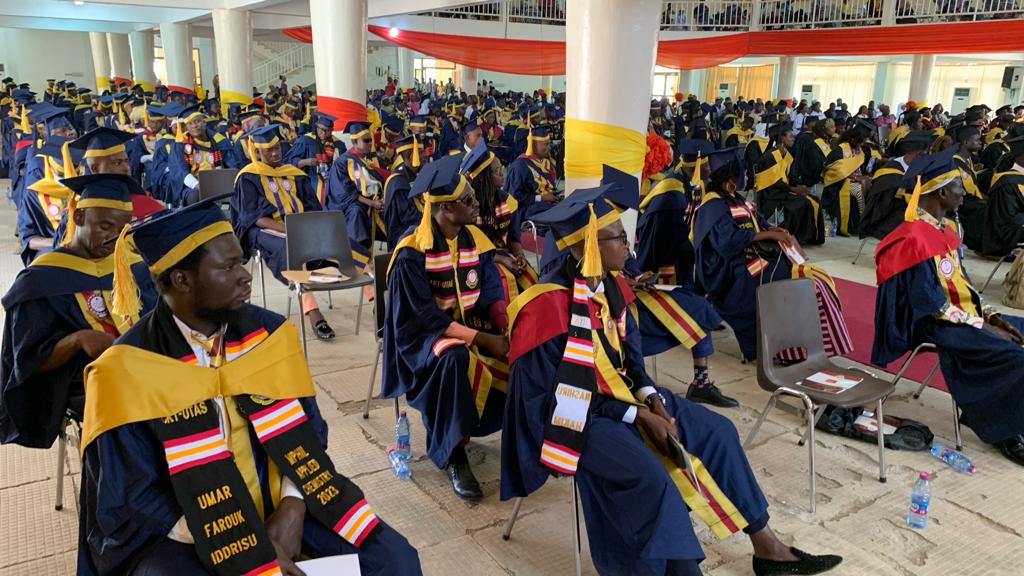




Facebook
Twitter
Pinterest
Instagram
Google+
YouTube
LinkedIn
RSS